
If you have read my Substack long enough, you know I think about food as medicine.
Salmon and avocado on sourdough is wonderful for your gut. It is also pretty expensive.
I am conscious of that.
Most of us are not shopping in a world of wild-caught fillets and organic berries.
We are shopping on a budget, in a hurry, after a long day.
So here are some healthy and affordable options I personally reach for.
BIG disclaimer: every food here has a drawback or two. That is partly why they are affordable. But the positives far outweigh the negatives, and this article will be mostly positive. My aim is simple: to get people eating healthier, whatever the budget. If you can afford pure organic whole foods, that’s great. Please read along, but don’t judge. Thank you.
You can check out my full Substack here
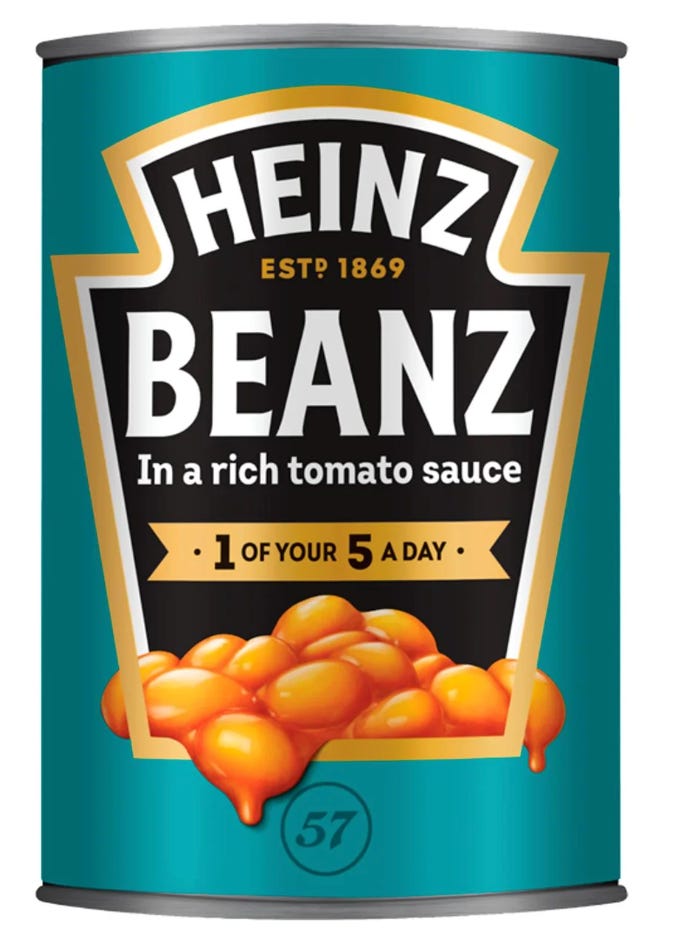
God bless baked beans!
A tin of value baked beans costs about 40p.
For that you get fibre, plant protein and one of your five a day.
Half a tin gives you roughly 10g of protein, similar to two small eggs, plus around 4g of fibre.
Most of us in the UK fall short of the 30g of fibre a day we should be eating, and beloved baked beans closes that gap!
The evidence for legumes is genuinely good.
A dose-response meta-analysis of 26 studies found that the highest legume eaters had a 10% lower risk of coronary heart disease compared to the lowest, with the benefit levelling off beyond 400g a week.
A randomised controlled trial in people with type 2 diabetes found that a daily cup of legumes for three months improved blood sugar, and reduced weight, waist size, cholesterol and blood pressure.
Then there is the gut.
In the BE GONE trial, 55 high-risk patients added a cup of navy beans to their usual diet, and their microbiome diversity rose measurably, feeding beneficial bacteria such as Faecalibacterium and Bifidobacterium while crowding out the less friendly ones.
My honest opinion? Baked beans on brown bread with a little grated cheddar is a complete, balanced meal. I stand by it.
A final note: some brands are high in salt and sugar. Check the label and pick a reduced-salt or no-added-sugar version where you can.
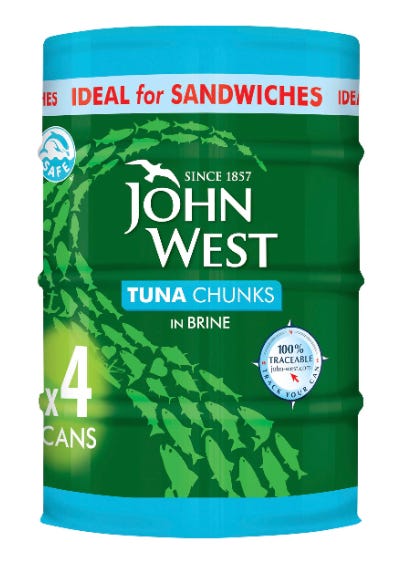
I ate tinned tuna as a broke student. I still eat it now! Old habits don’t fade!
A multipack works out at well under a pound a tin, and each tin delivers around 25 to 30g of lean, high-quality protein.
For the price, almost nothing beats it.
Canned tuna is NOT classed as an oily fish in UK guidance, because processing strips out much of the oil.
Fresh salmon or mackerel carry far more. So enjoy tuna for its protein, not as your omega-3 source.
I brighten mine with a little chilli sauce, or a small spoon of mayonnaise. Cheap, fast, satisfying.
A side-note: mercury (what’s the bet someone mentions this in the comments?). Tuna is larger and longer-lived than most tinned fish, so it accumulates more. For most adults there is no strict limit, but if you are pregnant or trying to conceive, the advice is no more than four medium cans a week, at about 140g drained weight each.
Good health does not need to be pricey! Share this with a friend
Comments
Nothing yet. Say the first thing.
Sign in to join the conversation.