

Walk through almost any grocery store today and you will see thousands of brightly colored packages promising convenience, high protein, low carbohydrate, gluten free, keto friendly, heart healthy, or gut healthy. Some of those products may fit into a reasonable diet, but hidden inside many of them are stabilizers, emulsifiers, gums, preservatives, dyes, and texture agents that barely existed in the human food environment until recently.
Over the past decade, a growing number of these ingredients have come under scientific scrutiny. Artificial sweeteners such as sucralose, saccharin, and aspartame have been associated in some studies with changes in the gut microbiome, altered glucose metabolism, impaired glucose tolerance, and shifts in microbial diversity, although the findings are not always consistent. Certain emulsifiers, including carboxymethylcellulose and polysorbate 80, have been shown in animal models to thin the protective mucus layer, alter gut bacteria, increase intestinal permeability, and promote low grade inflammation. Titanium dioxide, once widely used as a whitening agent, has raised concerns regarding intestinal inflammation and DNA damage in experimental studies. Some synthetic food dyes have also been investigated for effects on immune activation, oxidative stress, and behavior in susceptible individuals.
Individually, each additive may create only a subtle biological nudge. Together, they may create a very different information landscape that the intestinal barrier has to interpret every day.
One of those ingredients is xanthan gum.
Yep….time to look at your food labels
For years, the conversation around additives has usually been framed around one question: Is this ingredient safe? After reading this new paper, I am beginning to think that question is too narrow. Biology rarely responds to one isolated exposure. It responds to the total environment, repeated over time, until the system begins behaving differently.
A better question may be: What happens when the intestinal lining receives thousands of tiny food signals every day that it was never designed to interpret over and over again?
That question reaches well beyond xanthan gum. It includes preservatives, emulsifiers, artificial sweeteners, altered fats, highly refined carbohydrates, disrupted meal timing, poor sleep, chronic stress, low sunlight exposure, and long hours spent indoors. Our cells do not experience these as separate little boxes. They experience one continuous environmental conversation.
Before anyone panics, one meal is not going to destroy your colon, and one protein shake containing xanthan gum is unlikely to create a medical emergency. This was an animal study, and it does not prove that xanthan gum causes colon disease in humans. What it does suggest is that chronic exposure matters, especially when the same additive appears repeatedly across multiple foods every day.
For someone dealing with chronic bloating, irritable bowel symptoms, inflammatory bowel disease, unexplained food sensitivities, autoimmune symptoms, eczema, or recurrent abdominal discomfort, simplifying the food environment can be a very reasonable first step. That does not mean becoming afraid of every label. It means looking at the total exposure and asking whether the daily diet still resembles recognizable food.
A practical place to begin at home is simple. Read ingredient lists. Notice whether xanthan gum appears in several products you eat every day. Protein powders, gluten free breads, sauces, dressings, plant milks, ice creams, meal replacement drinks, and packaged “health” foods are common hiding places. You do not necessarily need to eliminate everything at once. A two to four week experiment with more whole foods and fewer additive heavy products may tell you more about your own system than arguing over whether one ingredient is universally good or bad.
Symptoms that deserve medical attention include persistent blood in the stool, unexplained weight loss, fever, nocturnal diarrhea, severe abdominal pain, progressive anemia, vomiting, or a major change in bowel habits that does not settle. Those are not “detox” symptoms and should not be brushed off as food sensitivity.
The study itself examined chronic xanthan gum intake in rats and found evidence of colon inflammation, changes in the microbiota, increased inflammatory cytokines, and alterations in proteins involved in maintaining the intestinal barrier. The researchers reported increases in IL 1 beta and TNF alpha, along with changes in Claudin 2 and ZO 1.
That last part is where my attention went.
The inflammation matters, but barrier biology may be the more interesting story. Once you begin looking at the colon as a living electrical surface rather than a passive tube, the entire paper opens up in a different way.
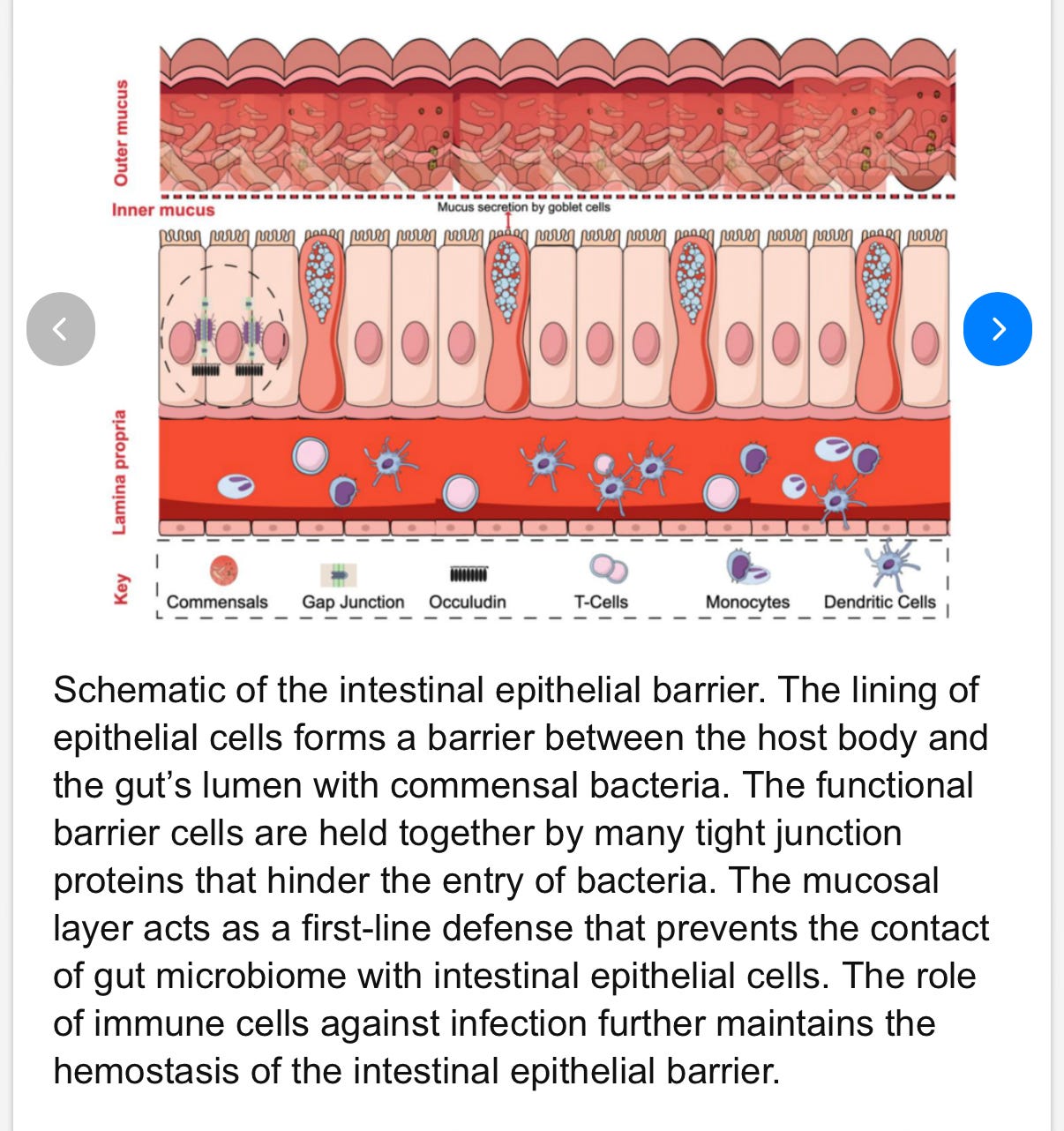
The colon is one of the largest sensing organs in the body. Every second, its epithelial cells are sampling nutrients, microbial metabolites, pH, mechanical stretch, osmotic pressure, water movement, ions, and immune signals. At the same time, the tissue must allow selected nutrients and electrolytes to pass while keeping an enormous bacterial population on the correct side of the wall.
That level of selectivity requires constant coordination. Goblet cells maintain mucus. Tight junction proteins regulate the space between epithelial cells. Immune cells patrol below the surface. Ion channels control sodium, chloride, potassium, bicarbonate, calcium, and proton movement. Water follows the ionic traffic.
This border is active, expensive, and highly organized.
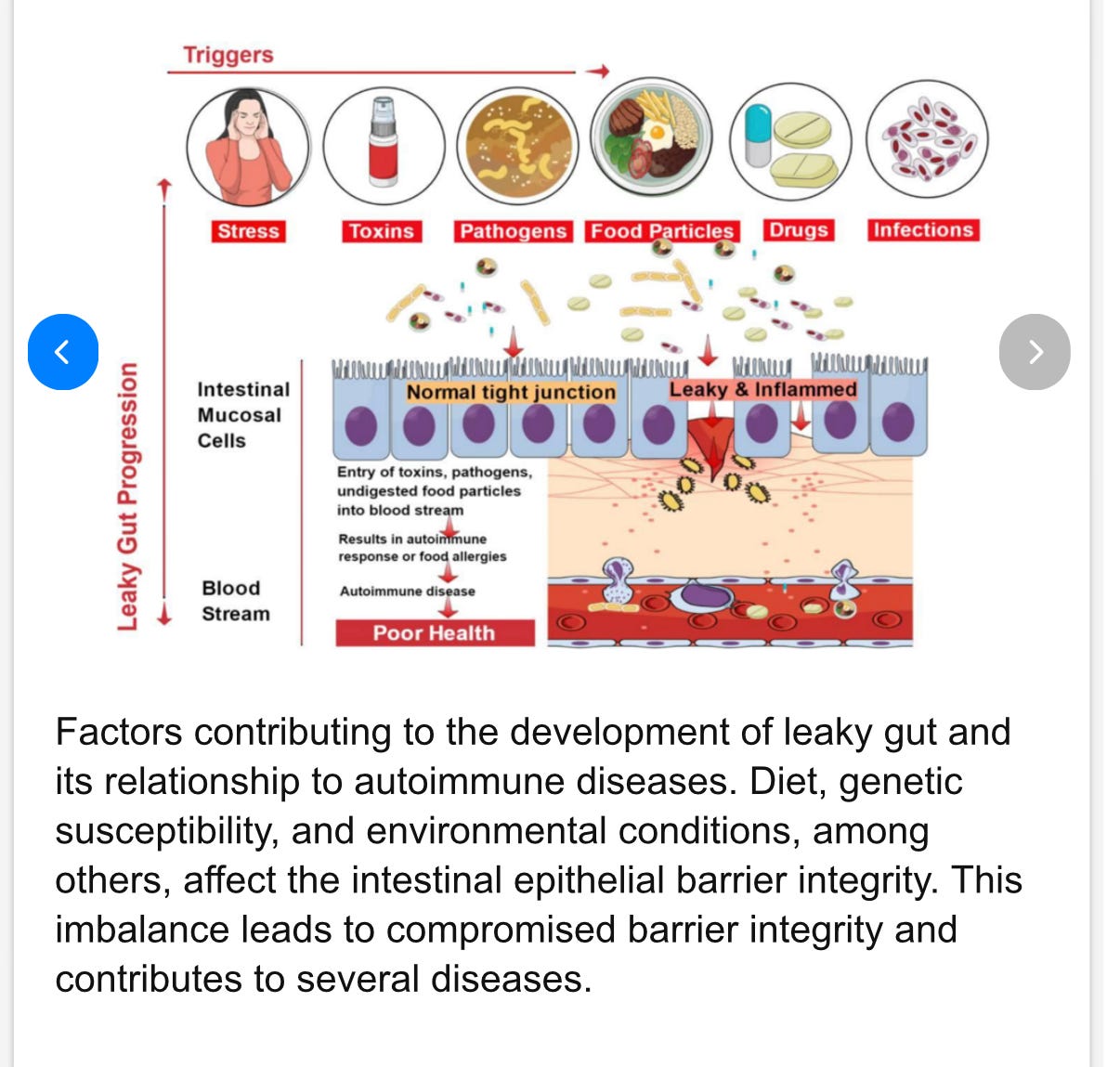
When people hear the phrase “leaky gut,” they usually picture tight junctions physically pulling apart. That may happen, but the tissue is not simply being held together like bricks with mortar. It is being continuously maintained by energy, ion gradients, membrane voltage, protein signaling, mucus production, and mitochondrial ATP.
In other words, the wall has to stay powered.
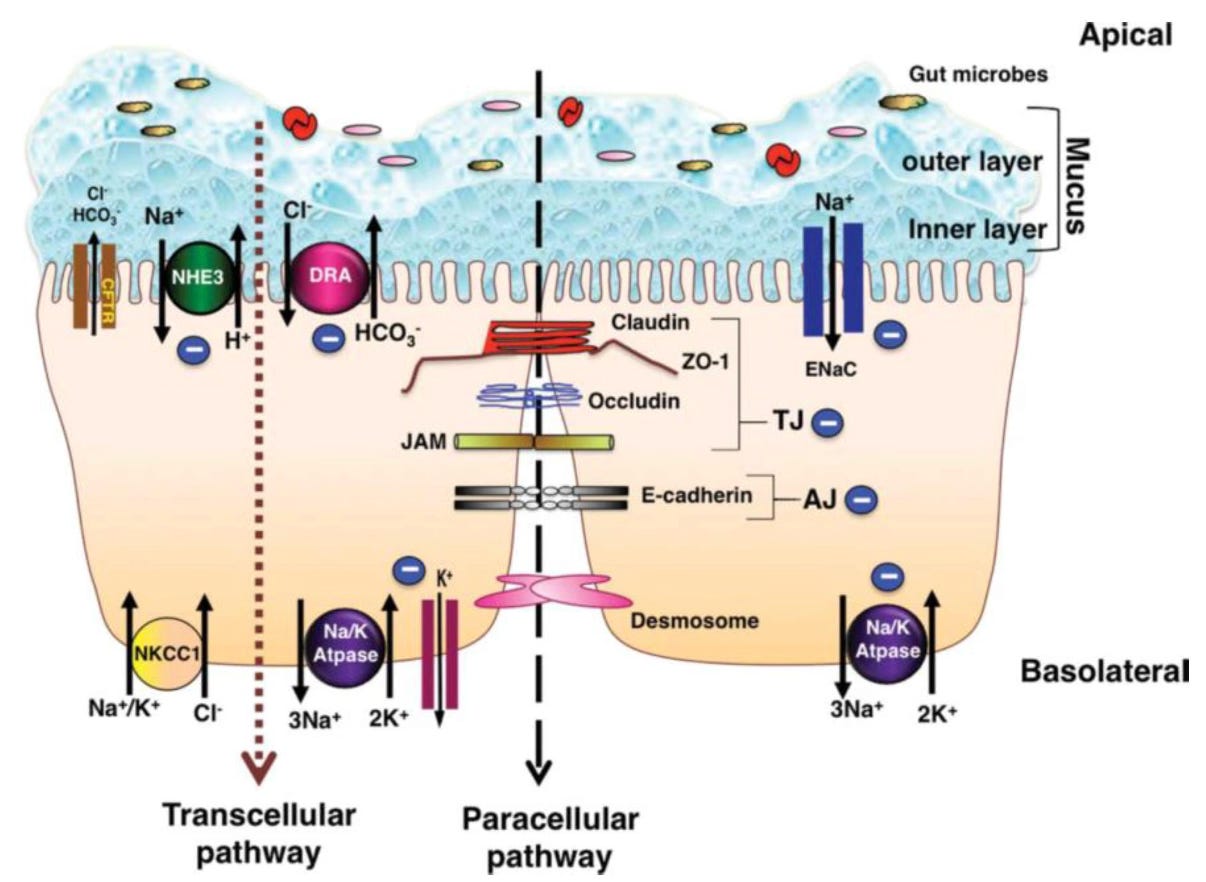
Look at the movement in this diagram. Sodium, potassium, chloride, bicarbonate, and hydrogen ions are being transported through specific channels and exchangers. The sodium potassium ATPase is spending ATP to preserve ionic separation across the cell membrane. Tight junction proteins such as Claudin, Occludin, and ZO 1 help regulate the paracellular route between neighboring cells.
This is where the Field Medicine lens becomes useful.
Every epithelial membrane separates charge. Charge separation creates voltage. Voltage creates a local electric field. That field influences protein conformation, channel behavior, calcium signaling, water movement, cell polarity, migration, repair, and immune communication.
The intestinal barrier therefore has a structural layer, a chemical layer, and a bioelectric layer. All three are moving together.
When the paper reports altered Claudin 2 and ZO 1, I do not see isolated proteins floating in a textbook diagram. I see a change occurring inside a living, polarized, energy dependent membrane system. Those proteins sit inside an electrical neighborhood. Alter the ions, the ATP supply, the membrane voltage, the local pH, or the hydration shell around the membrane, and protein behavior may change with it.
Inflammation may be the visible smoke, while loss of electrical organization is part of the earlier spark.
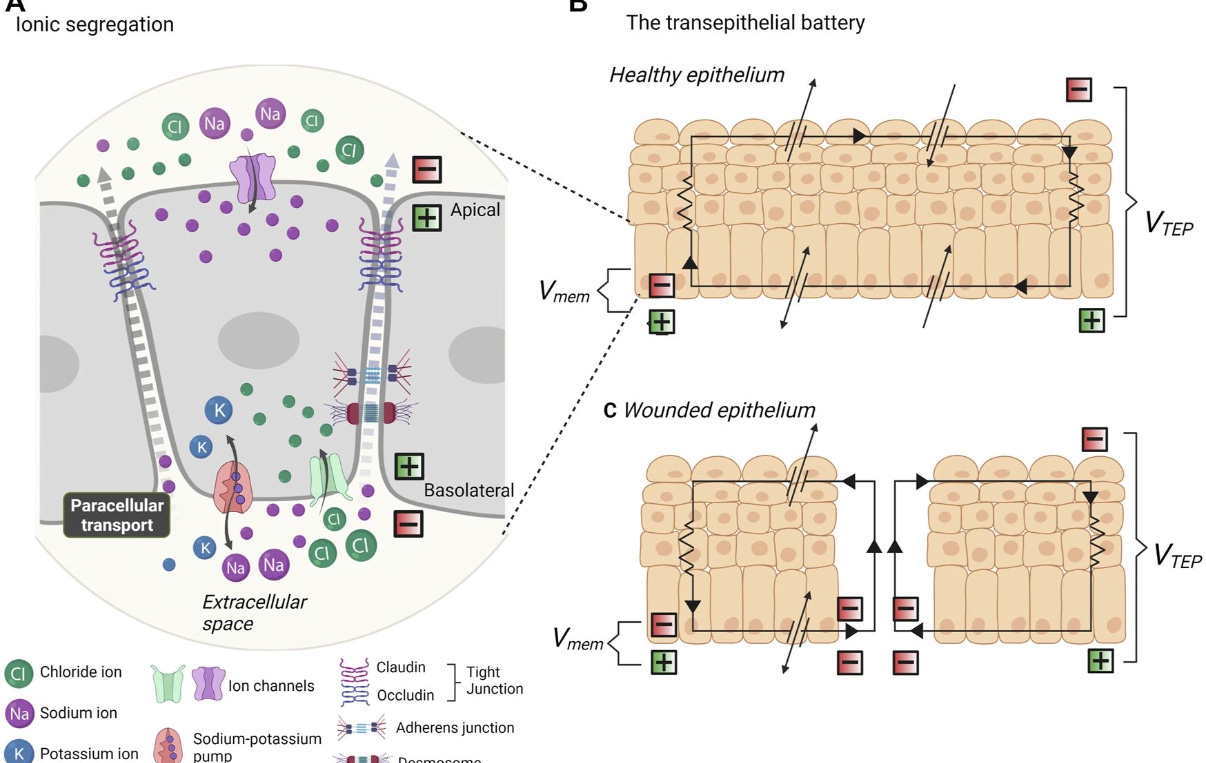
This may be the most important image in the post.
Physiologists describe epithelial tissue as a transepithelial battery because ion transport generates a measurable voltage across the barrier. The apical side facing the intestinal lumen and the basolateral side facing the tissue are not electrically identical. The cells actively create and preserve polarity across the entire sheet of tissue.
That polarity is functional. It tells the cell which side faces the lumen, where nutrients should move, where secretions should go, and how neighboring cells should align. It also contributes to tissue repair.
When an epithelium is wounded, the local electrical circuit changes. Current begins moving through the damaged region, creating directional information for cells involved in repair. This current of injury has been studied in multiple epithelial tissues. The gut is not simply waiting for inflammatory molecules to tell it what happened. The electrical architecture itself changes as soon as the barrier is disrupted.
That leads to a deeper question.
Could repeated dietary exposures subtly weaken the transepithelial battery before conventional disease becomes obvious?
We do not have evidence from this paper that xanthan gum directly lowers intestinal membrane voltage or directly alters the transepithelial potential. That would be an overreach. But the combination of barrier protein changes, inflammatory signaling, and altered microbial ecology makes the question biologically reasonable.
The field may start drifting before the wall visibly cracks.
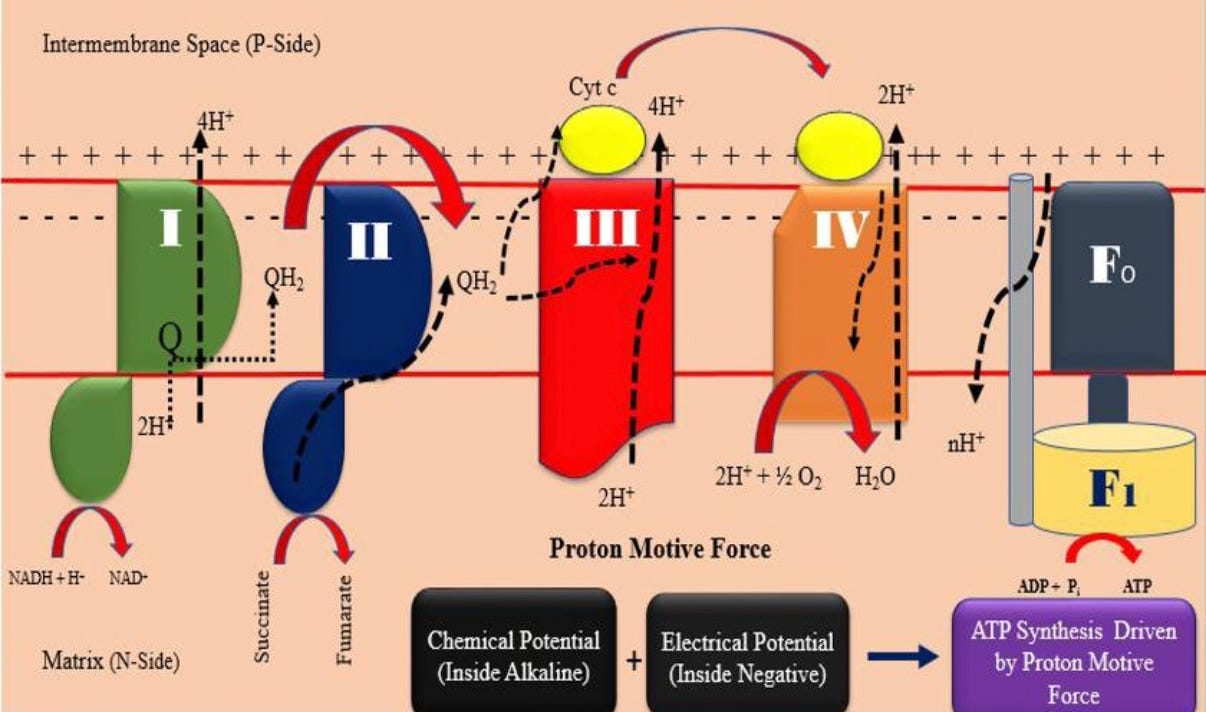
Now we move one level deeper into the epithelial cell.
Every sodium pump, chloride channel, tight junction repair process, mucus secretion pathway, and cytoskeletal adjustment depends either directly or indirectly on cellular energy. Much of that usable energy comes from mitochondria.
Inside the mitochondrion, electrons move through the electron transport chain while protons are pumped across the inner mitochondrial membrane. That proton separation generates the proton motive force, made up largely of electrical potential with a smaller pH component. Protons then return through ATP synthase, spinning the mitochondrial flywheel and helping convert ADP into ATP.
That ATP powers the intestinal barrier.
The sodium potassium ATPase alone consumes a substantial share of cellular ATP in many tissues. When epithelial cells are stressed, inflamed, hypoxic, nutrient overloaded, or exposed to altered microbial metabolites, mitochondrial demand can rise at the same time that efficiency falls. Once energy production begins lagging behind barrier workload, pumps slow, ion gradients drift, calcium handling changes, reactive oxygen species rise, and repair becomes more difficult.
This creates a possible feed forward loop. Barrier stress changes the microbiome. Microbial changes alter metabolites. Those metabolites influence mitochondria and immune cells. Mitochondrial dysfunction weakens ion transport and junction maintenance. The altered barrier then allows greater immune exposure to luminal material.
The colon can get caught in an energetic traffic jam.
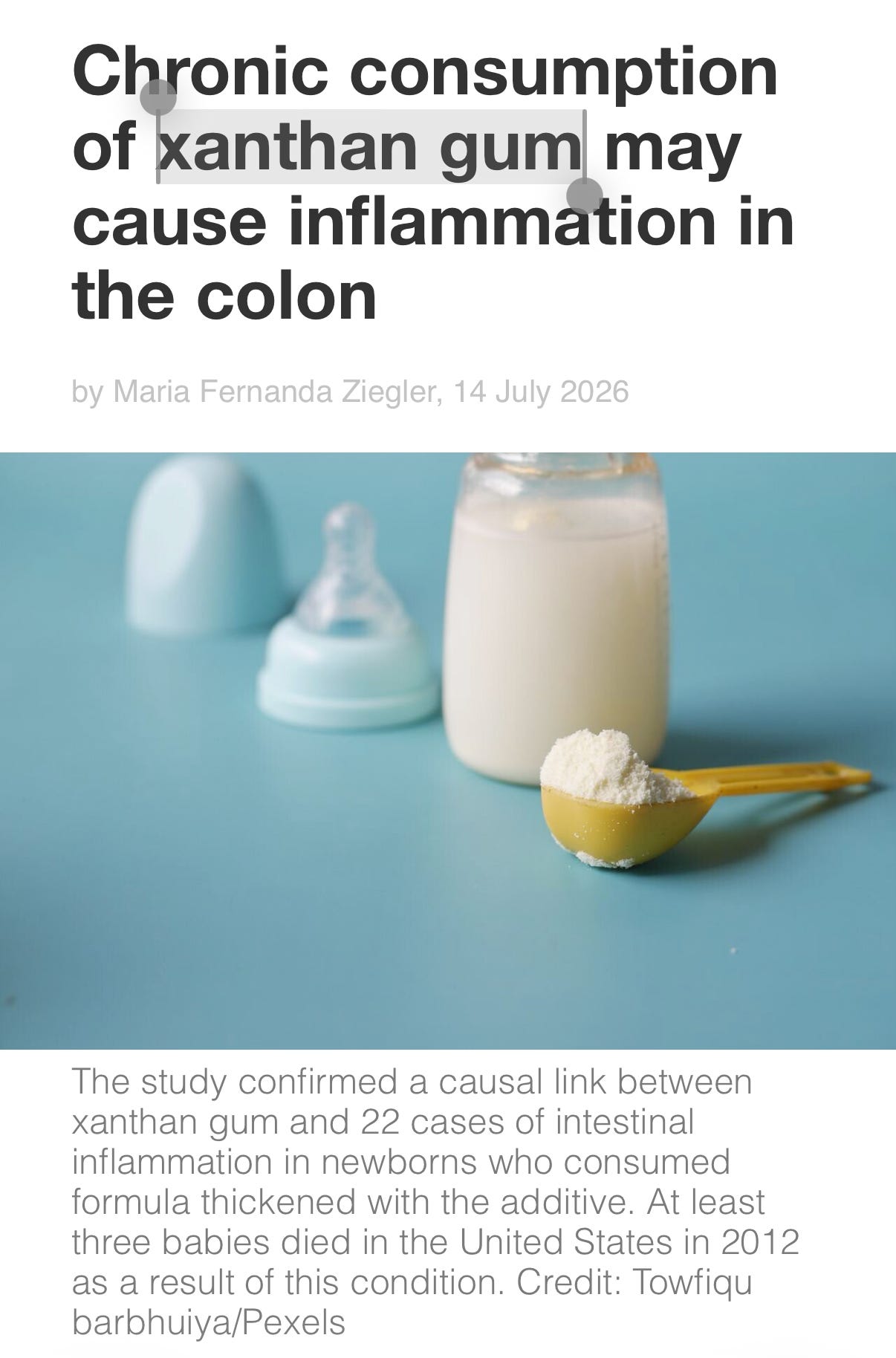
The Medical Xpress article also highlights an important clinical history. Xanthan gum has been used as a thickening agent, including in products for people with swallowing difficulty. Concerns have previously been raised around xanthan gum based thickeners in premature infants and necrotizing enterocolitis.
That does not mean the same risk applies to healthy adults consuming small amounts. Premature newborns have profoundly different intestinal maturity, immune function, microbial ecology, and barrier resilience. Still, it reminds us that the biological response to an additive depends on the condition of the host.
A healthy colon with strong barrier function, robust mucus, diverse microbes, good mitochondrial reserve, and normal motility may tolerate an exposure that a fragile or inflamed gut does not tolerate well.
This is one of the biggest problems with broad statements that an additive is either safe or unsafe. The answer may depend on dose, frequency, age, baseline inflammation, microbial composition, medication use, circadian state, and mitochondrial reserve.
The terrain matters.

What should someone actually do at home?
Comments
Nothing yet. Say the first thing.
Sign in to join the conversation.