
Something just shifted in American democracy.
Not in theory. Not in a law review article.
In real life. In elections. In who gets heard and who doesn’t.
The United States Supreme Court just issued a 6–3 decision in Louisiana v. Callais. And while the case centers on one state, the consequences reach across the entire country.
Let’s slow this down and look under the hood.
For decades, one of the most important protections in our democracy has been Section 2 of the Voting Rights Act. It gave people the ability to challenge maps that weakened the voting power of communities of color, even if lawmakers never said the quiet part out loud.
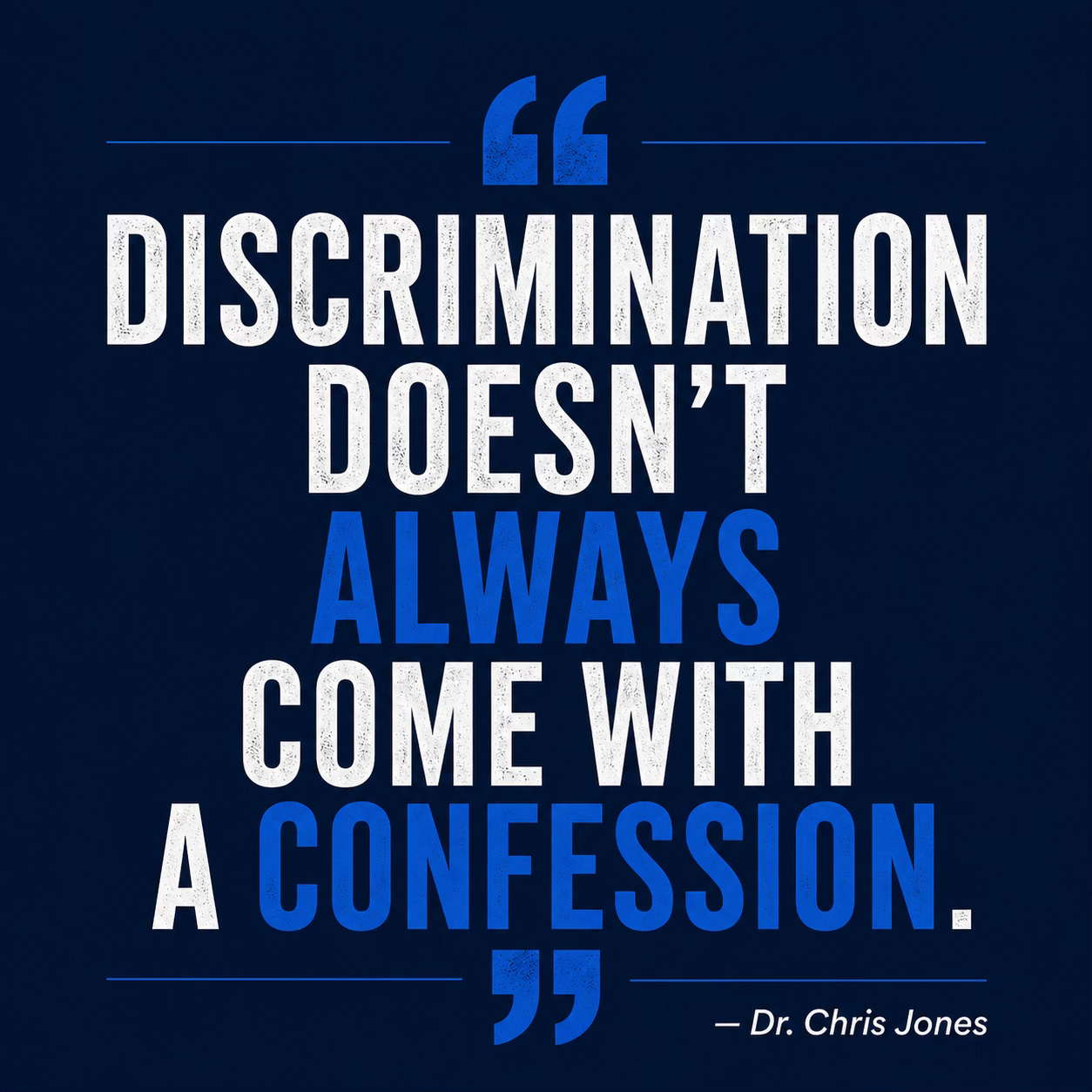
Because discrimination doesn’t always come with a confession.
What the Court just did was raise the bar. Higher.
Now, it is no longer enough to show that a map results in weaker representation. You are much closer to having to prove intent. And at the same time, states are being told they cannot rely heavily on race to fix those very problems.
Think about that.
You’ve made it harder to prove harm, and harder to fix it.
And that is a structural change.
Let’s be precise. This decision does not eliminate the Voting Rights Act.
But it does weaken one of its central enforcement mechanisms.
And when enforcement weakens, behavior changes.
Across the country, state legislatures draw political maps. Those maps decide who has a real chance to elect representation and who does not.
If courts are less able to strike down unfair maps, more of those maps will stand.
That is the real impact.
Not just lines.
Power.
Who has it. Who keeps it. And who gets locked out.
This didn’t happen overnight. Over the past decade, the legal framework protecting voting rights has been steadily narrowed:
In 2013, key federal oversight protections were removed
In 2021, the standard for challenging voting restrictions was tightened
And now, in 2026, the standard for challenging maps has been raised again
Each decision can be debated on its own. Together, they form a pattern.
A pattern where it becomes harder to challenge unfair systems and easier for those systems to remain in place.
At its core, this is about one question: Do communities have a meaningful opportunity to elect leaders who reflect their lived experiences?
Not guaranteed outcomes.
Not special treatment.
A fair shot.
That is what is now at risk.
Because when you make it harder to challenge vote dilution, you weaken accountability.
And when accountability weakens, representation follows.
When politicians draw maps that protect their power instead of reflecting the people, that’s not competition. Period.
It is the difference between earning representation and engineering it.
And when the rules shift in a way that makes those maps harder to challenge, it sends a clear signal: The system is becoming less responsive to the people it is supposed to serve.
I’ve spent my life working in systems. Engineering systems. Studying systems. Rebuilding systems.
And here’s what I know: A system only works if people trust it.
And people only trust it if they believe their voice matters inside of it.
That’s the foundation.
If that foundation cracks, everything built on top of it becomes unstable.
Economy. Opportunity. Governance. All of it.
Condemning this decision is not enough.
We have to respond.
We have to stay engaged.
We have to stay informed.
And yes, we have to participate.
Because while the legal landscape may be shifting, the power of participation still matters.
This ruling is a signal.
A signal about the direction of our democracy. A signal about how power is being structured and protected. And a signal that the fight for fair representation is not behind us.
It is right in front of us.
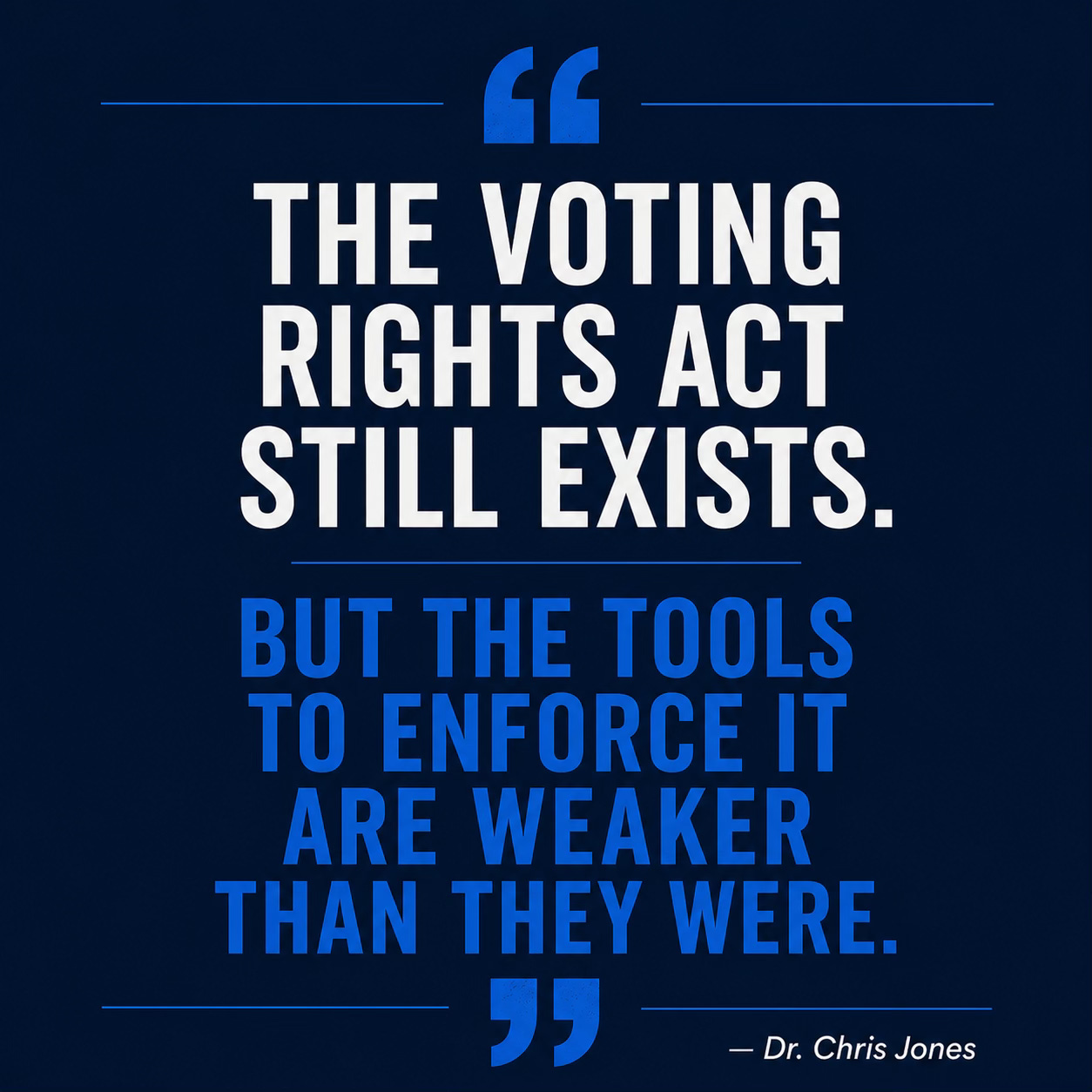
The Voting Rights Act still exists.
But the tools to enforce it are weaker than they were.
And when enforcement weakens, the burden shifts.
From the system…to the people.
So the question now is not just what the Court has done.
The question is what we will do next.
Will we accept a system that becomes harder to challenge?
Or will we show up, engage, and insist that this democracy works for everyone?
Because at the end of the day, that is what this has always been about.
Not lines on a map.
People.
And whether their voices truly count.
Blessings,
Chris
If you are interested in supporting my campaign for Congress (AR-02), you can find out more by visiting chrisjonesforcongress.com.
No posts
Comments
Nothing yet. Say the first thing.
Sign in to join the conversation.