
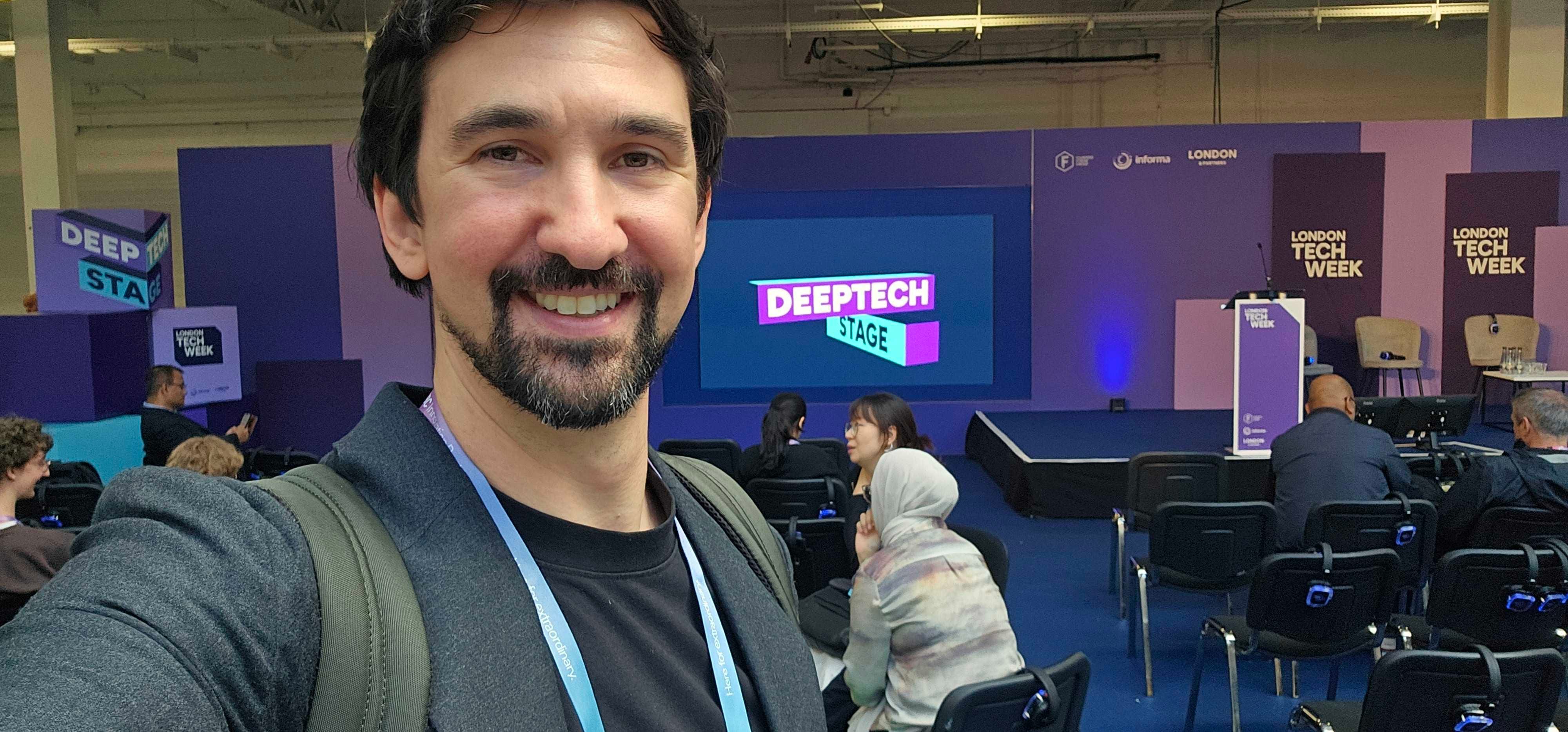
I’m writing this from a train rattling into London, the city assembling itself out of the window in that grey, undramatic way it does on a weekday morning. It’s been London Tech Week, and I spent a good chunk of it on a stage at ICC Olympia hosting Innovation Arc Day - the day dedicated to the perpetually self-efacing question of whether Britain can finally turn its science into companies. More on that at the bottom.
A lot of you came and said hello across the week, which genuinely makes my day every time. Some of you also joined for the happy hour - about which I owe the entire event an apology, but we’ll get to that too…
Wrapping medicine in glass so it can’t die
This week I shot a short with Asel Sartbaeva - one of my favourite founders, and full disclosure, one of ours; Empirical is an investor in her company, EnsiliTech. The video was about making medicines that are, more or less, “indestructible”. Leave them in the sun, post them across the world, forget them on a shelf for three years, and they still work.
But what does that actually mean?
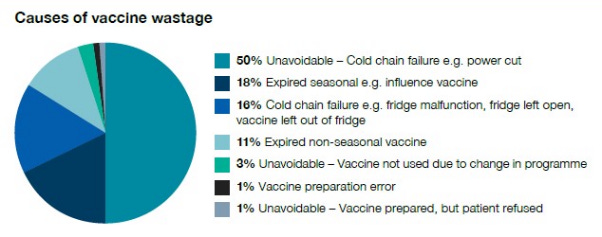
The problem is that most vaccines and biologic drugs are alive, in the sense that their active ingredient is a folded protein, and a folded protein is a delicate thing. Let it get too warm and it unfolds, and once it unfolds it’s useless. So we built an entire global cold chain — fridges, freezers, dry ice, refrigerated lorries — to keep these molecules between 2°C and 8°C from the factory to the arm. Some vaccines need colder still: the mRNA ones that became famous during COVID require storage at −60°C to −80°C, which is roughly the temperature of Antarctica in winter. It mostly works. But it’s expensive, it’s fragile, and roughly half of all vaccines are wasted because somewhere along that chain the cold broke.
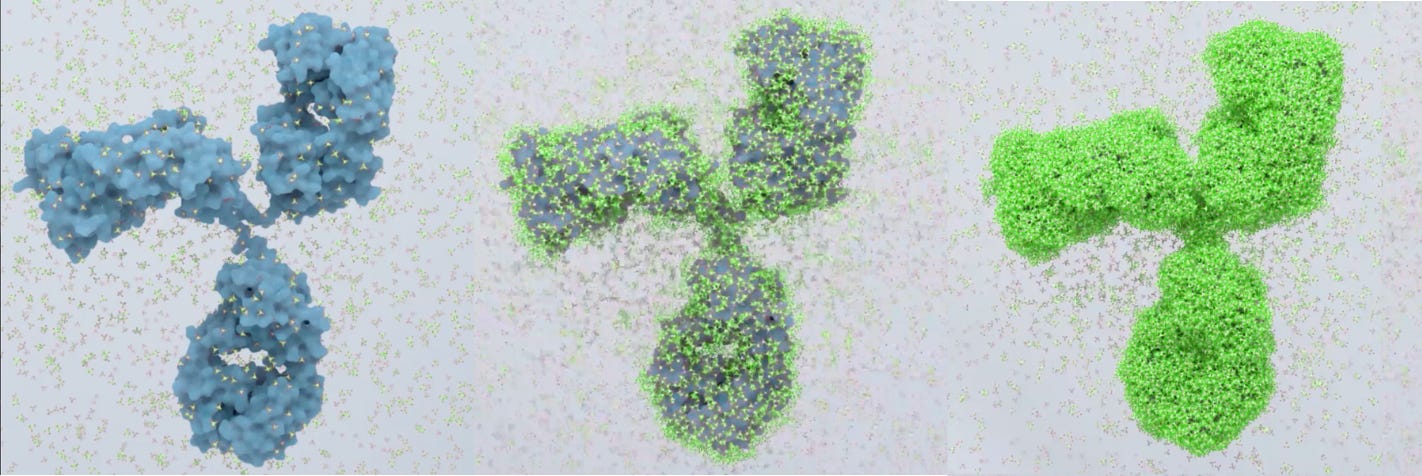
Asel’s technique is called ensilication, and it’s the kind of idea that sounds like cheating. You take the protein and you grow a microscopic shell of silica — glass, essentially, the same stuff as sand — around each individual molecule. The shell fits the protein like a custom cast, holding it in its working shape so it physically cannot unfold. Heat it, and there’s nowhere for the molecule to go. When you need the drug, you remove the silica layer and the protein walks out unharmed. In the lab they’ve taken ensilicated proteins up to 100°C and back; in practice it means storage anywhere from a deep freezer to a hot afternoon, no fridge required.
The most obvious comparison is to freeze-drying, which is the trick the industry already uses. Freeze-drying works for some molecules and fails for others, the powder is fussy, and plenty of freeze-dried products still want a fridge. Ensilication is more robust, and - the part investors care about - it’s designed to bolt onto existing manufacturing rather than replacing it. Some recent work that Ensilitech have done has even shown that their technology can reduce the costs of some vaccines by up to 50%. The realist’s caveat is that this technology is still pre-commercial. The science is well past proven; the hard, unglamorous work now is the validation data and the scale-up that turns a beautiful mechanism into something a pharma company will actually put in its line. That’s the bit that takes years, and it’s the bit that kills most deep-tech companies. EnsiliTech isn’t there yet.
What I keep coming back to is where the idea came from. Asel had it in 2010, holding her five-day-old daughter at a vaccination, when she clocked that the vaccine had come straight out of a fridge and asked the doctor why. The answer: “it’ll spoil if it warms up” became fifteen years of work. The whole thing is downstream of one mother asking an obvious question that nobody else stopped on.
Solid. Literally
Met - Lord Vallance, the Science Minister for the UK, who I’ll admit I was slightly star-struck by. An actual scientist running science in government is exactly the thing this whole newsletter is secretly about. Also won an accolade I wasn’t expecting. I’m now referenced in his opening speech on gov.uk, on account of me apparently advertising the Tech Week happy hour rather more enthusiastically than the venue’s capacity could bear. So if you came to the happy hour and couldn’t get in - that one’s on me, and now it’s a matter of public record. Sorry, everyone.

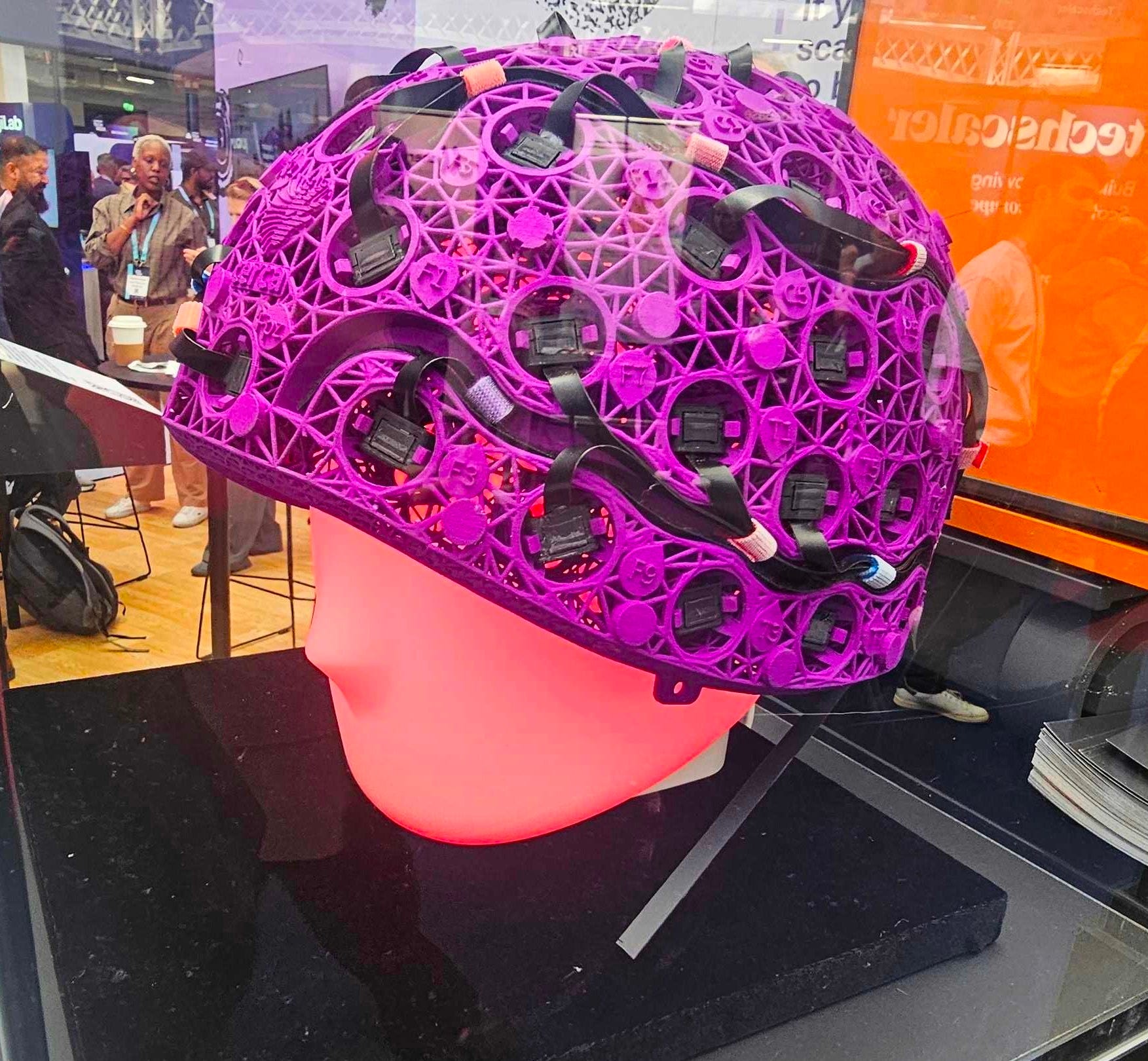
Saw - This fetching headpiece, spotted at London Tech Week. A wearable brain scanner developed by Cerca Magnetics - a spinout from the University of Nottingham - its 3D-printed array of sensors maps neural activity in three dimensions with millisecond precision, without the liquid helium-cooled cryogenic machine conventional scanners require. Technology like this could increase the number of children for whom life-changing epilepsy surgery is possible. Pretty cool.
Tasted - Plov, at an Uzbek place near Piccadilly, with Asel.
If you’ve never had it: Layers of lamb, carrot and rice, warmly spiced with cumin, cooked slowly until every grain has absorbed the stock. It’s the kind of food that demands you stop talking about the company for twenty minutes. 10/10, would derail a business lunch again. (Also bonus points for it not being a burger this week)

Innovation Arc Day was really about one argument. Britain has a chip on its shoulder about if it can deliver. A long-standing sense that we invent the thing and someone else builds the company and benefits from it.
People can spend a lot of time worrying that once a British company gets exciting - the sort of thing that could matter at scale - how do we stop it leaving?
This really is starting from the back foot.
My preferred approach is - “just get on with it.”
If we do more awesome things at larger volume and bigger scale - the rest will solve itself. We’ve got one of those awesome things announcing shortly. More on that soon.
Feedback always welcome.
Until next time
Dr Ben
Quantum of Knowledge goes out roughly every fortnight — sometimes weekly when the world’s been interesting. Forward it to someone who’d like it.
No posts
Comments
Nothing yet. Say the first thing.
Sign in to join the conversation.