
Our early experiences, before we have language, before we can make meaning; shape the person we become as adults. I want to tell you about my upbringing for the purpose of helping you understand how this memory worked in the background and helped shaped how I interact with the world. Understanding the sensations in my body, helped me to recognize why I’m motivated to share what I know with others.
My memory is about my mother when I was 9-12 months old. I am so glad that I had this memory so early in my life. It helped me to understand about what makes me tick.
In my blog from on February 4th, 2026, I talked about a positive experience I had with my mother. It was that positive memory that helped me through the painful experiences.
My earliest memory dates back to when I was about 9–12 months old. I was sitting in my highchair in our farmhouse kitchen with my family. On the way over for a visit, my relatives brought a package for my mother that they picked up at the local general store. I was awash with marvelous sensations as I watched my mother try on her first pair of eyeglasses. She was the center of attention and was enjoying herself as she received compliments. When my mother was happy, there was a positive ripple effect, which made everyone happy. Life was good when my mother was happy. Looking back, I realized that, at a very early age, I took on the mission of making myself and everyone happy.
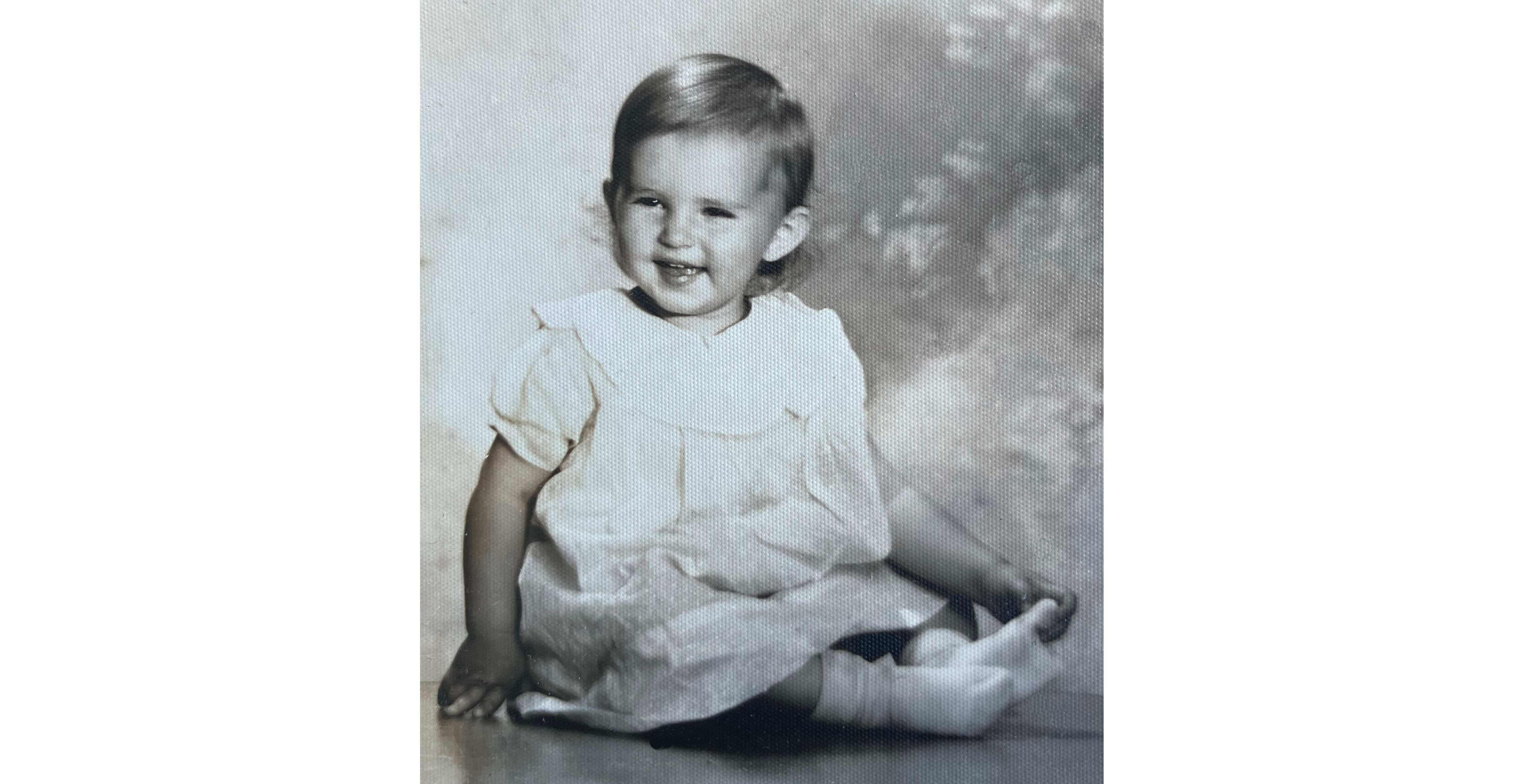
Because my mother (youngest of six) grew up in a very unhappy family, and was damaged emotionally and physically, control was a huge issue for her. When things felt out of control she would explode. Her explosions were scary. She had an old piece of leather horse rein that she folded up and would strap us with it. She would grab us by the wrist of one hand, wail on us with the strap held in her the other hand. We would run around her in circles screaming and crying. She never did it when my father or any other adult was around, so we were safe then.
Often, I would not know why she blew up. Not knowing why was the scariest for me. I don’t think she knew either.
My mom did not do it a lot, but she did not have to—all she needed to say in her nastiest harshest voice “Do you want me to get the strap?” Very frightened, I would do or not do whatever it was she wanted.
I need to explain that I grew up at a time when beatings, strappings, and spankings were considered good parenting. The church supported this behavior with the message “spare the rod and spoil the child”. The schools at the time had corporal punishment. The principal of the elementary school I attended had a razor strap that he carried with him. He would threaten children with it. I never saw him hit anyone, but I was always nervous and scared of him.
Children were considered properties of their parents, who could treat them however they chose. People had to turn away from other parents who abused their children because they had no right, by law, to interfere. When brave people did try to advocate for children they witnessed being abused, the children often got abused more because they exposed their family business to the world. Because of this culture, my parents were considered good parents.
Once in a blue moon, my mother was happy, and people in her presence felt the ripple effect. When she was happy, I experienced wonderful sensations. This positive experience helped me as a child and as an adult. I wanted to help people feel good about themselves. I wanted to help them to be all that they could be.
As a child, I rejected God as a force to be feared. I accepted that he is a loving and forgiving force. As a child I grew up vowing to never hit my children so when I became parent, I searched for a parenting program that dealt with children in ways that provided discipline without yelling hitting, guilt tripping or physically punishing them. I found the Rudolf Dreikurs’ S.T.E P. (Systematic Training for Effective Parenting) and Alfred Adler’s View of Human Behaviour useful resources. They taught that most people are motivated by Social Interest and how to be responsible parent.
I learned to create strategies to cope with recurring issues such as bedtime, tidiness, anger, tattle-tailing, and mealtimes, etc. As long as I had a strategy, I rarely ‘lost it’ with my kids. When I did ‘lose it’, I felt terrible afterwards. It reinforced my determination to apply what I had learned in the parenting program.
In the book Systematic Training for Effective Parenting (S. T. E. P.) by Rudolf Dreikurs, I learned how to parent by developing strategies based on logical and natural consequences. It helped me to not repeat what was handed down from generation to generation.
My parents were good people at heart. They were kind and helpful to others as well as to us kids.
My mother wanted to be a geriatric nurse. She loved elderly people. Her father made her quit school when she was 13 years old, telling her that there is no point in educating a girl who will eventually become a farmer’s wife. She was determined that her daughters would get an education, she sent my sister and I to a boarding school for our later years. She would say to me, “Get an education so you don’t have to work as hard as your father and me.”
I achieved the first part of her advice, I received a Ph.D., which is more than she could have ever imagined. It seems as if I didn’t hear the second part of her advice—the part that contained the word ‘don’t’. I am a senior person now, and I’m still working hard.
There are a lot of good people in the world who are damaged during childhood, yet they are still motivated to be good to others, whether it be as a therapist, social worker, doctor, nurse, caregiver, minister, chef, or are in any kind of work that serves others.
I remember when my husband and I were building a home. One of the electricians advised us to make a change to the master bedroom by adding a seating area to it. We followed his advice and were grateful for it. I know the electrician felt good about helping us.
If I had not had that positive memory as a child, I don’t know how, but my life would have been different. My siblings had more strapping and beatings than I did and they still are good people, they have many children, grandchildren and even great grandchildren all of whom are good people. But, as I have been, my siblings have all been emotionally crippled by the harsh discipline and the over emphasis on work.
My mother grew up in a family in which work was the only safe way to be. If my grandfather found anyone playing or just relaxing, he would punish them.
My mother shared this memory with me.
It was on Sunday afternoon, us kids were having fun playing card games. My father was away from home. I watched my mother wait anxiously for his return, all the time pacing back and forth by the window wringing her hands. When he did enter the driveway, she would give the heads-up, and everyone would scramble to be working at something before he entered the house.
The message to my mother and her siblings was “you are only safe if you’re working. If caught playing, you will be punished severely.”
There was no therapy at this time. My mother was a clean freak. She handled her own demons by focusing on work. She would only play with us children, once in a blue moon. That was a favourite saying of hers. She could not ‘just be’. I think my mother always had the image of her mother in her mind, wringing her hands and anxiously walking back and forth.
She nursed her first two babies, but it was not considered work so she could not enjoy it, that is she could not enjoy her children. When my other brother and I came along, she was delighted when bottle feeding was available so she could pass this task off to my sister, or one of the hired girls who lived with us while she went to the barn and milked the cows.
My father was the eldest of 10 children (7 brothers and 2 sisters). He was forced by circumstances to quit school at age 13 because the growing family needed another hand to help with the load. He became like a father to his siblings and disciplined them harshly. Because of having to discipline 7 brothers, he was partial to girls. I was fortunate to be a girl.
I asked my dad many times to tell me about his life growing up but he never would. He was the strong silent type. What he said was ‘law’, and we all knew we didn’t argue. I was the only child who did not get strapped/beaten by him. To me, my father was the safe one.
People often find it difficult to believe that a person can remember memories at such an early age. I believe I remember this incident so young, because the quality of the wonderful sensations was very intense. This memory certainly shaped who I am today. It is at the core of what makes me tick.
Because of the harsh parenting, I’m afraid of anger, my own and others. I am especially afraid of repressed anger, you know, when someone says they aren’t angry, but they are. Often people do not know they angry, because they have repressed the sensations to such an extent, they are not aware of them anymore. They tend to feel nothing, and they deny they are angry. They are usually depressed.
When clients come for therapy and they are complaining about something or someone, I invite them to slam some beanbags on my floor. At first, they feel silly, but as they are expressing it with their bodies, they seem to come awake as they access the sensations of anger. It’s kind of like opening the vent on a pressure cooker so the lid won’t blow off. It usually only takes about 5-10 minutes of slamming to release the pressure. When the session begins, they feel different and the session become more productive. I work with them to realign their body’s energy, so it is all going in the same direction.
Because I am afraid of anger, I have learned ways to communicate that I teach others. That it’s ok to be angry. It is how you act when you’re angry that is key in relationships.
Now you know what makes me tick.
Upgrade your free subscription and receive helpful exercises, tools, and access to my book “Say It Like It Is”, which is a great resource for effective communications. My goal is to help people help themselves, so they can enjoy life to the fullest.
Chapter Three—Channelling Anger Productively is available with pay subscription.
Comments
Nothing yet. Say the first thing.
Sign in to join the conversation.