
I do love the ethos of the NHS. Healthcare that is free at the point of access for all is an amazing feat. Whether someone destitute or blessed with abundance, each person is treated in the same way. But the NHS has had a tough few years. More than a few to be fair. Any system making the promise of free healthcare is bound to come unstuck at some point in terms of funding and expectations, particular in times of austerity. So much so, that I am saturated from hearing and reading that phrase: “The NHS is broken…”, although I understand the sentiment.
At the other end of the spectrum from the NHS there is a veritable slew of private clinics offering tests for everything going - whole body scans, boutique and concierge medicine in swish medi-spa type clinics, far removed from the world of public health ‘need’ served by the NHS. And there’s the rub. “Need”. How do we define it? It’s actually a public health term but increasingly the public is confused.
Jonathan Bradshaw summed it up:
The Four Types of Need (Bradshaw, 1972):
Normative Needs: Defined by experts or professionals against a set standard (e.g., recommended vaccination rates or housing standards).
Felt Needs: Defined by what individuals want or perceive as their own need, though these may be unexpressed.
Expressed Needs: Felt needs that have been turned into action, such as a demand for service or a waiting list entry.
Comparative Needs: Identified by comparing the services or conditions of one population group against another similar group.
Felt and expressed needs dominate the NHS these days.
Some people are scared of dying of cancer early and want screening, others want to access high-tech procedures, weight loss jabs or niche treatments and of course, people naturally look to the NHS first for this help. The NHS is not really set up for this, and beyond the state of our hospitals thanks to underfunding, this perceived lack of help really frustrates people. These are rapidly becoming new unmet ‘needs’.
There’s also a middle ground that is emerging now. People are being forced to ‘go private’ to beat waits for outpatient appointments or elective procedures. But of course that’s not an option for people who can’t afford it (the inverse care law in action).
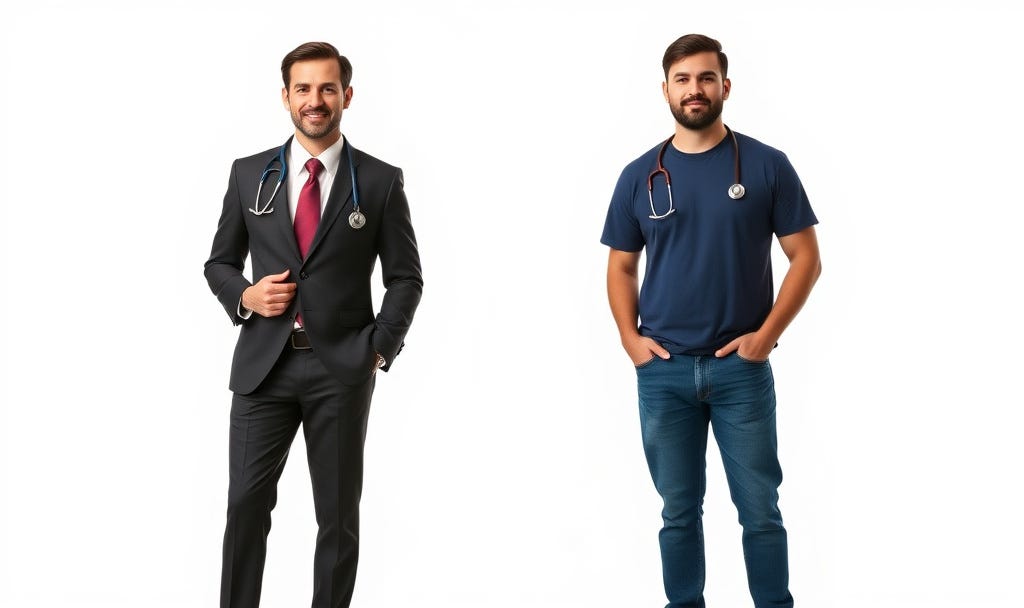
There are a couple of elephants in the room here. Firstly there has been a drift of talent from the NHS to the private sector for myriad reasons. Yet the swish surroundings, clinicians in smart suits and higher tech equipment in private medicine does not mean that the doctors who work there are ‘better’, because they are usually from the same pool. I’ve been there and done that. And although I do not work privately at all any more I am all for reasonable private services that add value
.The NHS talent exodus is similar to what's been happening at the BBC over the last 5 years - the BBC has a lot in common with the NHS as far as its inception and ethos goes.
Secondly something has snapped in the way the public think. Increasing health anxiety requires more reassurance. Dissatisfaction with the NHS has driven up demand and expectations.
Some private providers offer basic health screening, mainly the big insurance companies, but then insist that patients to see their own NHS GP when relatively minor abnormalities get thrown up. The whole thing is a bit of a mess, often creating frustration for GPs and unnecessary anxiety for patients.
So what’s the answer? In my mind, prevention is all important for future generations, although politicians are the masters of short-termism.
If the NHS has any future plan to promote proactive prevention (beyond collecting blood pressures and offering people statins as part of long term condition management), then in my view, health coaches should be a key part of that plan to help communities create and maintain healthy habits.
The other option is that the NHS divides its activity into streams, protecting all primary and acute care services, hospital admissions, a palette of elective services, maternity care, mental health, cancer services, being boundaried about what it can and can’t provide based on ‘need’, with a preventive service running along side this, delivered by health coaches who can help support behaviour change and lifestyle.
Meanwhile the expectation and service gap continues to grow. There is increasingly a two tier system of haves and have nots in healthcare that is unfolding and it’s time we openly acknowledged that.
No posts
Comments
Nothing yet. Say the first thing.
Sign in to join the conversation.