
Drawing Legs on a Snake is a new iteration of the Sun Tzu Reading Project, which was originally formed back in 2019-2020, when all of the founders were working at the same office and could meet regularly for discussion. Our intent was to relate The Art of War to conflicts we had to deal with in technology and business development.
From 2020 onward, we continued meeting and writing using Google Workspace and Slack, but as people moved to different parts of the world, or began to work with teams in different time zones, our progress became slower.
Our publication here on Substack was started in 2024 by myself (Andrew Milne) in collaboration with Anish Verma and Herman Ho. Many of the participants from the original project have continued as subscribers.
Our core working group has now gone through all thirteen chapters of Sun Tzu. We have written a number of short “companion essays” that expand on the ideas expressed in our many group discussions.
Our original hope was to bring out a book that treated Sun Tzu’s Art of War in the same way that Jessica Helfand treated Ralph Waldo Emerson’s 1841 essay Self-Reliance. Her companion essays (typically 200-400 words) connect a well-known work with a new set of experiences and perspectives. Her work was commercially published and this gave us hope that a market existed for this kind of book. Our Drawing Legs on a Snake Substack is a step towards reaching this broader audience.
However, we also want to help our members form Sun Tzu Reading Projects of their own. Reading The Art of War is valuable, but a well-moderated discussion group with good resources can help people clarify their ideas, and much more can be said in private face-to-face discussions than can ever be said in a public forum.
In the original Sun Tzu Reading Project, we made a modern Chinese text and an English translation available on a Confluence server, along with notes and links to articles that we had talked about. There were about a dozen people who met regularly to read and discuss the text.
Our policy was to never attribute any words to any individual, a form of the Chatham House Rule. We would also remove the names of companies and organizations if they could be used to identify a specific participant.
Here is a quick overview of our process (from when we were still working in a common office):
We met twice a week. Wednesdays and Thursdays at noon were good times. This made it possible for more people to attend at least one of the meetings. It’s an informal discussion group, not a course!
We advance through the text one paragraph at a time.
On the Confluence pages, we started with the English text.
For the Chinese text, we use the version provided by the 2000 Random House / Ballantine Books / Modern Library Edition along with the Ames translation. Note: Drawing Legs on a Snake uses the public domain Chinese Text Project (中國哲學書電子化計劃), edited by Dr. Donald Sturgeon (Chinese: 德龍).
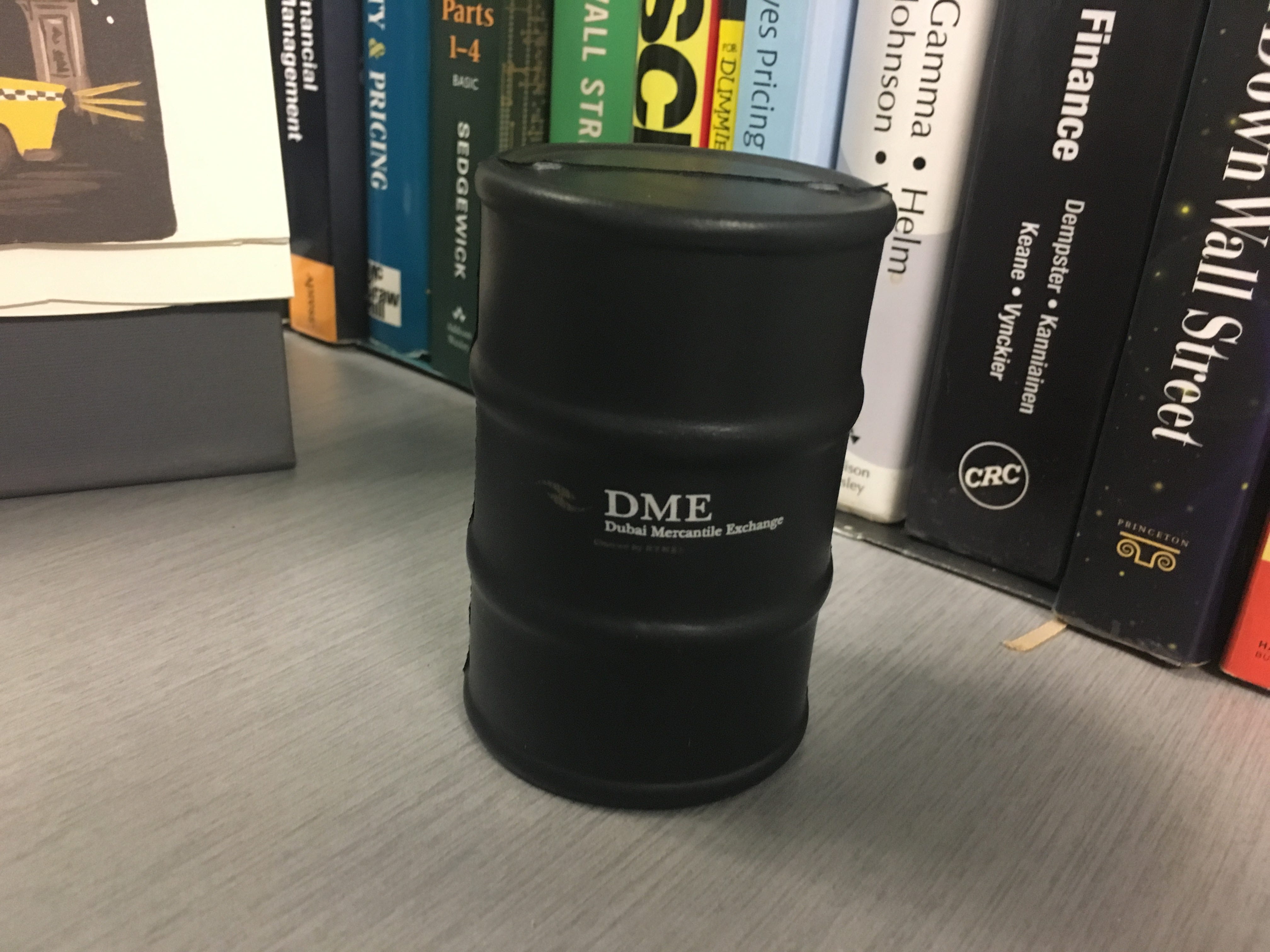
At the end of each paragraph, we go around the room, making sure that everyone gets a chance to speak. We accomplish this with the help of a small oil barrel which serves as a “talking stick” (When you have the oil barrel, you can speak.) There is no formal timer. We rely on the group’s sense of fairness to ensure that the barrel gets passed around equitably.
We annotate the text as we go. At the moment, the organizer types as people speak, but participants are urged to go back and edit, and add more notes and references.
In the interests of encouraging discussion without pre-judgement, we are not attributing words and phrases to individuals (unless they want to identify themselves).
You can see how far we have gone by looking at the annotations and highlighting (bolded text as a paragraph is reached) in the text so far.
New participants are welcome at any stage along the way.
New knowledge of any kind is welcome.
Depending on your interest, you can participate here on Substack as a writer, as a public commenter, or simply as a reader and private commenter. Anish, Herman and myself are the editors (and Substack admins) for the publication. We are easily reachable here and on other platforms.
We are also looking for ways to hold more discussions in public, and to help participants become facilitators. Our original group was very diverse, but over time we learned how to share and reconcile our different points of view.
Subscriptions to Drawing Legs on a Snake are free, and we plan to keep them that way until we get large enough to need an editorial assistant.
The public posts cover Chapter One of The Art of War. You are welcome to use them under the Creative Commons “Attribution, Share Alike” license (this is the license that Wikipedia uses).
Each post contains enough material for a weekly discussion of about 60 minutes in duration.
Retrospective on Chapter One / Next Steps
The posts contain examples that are historical and small in scale, with the intent of getting everyone in the group “on the same page” with the concepts. These are a resource for the facilitator and the participants to fall back on during more intense discussions about politics and business. We are not offering them as deep interpretations of Sun Tzu’s work.
If possible, please consider sharing some of your ideas with us. It’s obvious that any useful discussion of business strategy has to be kept confidential, but we all encounter gems of insight from time to time.
For anyone wondering about the oil barrel used as a “talking stick”, here it is.
We used this foam rubber oil barrel, which the New York Mercantile Exchange gave away as conference swag when it set up the Dubai Mercantile Exchange (now the Gulf Mercantile Exchange). Like it or not, oil is still power. Terrain with oil underneath it is worth fighting over, although this may change as other forms of energy become more important. Future Sun Tzu Reading Projects may use different objects for this purpose.
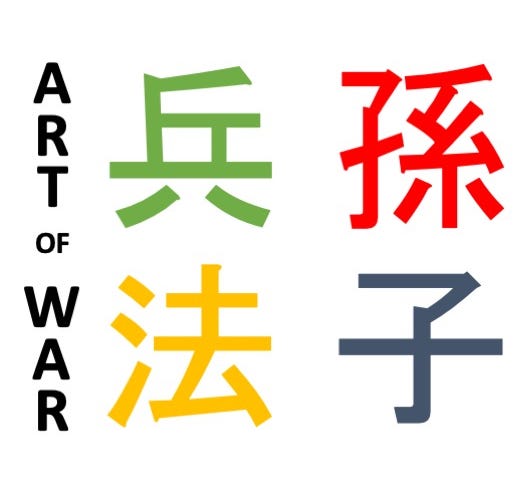
Our primary source is the Chinese Text Project (中國哲學書電子化計劃), edited by Dr. Donald Sturgeon (Chinese: 德龍).
https://ctext.org (for the project main page)
https://ctext.org/art-of-war (for The Art of War specifically)
Dr. Sturgeon has used the Giles translation, which is in the public domain, and available on Project Gutenberg at http://www.gutenberg.org/ebooks/132
English translations of individual kanji are from Jisho.org.
For more information on language resources, see Sun Tzu Chapter One - Laying Plans.
The Wikipedia article on The Art of War gives an overview of the work and its impact.
Drawing Legs on a Snake ( 画蛇添足 ) is a metaphor in both Chinese and Japanese. It refers to an action that adds nothing of value, or an “improvement” that lowers the value of the thing being “improved”.
Its purpose is to remind us that Sun Tzu’s work has been in existence for over 2000 years. It has been translated multiple times into every major language. Scholars have been writing commentaries for centuries. What more could our project possibly add?
Maybe it’s you.
Comments
Nothing yet. Say the first thing.
Sign in to join the conversation.