
Last week I stood in my clinic, pointed at a tangle in my hair, and asked you what you wanted to know about progesterone.
You didn’t hold back. You asked about dosing, about sleep, about why the hormone that’s supposed to calm you down is making you feel like a stranger in your own body.
Progesterone is the most misunderstood hormone in the menopause conversation. Everyone talks about estrogen. Progesterone gets treated like the chaperone estrogen has to bring to the party. That framing is wrong, and it’s costing women sleep, sanity, and in some cases the confidence to stay on hormone therapy at all.
Sixteen things.
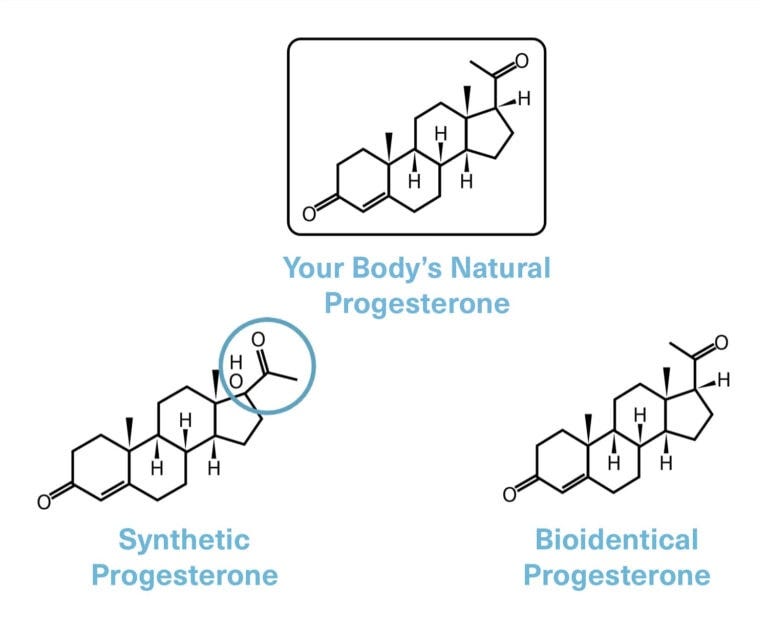
1. Progesterone and progestin are not the same word for the same thing. Progestogen is the umbrella term for anything that acts like progesterone on your uterus. Progesterone is the specific molecule your ovaries make. A progestin is a synthetic look-alike: medroxyprogesterone, norethindrone, levonorgestrel. All progesterone is a progestogen. Not all progestogens are progesterone. That single distinction clears up half your comments. And the progesterone in body-identical HRT is the same molecule your ovaries made. It’s synthesized in a lab from yam or soy, but by the time it reaches you it’s structurally identical to yours.
2. Progesterone is a neurosteroid. Your brain makes it and has receptors for it. It isn’t a reproductive hormone that occasionally visits your head. It’s even been studied as a neuroprotector - It looked spectacular for protecting the injured brain in animals, but then two large human trials in traumatic brain injury came up empty. The everyday effects on sleep and mood are a different story, and those are real.
3. No ovulation, no progesterone. It comes from the corpus luteum, the little structure left behind after you ovulate (think of it like the egg shell that’s left after the egg is released). Skip the ovulation and you skip the progesterone. That’s why progesterone is usually the first hormone to fall meaningfully in perimenopause, while estrogen isn’t politely declining but swinging, sometimes higher than it ever went in your thirties. Your estrogen-to-progesterone balance tips, and your body notices, long before estrogen leaves the building.
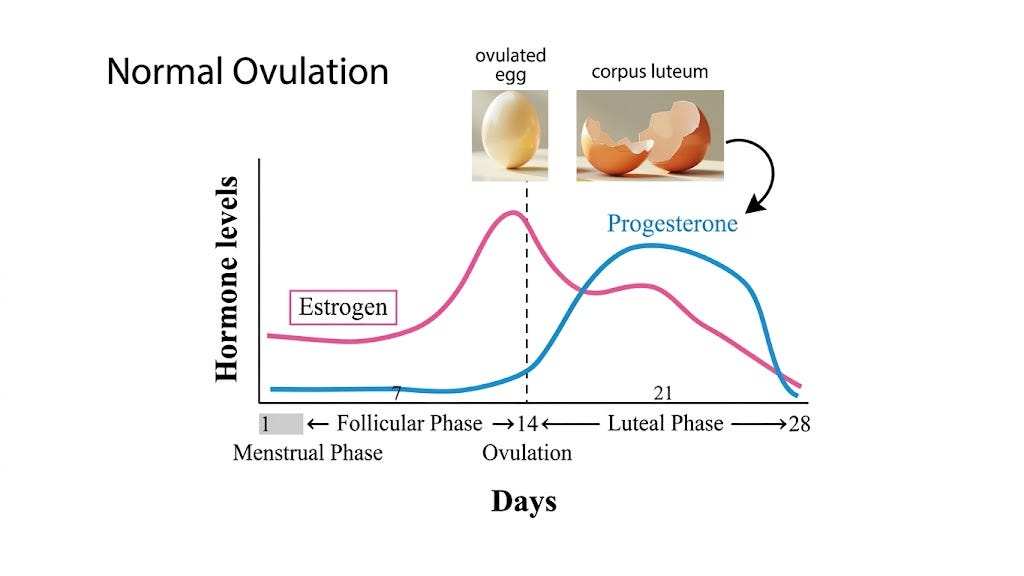
4. Which is why perimenopause often shows up as insomnia and flooding instead of hot flashes. If you’re 43, still cycling, wired at 3 a.m. and bleeding like a crime scene, a progesterone that quietly checked out is a prime suspect. Plenty of women get hot flashes early too. But hot flashes are the symptom everybody’s watching for, which is exactly why the earlier ones get missed.
Comments
Nothing yet. Say the first thing.
Sign in to join the conversation.