
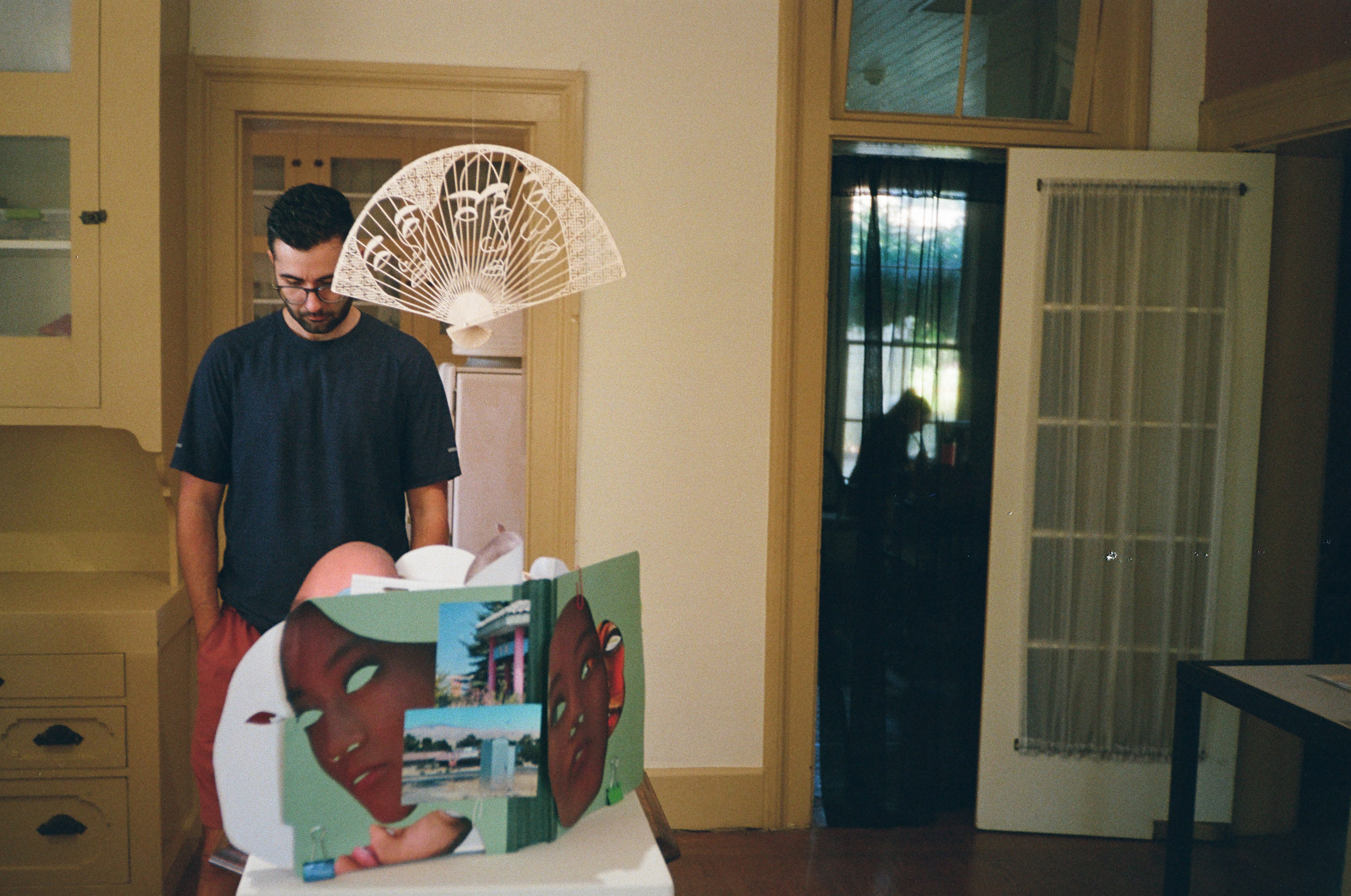
A rumination in four parts: Juxtaposition, Scale, Reflection, Reprise
JUXTAPOSITION
The dry, dusty heat of the central valley in late september pillows into our noses and throats as we unroll the car windows coming down off the highway; climate change summer drags inexorably onward. Approaching the victorian house museum on a quiet tuesday, the eerie silence of plantation architecture speaks layered histories of displacement, destruction, enslavement, colonization. The red brick masonry recessed behind a double-height white colonnade foregrounds a wraparound second-floor balcony, the horizontal white railing denoting a panopticon vantage. Tall white window and door frames stand upright against the dirt drive and flat expanse of grass stretching toward the street. The bare architecture has much to say about conquest, capitalist accumulation, brutalized bodies—of severed relationships between a people and the land.
Even as I remark to JB, “this is very Get Out,” the imagery on my mind is less the Jordan Peele from which that colloquial shorthand is borrowed, but Ryan Coogler’s Sinners. I’m recalling Coogler’s careful depiction of Chinese communities in the 1930s Delta region of the American South,1 portraying both Afro-Asian solidarities in segregated Clarksdale Mississippi and Asian-American complicity within white supremacy. Coogler employs the supernatural, the vampire, as a multi-pronged allegory for the overlapping losses and violences of one racial group against another. I’ve recently re-read both Dionne Brand’s A Map to the Door of No Return2 and Noam Keim’s The Land is Holy,3 two books that elucidate lines between migration and movement, between diaspora and displacement. Dionne Brand, writing on belonging and origins and the Black body, quotes Guyanese writer Wilson Harris,
“It is not a question of rootlessness but of the miracle of roots, the miracle of a dialogue with eclipsed selves which appearances may deny us or into which they may lead us.”
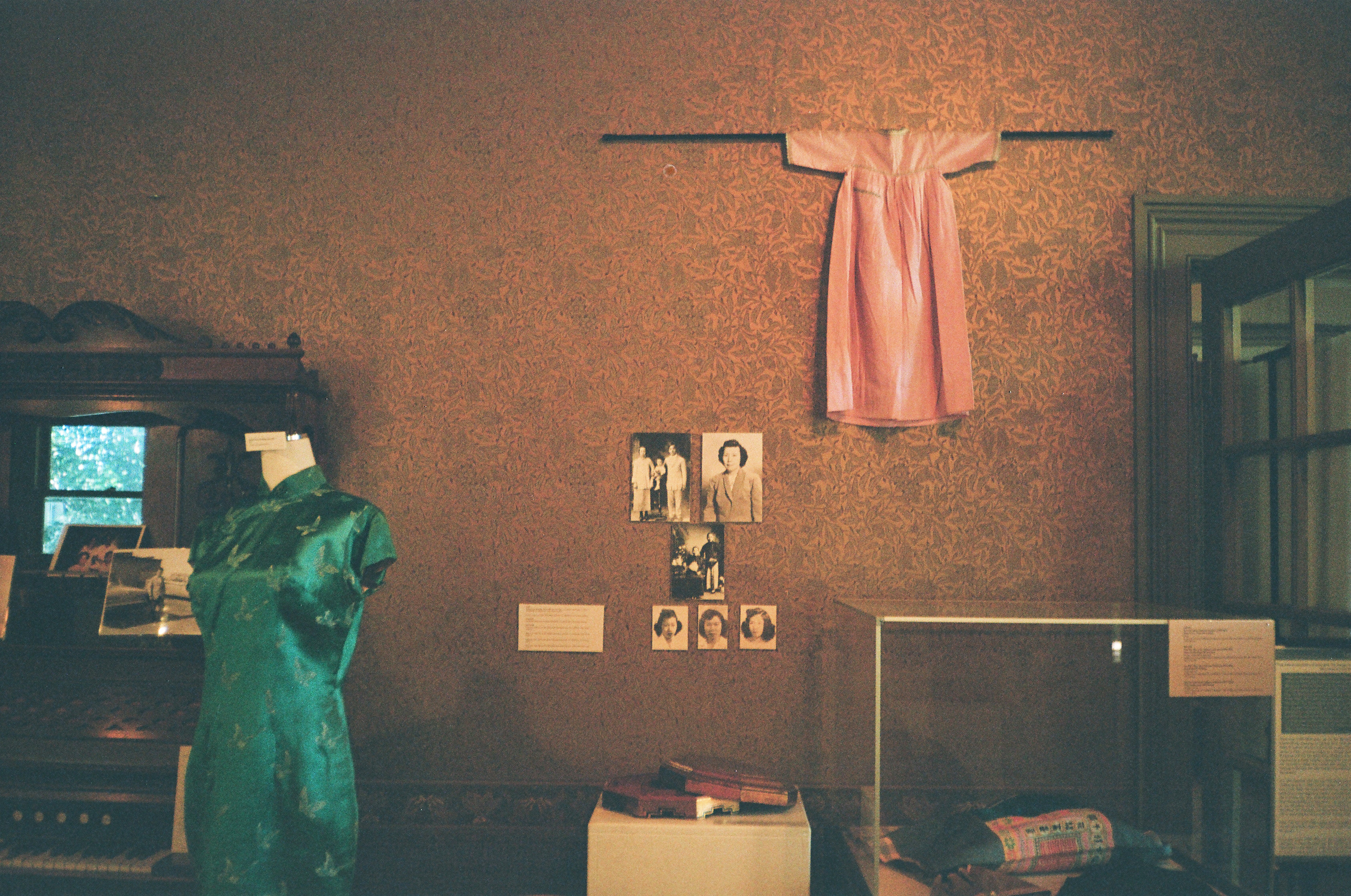
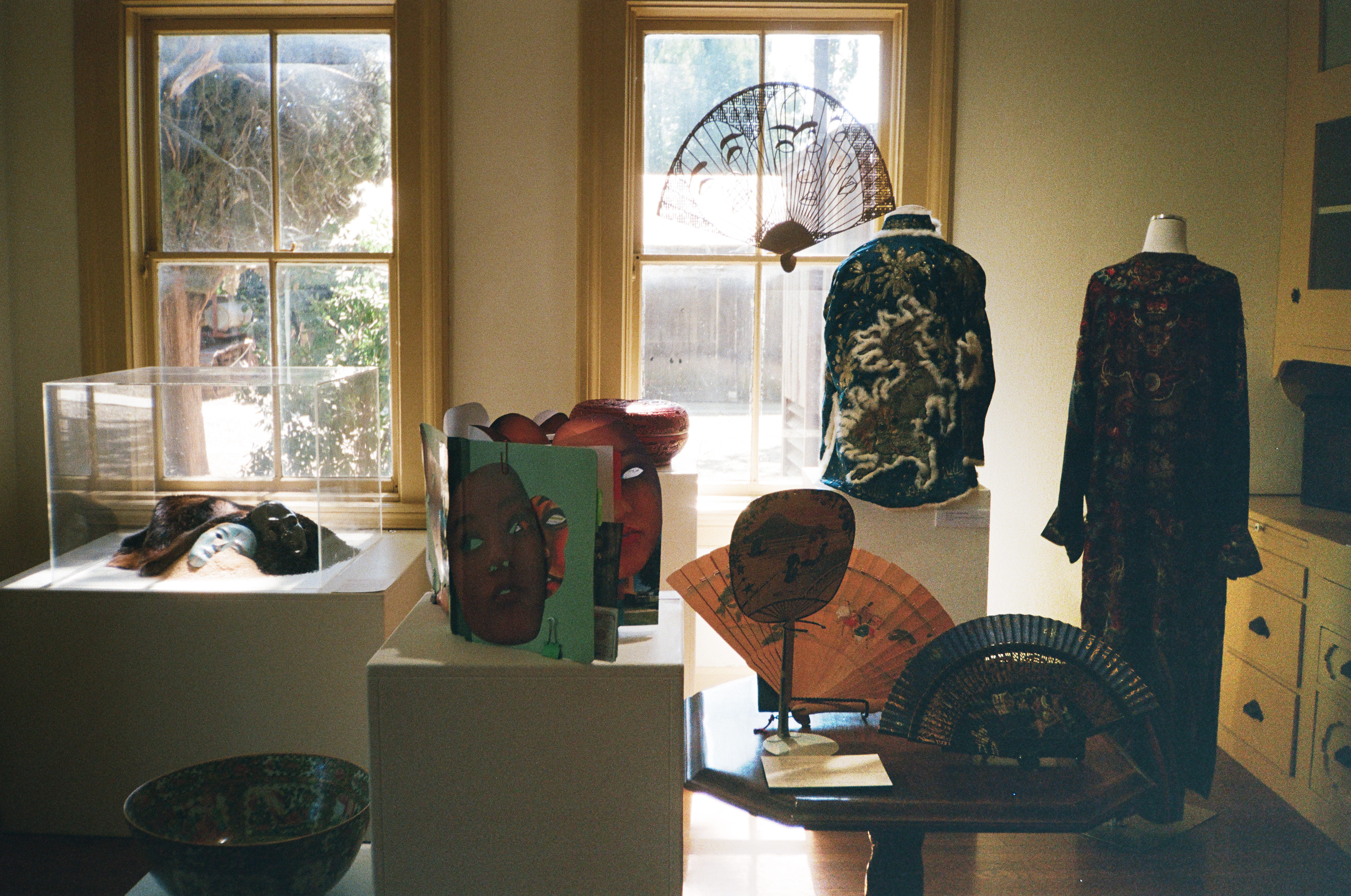
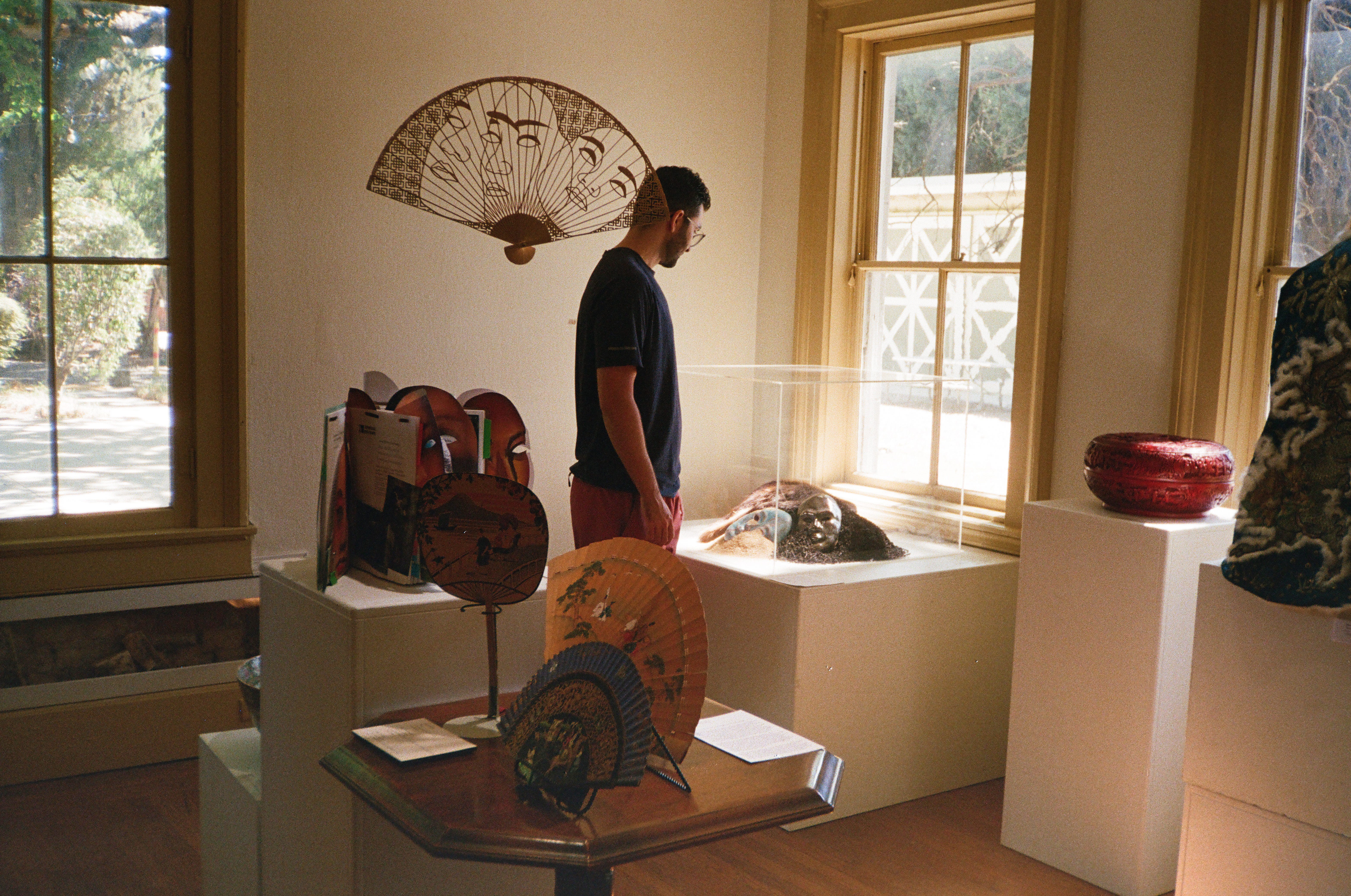
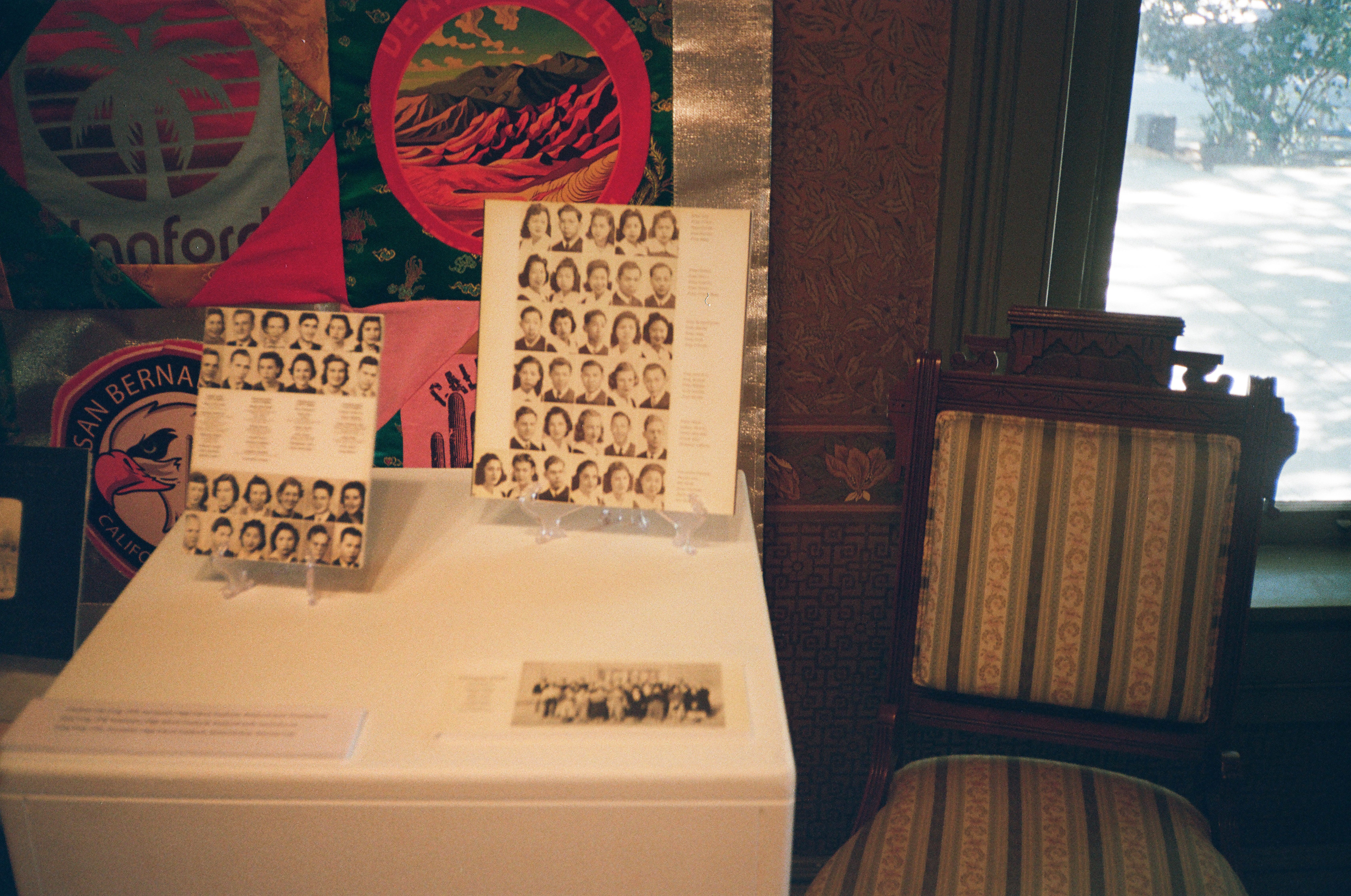
Inside the house museum, victorian era objects, textiles, and materials fade into the background until quite suddenly they don’t; the backdrop of whiteness is a presence in itself. We look closely at yearbook photo reproductions featuring several rows of Fong family members in early 1900s Yolo County, and JB immediately clocks a classmate, recognizing with easy immediacy familiar features and his own roots, an Armenian face alongside the Fongs. Perched on marble side tables with beveled corners, placed on a wooden parlor organ, framed against gaudy wall coverings and the patterned upholstery of wood-backed parlor furniture, the Fong family’s belongings and the artist’s own works orchestrate a careful dialogue, construct an object world. “It’s very disruptive,” JB remarks of this calibrated juxtaposition, “like, I saw this stuff, the victorian stuff, going into museums growing up.”
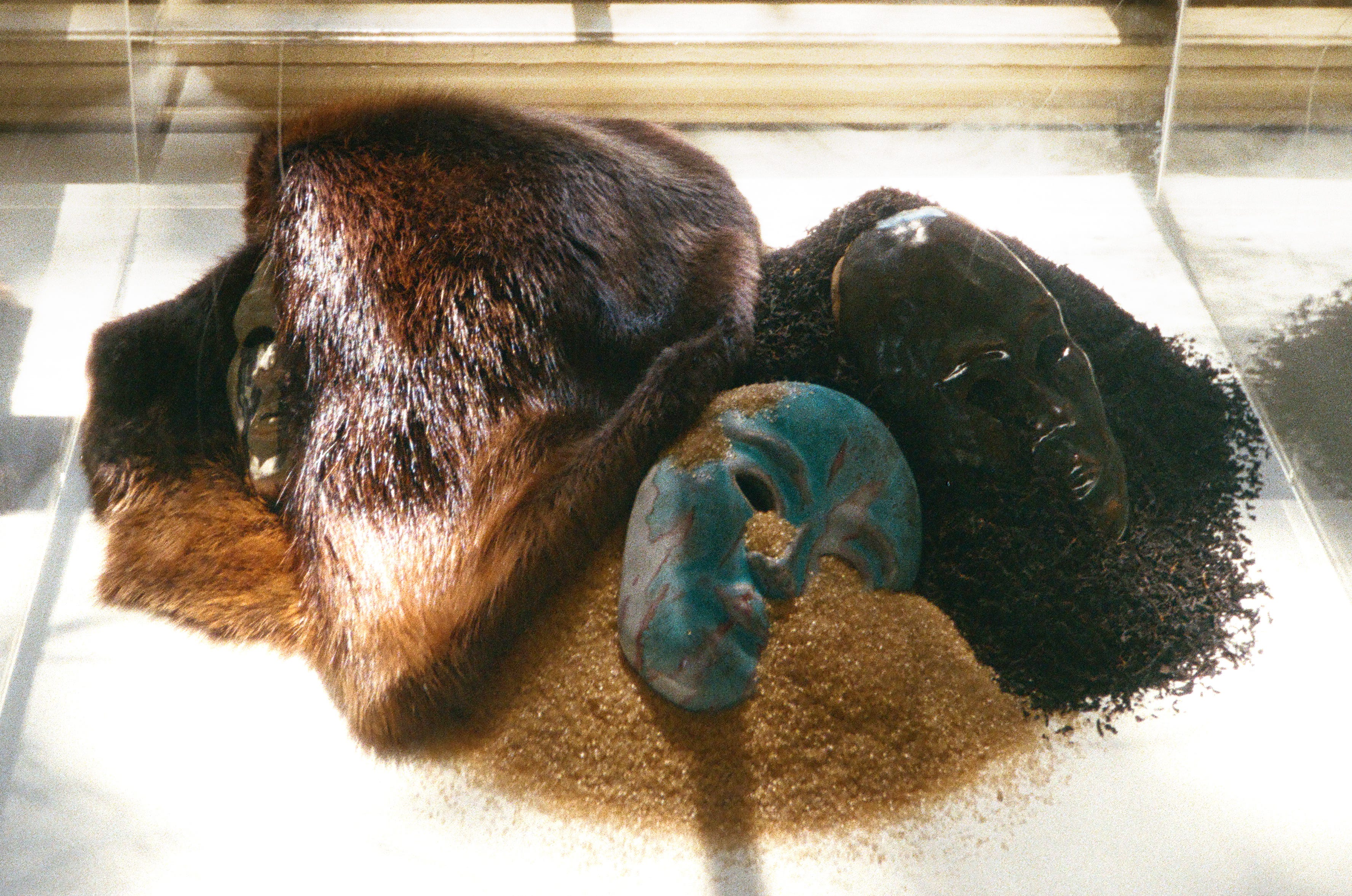
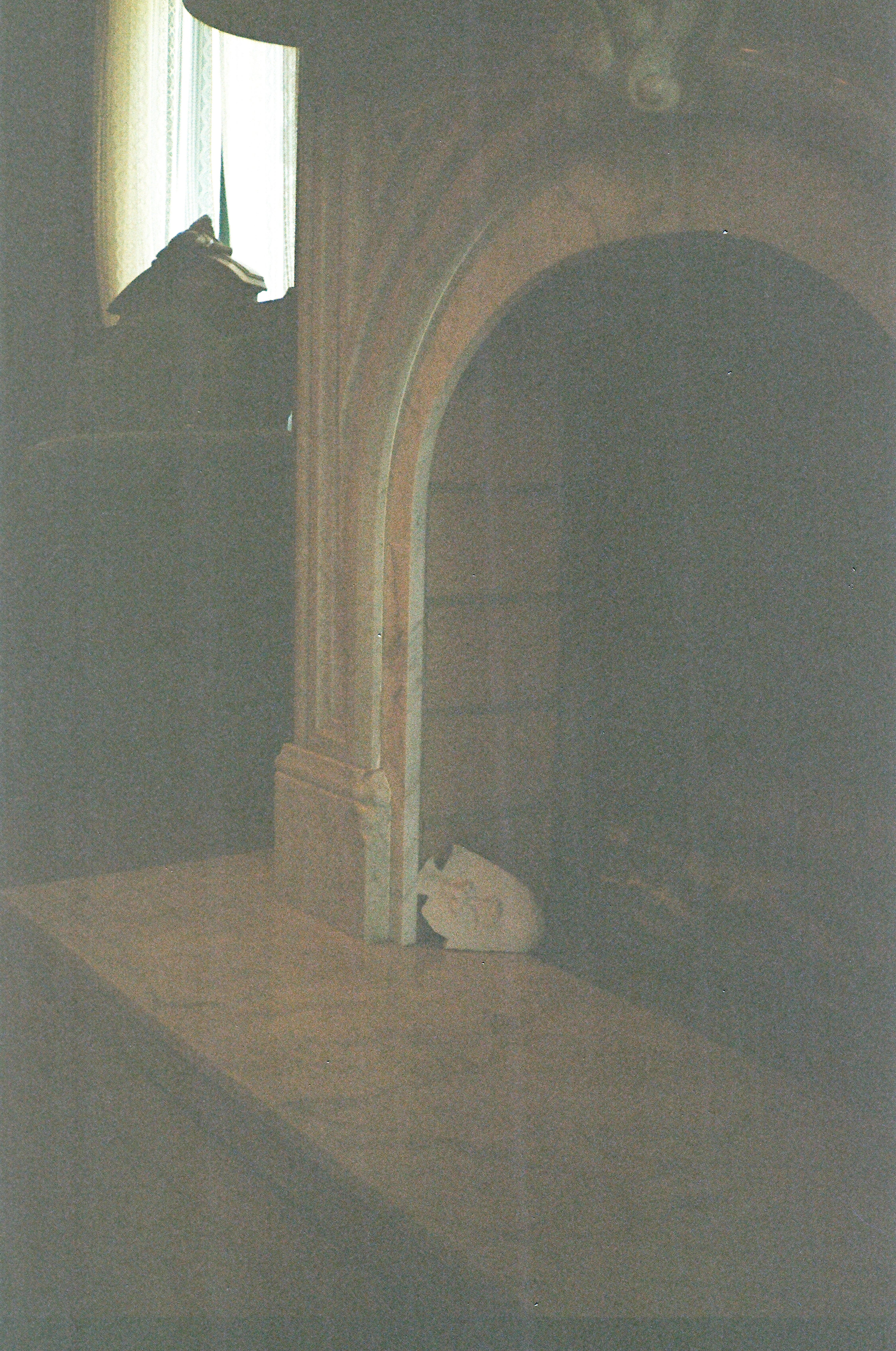
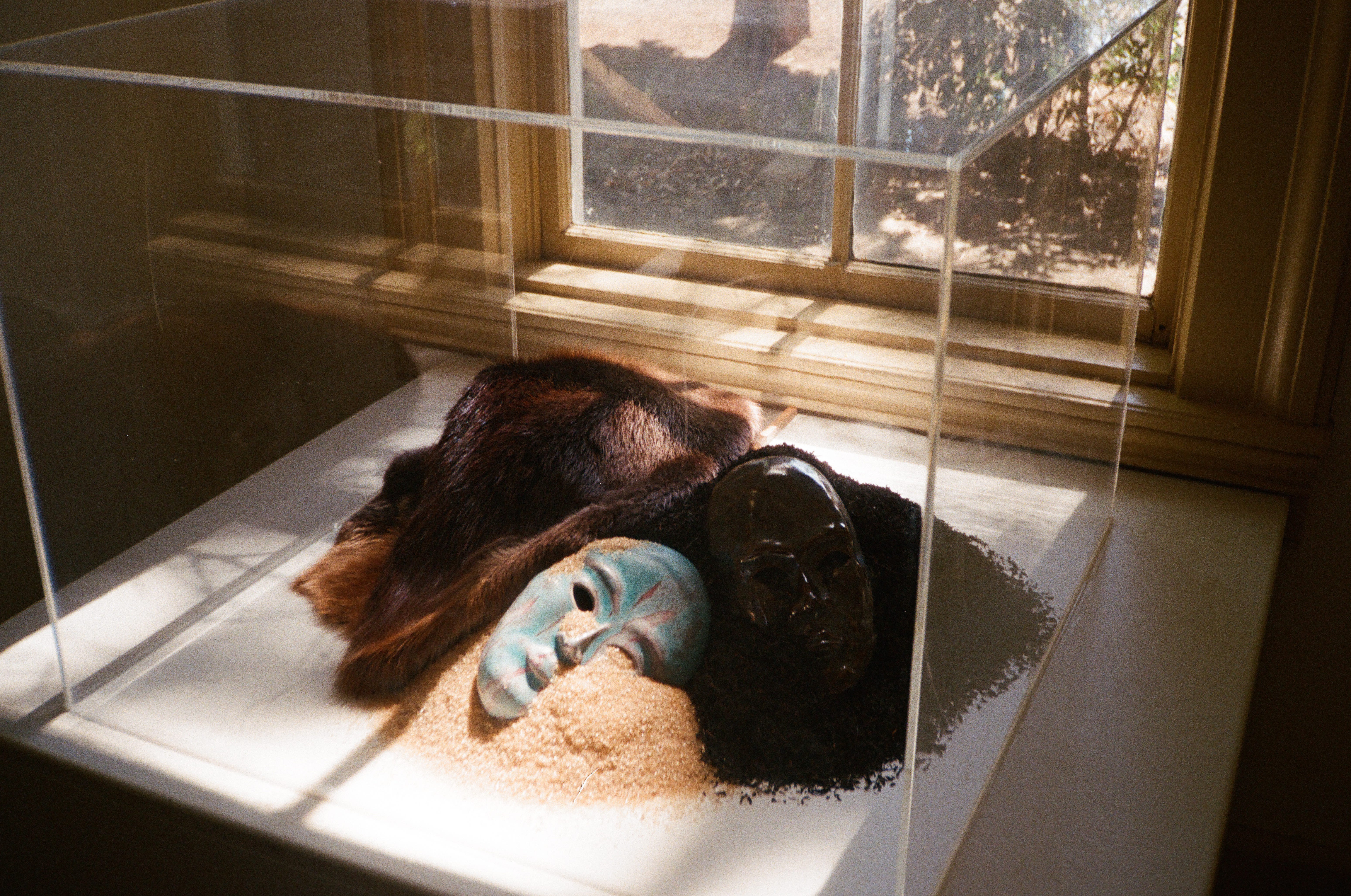
The raw edges, textural adjacencies, and physical abutments train my eye toward both obvious contrast and an uneasy synchronicity between the artist’s work, the Fong family’s belongings, historic documents of Chinese communities in the central valley, and the victorian era furnishings and details. Ceramic tangyan and jiaozi constructed by the artist are placed side by side with Fong family photographs, dresses, jewelry boxes, a “certificate of medical examination” permitting Fong Yee Young into the port of San Francisco in 1930. Ceramic masks giving the artist’s face reside in crevices and corners at dispersed locations, haunting the domestic interior. Of the weighty precision and intense intimacy of this object world, JB describes “reading about the ways that people have been systemically excluded, and then turning and seeing the ridiculous opulence of this plantation architecture.”
SCALE
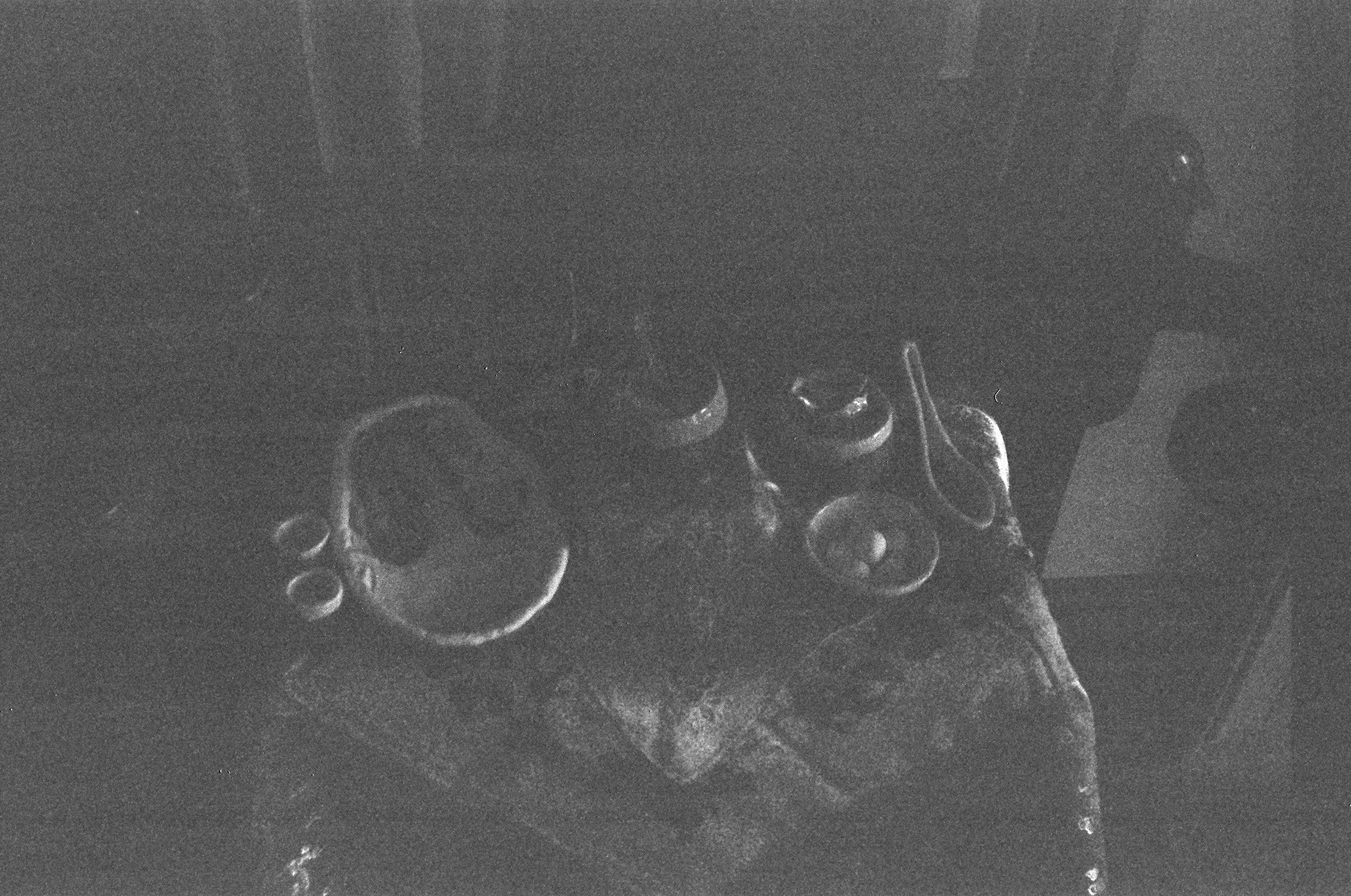
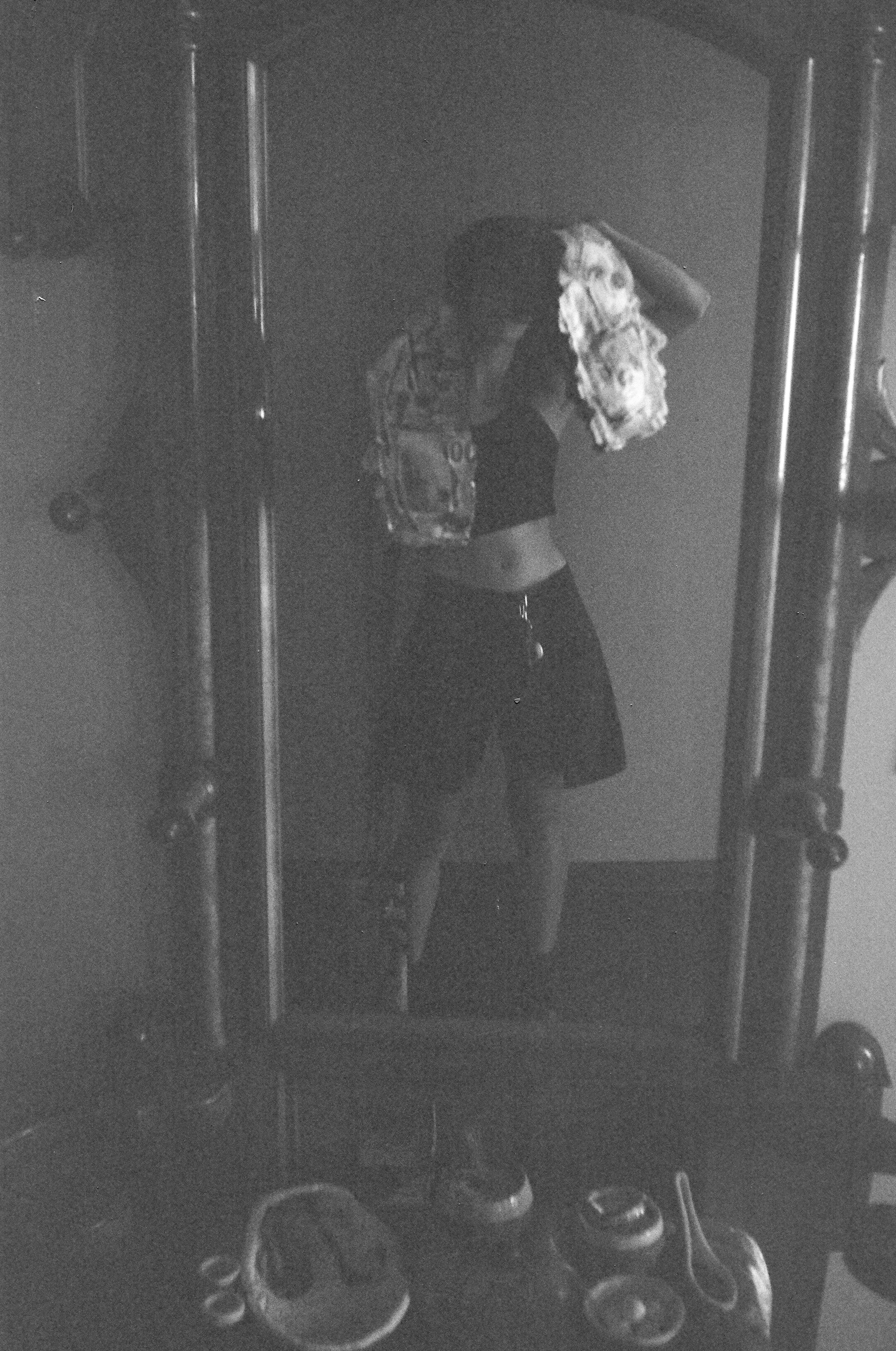
The intimacy of the domestic interior compresses my body upon entry. The path of the exhibit opens to the left and to the right through glass-pane doors, but the first encounter is a victorian era hall tree repurposed as an altar that gives face, pays respects, shows honor, to Chinese ancestors in the American West. This first mirrored surface confronts the visitor through a layered materiality: joss paper, ceramic, incense, paper, oranges grown in the San Joaquin Valley, and textiles including a silk paisley hankerchief, Kokum scarf, kufiya, Chinese brocade, and spandex. The palimpsest presented here collapses private and public, small-scale lineages and large-scale histories, through specificity and multiplicity, an effect heightened by the range of objects interspersed with the artist’s work across the house. This curation includes family belongings and objects left behind, artifacts through which Chinese communities have impacted Yolo County.
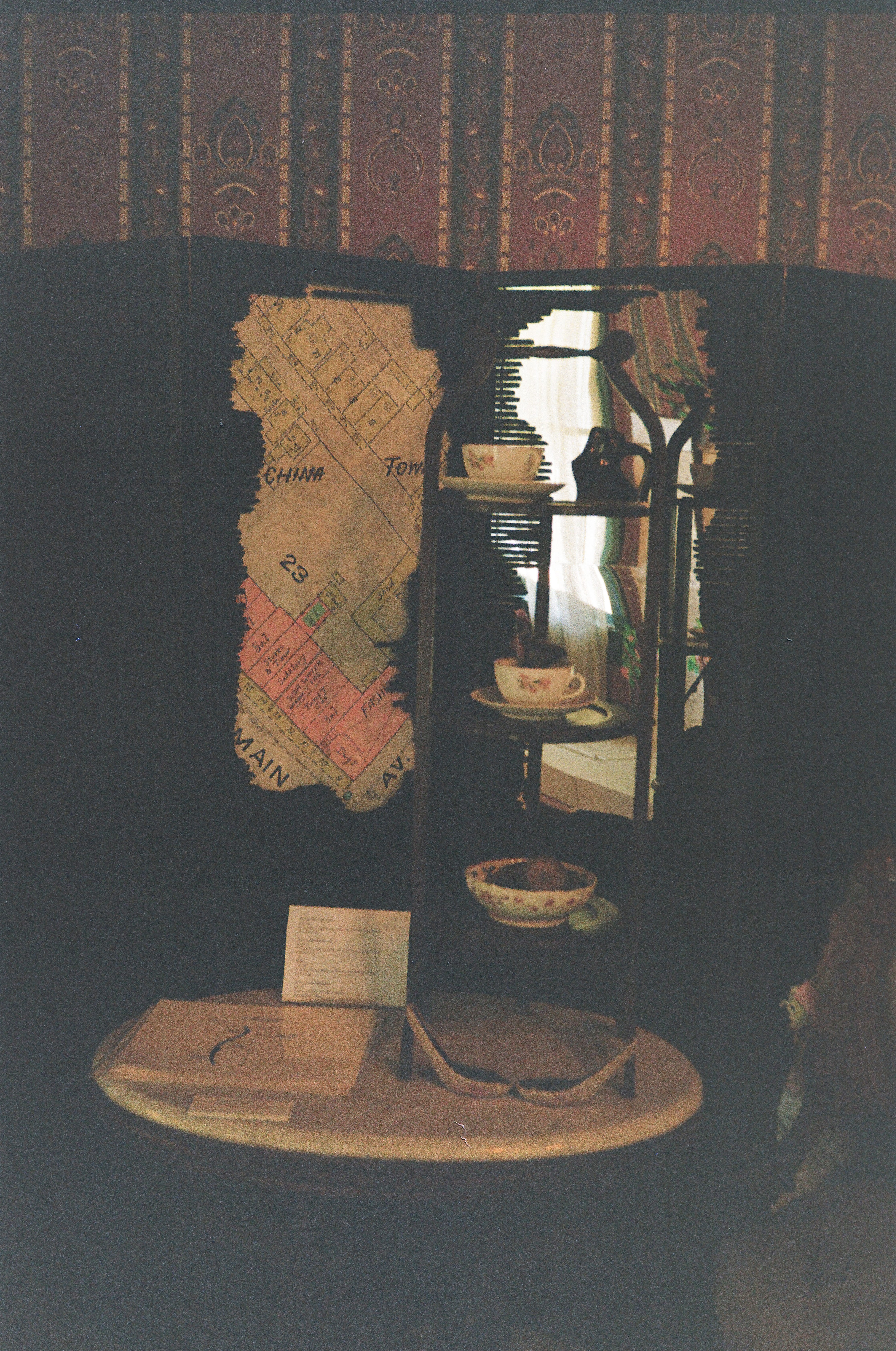
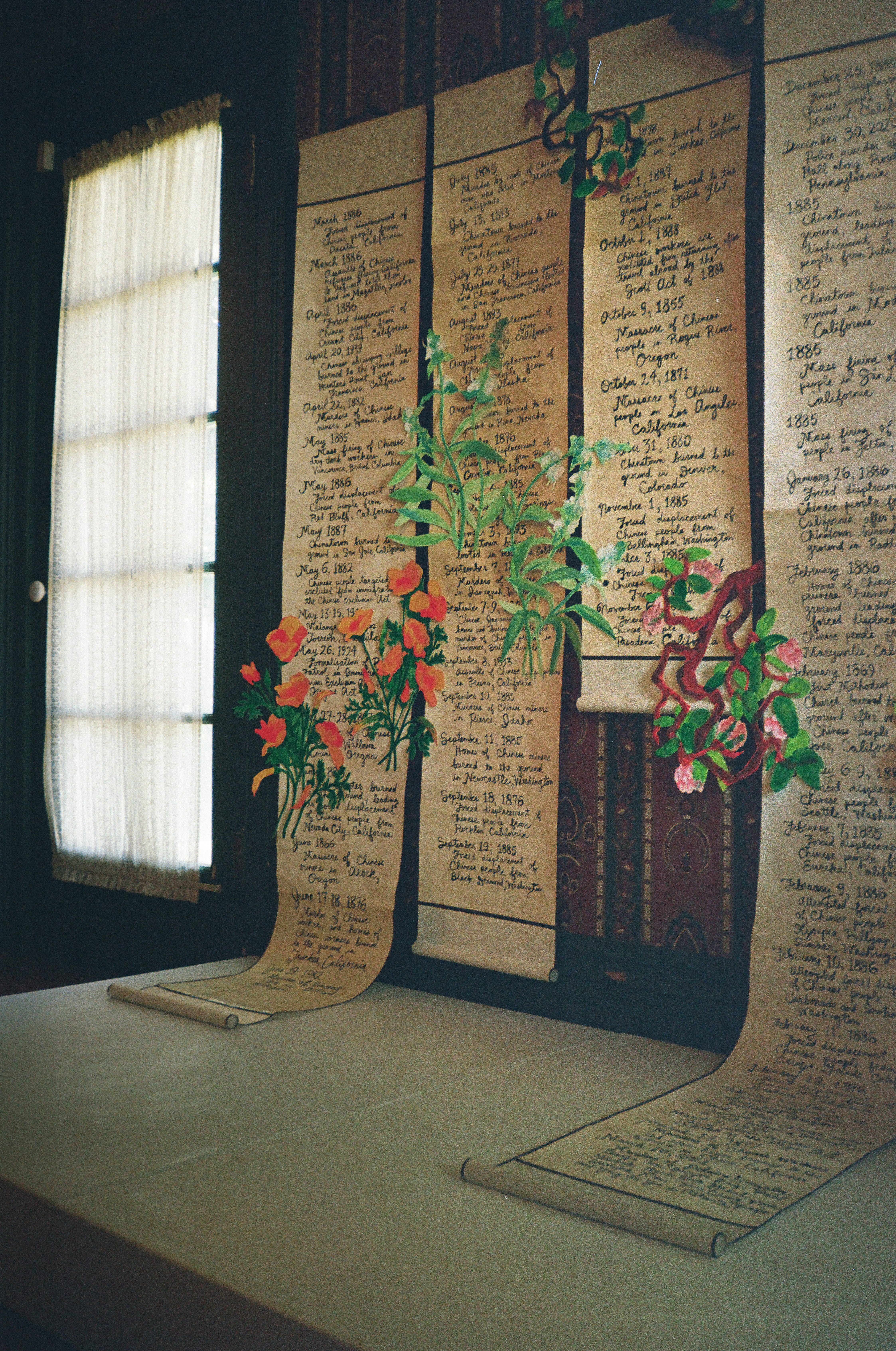
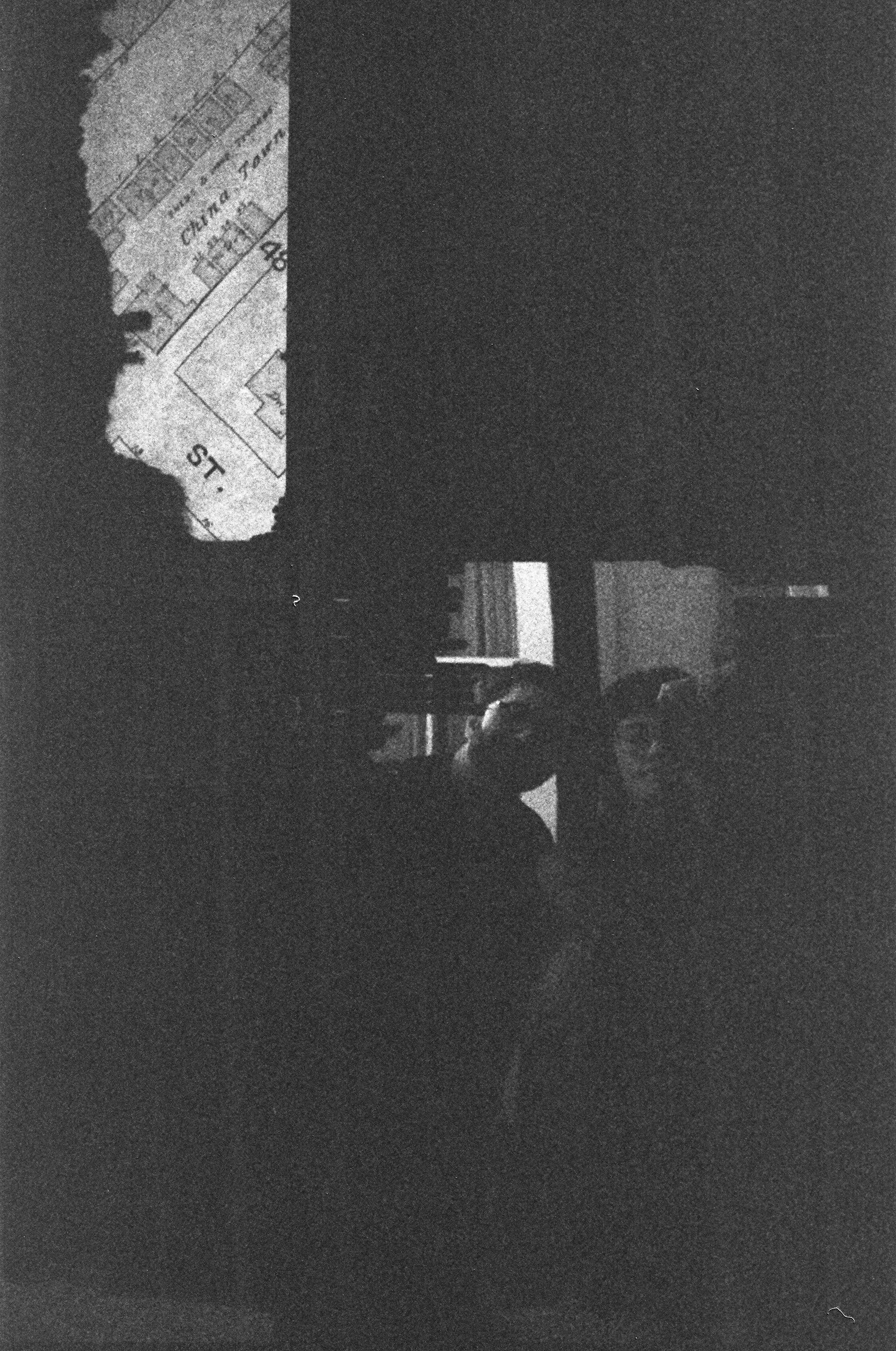
As a visitor, the relatively small building footprint makes this object world feel almost digestible, accessible, until you get close enough to make out the details, perceive all the coincident layers and their wide-ranging implications. In tiny white lines drawn carefully in correction fluid over almost-translucent mulberry paper pages of beige and yellow Sanborn Fire Insurance maps, the artist has rendered buildings to represent and restore Chinatowns that have been purposefully displaced or burned to the ground. This minute intervention is so tiny and precise in scale, yet spans long distances to represent the physical structures of Chinatowns across California. The detail becomes emblematic of a larger whole through this articulation and record-keeping of largely-forgotten, undervalued, or actively-invisibilized histories.
I consider the definition of scale [n.] while walking around the house, the proportional relationship between a drawing or a model and the real-world object, but also, an instrument or machine for weighing. This piece that restores Chinatown’s buildings, Píngfēng 屏风 / Píngfēn 评分 (Screen Wind / Keep Score), is another clever wordplay through homophone, juxtaposing “Píngfēng 屏风 screen wind” with “to mark or keep score (Píngfēn 评分),” documenting what might otherwise be forgotten. At the small scale of my own body, I consider the distance traveled from mine and B’s northeast LA neighborhood to another former home we share in common, the East Bay, Oakland and Berkeley, on the way to this little house. I recall walking with B through Death Valley three years ago now, in the spring, looking for traces of Chinese communities in the placards that describe the lodgings of Chinese laborers, locating mahjong tiles and soup spoons at that small museum in the Mojave Desert.
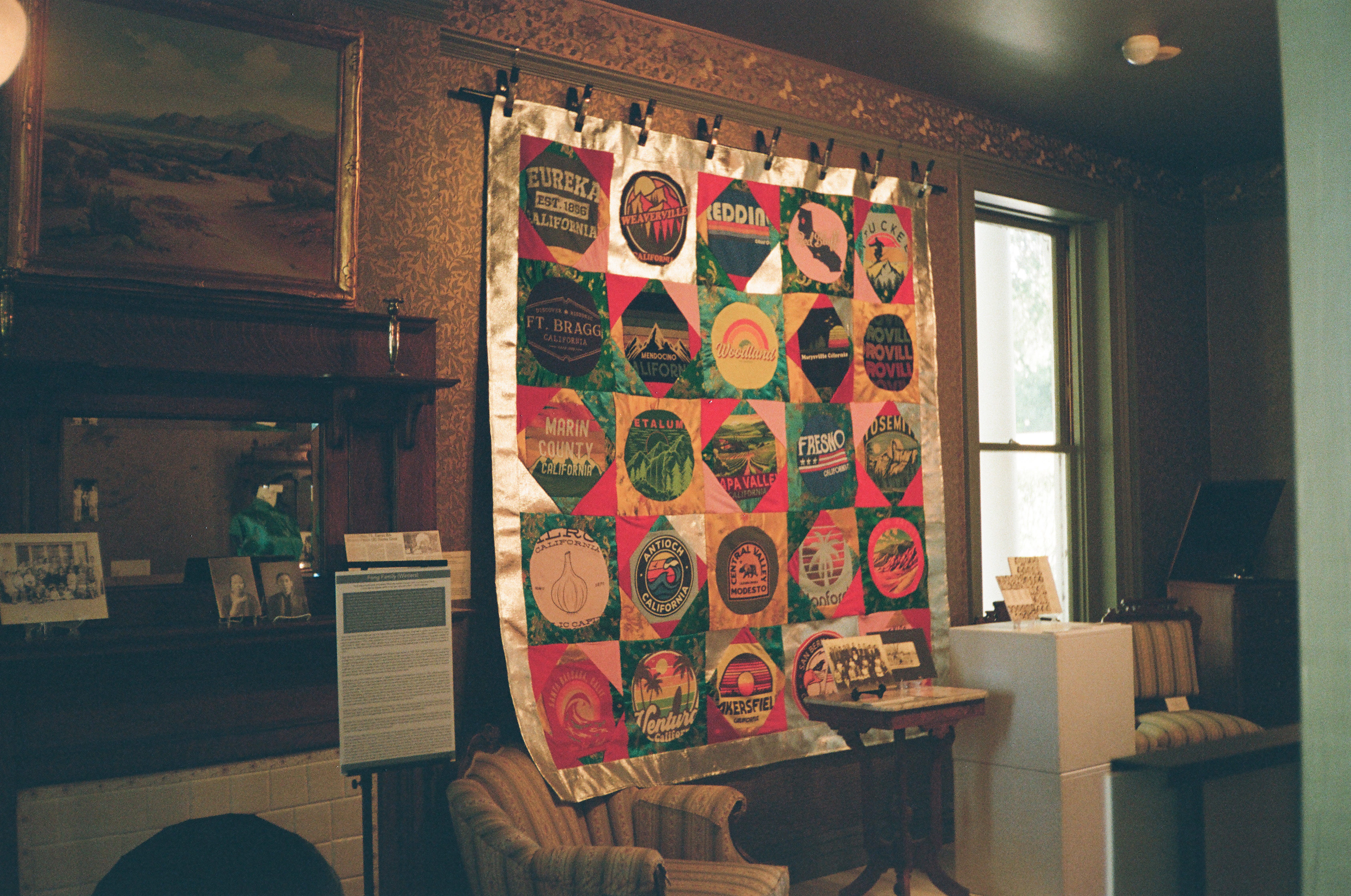
The weight of layered histories and overlapping narratives engulfs this small space, a crashing wave of personal family stories that, in their specificity, nonetheless tell a broader story of something labeled foreign and rendered familiar, of Chinese diaspora across California and the Americas. On placards across the house, the artist carefully cites scholars and cultural theorists who trace these broader stories: Anne Anlin Cheng,4 Lisa Lowe,5 Fred Wilson,6 Saidiya Hartman, among others. Threading a fine line that avoids false equivocation or the displacement of one struggle atop another, these citations weave together stories of loss and fights for liberation through historical connections, parallels, similarities, and distinctions.
REFLECTION
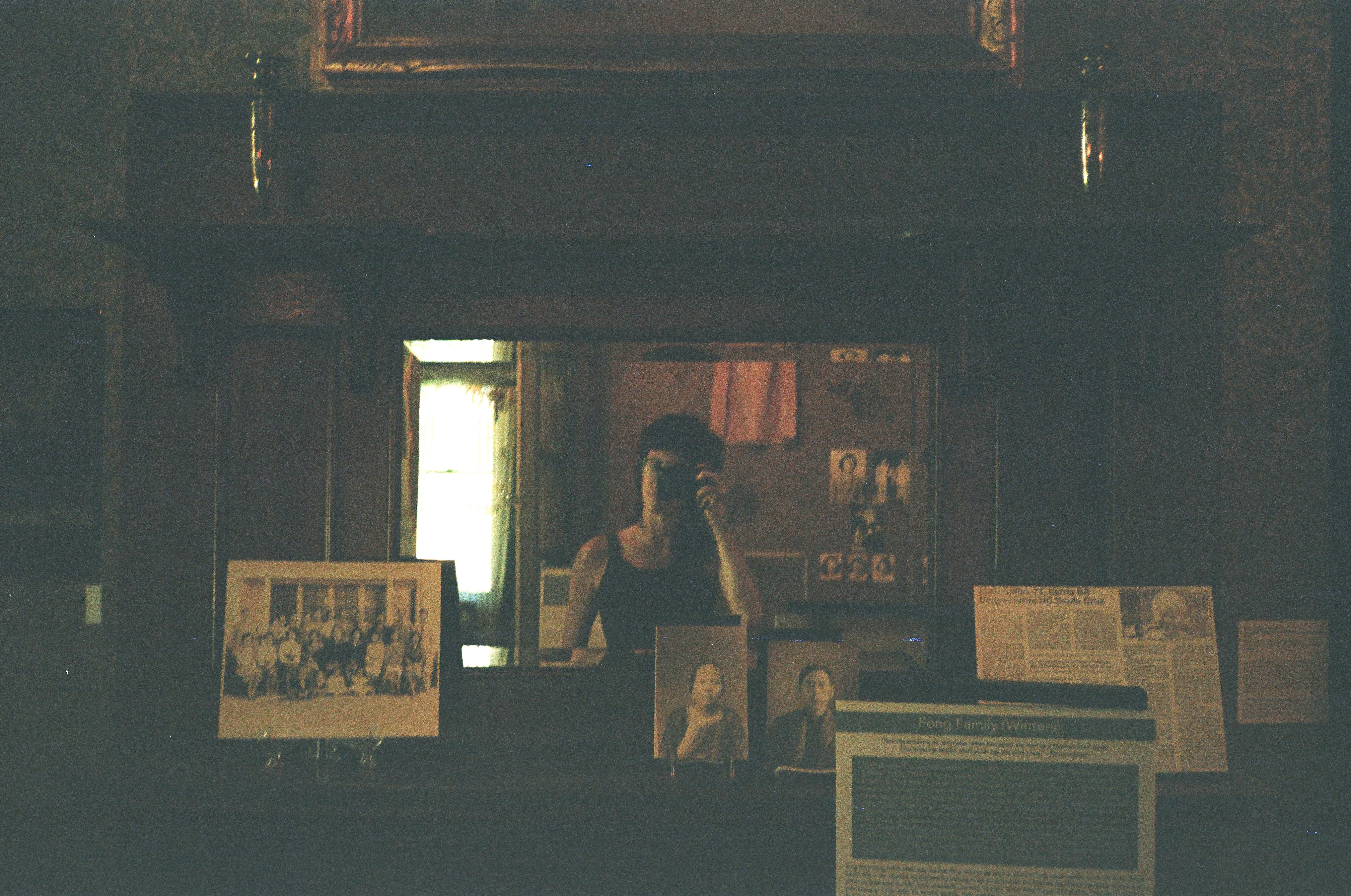
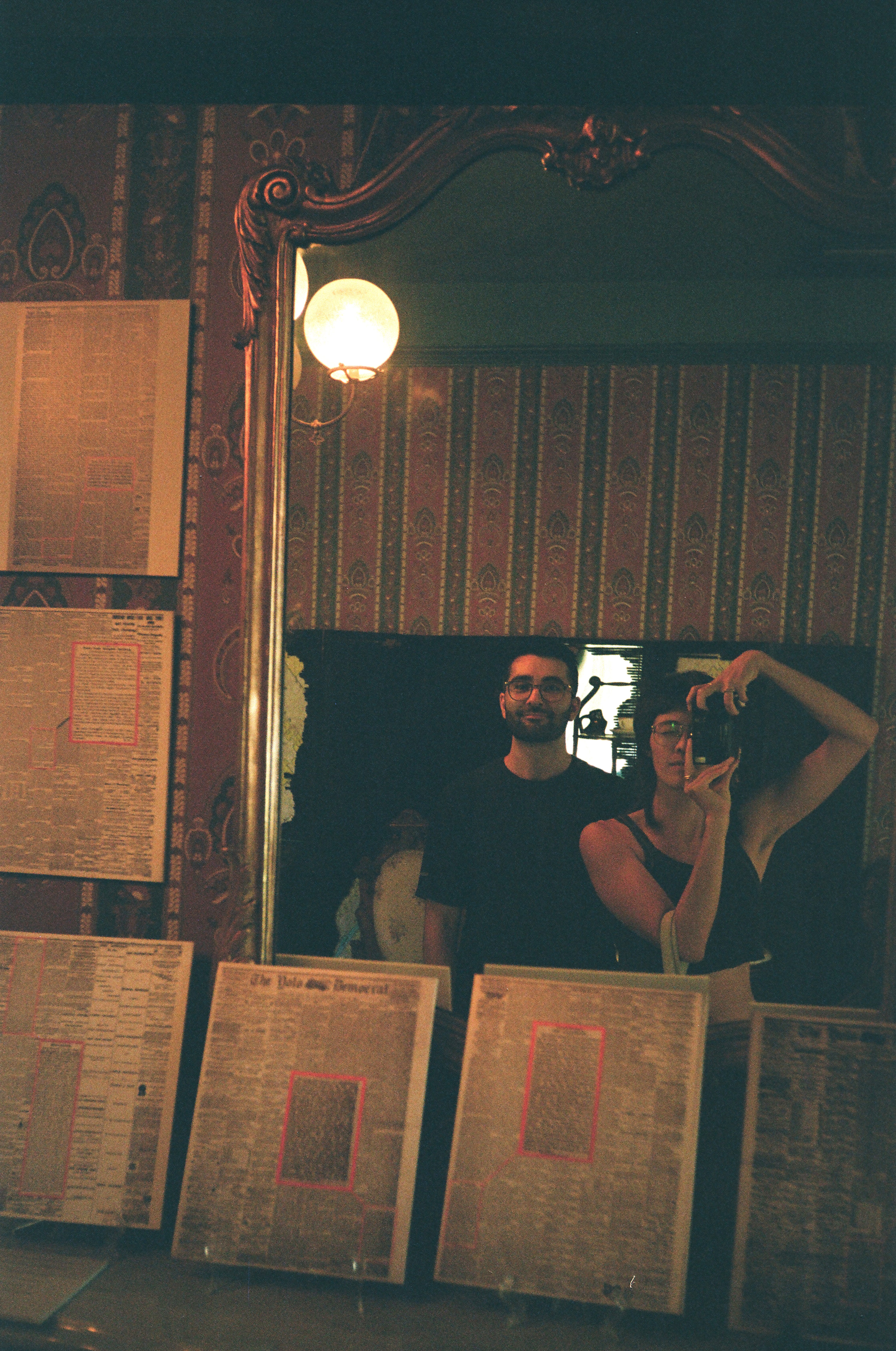
In every room, the visitor is confronted by mirrored surfaces and planes of variously reflective or transparent quality. When I first catch sight of my own face in the picture plane recessed behind the early 1900s photographs of the Fong family, the wedding dress brocade in an electric-bright shade of teal cerulean lines up with the same brilliant shade of blue brocade in B’s Bǎijiā 百家 / 百加 (Hundred Families / Hundred Californias) on the facing wall. The placement of mirrors strikes me as both incidental and careful—a product of the preexisting domestic arrangements of the victorian home purposefully manipulated to tell the stories of labor and trade undergirding these material realities, requiring every body present in the space to situate themself and their own family lineage in dialogue, in context, with the stories told by this object world.
The 1964 date on a placard detailing Rachel Jacaban’s marriage into the Fong family catches my eye: “Because Rachel was not Chinese, there were some who had issues with them getting married. Back in China, Luke’s mom sought to show her support. She had a traditional Chinese wedding dress made for Rachel and sent to her in California so that she could at least have the proper Chinese dress for their wedding.” I think of the 1967 Loving vs. Virginia court case, which struck down state laws banning interracial marriage, a date that my parents commemorate with the same regularity as their wedding anniversary. I picture my mom, blond-haired and blue-eyed in a bright red cheongsam on her wedding day. I imagine Rachel one generation before, of mixed Filipina-Japanese descent, in this blue brocade. My mind wanders over dresses, thinking about my dad’s mom, my 人人, my yingying, who owned a bridal shop in South LA in the 1980s. My mom would accompany her to “the market” downtown in the Fashion District, helping peruse the booths and order dresses.
One ceramic bowl on display marked “1870s” from the “Yolo County Historical Collection, gift of Glen D. Ruiz” features a familiar scene, the same assortment of figures and same color tones, ornamented floral edges, and textural details as a ceramic garden stool in my parents’ yard. Looking at remnants of Chinese pottery found in Yolo county’s museum archives, I almost inexplicably think of John Birdsall’s writing on the closeted life of decorated chef James Beard, whose cooking is still widely regarded as some kind of US American ideal. Birdsall details that the Beard family’s Chinese-born cook, Jue Let, enormously impacted James Beard’s understanding of food.7 Almost immediately, the recollection of this undervalued historical detail points me toward the recorded link between railroad track infrastructure in the American West8 and the proliferation of Chinese restaurants.9 Many of the reflective elements in this object world are less materially literal than a mirrored surface.
REPRISE
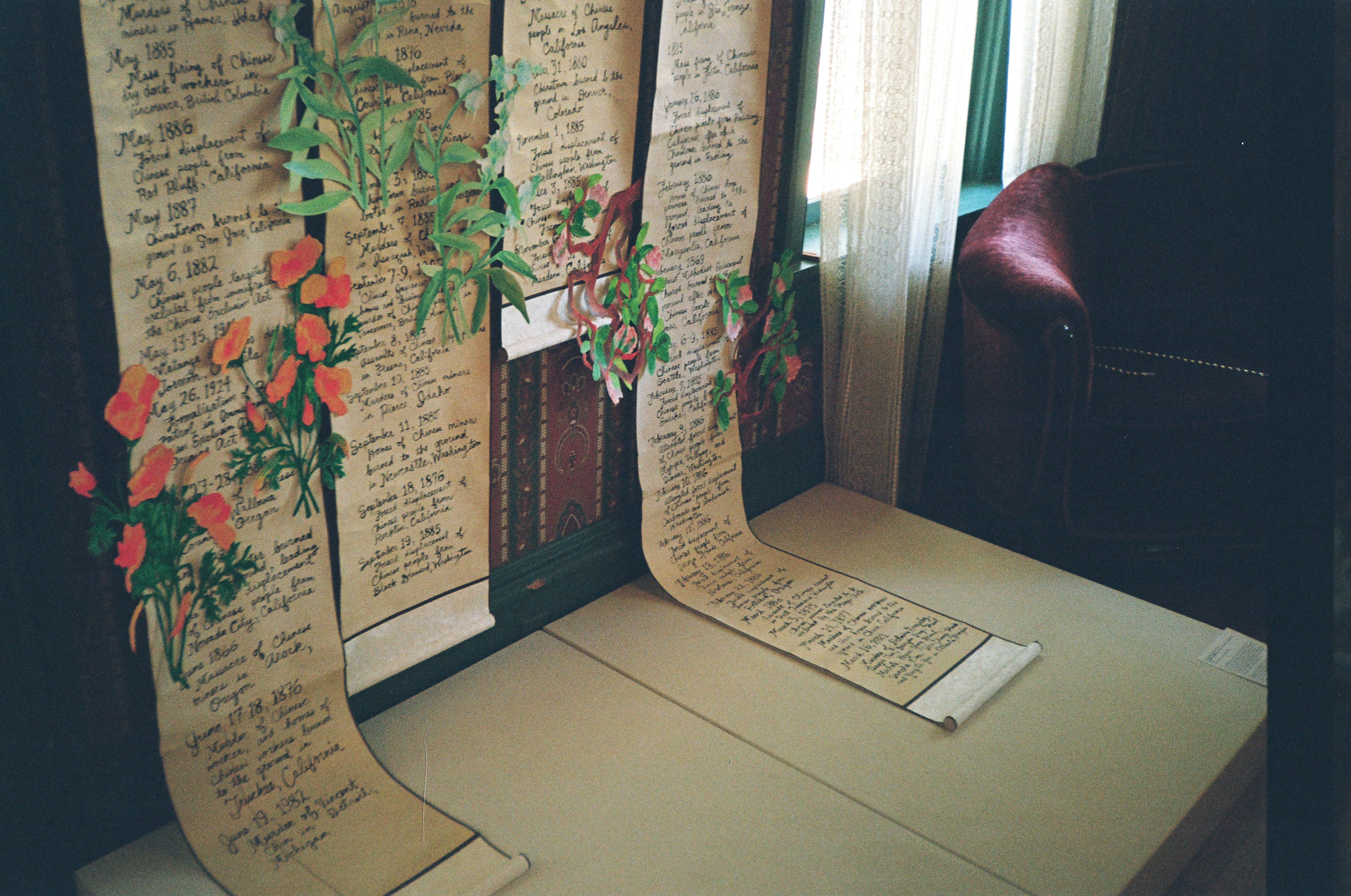
Crouched in front of the Sìjì 四季 / Sǐjì 死忌 (Four Seasons / Death Anniversaries) scroll paintings, I remember the location of my physical body during the spa shootings in Atlanta.10 I was living alone in West Philadelphia that spring, a sheet of snow still covering the rooftop out the window of my one-room apartment. I remember the text that VM sends me the following day, from California, asking if there’s anything that I need, letting me know that she’s thinking of me. We’re in a book club together at the time, reading Anna Tsing’s Mushroom at the End of the World and Overstory by Richard Powers, James Baldwin’s Another Country and Izumi Suzuki’s Terminal Boredom with PF, AO, and a far-flung, motley group of friends and comrades, all of whom once lived in Philly or still do—another former home shared between myself and B. I remember the sharp uptick in sinophobia when T and I would walk around our New Jersey town during the pandemic lockdown that spring and summer, registering surprise at the small scale of my own body, grown up so close to Torrance, Hawthorne, and Gardena, a short drive from the ethnoburbs of the San Gabriel Valley.
As I read that March 16, 2021 entry written in B’s exacting hand, on this ledger of anti-Chinese murders and massacres across the Americas “Delaina Gonzalez, Xiaojie Tan, Daoyou Feng, Paul Andre Michels, Hyun Jung Grant, Suncha Kim, Soon Chung Park, and Yong Yue in Atlanta, Georgia,” I abruptly come up against a different memory—gathering with EL, T, M, J, K, and RK on January 21, 2023 for dim sum to ring in the lunar new year at a favorite haunt in Monterey Park, and afterward, squatting on trapezoidal parking curbs in the strip mall parking lot for bao, sweet taro pastry, and egg tarts. I remember waking abruptly the next morning, the way it felt to hold each other in the aftermath of the deadliest mass shooting in the history of LA county,11 barely ten hours and four city blocks away from where we had just sat together eating siu mai and har gao, plates of gai lan and noodles, enough dumplings and zongzi and jian dui to keep us full for days. I recall my first lunar new year back in LA since childhood, four years ago with B on the beach, dressed in red and telling stories of family. The simultaneity of carving out a deep belonging to this place and to each other, that feeling of safety in gathering, and the precarity of that placeness, the shattered feeling, stays with me, home-grown in the heart of empire, second-generation american-born-chinese.
The seasonal shift from summer to fall hits my body more forcefully this year, B’s paper collages of California poppies, white sage, coast live oak, and manzanita blooming, fruiting, moving, shifting. I can feel the weight of the spring and early summer months when we patrolled Home Depot parking lots daily; held clandestine meetings in entirely public spaces and hosted public meetings in entirely domestic interiors on weeknights and weekend mornings; relied on connections organized last year at the encampments to carry us downtown together, to protest the presence of the national guard, to resist the ongoing raids; the winter months when we collected donations in friends’ Altadena and North Pasadena backyards; this month two years ago when M and I took to the streets of west LA marching on the zionist consulate; and the next day, buying flights to join up with the march on the capitol in Washington DC, to oppose US funding of the ongoing genocide in Gaza. M and I walk the neighborhood streets through to the park this year in late october, horrified by the mundane predictability of blood and gore strewn across front lawns, the shameless exuberance of halloween decor contrasted sharply against the actively hidden and under reported ongoing genocidal violence that has built and still defines what we call the United States.
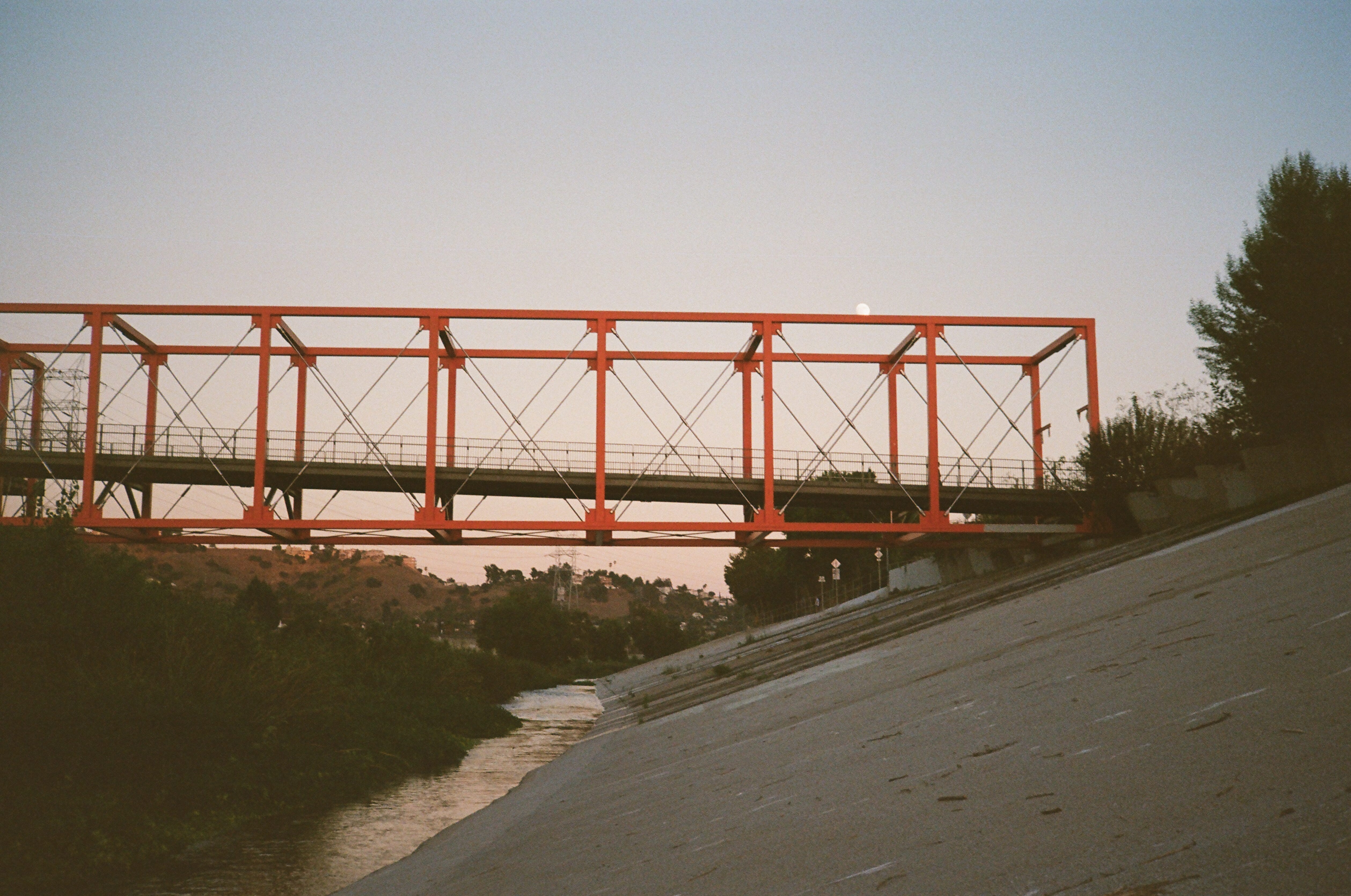
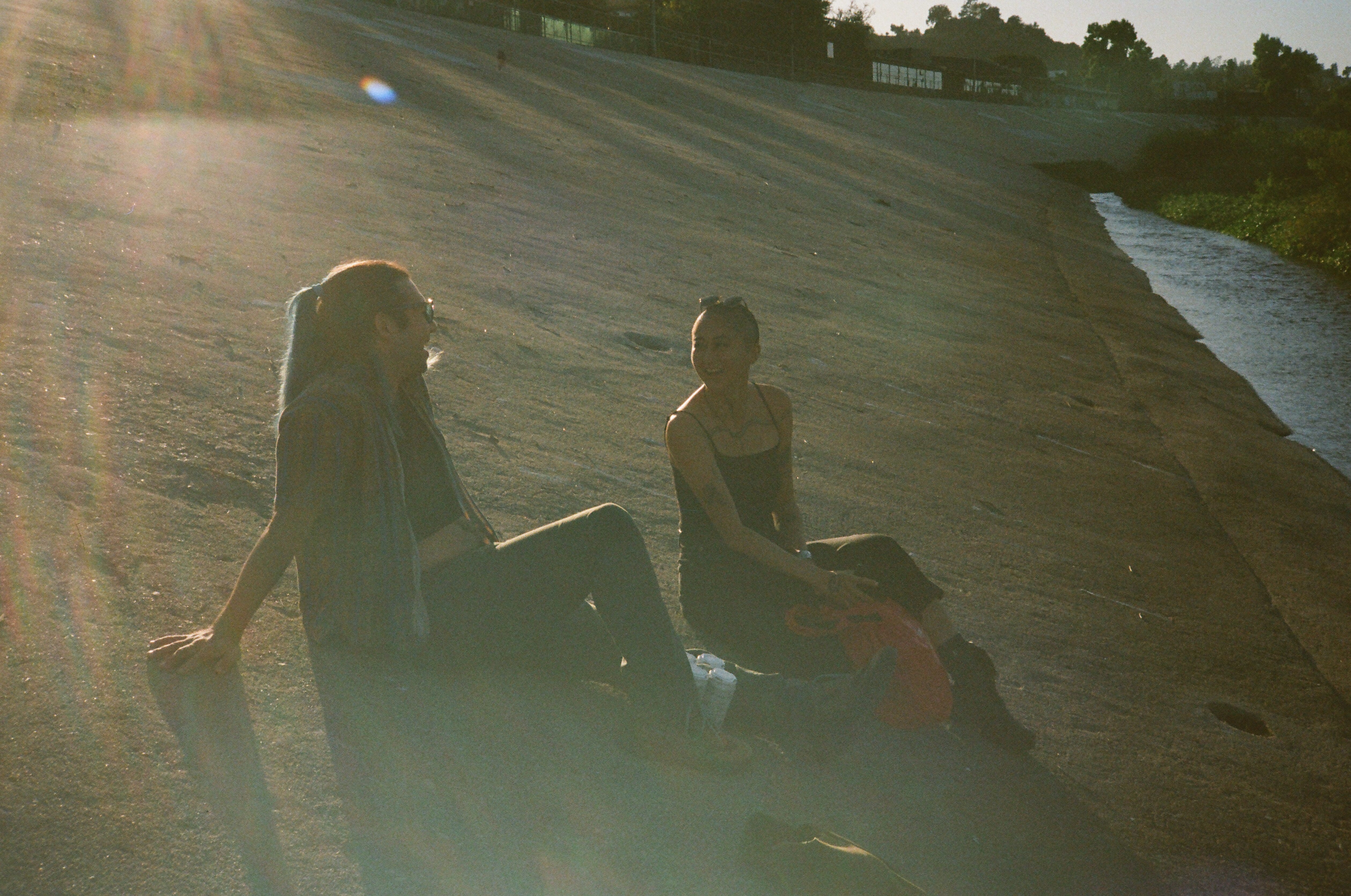
On the river with B and EL the first week in october, we talk about B’s object world so many miles north. B pulls a tiny talisman out of their bag, a pocket-sized ceramic mask that gives face, 给面子, gěimiànzi, when they’re on the move, constructing placeness across their various travels and movements—the reason we so often refer to B as “a tumbleweed.” We speculate about a frog shrine for the LA river, a longtime rumination of EL’s that would integrate Shinto ritual and construction with our beloved trash river. We wonder aloud about ways we might weave our cultures, histories, and lineages into the layered place where we find ourselves now. I reread Jhumpa Lahiri’s When Mr. Pirzada Came to Dine or Anne Carson’s 1=1 on the unrelenting simultaneity of building out place and belonging even in a world of contradiction and cruelty. I hope that we continue to organize our art in service of each other, in deference to those who came before us—an excavation of where we’ve been, looking backward so that we can meaningfully orient ourselves forward.

Zachary Lee. “Li Jun Li and Yao on Representing Asian Americans in the South in “Sinners”.” 30 June 2025. The Amp. https://www.aaartsalliance.org/magazine/stories/li-jun-li-and-yao-on-representing-southern-asian-americans-in-sinners
Dionne Brand. A Map to the Door of No Return: Notes to Belonging. Toronto: Vintage Canada. 2001.
Noam Keim. The Land is Holy. New York: Radix Co-op. 28 May 2024.
Anne Anlin Cheng. Ornamentalism: A Feminist Theory for the Yellow Woman. Oxford University Press. 2019.
Lisa Lowe. The Intimacies of Four Continents. Durham, North Carolina: Duke University Press. 2015.
Fred Wilson. “Mining the Museum.” Maryland Historical Society. 1992.
Hope Ngo. “The Chinese Cook Who Made An Impression On Young James Beard.” 2 September 2022. Tasting Table. https://www.tastingtable.com/992439/the-chinese-cook-who-made-an-impression-on-young-james-beard/
Shoshi Parks. “Inside the Diet that Fueled Chinese Transcontinental Railroad Workers: Denied the free meals of their Irish counterparts, Chinese laborers learned to thrive on their own.” 30 November 2022. Atlas Obscura. https://www.atlasobscura.com/articles/diets-transcontinental-railroad
Heather R. Lee. “The Untold Story of Chinese Restaurants in America.” 20 May 2015. Scholars Strategy Network. https://scholars.org/brief/untold-story-chinese-restaurants-america
Courtney Vinopal. “What we know about the Atlanta spa shootings that killed 8, including 6 Asian women.” 17 March 2021. PBS news. https://www.pbs.org/newshour/nation/what-we-know-about-the-atlanta-spa-shootings-that-killed-8-including-6-asian-women
Jireh Deng. “Violence In The Communities Where We Didn’t Have To Assimilate Have Shattered A Sense of Safety For Many Asian Americans".” 3 February 2023. Teen Vogue. https://www.teenvogue.com/story/monterey-park-half-moon-bay-shootings-safety
No posts
Comments
Nothing yet. Say the first thing.
Sign in to join the conversation.