
In the ultra competitive landscape of luxury hospitality, culinary excellence is no longer measured solely by flavor execution and ingredient sourcing. Today’s discerning affluent guests, institutional investors, and global hotel brands evaluate dining destinations as comprehensive, sensory driven architectural ecosystems.
Long before an ingredient enters a prep kitchen or a rare spirit is poured over hand-carved ice, the visual vector of a culinary concept dictates its operational success, cost efficiency, and brand equity.
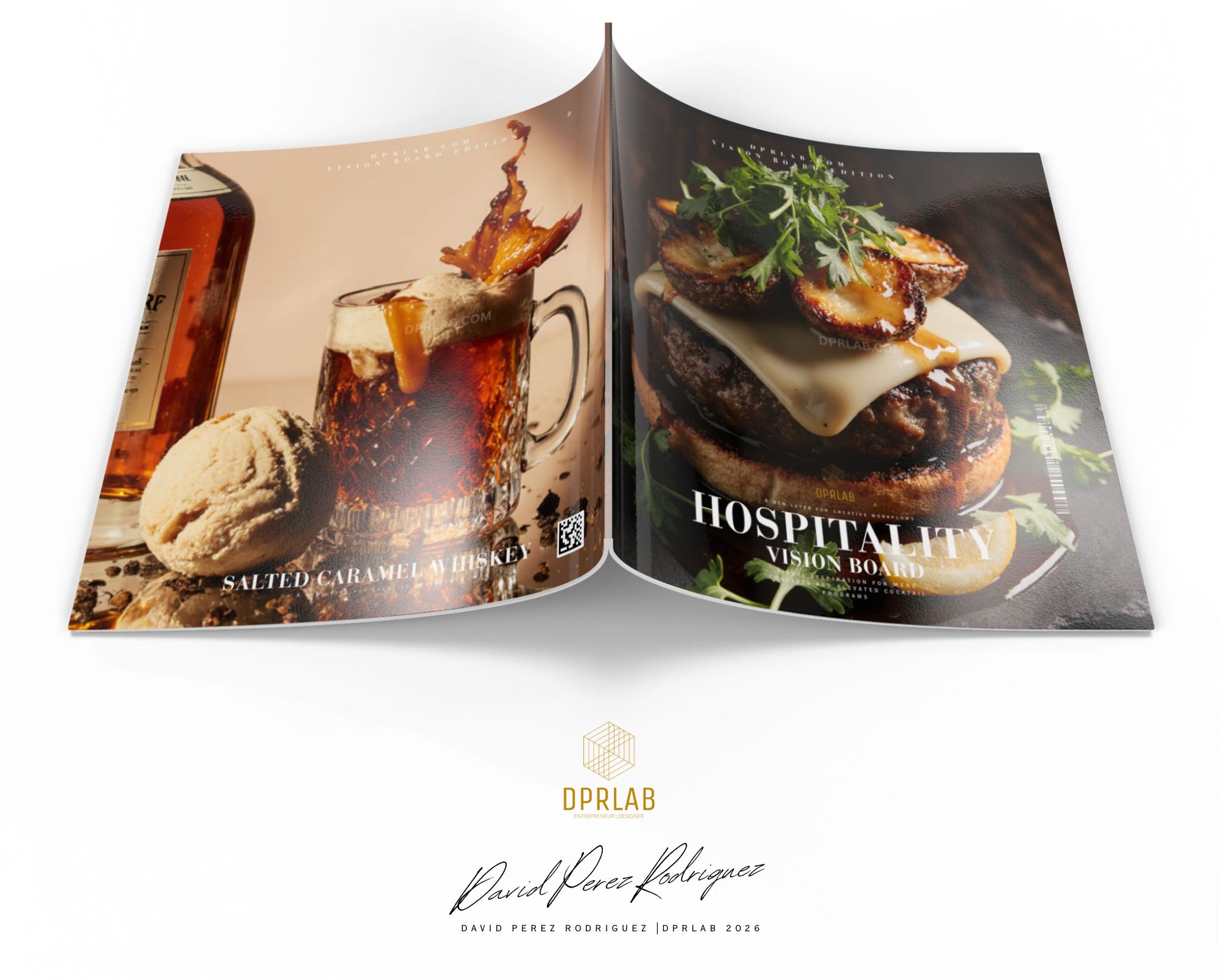
At DPRLAB, our creative workflows focus on defining concept development and aesthetic direction prior to ingredient procurement. Through digital publications like the AIXX26 Hospitality Vision Board Edition, we provide luxury restaurant groups, hotel brands, and visionary investors with a visual-first blueprint for menu engineering and spatial dining design.
“A well-designed vision board acts as the bridge between interior architecture and the dining table, ensuring that lighting, glassware, textures, and garnishes whisper a unified brand language.” -dprlab
Luxury menu engineering requires a delicate equilibrium between novelty and operational consistency. Rather than relying on trial and error in a production kitchen, establishing a design driven concept beforehand governs the culinary lifecycle in two pivotal ways:
Concept Driven Lifecycle Management: Highly conceptual, narrative driven menus require structured evolution to keep repeat guests engaged. Pre-defining aesthetic parameters allows chefs to rapidly introduce micro-seasonal variations (e.g., swapping garnishes or protein cuts) without breaking the established visual language of the venue.
Streamlined R&D Workflows: When lighting, color palettes, and plating architecture are set visually before sourcing, culinary teams eliminate guesswork. R&D cycles shrink, ingredient waste during testing drops drastically, and menu rollouts happen with surgical precision.
“In luxury hospitality, taste is table stakes, visual identity is the strategy. Designing a menu visually prior to procurement transforms food and beverage programs from operational cost centers into core brand assets.” -dprlab
Modern luxury consumers “drink with their eyes first.” High-end mixology has evolved into liquid sculpture that must seamlessly complement the venue’s interior architecture, ambient lighting, and furniture finishes.
A pre-conceived visual concept determines whether a drink requires:
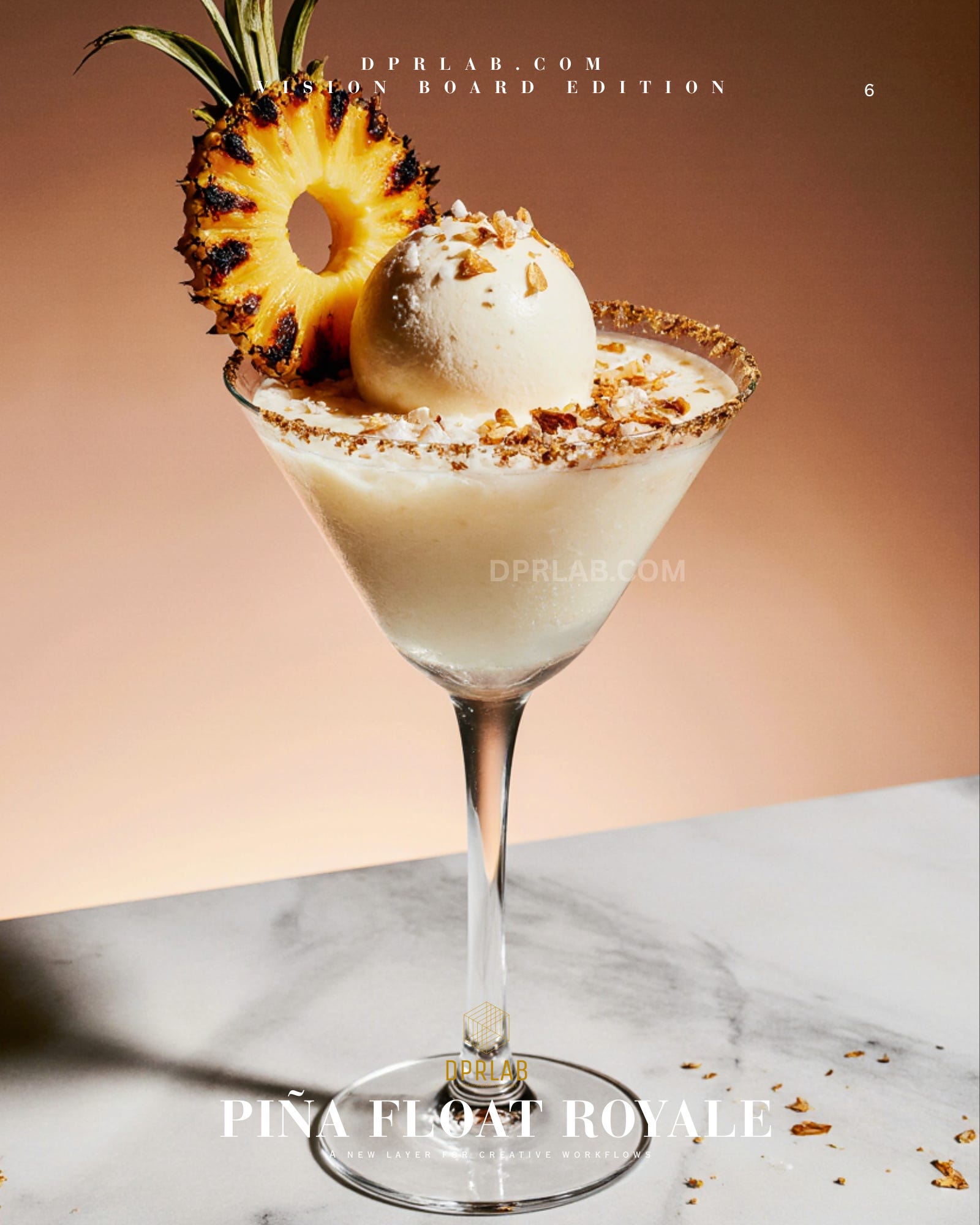
Symmetrical Minimalism: Sleek, crystal stemmed martini coupes stacked in geometric rhythm to reflect warm ambient lighting.
Tactile & Theatrical Contrast: Heavy, cut crystal mugs layered with dense foams, dripping ribbons of salted caramel, and dramatic spun sugar crowns (as featured on Page 8 of the AIXX26 edition).
Asymmetric Tropical Re-Interpretation: Vibrant frozen cocktails topped with charred pineapple rings and micro garnishes that bridge fine dining pastry art with classic lounge mixology (as seen in the Piña Float Royale on Page 6).
By curating these visual assets during the design phase, operators can purchase glassware, barware, and specialized equipment that strictly reinforce the overarching brand story.
A major advantage of a vision board workflow is its ability to test high-margin culinary plays visually.
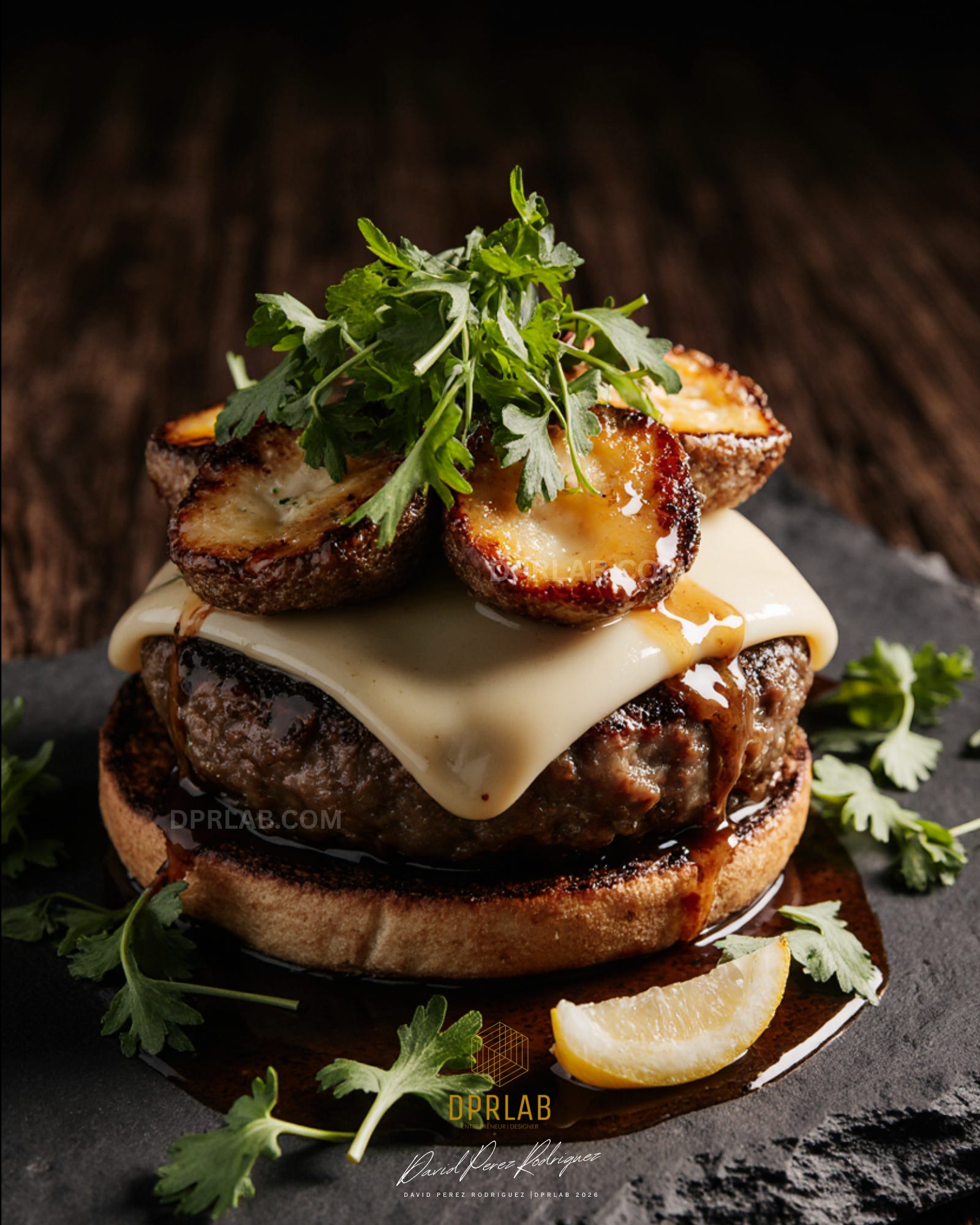
Take, for example, the “Wagyu + Foie Gras” concept on Page 3 of AIXX26:
The Visual Transformation: By presenting an open faced gourmet burger stacked with caramelized foie gras rounds, melted cheese, and fresh flat-leaf parsley on a textured black slate tile, the dish shifts from casual comfort food to an elite culinary centerpieces.
Perceived Value Optimization: Highlighting rich glazes, rendered fats, and moody chiaroscuro lighting establishes an immediate perception of extreme value, enabling operators to command premium menu pricing while driving viral social media visibility.
Developing a luxury hospitality concept without a visual blueprint is a costly gamble. The AIXX26 Vision Board Edition delivers a distinct competitive edge across all stages of development:
Rapid Stakeholder & Investor Buy-In: Pitching abstract culinary ideas to investors is difficult. Delivering high-resolution visual boards showing exactly how signature dishes and beverage programs integrate with interior aesthetics makes concepts immediately tangible and fundable.
Cross-Departmental Alignment: A vision board serves as a single source of truth. Executive chefs, mixologists, procurement leads, interior designers, and PR agencies all operate from the exact same visual mandate.
Optimized Procurement Spending: Buying specialized serving dishes, organic slate platters, and custom glassware before finalizing the aesthetic leads to mismatched inventory. A visual first approach ensures every procurement dollar directly supports the final guest experience.
The AIXX26 Hospitality Vision Board Edition is a free 9-page digital PDF curated specifically for luxury restaurant groups, boutique hotels, and hospitality investors seeking design-driven innovation over traditional editorial content.
Visit DPRLAB.com to download the 9-Page Digital PDF and explore new creative workflows for high-end hospitality programs.
Comments
Nothing yet. Say the first thing.
Sign in to join the conversation.