
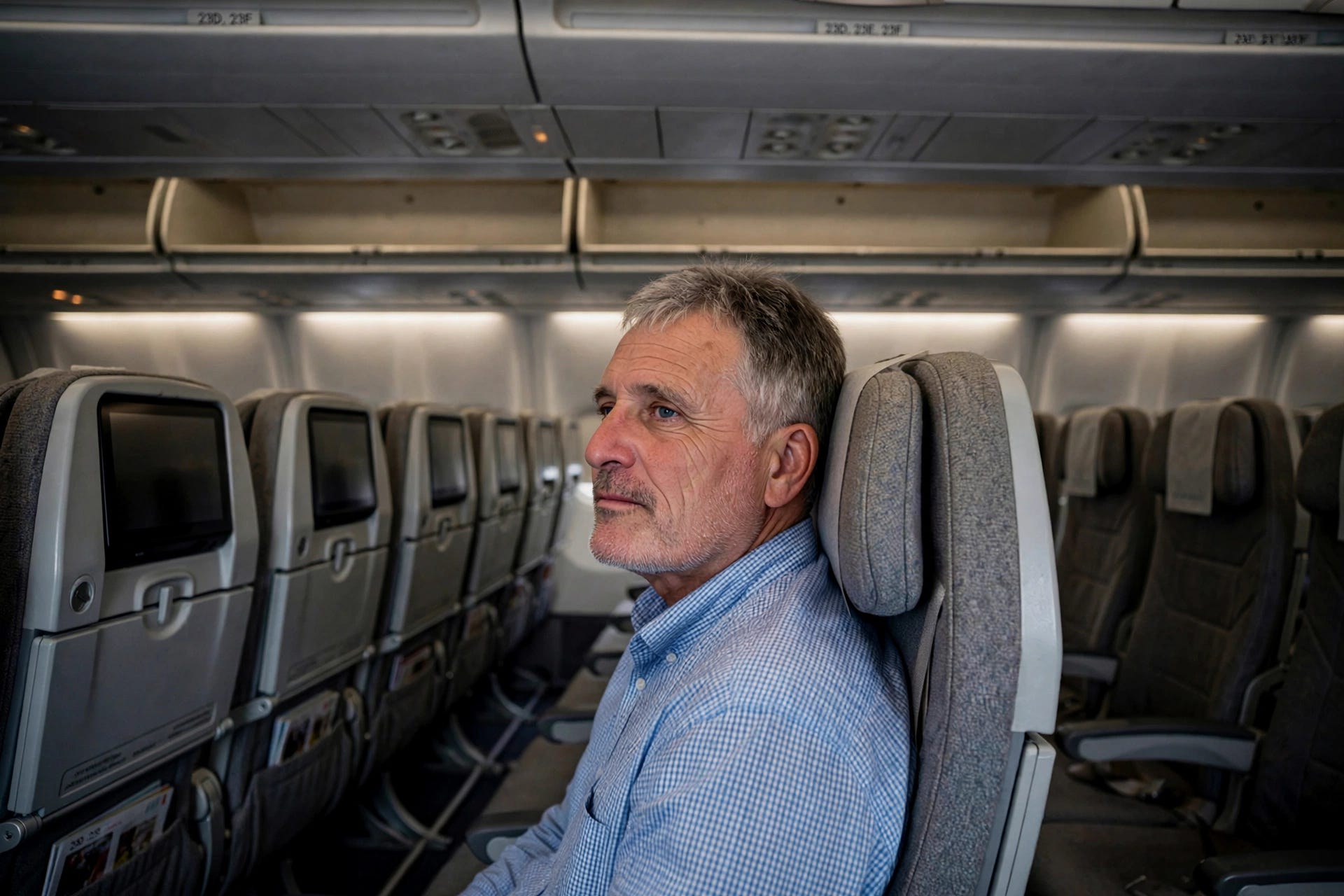
The New Yorker recently took up one of the great moral questions of our age: should you recline your airplane seat? I read the piece with interest, and also with a certain professional irritation, the way a cardiologist might feel reading a magazine article about the heart. Because if anyone is qualified to issue a definitive ruling on this matter, it is not a culture writer in Manhattan. It is me.
Consider my credentials. I have flown across the Atlantic more times than I can count — mostly to Zürich, where I served a church for several years, and later to The Hague, and back again for weddings, funerals, and the occasional emergency meeting that (let’s face it) could have been handled with an email. I have flown from Detroit to Manila (via Nagoya, Japan), which was hands down the longest twenty-two hours of flying I have ever done. I have even flown red-eyes in the middle seat of the last row, the one that doesn’t recline at all, directly across from the lavatory, which I have come to think of as the economy class’s version of the outer darkness, where there is weeping and gnashing of teeth. I know things.
More to the point, I spent forty-five years as a Presbyterian pastor, which means I spent forty-five years adjudicating disputes between people who were both convinced they were right. The seat recliner and the seat reclinee are, spiritually speaking, the same two people who once argued in my office about the color of the carpet on the chancel steps. I recognize them. I love them (mostly). And I have survived worse.
So, the ruling. But first, as is our custom, the theology.
The pro-recline party makes what I’d call the argument from creation: the button exists, therefore reclining is part of the created order. If the airline had not intended the seat to recline, the airline would not have installed the button. This is a respectable position. It is also, I’d note, exactly the reasoning of every toddler who has ever been handed a whistle.
The anti-recline party counters with the argument from solidarity: we are all suffering together back here, and to recline is to purchase your comfort at your neighbor’s expense — to gain two inches of paradise by annexing two inches of someone else’s purgatory. A respectable, but also suspiciously convenient argument, since it is advanced exclusively by people seated in the row behind.
The Apostle Paul, who did (at least some of) his traveling by boat and was shipwrecked four times (which puts our complaints in some perspective), addressed this very question in his first letter to the Corinthians. Not the seat, obviously, but the principle. The Corinthians wanted to know whether they were free to eat meat that had been sacrificed to idols. Paul’s answer, loosely paraphrased: yes, you’re free, but there’s a more important question. Which is what your freedom does to the person next to you (or behind you). “Everything is permissible,” he wrote, “but not everything is beneficial” (my translation from the Greek, which I think is quite good). If Paul flew economy — and let’s be honest, Paul would have flown economy — I believe he would have reclined on the overnight from Amsterdam, but then sat upright on the thirty-minute hop from Chicago to Grand Rapids. He would also have told the Corinthians to stop asking him questions like that.
The Westminster divines, for their part, were silent on the matter, though I have long suspected the chapter on Christian liberty was drafted with something like this in mind. Liberty, they insisted, is real, but it is not a license to do whatever the button allows. American Presbyterians revised the Westminster Confession in 1789, and if we’re being honest, we could revise it again to add a footnote: This applies also to seat 54C.
So here is my ruling, offered with all the authority of a retired pastor, which is to say, none that anyone, in my experience, recognizes:
You may recline. Slowly. After glancing back, the way you’d check your mirror before changing lanes. Not during the meal, such as it is. Fully on the red-eye, where reclining is not merely permitted but arguably a communal good. Everyone is trying after all to achieve unconsciousness together, like a congregation during the third point of a very long sermon. And if the person behind you is six-foot-seven, folded into his seat like a letter into a too-small envelope, you leave the seat upright and count it as your good deed, because grace, as we say in my tradition, is unmerited. (Which is also apparently true of legroom.)
And if someone reclines into your space? You may sigh. You may not kick. You may ask, politely, and you will usually be surprised. Most people, it turns out, have no idea they’ve done anything at all. They are not your enemy. They are just tired. And far from home.
But we live in hope. That’s the whole business, isn’t it?
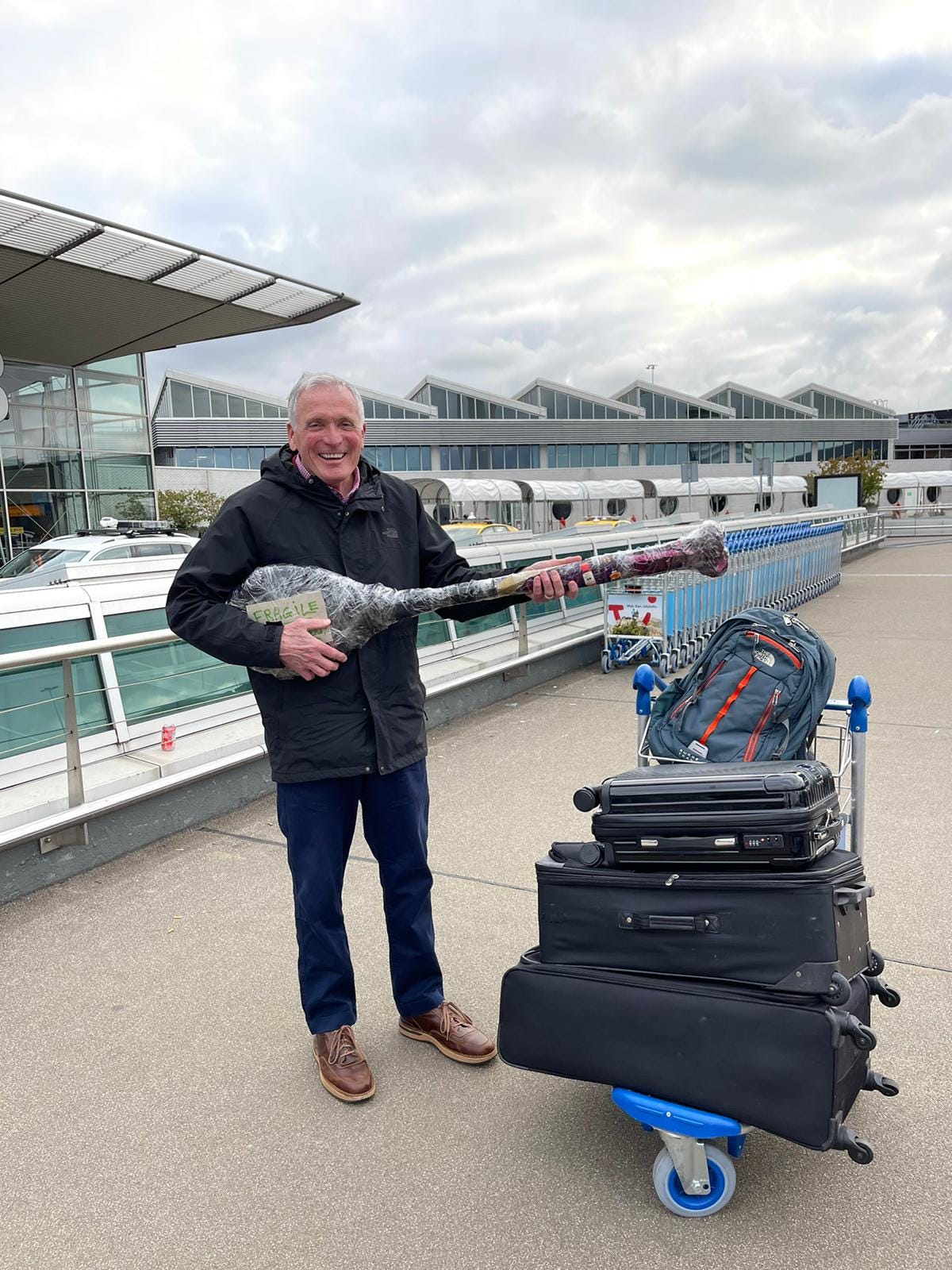
Bottom photo: Just for fun, that’s me at Schiphol Airport, happy to be going home (with a kayak paddle, among other things) after working hard for nine months (or so) in The Hague. I’m pretty sure I sat in the upright position for the entire flight.
Comments
Nothing yet. Say the first thing.
Sign in to join the conversation.