
Losing yourself rarely looks like falling apart.
It looks like being easy. It looks like reading the vibes of a room before you’ve even said a word. It looks like getting so good at anticipating what everyone else needs that you forget to check in on what you need, ever, about anything.
You don’t lose yourself in one dramatic exit. You lose yourself in about four thousand small, reasonable, perfectly agreeable decisions. And you get so skilled at making them that nobody, including you, notices it’s happening until one day you find yourself making yourself smaller simply because it has become the path of least resistance.
The really insidious part is that you did it so gracefully.
This isn’t burnout, not exactly. Burnout has a diagnosis and an Instagram infographic. This is quieter, harder to point at. More like the exhaustion of performing a version of yourself that used to be a survival strategy and somewhere along the way turned into a personality.

Time for your villain era, babe.
Contrary to popular belief (cough…the patriarchy…cough), it’s not about becoming cruel or difficult. It’s the much less cinematic realization that your preferences are information. Your resentment is information. Your boredom is information. The thing you keep saying you “should” want has been drowning out the thing you actually want for a very long time.
It starts small. Noticing how quickly you say yes before you’ve checked whether you mean it. Noticing that some of what you call being nice is actually fear, dressed for the occasion. And then, slowly, choosing differently. Not louder or more dramatic, just honest.
That’s the work.
So I made something to make stepping into your villain era a little easier. And a hell of a lot more fun.
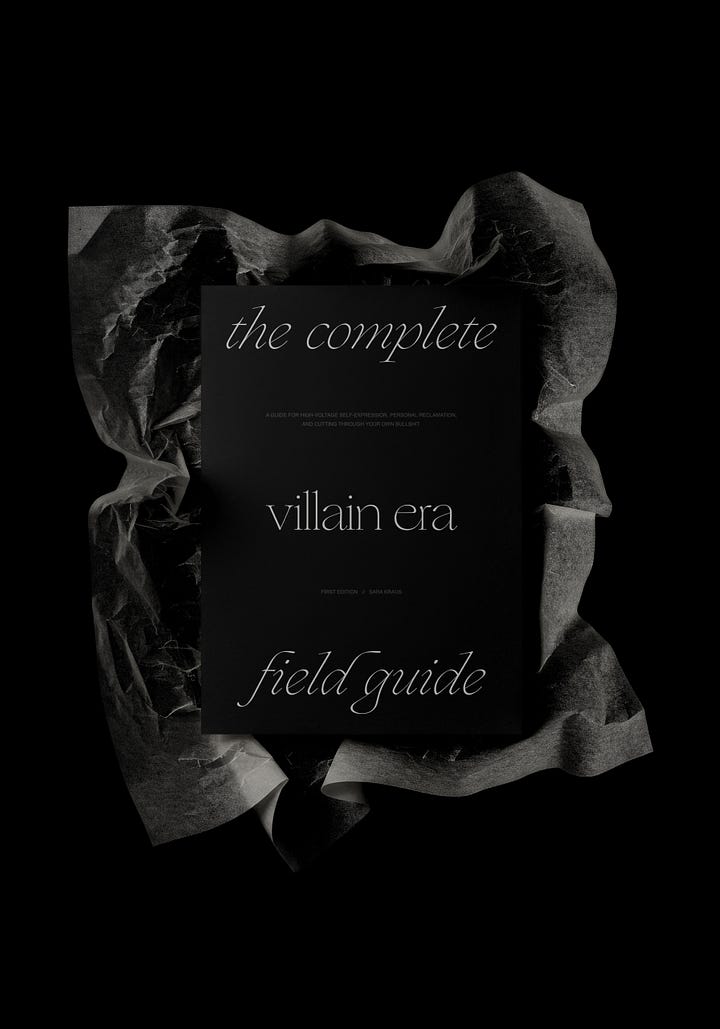
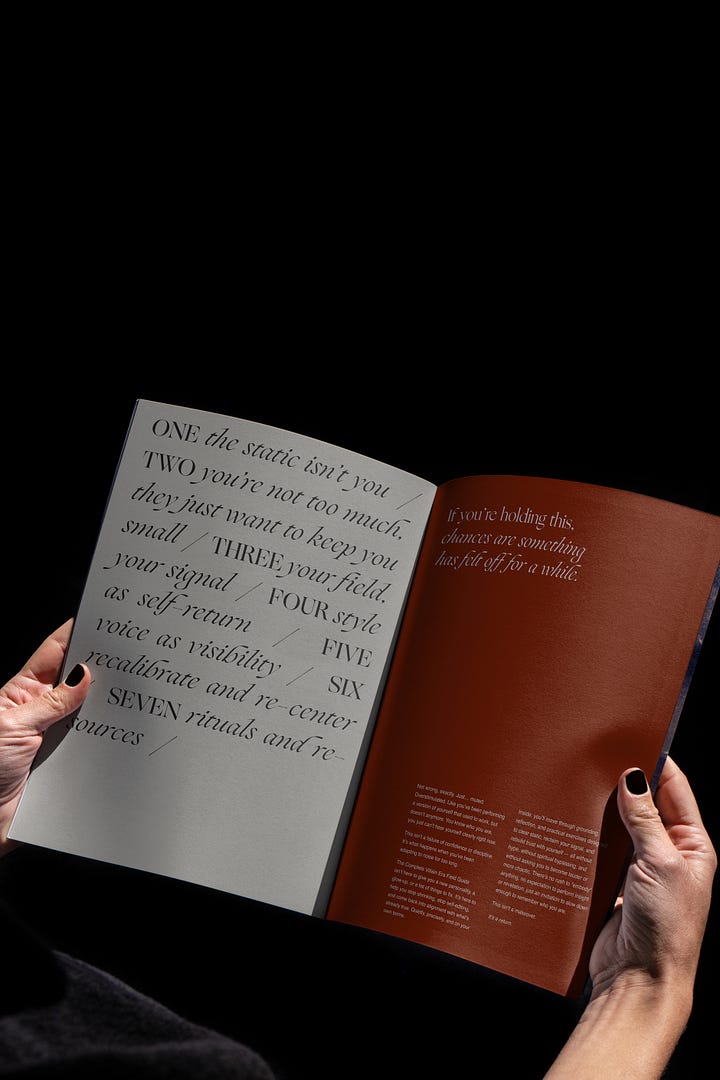
I built The Complete Villain Era Field Guide because I needed exactly this and it didn’t exist yet.
It’s not a workbook asking you to find your “highest self,” because I don’t think there is one, at least in the way we’ve been marketed it.
There’s just you.
You, with your excellent taste, questionable decisions, deeply specific opinions, old coping mechanisms, and well-developed ability to explain away what you actually want.
Because women are being asked, again and again, to be smaller. To be more agreeable. To smile through things that deserve a different response entirely. To be grateful for rooms they’re allowed into rather than furious about the ones still closed.
We’re tired in a way that goes beyond the personal. It’s personal and political and cultural all at once and it sits in our bodies like stone.
This guide doesn’t solve that, but it does give you somewhere real to put it. A place to work through what’s yours, what you’ve been carrying that was never yours, and what you’re ready to set down or kick to the curb.
That’s not small work. Right now, it might be the most important work there is.
Signal Check-In Rituals teach you to read what your body already knows before your manners get there first and override it. You’ve been overriding it for years and you’re extremely good at it, but it’s costing you more than you think.
Inventory Exercises give you an honest account of what you’re carrying: what’s actually yours, what got handed to you, what you picked up somewhere along the way because it seemed responsible and never put back down. Some of it stays, a lot of it goes.
Reclamation Protocols are the unglamorous part. Not affirmations or “step into your power” nonsense. Actual moves for actual moments, like the dinner where someone asks a question you don’t want to answer, the meeting where you feel yourself shrinking, or the text you’ve rewritten seven times trying to make a boundary sound like an apology. This is where you practice choosing yourself when the old reflex says not to.
Integration is what happens after, when this stops being a weekend project and starts being how you move through your day to day. Because we are not doing the personal-growth equivalent of going to the gym for three weeks and buying a new water bottle. The point is not to have one big breakthrough, but to start noticing, in real time, when you’re about to abandon yourself. And then sometimes not doing it.
And, obviously, there’s a closet section.
Because whether you believe in it or not, what you wear is data. What you actually wear versus what you’re saving for a thinner, richer, cooler, more together version of yourself tells you where you’re still negotiating. We’ll tackle the things you bought but never wear, the things you “love” but somehow never feel like yourself in, the things you keep for when you become the person you think you’re supposed to be.

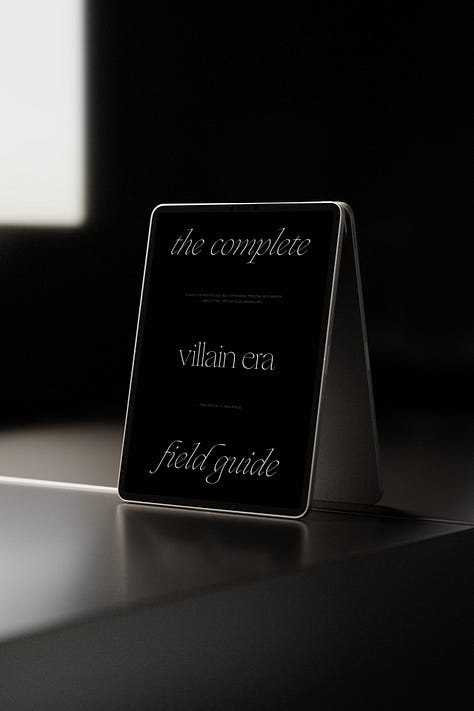
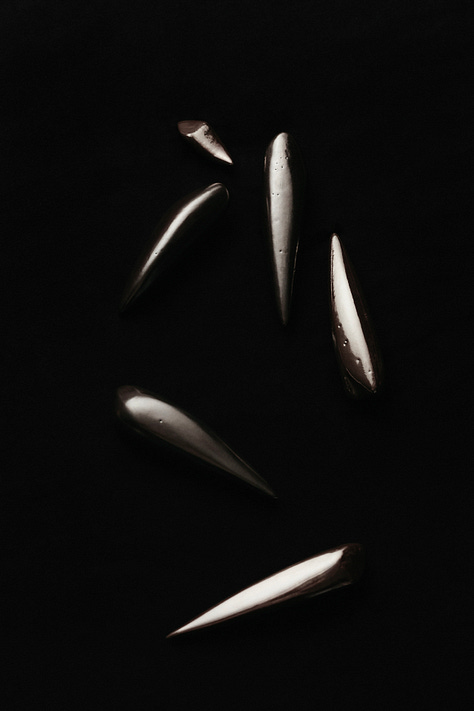
It’s nearly sixty pages (this bitch is beefy 💪🏻). Print it. Put it on your iPad or Kindle. Scribble all over it until it looks beat to hell. Work through it in a fit of rage or piece by piece over time. Whatever works for you is how it’s supposed to work.
This product is available only for paid members. Upgrade for access, or download the guide from the perks page if you’re already a paid subscriber.
And welcome to your Villain Era. 🔥🗡️🖤
-Sara
About the Author
I’m Sara — artist, creative director, metalhead, art history dork, dirty martini lover, and founder of Double Kick.
I write about art, beauty, identity, feminism, and the ongoing project of building a life that actually fits — not just the bullshit you were handed.
If that sounds like your particular type of unhinged fun, welcome.


No posts
Comments
Nothing yet. Say the first thing.
Sign in to join the conversation.