
Loud squawking outside caught my attention. I looked out the window and saw a hawk on the lamp post across the street.
I love raptors! 🦅 They’re majestic and beautiful. I grabbed my binoculars and ran out for a better view.
The hawk held a mockingbird in its talons. The mockingbird’s mate screamed and dive-bombed the hawk over and over again.
I trained my binoculars on the birds. What I saw, well, think horror movie complete with guts and blood.
I lowered the binoculars, filled with awe at the hawk’s strength … and anxiety at the mockingbird’s fate.
And then it hit me.
Nature is both beautiful AND brutal.
A hawk soaring in the blue sky? Beautiful.
A hawk ripping apart a mockingbird? Brutal.
I call this beautality.
Beauty + Brutality = Beautality
Since humans are part of nature, I see beautality in our lives as well.
Once a week I spend time with a group of wonderfully diverse people in my Toastmasters club. We meet to support each other becoming better speakers and leaders.
We also support each other through the ups and downs of life.
One member, Bill, lost his wife of 30 years suddenly to a heart attack. In our meetings, he practiced his eulogy for her memorial service.
Every time Bill gave that speech, he cried. We cried. His loss echoed our own losses. Our sorrows reflected his sorrow.
We felt closer as a group because we shared one of the “brutal” parts of life — death.
There’s another member of our group, Gina. She gave a speech about her recent IVF experience. Beaming, she announced, “It worked! I’m pregnant!”
We clapped and laughed. A few of us shed tears of joy for her. 👋
We felt closer as a group because we shared one of the “beautiful” parts of life — birth.
And then Gina shared her baby’s due date: December 12, 2025.
We looked at Bill. His wife died on December 12, 2024.
Bill smiled and said, “How wonderful! I like to think my wife was somehow involved.”
That date, December 12th, holds someone’s death and someone’s birth.
In that moment our group shared beautality — the sorrow AND joy of life.
Joy and sorrow live side-by-side every single day for every single one of us.
As Helen Keller said:
“Security is mostly a superstition. It does not exist in nature, nor do the children of men as a whole experience it. Avoiding danger is no safer in the long run than outright exposure. Life is either a daring adventure, or nothing.”
I see three options for coping with life’s beautality:
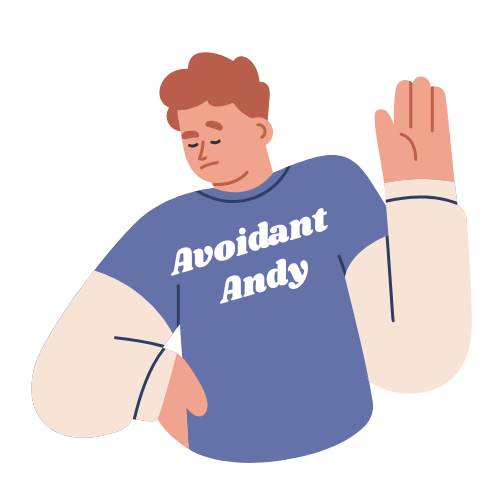
Some of us fixate on the beauty of life. It’s a coping mechanism to avoid anger or despair at humanity’s brutality. Perhaps we believe ignoring the worst will somehow protect us?
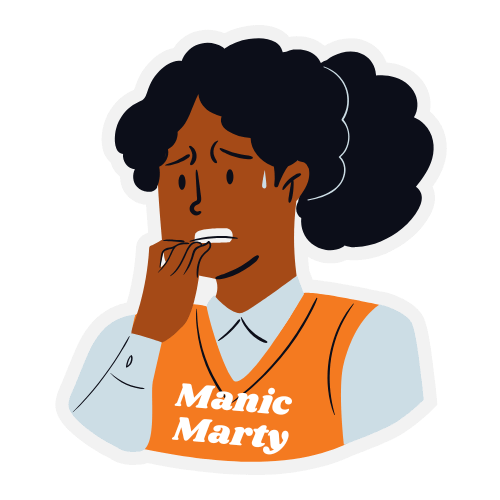
Others of us fixate on the brutality of life without considering the beauty. That’s our coping mechanism to avoid getting hurt or betrayed. Perhaps we believe preparing for the worst will somehow protect us?
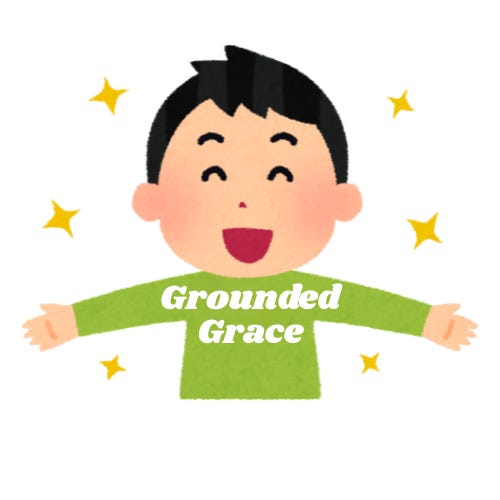
A few of us choose a third option. We acknowledge beauty and brutality exist together and see them as “coexisting contradictions,” to borrow a phrase from psychologist Dr. Ethan Cross. We’ve learned this is a healthier, saner, even happier way to live than option one or two.
When we encounter beautality, each of us copes differently based on which of the “Four F’s” (Fight/Flight/Freeze/Fawn) we default to.
Let’s find out which coping strategy you use most often. And remember, no judgment! You’re only human after all.
When you encounter joy or sorrow, do you feel ….
numb or shutdown?
depressed or hopeless?
overwhelmed?
tired and weak?
isolated and alone?
worried about others while ignoring your own needs?
If so, your nervous system may be stuck in a Freeze or Fawn response.
It takes a lot of energy to avoid feeling distressful emotions like fear or anger or sorrow. In fact, it takes so much energy we often miss out on feeling pleasurable emotions like joy and meaningful connection.
Fixating only on the positive is unhealthy too, and sometimes called “emotional bypassing” or “toxic positivity.” We’ve all been on the receiving (or giving!) end of toxic positivity. It doesn’t feel good, does it? It keeps us from being vulnerable with others and receiving — or offering — genuine empathy and support during life’s challenges.
When you encounter joy or sorrow, do you feel ….
anxious or panicky?
a racing heart or palpitations?
short of breath?
muscle tension, headaches or back pain?
digestive issues?
outraged or defensive?
agitated or restless?
If so, your nervous system may be stuck in a Fight or Flight response.
It takes a great deal of energy to try and control circumstances to keep ourselves safe, to plan and strategize while vigilantly scanning for threat. In fact, it takes so much energy we often miss out on feeling pleasurable emotions like contentment and meaningful connection.
Fixating only on the negative is unhealthy and sometimes called “emotional bypassing” or “toxic negativity.” We’ve all been there! Toxic negativity also keeps us from being vulnerable with others and receiving — or offering — genuine empathy and support during life’s challenges.
When you encounter joy or sorrow, do you feel ….
relaxed and calm?
content or neutral?
engaged and present?
aware of your emotions as they arise?
aware of sensations in your body?
aware of your thoughts without feeling overwhelmed by them?
able to control your reactions?
If so, your nervous system may be resilient enough to quickly return to equanimity — what I call your Window of Kindness — after something upsetting happens.
It takes less energy to hold the joys and sorrows of life equally. When we recognize both are transient, we’re present enough to enjoy the joy when it arises — and aware enough to make space for the sadness when it arises. When we’re grounded, we practice gratitude and critical thinking to counter our brain’s built-in negativity bias.
We’re also realistic when we’re grounded. We know shit will happen that is out of our control, so we don’t waste time trying to be perfect or manage everything and everyone around us. We’re also more empathetic — we feel our own pain as well as the pain of others without letting it shut us down.
To put it simply, when we’re grounded we feel it all without being overwhelmed by it all.
I believe resilience requires embracing beautality as part of life. We find equanimity when we balance ourselves between life’s joys and sorrows.
Try this practice to see what a balanced “Grounded Grace” approach to beautality feels like in your body. It’s a standing guided visualization.
If you’d like me to walk you through this practice, listen to the podcast version of this newsletter.
Take off your shoes and stand up. Place your feet wider than your hips in a nice solid stance, with a slight bend in your knees.
Close your eyes and imagine two trains moving at the same speed in the same direction on parallel tracks.
Picture yourself standing on top of the train cars — left foot on the Sorrow Train and right foot on the Joy Train. (Or you might think of them as the Pain Train and Pleasure Train.)
Keeping your eyes closed, lift your left foot up off the floor. Now you’re standing only on the Joy Train. Notice the Sorrow Train is still there, chugging alongside you.
How does it feel to balance on one foot on the Joy Train?
Is it harder or easier than straddling the two trains?
Do you feel stable or shaky? About to lose your balance?
Place your left foot back on the Sorrow Train. Then lift your right foot up off the floor so you’re standing only on the Sorrow Train. Notice the Joy Train is still there, chugging alongside you.
How does it feel to balance on one foot on the Sorrow Train?
Is it harder or easier than straddling the two trains?
Do you feel stable or shaky? About to lose your balance?
Place your right foot back down on the Joy Train. Now you’re standing on both metaphorical trains — one foot on each. With your eyes still closed, picture the two trains chugging alongside each other with you balanced on top.
How does it feel to have one foot on the Sorrow Train and the other on the Joy Train?
Is it harder or easier than standing only on one train?
Do you feel more, balanced and sturdy?
Feel your feet pressing into the ground (aka “train”). Notice how supported, stable and balanced you are.
What sensations arise in your body when you think of sorrow and joy co-existing side-by-side like these two trains on parallel tracks?
What emotions arise when you think about accepting the beautality of life?
Name the emotion by saying, “I feel [fill in the blank].”
For example, “I feel scared” or “I feel happy” or “I feel confused.” Whatever feeling comes up for you.
Bring compassionate curiosity to the feeling. Using your own name, ask how to support yourself.
For example, “How can Dorothea support herself right now?”
Open your eyes and take your own damn advice!
I designed this practice to use your body on purpose. When we drop out of our thinky-think minds into our feely-feel bodies, we connect with our true emotions.
Also, making this experiential versus cognitive gives you muscle memory of what it feels like. Eventually you won’t have to do the full practice — simply closing your eyes and standing on your two imaginary trains will induce feelings of calm groundedness.
Reminder: You’re Okay!
It’s okay to feel some grief when you realize there’s no getting away from the Sorrow Train. It’s also okay to feel some concern when you realize there’s no getting away from the Joy Train. Some of us don’t think we deserve joy. Or joy feels dangerous.
I want you to accept both joy and sorrow co-exist. I want you to allow yourself to feel both.
Remember, everything is temporary. The wind today. The rain last week. The fuckery in the White House. The love of a faithful dog. The bounce of a breast. The cuteness of ducklings. The snow on mountain peaks. Life itself.
Pain is temporary. So is pleasure.
No matter which train you plant your feet on, there’s no getting away from the other train. It speeds along through the days and nights of your life. So you might as well balance atop the two for the ride of your life!
That’s what I call resilience.
If you’re listening to my podcast, you’re probably experiencing some distress about the state of democracy right now.
I encourage you to experiment with beautality. Acknowledge the brutality of the fascist shit show, feel your despair or outrage or anxiety or whatever, and then channel all that emotion into beautiful ACTION.
Here are three actions you can take to fight for our democracy:
The budget bill that passed the House by one vote would gut our social safety net while rewarding billionaires with tax cuts. It would also fund more unconstitutional deportations and involve the military at the border. Plus it’d raise our national deficit by almost $4 trillion. It’s in the Senate now for vote.
Watch Elle Cordova’s vid for a laugh about the bill.
Trump’s military birthday parade on Flag Day will cost taxpayers between $45 million and $100 million. No other U.S. president ever wasted our money — and insulted our military — on such vanity. You wanna know who throws themselves military parades? Dictators like Russia’s Putin, China’s Xi Jinping, and North Korea’s Kim Jong Un.
On the day of Trump’s parade, millions of Americans will take to the streets to protest. We’ll carry on the legacy of generations before us who fought tyranny since the country’s founding.
We’ll march because, as Thomas Paine said in 1776, “In America the law is king.”
Read this veteran’s perspective on Trump’s parade for inspo.
Check out this line of 15,000 Chicago-area protesters that stretched almost 30 miles long for inspo of people coming together to take a stand.
Go here to find a peaceful No Kings protest near you — they’re happening around the country.
It’s easy to stand on the Sorrow Train right now as we witness the attacks on our democracy. To throw up our hands and say it’s too late.
But as American political historian Heather Cox Richardson says:
“I want to leave you with some hope. … Courts are standing up, universities are standing up, lawyers are standing up … corporations are standing up. There’s a lot of resistance out there. … But now I want to talk about us.
“We need to make it really clear that this administration does not have popular support … His [Trump] popularity is underwater in every demographic. The sense that he is a juggernaut is in your head — it’s not real. … Stop listening to the people on social media who are saying it’s all over, there’s nothing we can do. That is deliberate, a deliberate way to undermine resistance. Forget that.”
Activism takes energy and can be exhausting. It’s important you take breaks as needed to recharge. Breaks make you more resilient for the fight ahead.
BONUS: Historically, joy works as a form of resistance!
Here are a few suggestions for you:
Take a walk in nature.
Breathe — try my 4-6-8 Appreciate practice.
Listen to soothing music.
I like Jacob’s Piano playing one of my favorite songs — Nuvole Bianche. It calms me.
Avoid screens and doom-scrolling black holes. Get out in the sun instead.
Spend time with friends and family doing fun activities.
Read a novel.
Make art!
Play Yay/Boo with friends or family:
If you want to hear my friends playing this game, give a listen to the podcast version of this newsletter.
Stand or sit in a circle
One person starts by saying a random word, and the group throws their arms up in air and says, “YAY!”
Next person says a random word and the group lowers their arms toward floor and says, “BOO!”
Repeat as long as you want, alternating Yay/Boo
Life is sweeter when we straddle the twin trains of Joy and Sorrow. Balancing between the two reassures our nervous system that we can face the beautality of life — with groundedness and grace.
As neuropsychologist Dr. Rick Hanson says:
“Having a deep sense of calm is a kind of freedom. A way to live without being yanked around by every twist and turn. And in a chaotic world, that kind of freedom is gold. That stance—gentle, real, not forcing anything—is what makes all the difference. You’re not trying to control the storm. You’re learning how to hold your center while it passes through.
There’s freedom in embracing beautality — liberation even. I give you permission to feel all the feels, knowing they’re temporary. Just be present enough to experience them as they arise, and then let them go when they pass.
Don’t worry — they’ll be back. 😉

No posts
Comments
Nothing yet. Say the first thing.
Sign in to join the conversation.