
Hello! Hello!
This is not what I’d planned to write — until a post came up in one of my feeds and it sent me back a bunch of years. A big bunch of years, to long-ago Brooklyn.
But first, it’s Friendship Food Week and I’ve got a friendly recipe for you that you can share with friends (scroll down). As I have for years, when Friendship Food Week rolls around, I contribute in honor of you, readers who support this newsletter, to a helping organization. This week, I want to point you to a writer whose newsletter I subscribe to because of her remarkable work. I don’t even have words for how much I admire what Felicity Spector does in her Substack, Flour Power: by Felicity Spector — there are a clutch of newsletters that I read the instant they land, and hers is one of them. Her on-the-ground profiles of the people she works with in Ukraine are both riveting and inspiring. A couple of weeks ago, she wrote about Bogdan Zuyakov and his risky rescue missions — also his destroyed van — and last week she introduced us to Victoria Belim. I am adding them to my pantheon of heroes — and donated to the fundraiser to help replace their humanitarian evacuation vehicle, thanks to your support.

xoxoDorie is a reader-supported publication. Monthly and annual subscribers access the 300+ post archive on food, travel and community — don’t forget to invite a friend!— and know that a portion of your subscription supports a cause that helps feed people in need each month.
My father taught me how to drive, which wasn’t as calamitous as my mother and I feared it would be. Our doubt didn’t come from his behind-the-wheel skills, it was more about his limited patience and laissez-faire ways. There weren’t all that many things that he did or wanted to do around the house or with us kids, but for reasons unknown, he wanted to teach me how to drive. And he did. When he had time, he’d drive to the Brooklyn Terminal Market after the food warehouses were shuttered and he’d let me zigzag my way around the parking lots.
Or cruise the straightaways along a nearby bumpy road that was lined with wrecking yards and places that sold tires of all sizes. Where could we have been? I don’t ever remember driving on city streets, which probably explains why he hired a real teacher to give me a couple of lessons before I showed up at the DMV. Since nothing remarkable happened when I was out with the instructor, I remember nothing about him or our time together up to the moment when he got out of the car to make room for the inspector. That’s when he leaned over and whispered to me: “You must remember this; a kiss is but a kiss.” I had barely a second to register how bizarre this was. Why recite a line from the song, “As Time Goes By”? Why make me conjure up Humphrey Bogart and Ingrid Bergman in “Casablanca”?
I was bewildered and it was all I could think about as I started the engine. Of course, that might have been the point — I was a nervous wreck before the exam and a relaxed girl with a delightful song in her head during it. I passed. I got my license. And I got a car: A sleek, navy-blue 1965 Mustang. It was a bribe — the first and only one from my parents — to have me stay home and go to Brooklyn College. A kind of mixed offering, a message or a dare that said, we’ll keep you tightly in the fold but give you the keys to freedom. The day the car arrived, I drove for hours. I drove over the Brooklyn Bridge and I drove down to Manhattan Beach. I finally pulled into the parking lot at Lundy’s Clam Bar. My plan was to have a bowl of steamers, but I’d never gone into a restaurant by myself, that would happen years later, and I was scared. Besides, I didn’t want to have those clams without my mom.
I don’t know where my mother’s love of seafood came from. I’m guessing it was born of rebellion. She grew up in a kosher home which forbade shellfish, and she was coerced by guilt to make her own home kosher, so that her mother would come to visit. Not that my grandmother ever ate a thing that was cooked in our house: She always brought food with her. Lots of it. Chicken and soup and noodle pudding and cookies and cakes. She brought it for us and we loved it, but she might also have brought it because she knew my mother wasn’t a cook.
My mother loved food but never wanted to make it. And she didn’t. There was always a housekeeper who babysat and tidied and cooked dinner, so my mother didn’t have to. I barely remember my mother even eating at home — she sat down to dinner with us and she must have eaten, but while I can see her and her place at the table, I can’t conjure a forkful of food passing her lips. Her favorite “home-cooked” meal was the clandestine sandwiches we made on white bread with mayo and canned crab, which wasn’t kosher. She loved crab and would spirit me away to a snack bar near the Marine Parkway Bridge to have the first soft-shell crabs of the season — they were sautéed or maybe fried and served on a roll, kind of like a po’boy. We’d sit on high stools that spun around and use long two-pronged wood forks to pick French fries out of their cardboard serving boat, and we’d laugh when we heard a crab shell breaking under our teeth. And she adored lobster — for whatever birthday fell when I was in sixth grade, she took me to see “South Pacific” and to have a whole lobster at a fancy restaurant after the show. But the seafood that was always the most fun for us was steamers, clams that look like pipsqueak geoducks. And we only had them at Lundy’s.
Anyone who lived in Brooklyn, New York before Lundy’s closed for the first time in the 1970s, probably knew the place. It was an enormous seafood restaurant in Sheepshead Bay, as large in real life as it is in the stories old-timers tell of it. The imposing Spanish-style building seemed to go on forever. The dining room had 2,400 seats, maybe more. The waiters who carried trays of food high above their heads balleted past other waiters, diners wielding knives, forks and pointy utensils for getting the best bits out of lobster knuckles and crab claws, tables, chairs and restless children who’d wander around and sometimes, as my brother once did, get lost in the chaos.
The noise, the noise, the noise — the clang of trays, the thud of dishes, the scrape of chairs, the catch of a conversation and the chatter that rose and fell but never stopped. The Shore Dinner, which included half a lobster and half a chicken. The ice cream. The garlicky baked clams, the shells so hot that you had to blow on your fingers after you picked one up. The famous biscuits. And the huckleberry pie — Michael’s favorite. It was a double-crusted pie baked in a metal pan. You could buy the whole pie, but you kind of rented the pan — return it and you’d get your deposit back. That pie and the beloved steamers were served in the clamorous dining room, but also at the clam bar which, for mom and me, was “our place.”
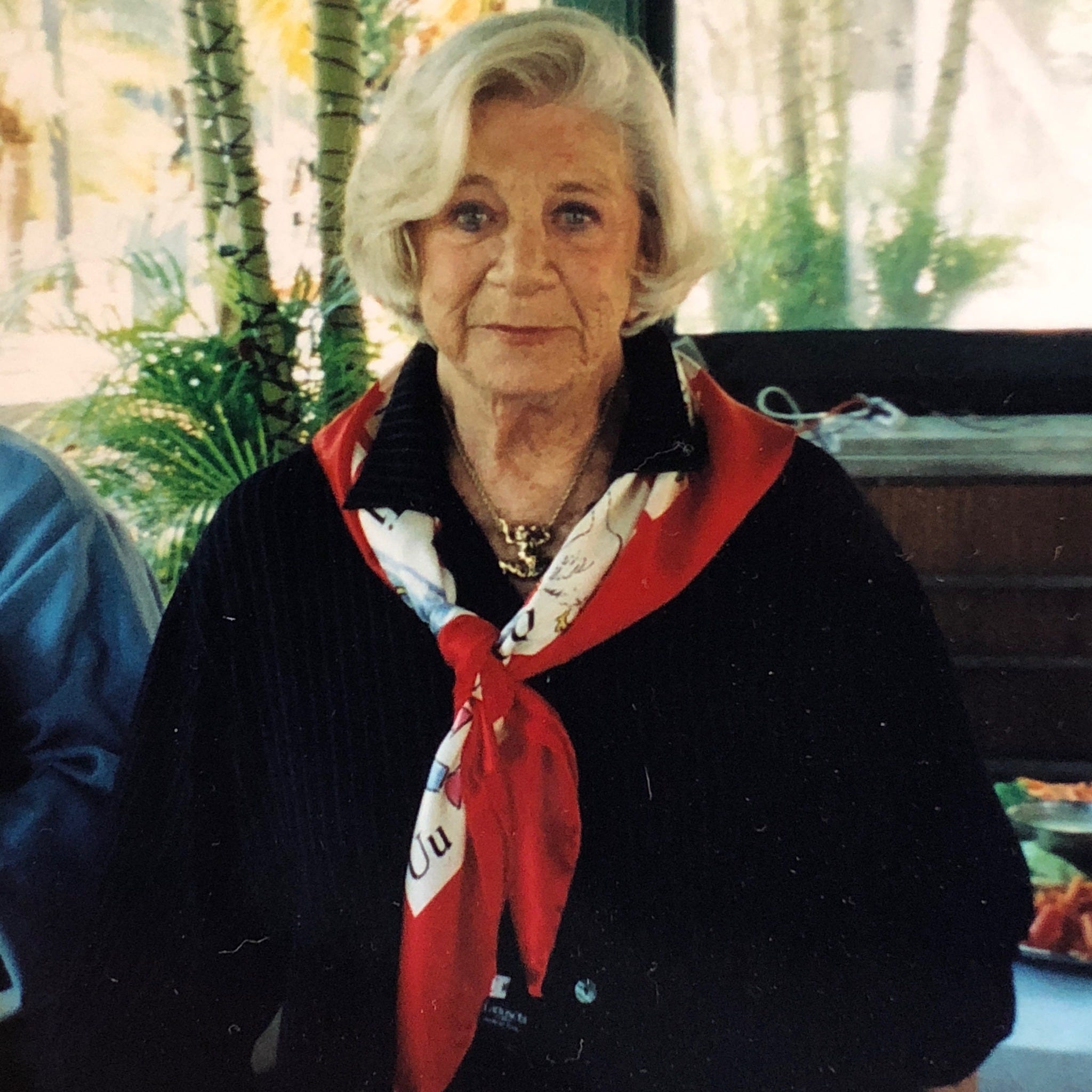
In her steamer days, my mother had a little adventurous streak. I imagine had she been given the keys to a Mustang when she was 18, she’d have taken off and been who-knows-where by dusk. But you wouldn’t have thought that when you met her — she looked almost proper. She loved clothes and looked good in them. I can see her at the doorway, tying her coat tight around her waist and giving the ends of the belt a tug. I can hear her heels clacking against the foyer’s tile floor as she walked out the door. And if I opened the closet, I could always smell her perfume. My mother got dressed — as in straight-cut-tweed-skirt (with a kick-pleat)-and-cashmere-sweater dressed — every day. She always wore mascara and lipstick and her hair was always done. And usually blonde, although I remember the redhead period — we didn’t see whatever her natural hair color was until she was 80, and by then it was a beautiful silver gray. She was dressed to go out, usually with friends, but sometimes with me. Let’s go, she’d say and we’d get into her white Chevy Impala convertible — it had a red interior, of course — and we’d drift. We’d shop. We’d go someplace where she’d have coffee and I’d have a milkshake. We’d find a bakery or a candy shop — my mother loved candy. And we’d end up at Lundy’s Clam Bar for steamers.
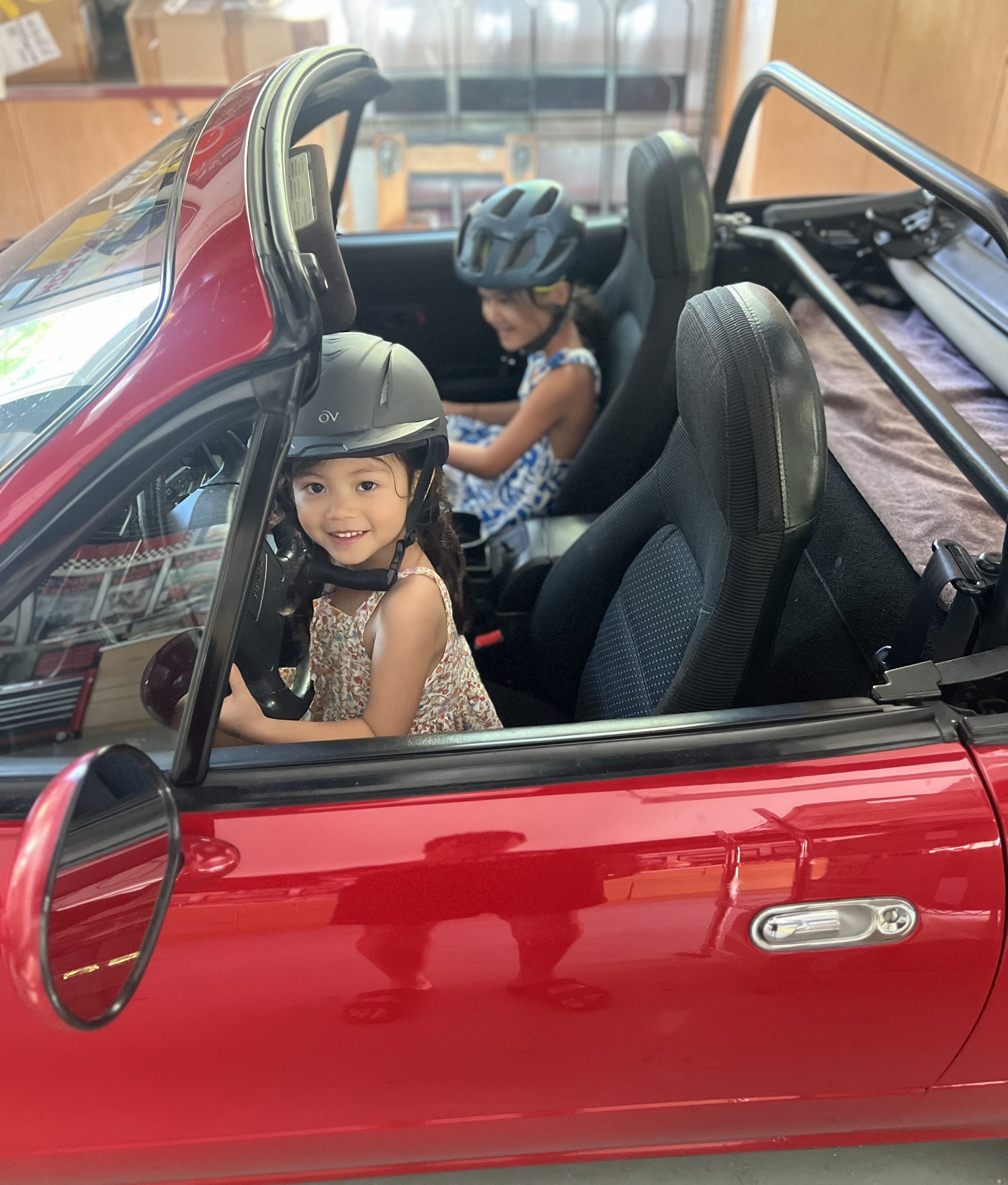
Steamers are messy. The part you want to eat is in a shell that, no matter what anyone does to prevent it, cradles pockets of sand. The game is to grab the steamer by its (hot) neck (I always thought of it as a trunk; officially it’s a siphon), pull it out of its (hot) shell, swish it in a bowl of broth — the liquid the steamers were steamed in — wash away the grit, give it a good run through some melted butter and pop it into your mouth, avoiding spattering broth or butter or both on yourself or someone else, and pulling away the siphon’s black covering as you do. You can pick out a beginner in a crowd — look for the dribbles. My mother and I were pros.
For as much as we both loved sweets, I don’t remember that we ever had dessert after our clams. Michael says that if we’d had the huckleberry pie, we’d remember it. I’m not sure that I’ve ever had a real huckleberry anything, but mention Lundy’s pie to him, and he looks beatific.
All these memories burbled up recently when I read about Lundy’s revival. (The pie video above is from the revived Lundy’s.) Since I’m old enough to know that no matter how good the replica is, it will only disappoint me if I go there with thoughts of the past, I have no plans to go. Oh, maybe if I had an old Impala convertible. Or my racy Mustang. But even then, I’d probably stay home if I couldn’t shake the memories. As for Michael … that huckleberry pie still calls to him, explaining why I baked a double-crusted pie for him over the weekend. Since I couldn’t find huckleberries, I used blueberries.
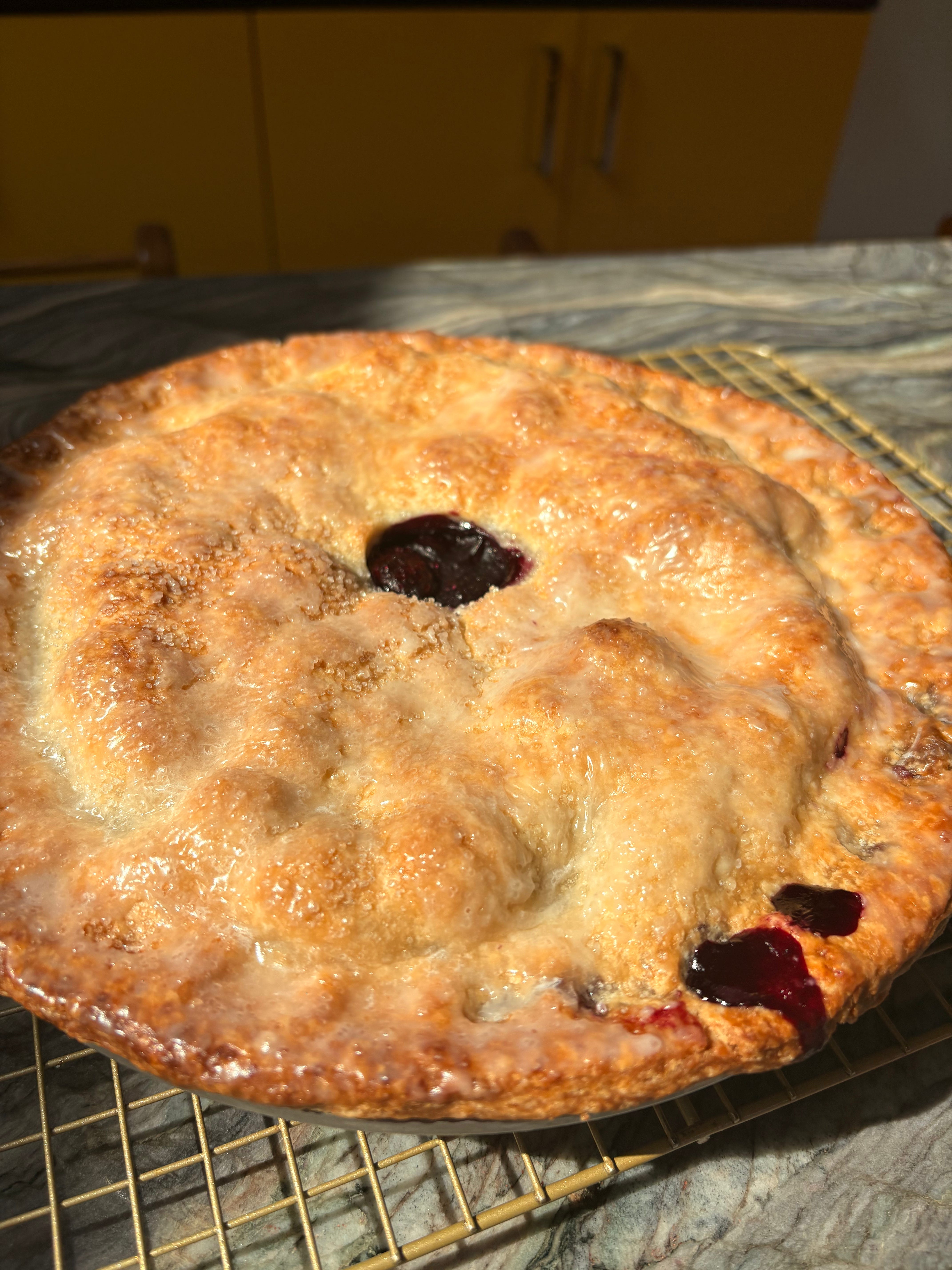
When I pulled it out of the oven with delight and a side-serving of regret that it wasn’t authentic, Michael said: “I don’t even know what a huckleberry tastes like. I always thought they were the same as blueberries.” I 86’ed the regret and went in search of ice cream instead.
And then, because one good thing deserves another, because pie seems to beget pie, and because one of our favorite farm stands grows their own peaches, I made a big peach pie. A pie to share. Oh wait, you might have thought that the big blueberry pie was a pie to share. Nope. Michael said he meant to share it, but …
I hope you’ll make the pie. I hope you’ll share it. Or not. It’s meant to bring happiness — big group joy, little group joy, solo joy. All good.

📚 📚 📚 You can find more recipes in my latest books, Dorie’s Anytime Cakes, Baking with Dorie, and Everyday Dorie.
ℹ️ Click here for helpful links while using Substack.
👋 Say hello and share what you’re making on Instagram and Facebook.
Adapted from Baking Chez Moi by me
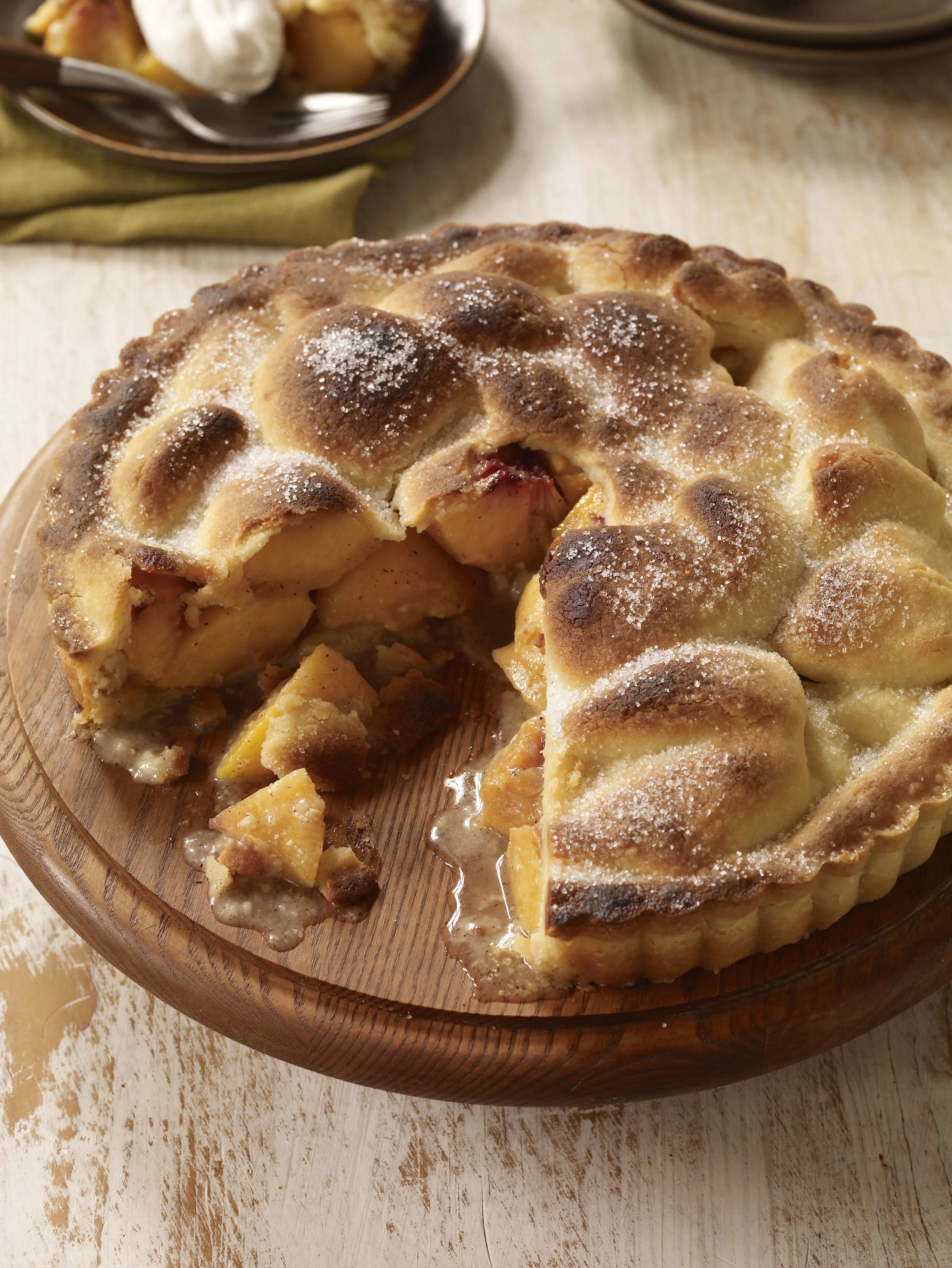
Brown butter. Peach. Tourte. Each of these words makes me happy; together they describe one of my favorite desserts: a covered tart made with sweet dough, filled with peaches glistening in butter that’s been simmered until it turns fragrant, golden brown and almost caramel flavored. The fact that the top crust melts just a little, following the contours of the peach filling and creating an undulating sugar-sparkled cover for the fruit, only adds to the tourte’s temptations.
Comments
Nothing yet. Say the first thing.
Sign in to join the conversation.