
People often view Marcus Aurelius as the voice of calm, detached, serenity, but make the mistake of assuming that he was completely emotionless.
The real Marcus was more interesting than that. He experienced grief, wept, and worried. He struggled with anger, fear, illness, bereavement, war, plague, political intrigue, and the moral burden of ruling the whole Roman Empire.
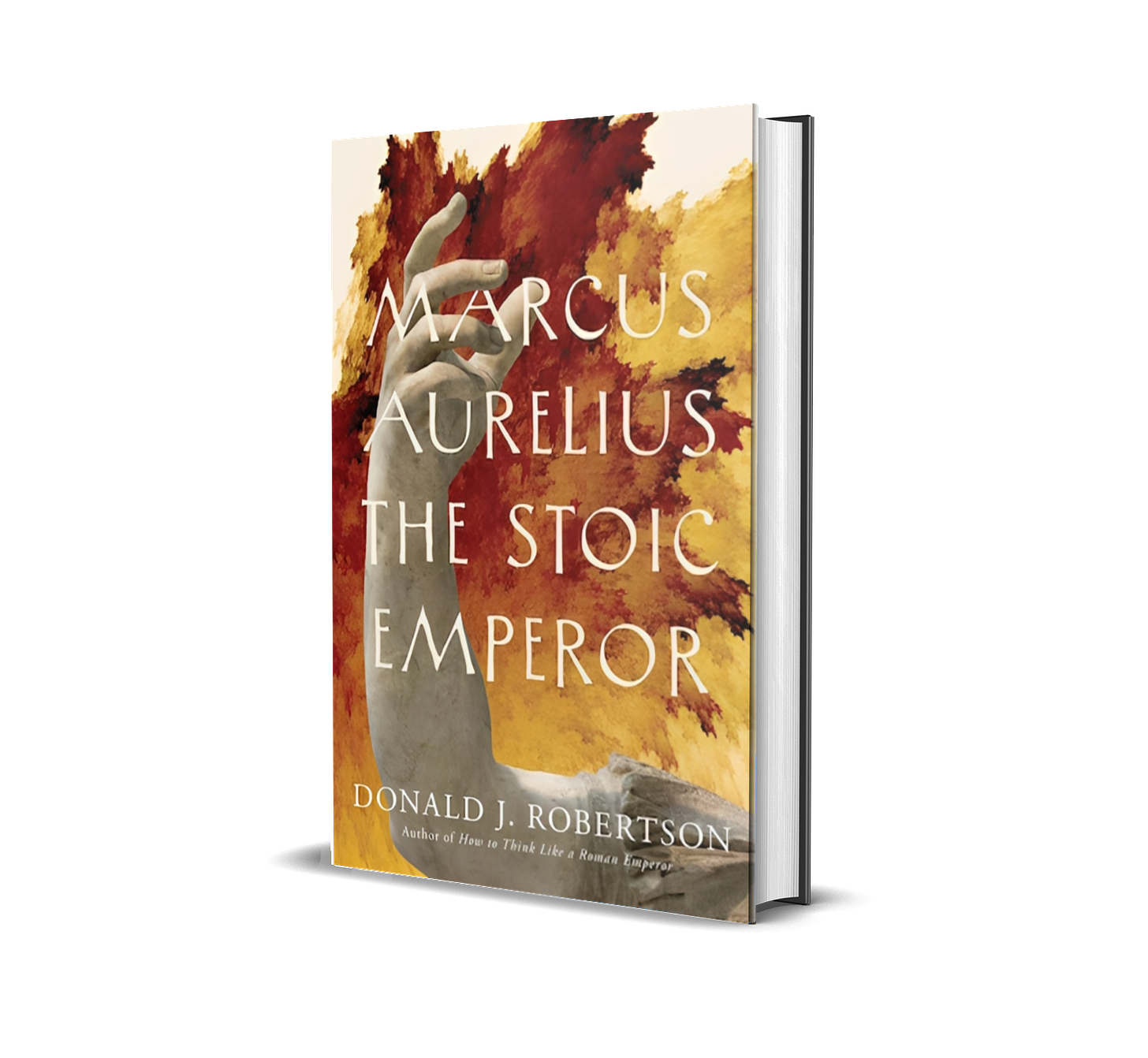
I wrote Marcus Aurelius: The Stoic Emperor, for the Yale University Press Ancient Lives series, to tell the real story of the man behind the Meditations.
Here is a short passage from the opening of the book:
Marcus Aurelius did not have a heart of stone. When the news was brought to him that one of his most beloved tutors had died, the young Caesar was distraught, and tears poured down his cheeks. Palace servants, afraid his reputation would be harmed by such a public display of raw emotion, rushed to his side, trying to restrain him. His adoptive father, the emperor Antoninus Pius, a thoughtful and gentle man, gestured for them to step aside. He whispered, “Let him be only a man for once; for neither philosophy nor empire takes away natural feeling.”
That episode captures one of the most important things to realize about Stoicism. Stoicism was not about becoming cold or inhuman. It was about learning how to experience natural feelings without allowing grief, fear, anger, or desire to overthrow reason.
For example, we’re told that the early Stoics, who founded the school were careful to distinguish between being “free from passions” in the therapeutic sense and merely being unemotional and hard-hearted.
They say, moreover, that the Sage is free from unhealthy passions [has apatheia], because he is not prone to be overcome by them. But they add that in another sense the term apatheia is applied to the vicious man, when, that is, it means that he is hard and insensitive.
Marcus, therefore, did not aspire to be “stoic” (lowercase), or cold and unemotional, but to be wise and unperturbed by strong emotions.
My biography of Marcus Aurelius, explores his life in context: his childhood, his mother Lucilla, his Stoic teachers, the shadow of Hadrian, the example of Antoninus Pius, the wars, the plague, and the experiences that shaped the philosophy of the Meditations.
If you have read the Meditations and want to understand the man who wrote it, the book is available in hardcover, paperback, Kindle, and audiobook.
I’d be curious to read your answer to the poll, and hear about your reasons in the comments section.
Thanks for reading Stoicism: Philosophy as a Way of Life! This post is public so feel free to share it.
No posts
Comments
Nothing yet. Say the first thing.
Sign in to join the conversation.