
The generally weak performance of the Dominican economy over the past 3 years, and especially the 2% growth number from 2025, has generated a certain amount of hand-wringing, as exemplified by this exchange on X.com, where the OP (a former Planning Minister) shows how poorly the country has done in comparison with others in the region and the commenter (a former mid-level official), both from a party now in opposition, bemoans that:
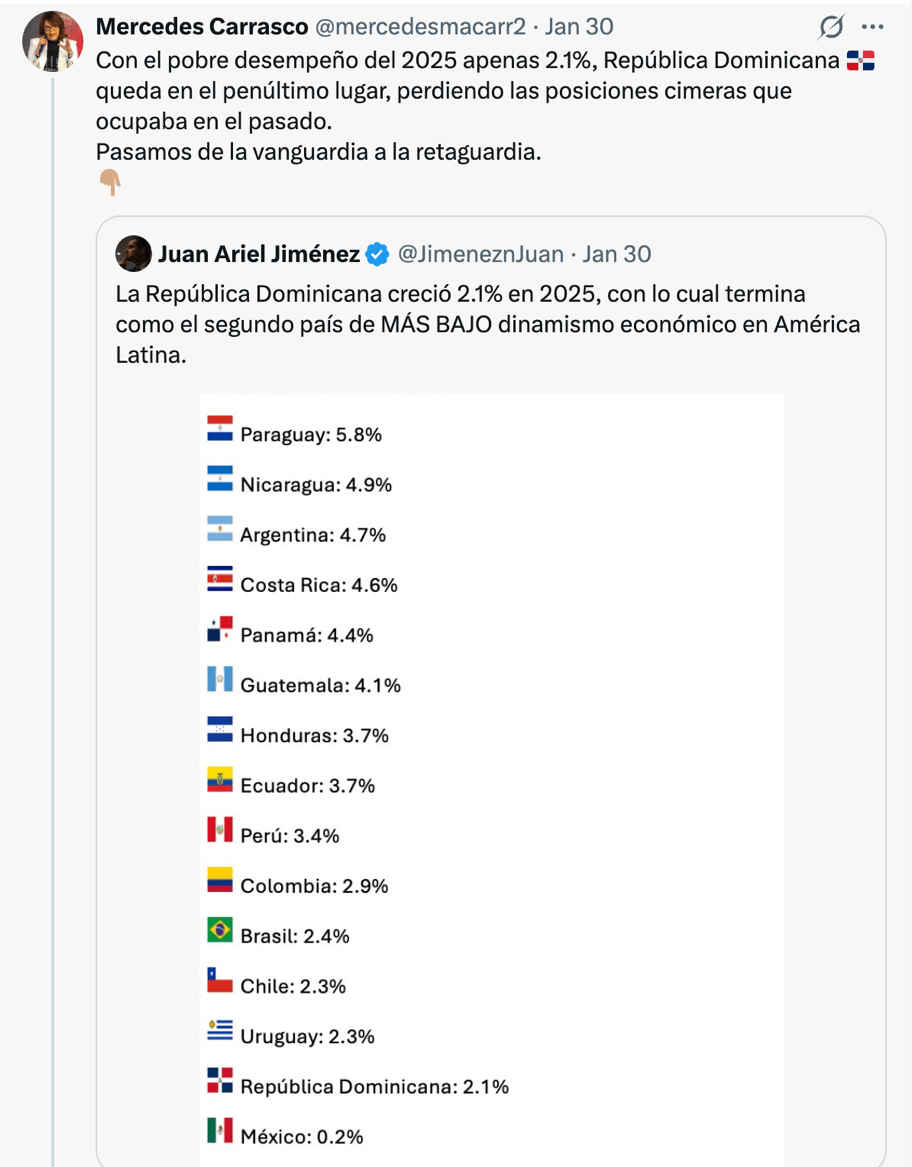
The Dominican economy has averaged growth of 5% for the past 75 years, taking it from one of the poorest countries in the region to one of the more prosperous. It is an impressive achievement. But it did not happen on its own. My feeling is that Dominican policymakers have more-or-less taken that rapid growth for granted, as though it happens on its own without any particular need for policies that may not be popular. And they have gotten away with it…for a while. This is in part because investors also see strong growth as more likely to repeat than not, so they were not initially deterred by the slowdown. But the level of fixed investment in 2025 was down 3.1% from 2024, so it seems the bloom may be coming off the rose.
I spent last week in Nicaragua, which you will find at the top of the ranking, at 4.9%, in the x.com exchange above.[1]Nicaragua remains one of the poorer countries in the hemisphere, and I had expected to find the FSLN government pursuing the usual policies of left-wing governments: large subsidies for basic goods, large public payrolls, and large fiscal deficits, creating inflation and instability.
I was completely wrong.
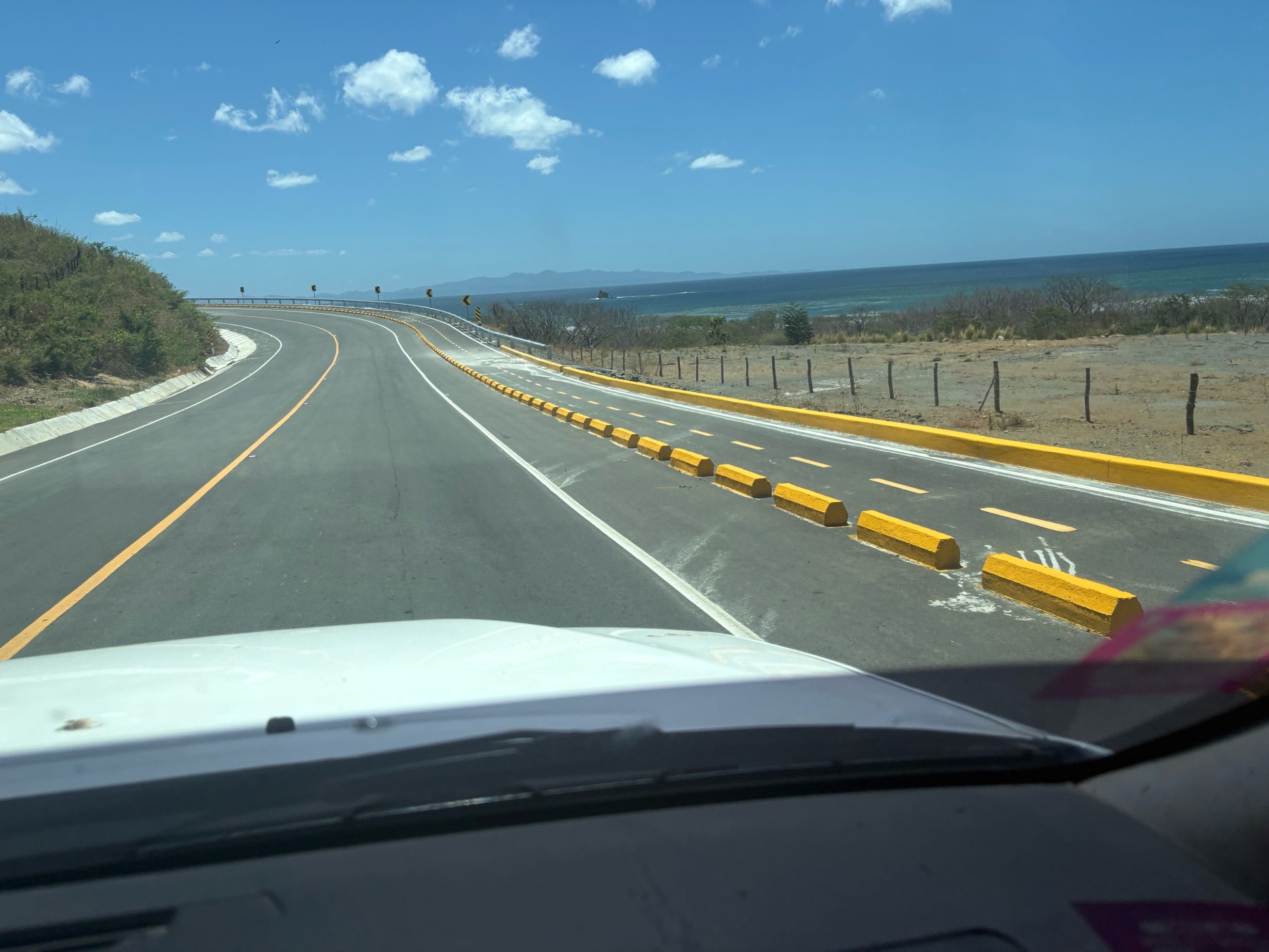
Not only was growth high, but the exchange rate is stable, inflation last year was 2.7%, and foreign exchange reserves are equal to 8 months of imports. The government collects 20% of GDP in taxes, but still spends 9% of GDP in public investment, expanding the road network (picture) and building additional hospitals, in particular. Nevertheless, it runs a surplus both in the budget and in the current account of the balance of payments. Remittances from Nicaraguans abroad, measured in dollars per home country resident, are about the same as in the Dominican Republic, though that does make them higher in terms of the overall economy. Tourism seems to be growing after the political crackdown in 2018 scared many visitors away (see box), but it is still far, far from the scale of Dominican Republic tourism.
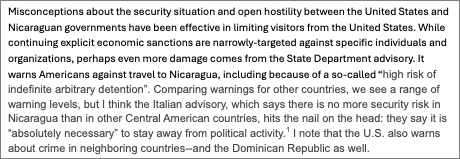
The good news is that it makes the very large and nearby U.S. market a promising area for growth, should political conditions evolve.
Returning to the Dominican Republic, the country collects about 15% of GDP in taxes, spends 2% of it on public investment, and the same 4 ½% as Nicaragua on the public wage bill…and runs fiscal deficits of 4-5% of GDP (including central bank losses, properly accounted for). Monetary policy is erratic, running between stabilizing the exchange rate and trying to stimulate economic growth, with the exchange rate increasingly volatile and inflation of 4-5%.
The Dominican economy simply does not look like the “Tiger of the Caribbean” it once was. It is all still fixable, but the year and a half since the fiscal reform package was withdrawn (probably a good thing) has seen no serious attempt to strengthen the policy framework. Moody’s upgraded Dominican Republic bonds in August, but I view this as a lagging indicator. We were 3 ½ years from elections, and the opportunity for reform was missed. We are now 2 years out, so it is not more likely that major reforms will be undertaken; but the rise in imported oil prices might just be the trigger for a more far-reaching response. In fact, the Iran crisis makes it even more urgent than before that the government take steps to revitalize the economy.
[1] I can’t find a source for this, but it seems like a reasonable number to me: the IMF has estimated only 3.8% based on first-half data, but they apparently went to press before the central bank released a growth rate of 6.8% for the 3rd quarter; 4th quarter data are not yet available (and were only published for the Dominican Republic this week, despite advance indications from the monthly index of economic activity that the BCRD publishes).
No posts
Comments
Nothing yet. Say the first thing.
Sign in to join the conversation.