
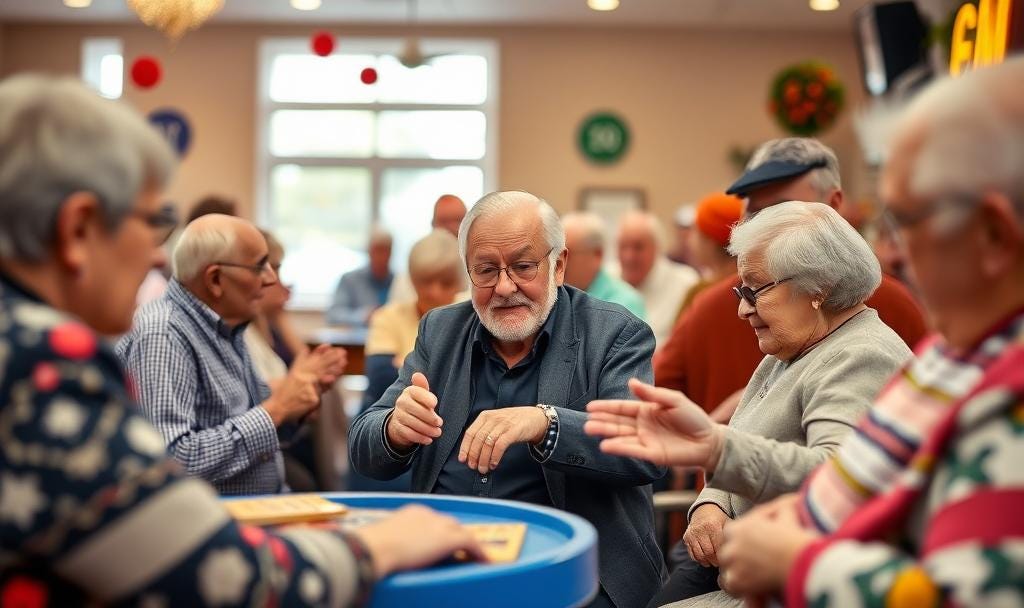
I recently came across a short article that really stuck with me. It shared the results of a study conducted in Turkey, where a group of seniors living in care homes were invited to play simple recreational games — bingo, word puzzles, hot-cold guessing games, matching cards — twice a week for two months.
The outcome? The group that played games reported significantly higher happiness, life satisfaction, and lower feelings of loneliness and somatization (physical symptoms triggered by emotional distress).
“Recreational games may give psychological benefits to older adults. Yet, results of the study need to be interpreted with caution and need to be replicated.” (Source: The effect of recreational games on happiness, life satisfaction, loneliness, and somatisation in elderly individuals: a non-randomized controlled trial, BMC Psychology, 2024)
That got me thinking:
Maybe games are far more than just entertainment. Maybe they hold deep, untapped potential — especially when it comes to living well and aging well.
When I shared this study with some of my senior users and friends, I received a variety of responses. One stood out:
“For highly educated retirees, there’s often less appeal in leisure games. We tend to stay curious about high-tech topics like AI and healthcare — that’s how we spend our time.”
And that struck me.
Because what they described — staying informed, exploring innovation, making smart decisions about health and money — is also a kind of game.
A social game.
Game designer and futurist Jane McGonigal, in her book Reality Is Broken, defines a game as having four key elements:
A goal – a specific outcome players work to achieve
Rules – constraints that push us to be creative and strategic
A feedback system – progress indicators that keep us motivated
Voluntary participation – we play because we choose to
She offers a powerful definition:
“A game is the voluntary attempt to overcome unnecessary obstacles.”
In other words, we play games not to escape reality, but to feel more engaged, more in control, more fulfilled.
The pursuit of lifelong learning. Building financial security. Managing one’s health proactively.
These are all “games” in a broader sense.
Information gathering becomes your competitive edge
Resource optimization (time, money, relationships, energy) is your core mechanic
Trial and error gives you feedback and improves your strategies
And most importantly, you play by choice, driven by a sense of purpose
The “players” of these games might not sit at a console or hold a controller — but they’re equally engaged, strategic, and curious.
This post isn’t about challenging stereotypes around video games.
It’s about inviting a different way of thinking:
What if we all embraced the best parts of games — clarity, challenge, feedback, and voluntary action — as tools to live more fully?
For seniors, games aren’t childish distractions.
They’re opportunities to connect, engage, and grow — whether it’s through puzzles, investing, learning a new tech, or mentoring someone younger.
And for all of us, embracing that “gameful” mindset could mean the difference between feeling stuck and feeling in flow.
So here’s to playing the long game —
intentionally, joyfully, and with purpose.
最近看到一项特别有意思的研究,来自土耳其的学者在养老院中组织老年人每周玩休闲游戏,持续两个月,结果发现这些游戏显著提升了他们的幸福感和生活满意度,降低了孤独感和躯体化症状(BMC Psychology, 2024)。
这让我开始思考游戏背后的“力量”,不仅是对于年轻人,也包括我们每一个人,无论在哪个人生阶段。
我把这项研究分享给我接触的几位长者朋友,他们的反馈很真实:
“大学毕业的精英与没念过大学的老人,退休后的休闲程度会有很大区别。文化程度高的人中,闲得无聊只好玩游戏的人不多,对高科技、AI、医疗这些更感兴趣。”
这段话让我意识到一个有趣的观点:
看似“高科技”、“AI”、“投资”这些高阶兴趣,和游戏,其实并不冲突,甚至可以看作是另一种层次的‘社会游戏’(Social Game)。
在《Reality Is Broken》中,游戏设计师 Jane McGonigal 提出了游戏的四个核心组成:
目标:每个游戏都设有目标——就像理财目标、健康目标、技术学习目标。
规则:游戏有明确规则限制我们的行为,反而激发创造力。
反馈系统:分数、排行榜……现实中就是市场波动、数据反馈。
自愿参与:没人强迫你玩,是因为你愿意去挑战和成长。
换句话说:游戏就是我们自愿去克服“不必要”的障碍的一种方式,它让我们体验到掌控感、成就感和乐趣。
退休之后,有人选择打牌、种花、旅行,也有人喜欢研究投资组合、AI 工具、医疗前沿。
这些看似“严肃”的兴趣,其实也是在玩一种复杂的社会游戏:
信息获取 → 谁知道的更早、更深
资源整合 → 时间、注意力、金钱、人脉
策略制定 → 什么时候买、什么时候退出
身份感与成就感 → 你是谁,在这个社会系统中扮演什么角色
每个人都在玩,只是“游戏的形态”不同而已。
我写这篇文章,不是为了挑战大家对“游戏”的刻板印象,也不是说每个人都要去玩电子游戏。
而是想借此机会邀请大家用一种“成长型心态(Growth Mindset)”来看待游戏的本质:
如果一个小游戏能唤起长者的快乐,那是值得鼓励的;
如果你在理财、学习、社交中找到了挑战与乐趣,那你也正在玩人生最深刻的“社会游戏”。
游戏不只是娱乐,它是一种积极面对世界的姿态。
愿我们都能找到自己热爱的“游戏”,并在其中,活得更加投入、快乐、有意义。
No posts
Comments
Nothing yet. Say the first thing.
Sign in to join the conversation.