
I am happy to share my chapter in a new volume on the political economy of AI, based on a very interesting NBER conference in Toronto in September 2024:
Lindsay, Jon R. 2026. “The More Dismal Science: Perspectives from International Relations on Military Automation” eds. Ajay Agrawal, Joshua Gans, Avi Goldfarb, and Catherine Tucker. The Political Economy of Artificial Intelligence. U Chicago Press.
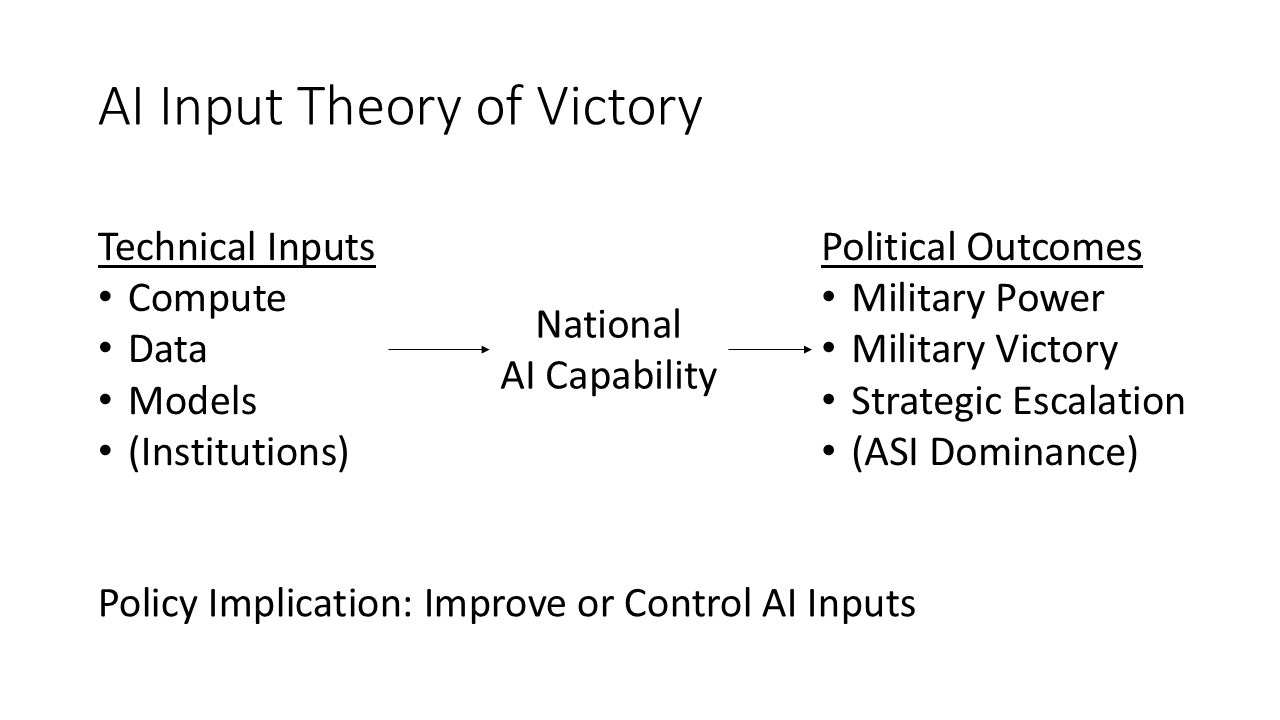
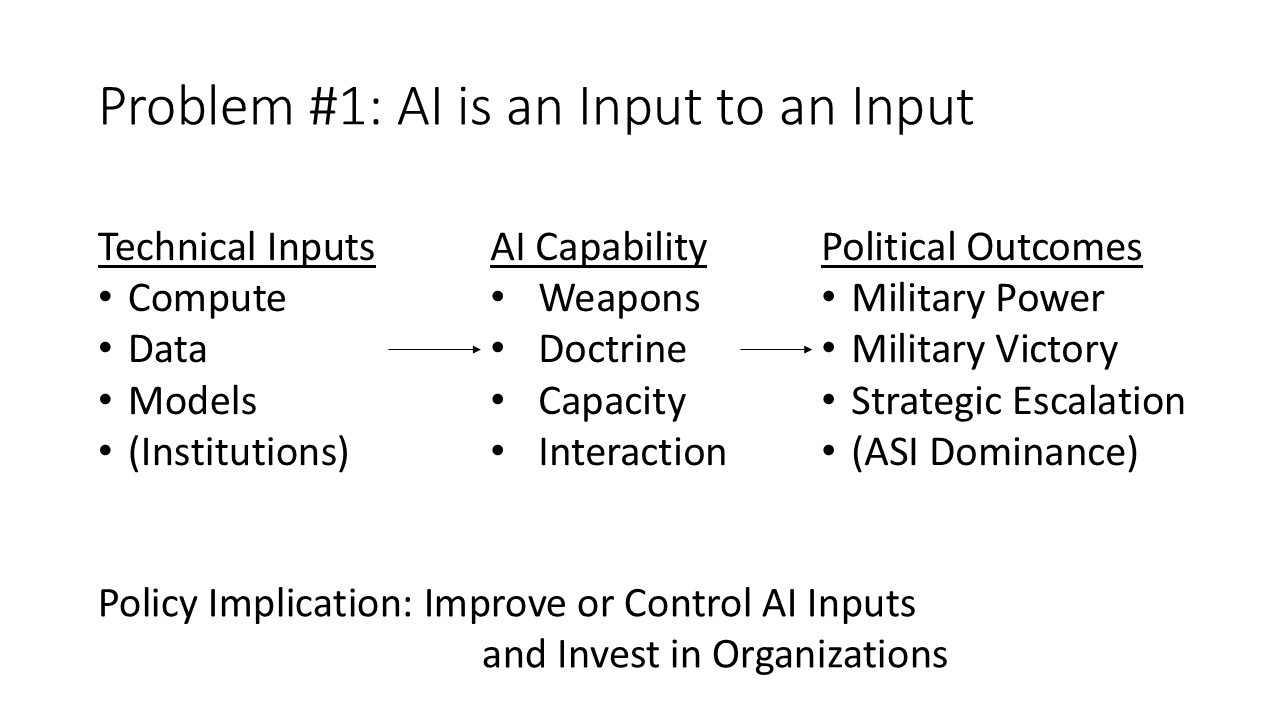
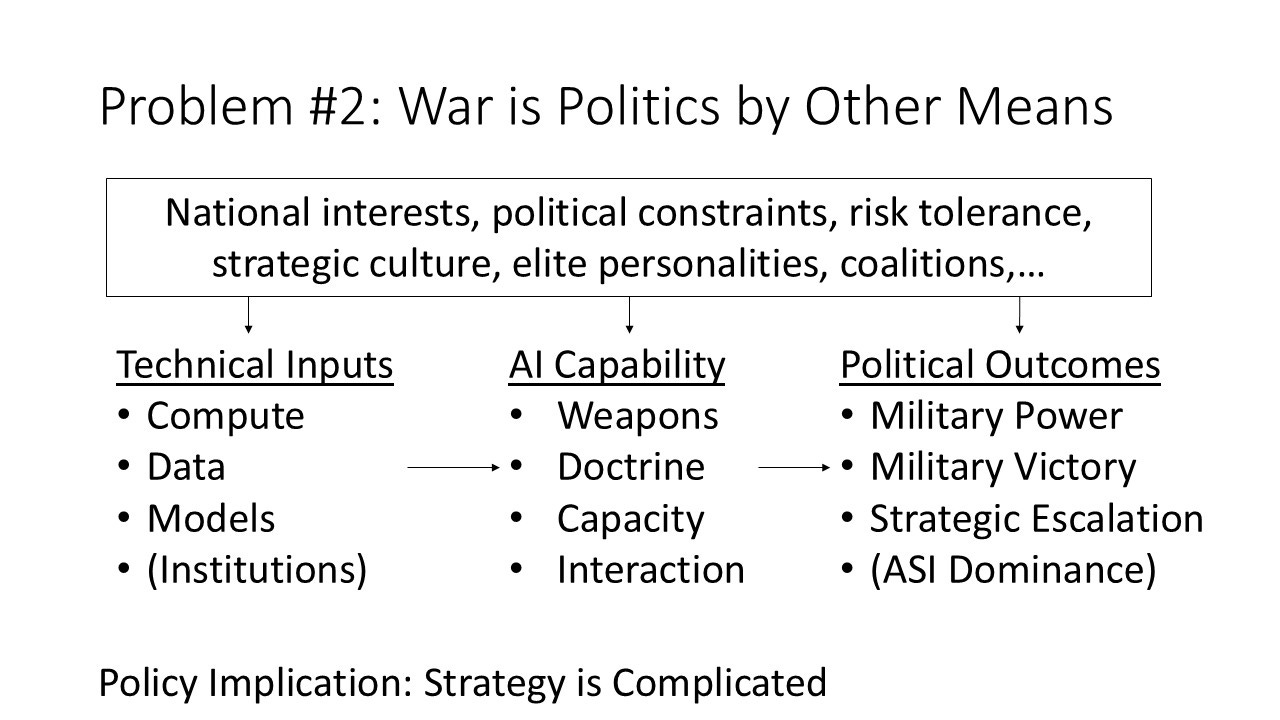
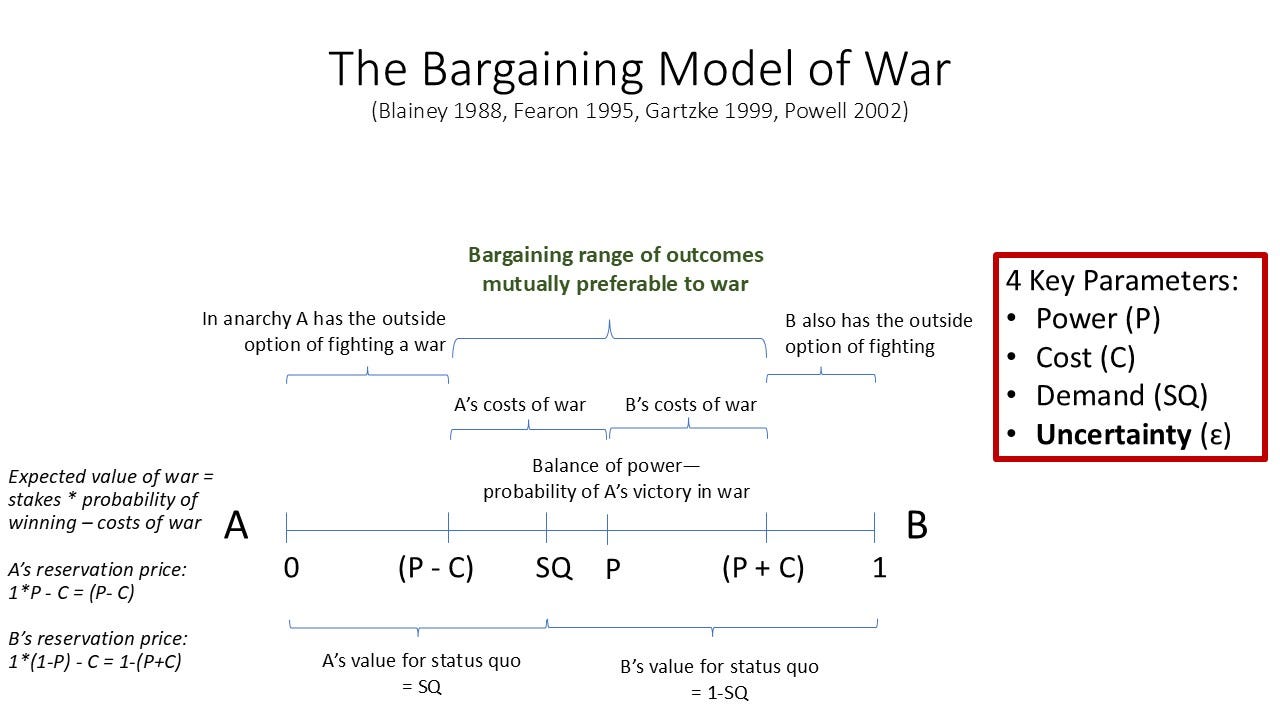
The chapter reacts to discussion at the conference about the technical inputs to AI, such as chips, models, and data. A few participants made strong claims about how this may affect military power. But in my neck of the woods, power is not not just an economic production function but a political interaction. I thought the easiest way to demonstrate this to my friends in economics would be with the trusty bargaining model of war, which international relations stole from economics.
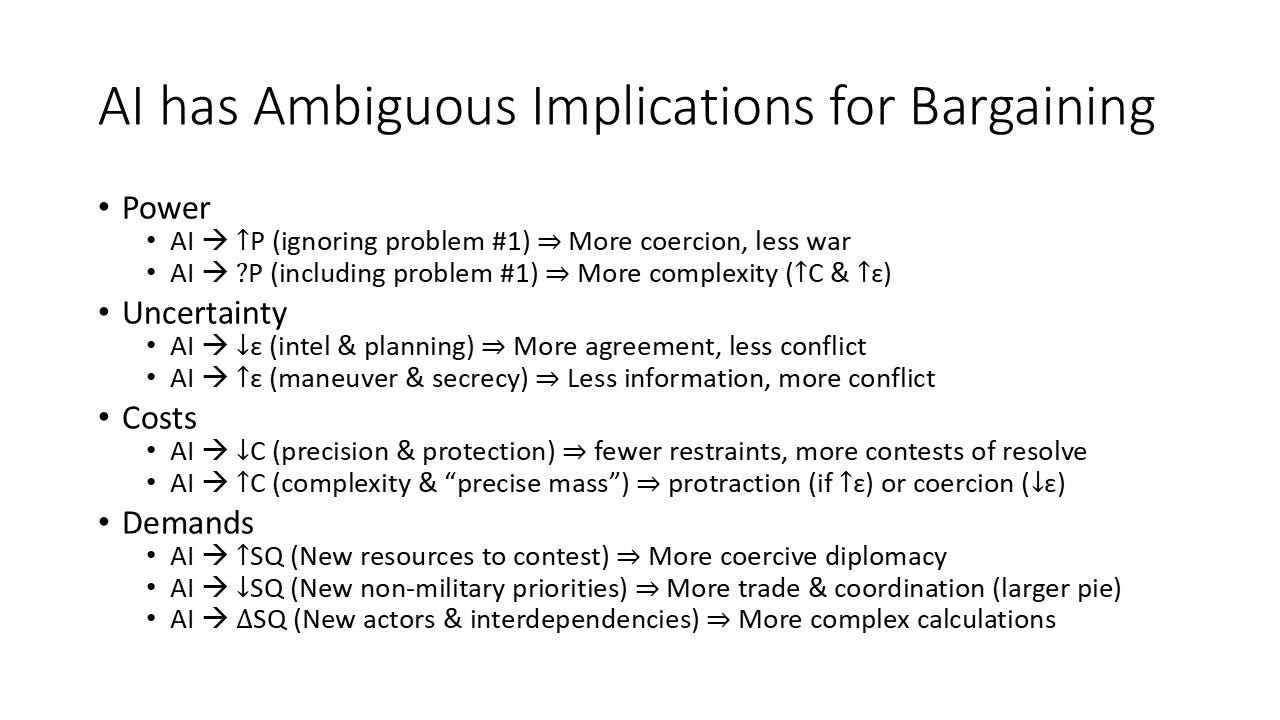
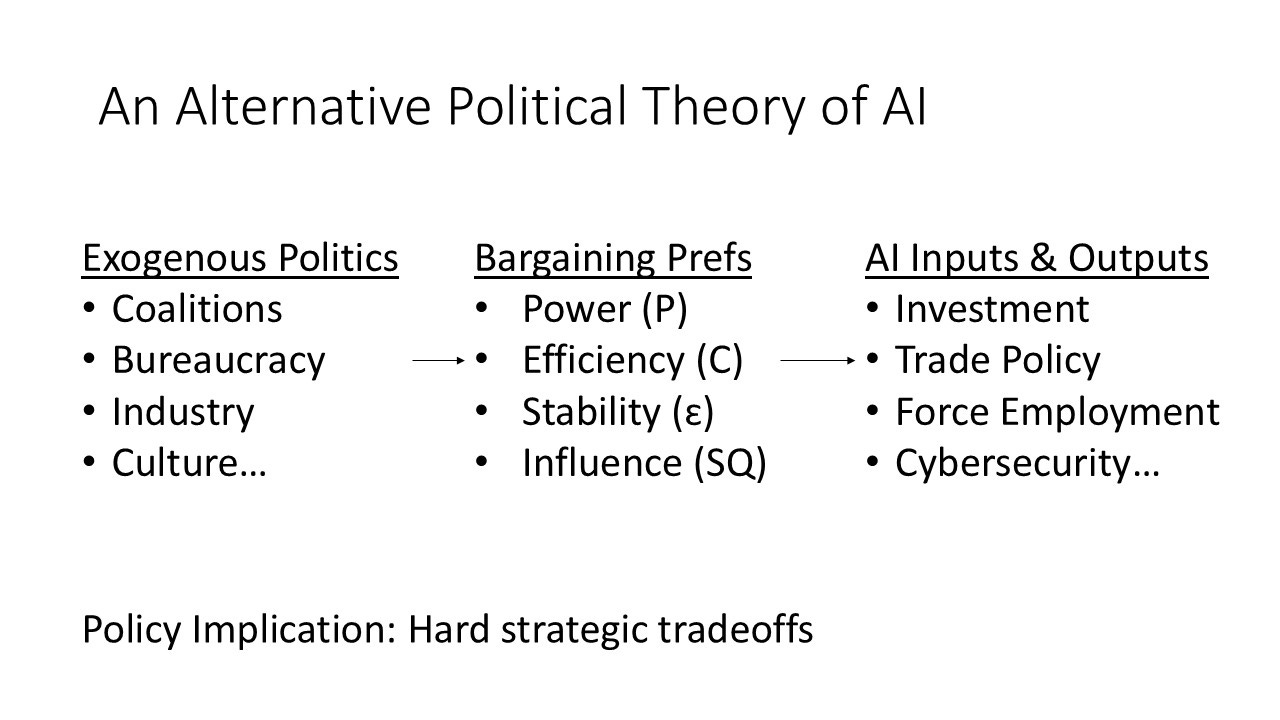
In the rationalist tradition, if war is costly, then actors ought to prefer a deal to fighting. They may still fight anyway if there is uncertainty about power, costs, or commitment. Tragic. Yet the bargaining model itself is silent about how actors should improve their lot. They might manipulate power, costs, demands, or uncertainty, which are the key parameters of the bargaining model. Preferences over them are exogenous to the model, and thus must be sought elsehwere (i.e., at the unit level in bureaucratic politics, elite psychology, strategic culture, etc.). Moreover, different technologies may be more or less suited to these various goals, as Erik Gartzke and I argue in Elements of Deterrence,
The chapter thus asks how AI might affect any of these parameters. The short answer is that it might affect them all, and in different ways. The paper discusses the counterveiling ways in which AI might affect power, uncertainty, costs, and demands. Whether and how it actually does so is an empirical question, but this is a good reason to be suspicious of any deterministic claims about how AI will affect war or coercive diplomacy. The upshot is that instead of focusing only on the technological inputs to AI capability (and policies that control them), it is important to also focus on how political preferences shape the AI means that support them.
The chapter has more detail, but here are some slides that make a similar argument:
(Edit: slide corrected)
No posts
Comments
Nothing yet. Say the first thing.
Sign in to join the conversation.