
The animal-training world lost one of its great teachers last week: Alexandra Kurland.
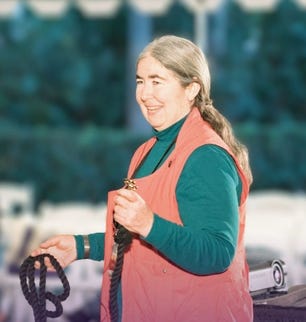
Kurland was one of the first people to use clicker-training techniques with horses, beginning in the 1990s. Traditional horse training has long relied heavily on compulsion—using pressure, and sometimes fear or physical discomfort, to gain control. Unfortunately, mainstream horse training still involves a lot of punishment and negative reinforcement. But Kurland deserves an enormous amount of credit for helping expose horse trainers to training that does not require pain and coercion. She spent decades showing people how positive reinforcement could be used with horses, producing results that were humane and also that produced extraordinary results.
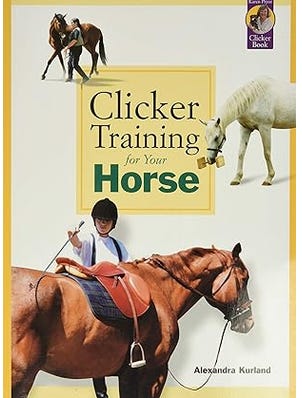
Her book, Clicker Training For Your Horse, was the first book published by the late Karen Pryor’s publishing company. Long before “consent” and “cooperative care” became common language in animal training, she was showing people what it looked like to teach horses without intimidation—and to pay close attention to what the horse was saying in return.
Her work changed the way countless trainers thought about horses, learning and the relationship between the two species.
Although I’ve never worked with horses, I’ve followed her work for years. I am particularly fascinated by the work she did training Panda, a mini-horse, to be a service animal to a blind woman. Mini-horses can live three times longer than a dog, which is of huge value to people who depend on a highly trained animal to help them navigate the world. Kurland demonstrated that a miniature horse could be trained to perform just as effectively as a dog, and that the training could be done solely using reward-based methods.
She chronicled her work with Panda on her blog, and it is also the subject of the children’s book, Panda: A Guide Horse For Ann. Here is a little peek into this amazing animal and the work that went into training her.
Comments
Nothing yet. Say the first thing.
Sign in to join the conversation.