
A river island, a cultural expedition, and getting re-introduced to my homeland’s slowness — that’s what my last newsletter “In a river island called Majuli” was about. And today I’ll attempt to take you on a journey to experience Mukha Xilpo — a heritage mask-making craft of Majuli that I tried my hands at in a workshop led by the local experts and arranged by Northeast’s Travel + Learn Startup, The Expedition Collective (TEC).
Last year I visited Majuli for a day trip and checked out the craft as a viewer, meeting the legendary artist of the region - Hem Chandra Goswami and a few high school students who were learning the art during their summer vacations. But after my second trip to Majuli and trying my hands at the craftwork, I truly understood how learning through immersive workshops can be much more eye-opening or even soul-stirring at times.
The Majuli trip with TEC was truly an ‘expedition’ with a common goal: healing through art and culture. Interestingly titled “Unmask”, it was about tapping into our inner worlds and unmasking oneself through the heritage artform of Mukha Xilpo. ‘Mukha’ literally means ‘mask’ in Assamese, and the craft has been passed on through generations.
The living legend Hem Chandra Goswami was awarded the Padmashri in 2023, India’s fourth highest civilian honour for his contribution to keeping the craft alive and is also credited with bringing creative enhancements to the masks that help actors uplift their performances in a theatrical artform called Bhaona.
Bhaona is a drama of India’s mythological stories, which Majuli is widely known for, and the masks play a huge role in letting actors perform live with dialogues and expressions while remaining well ventilated throughout the performance.
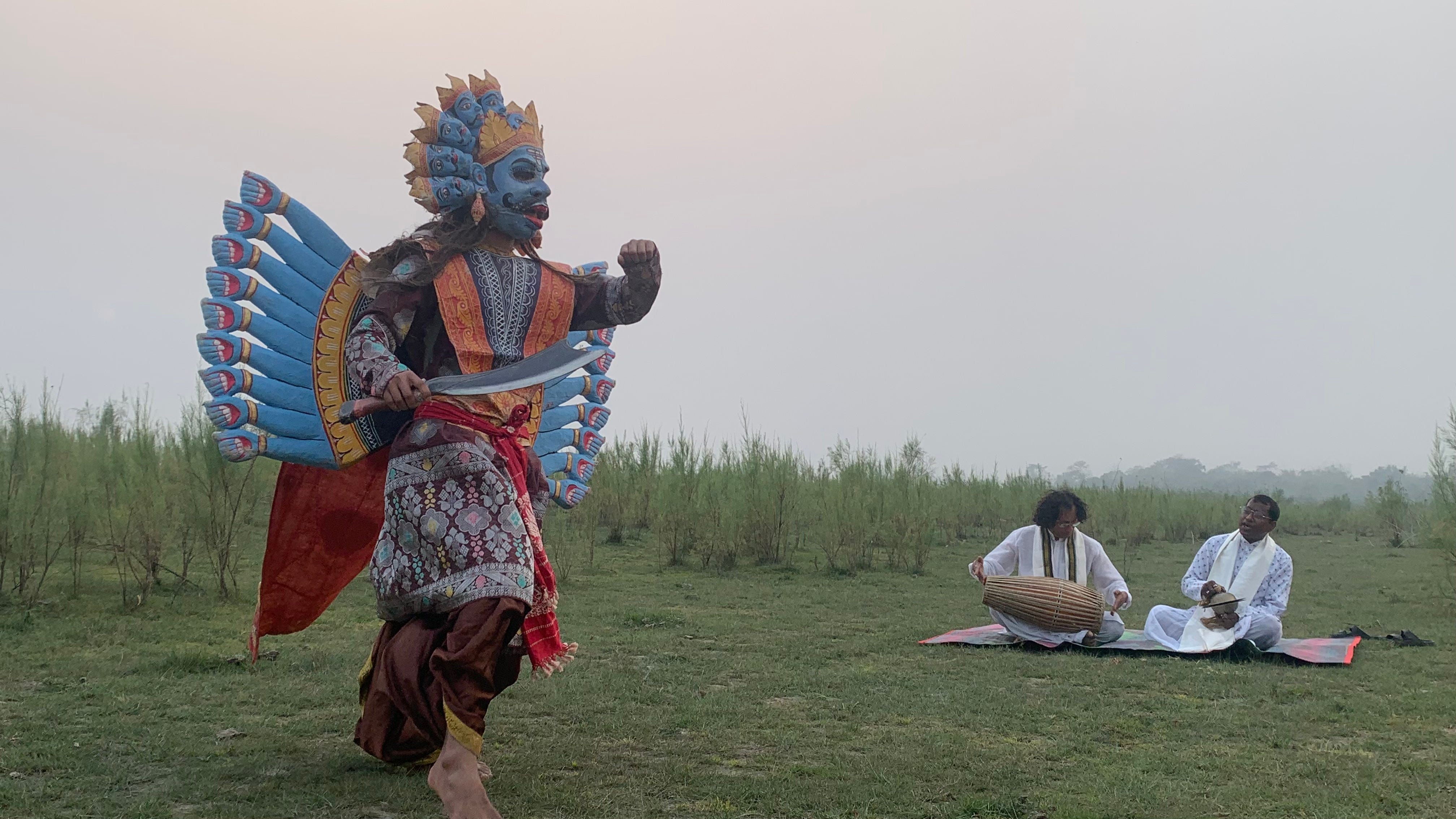
On the trip we experienced Bhaona by the Brahmaputra river bank, and it was something I’ll never forget! It was one of those days when things got aligned with perfect weather before dusk, and we experienced the surreal theatrical art form that the amazing artistes from Majuli have kept alive with such beautiful dignity. Have you ever had experiences that were never in your bucket list but unexpectedly turned out to be a captivating memory that you’ll always keep close to heart? This was such a memory!
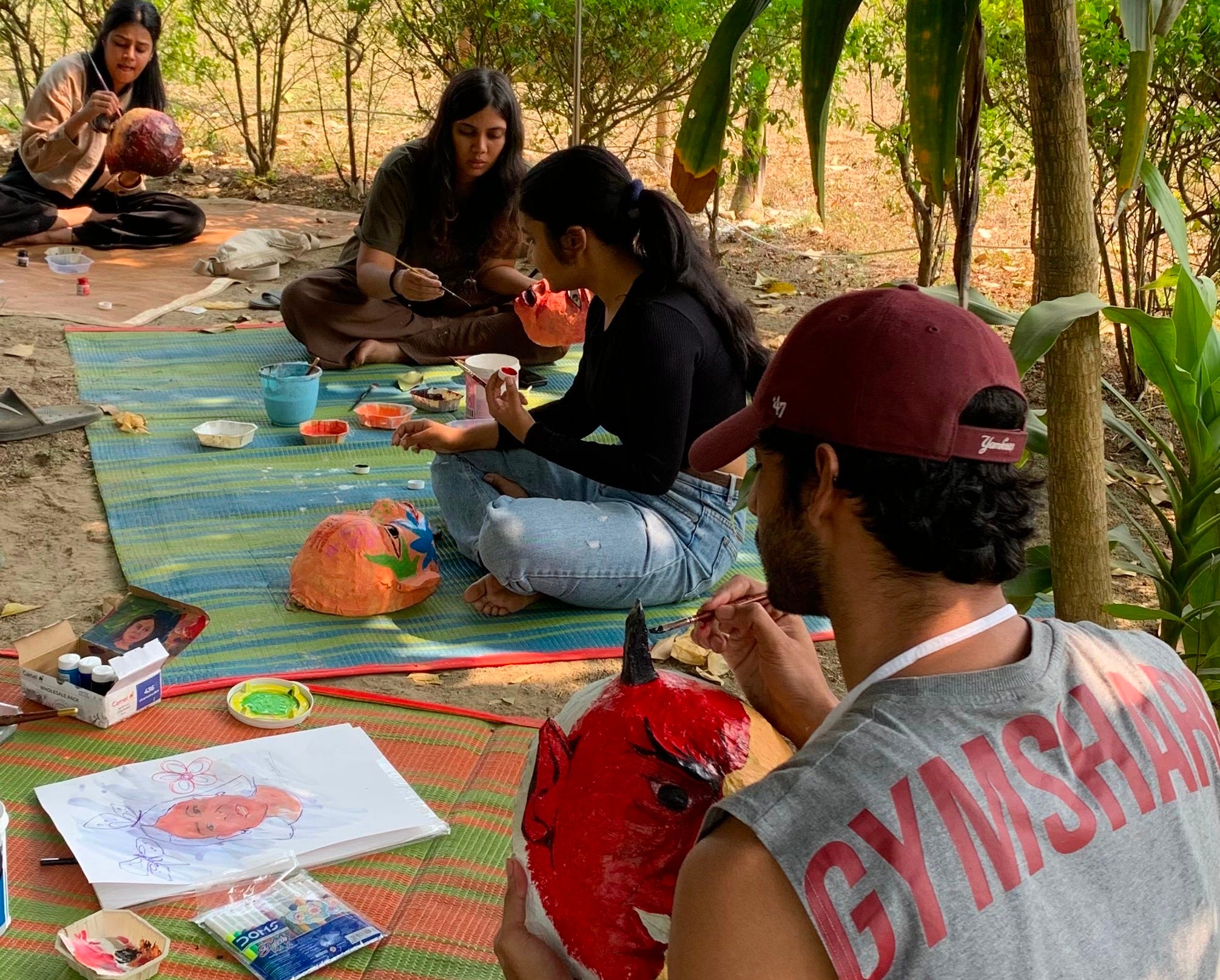
We learnt about the mask-making craft through immersive participation in a workshop led by Hem Chandra Goswami’s son and students. Traditionally, as these masks are used in Bhaona, faces of mythological characters from Ramayana and Mahabharata are created.
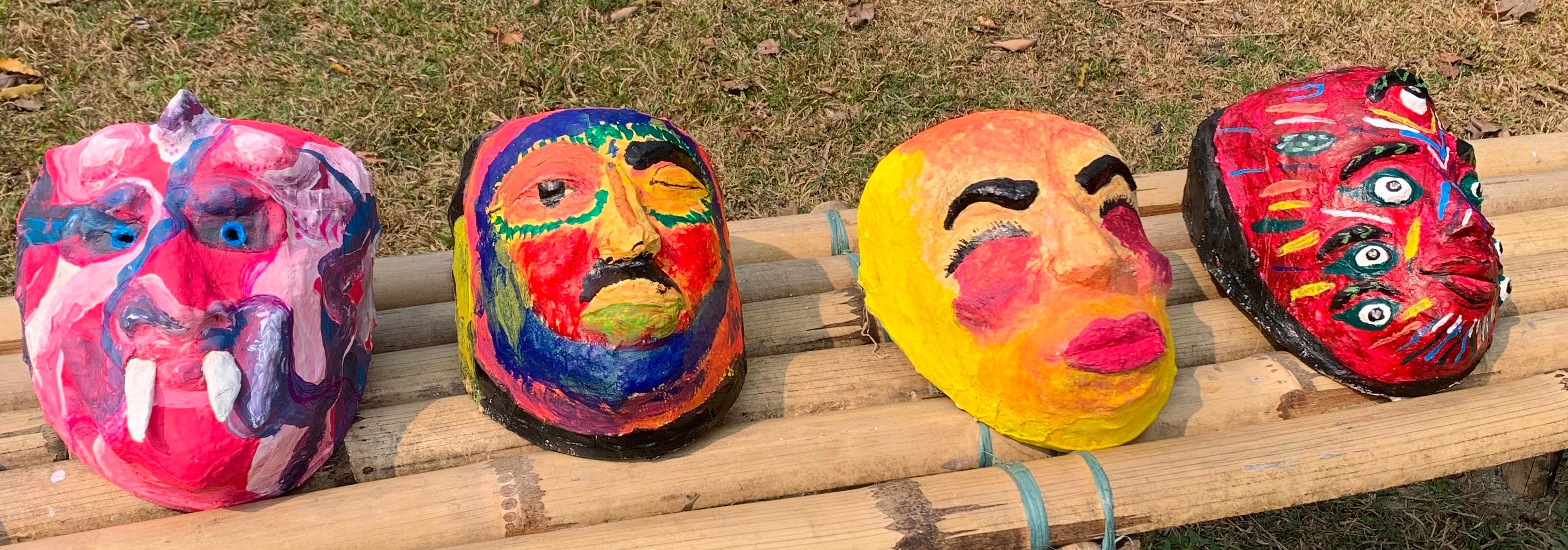
However, the masks we made were to be styled according to the healing sessions we did as a group, where we were asked to pick a quality or inhibition about ourselves that we wanted to confront and unmask. So, we took the creative liberty to craft our masks in a way that pushed us to go deeper and express an emotion that we wanted to pick, address and peel off. The motive was to learn the traditional mask-making skills of Mukha Xilpo and be creatively expressive in its process and final result.
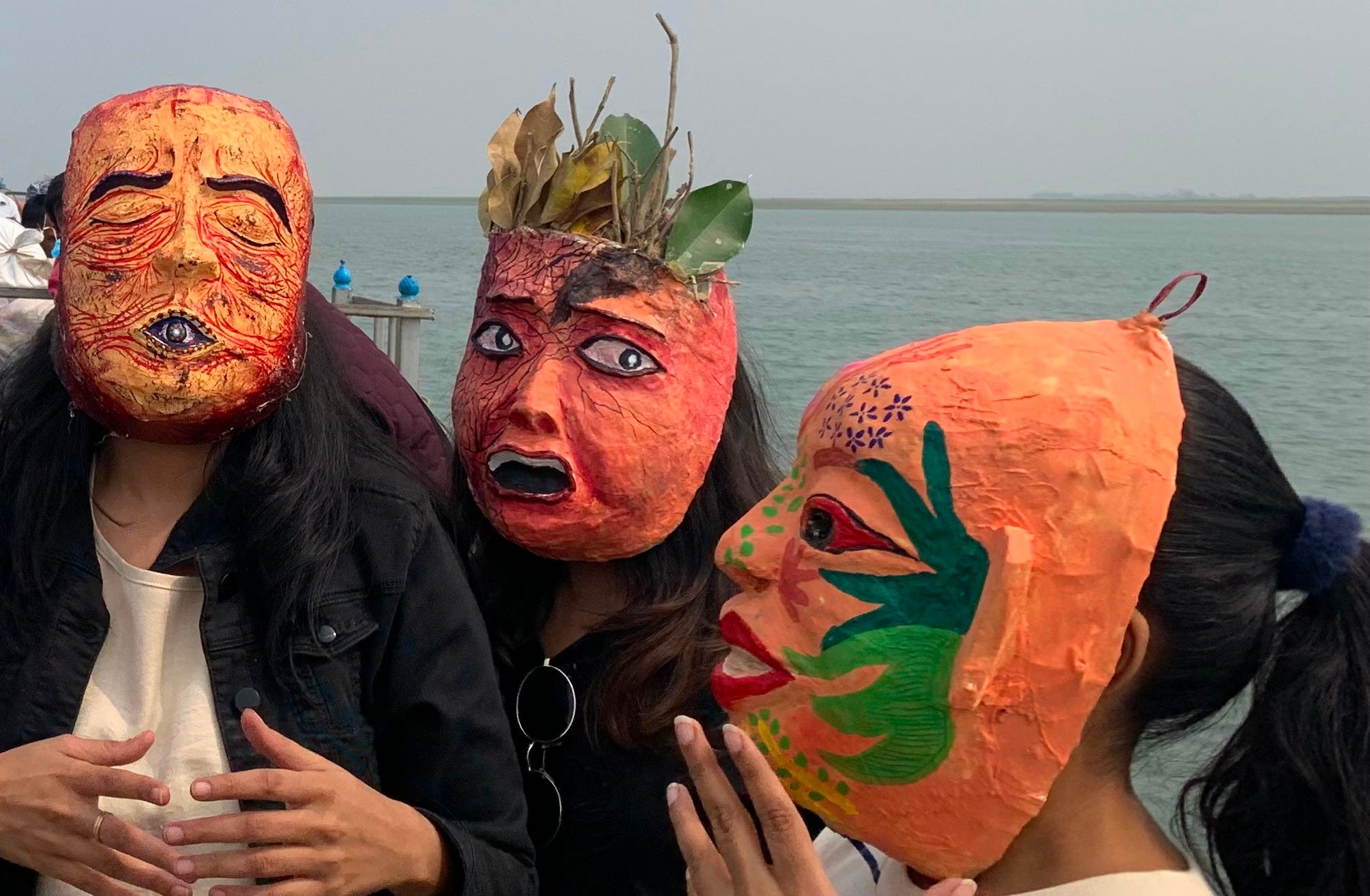
How a Mukha Xilpo Mask is Made:
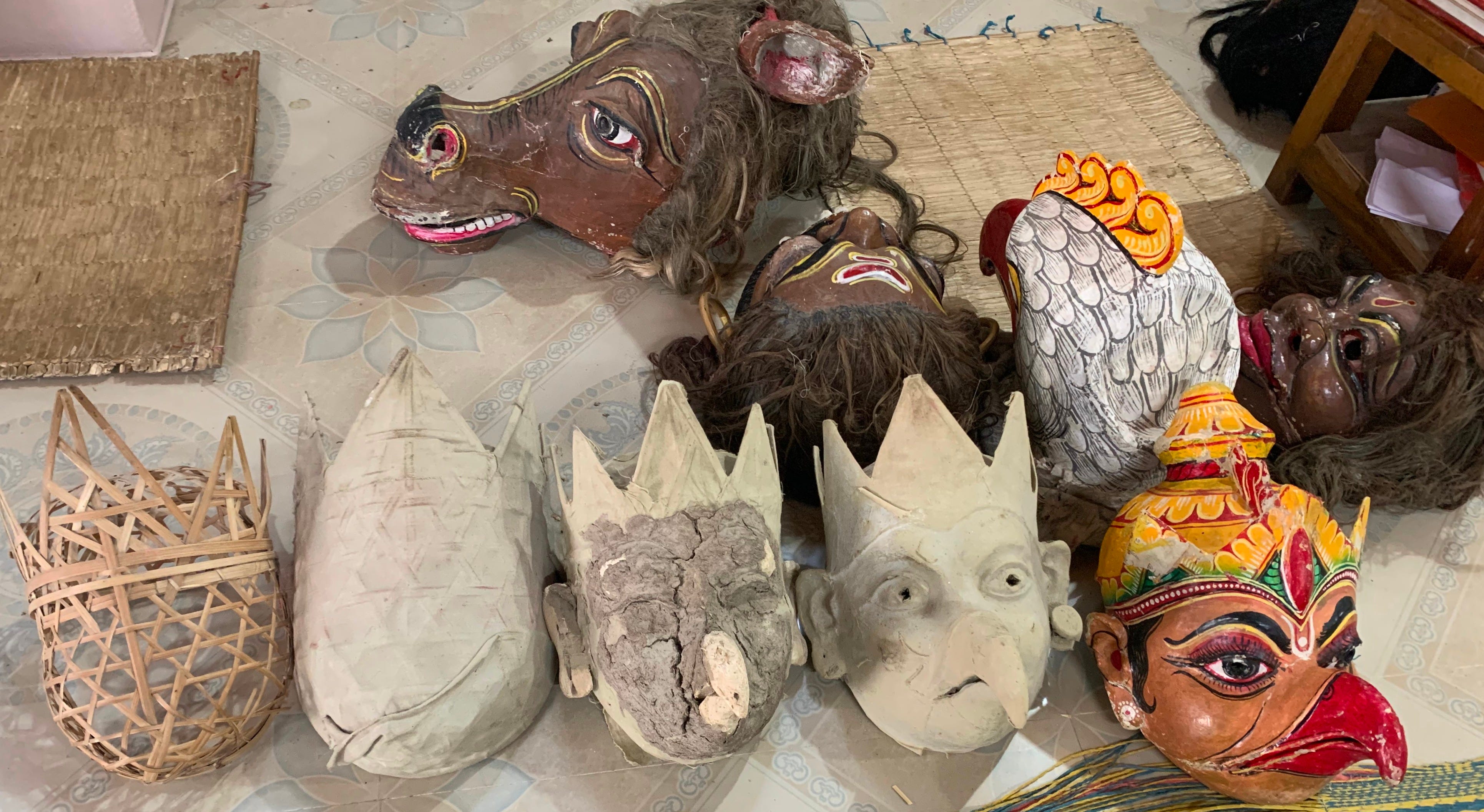
Step 1: The Bamboo Frame: A bamboo frame is created by weaving small strips of bamboo. This is the most complicated part of the process.
Step 2: The First Layer: Kumaar maati (potter’s clay) and cotton scraps are used to make a layer of cover around the bamboo frame.
Step 3: Building the Features: After it dries out completely, a mixture of Kumaar maati and cow dung is used to create the three-dimensional features of the mask. To keep the masks lighter in weight, small pieces of Kuhila (Sholapith) are inserted in the areas that need to be thick and three-dimensional.
Step 4: Painting: After getting it fully dried, the mask is finalised with painting. Traditionally in Bhaona masks, natural colours are used.
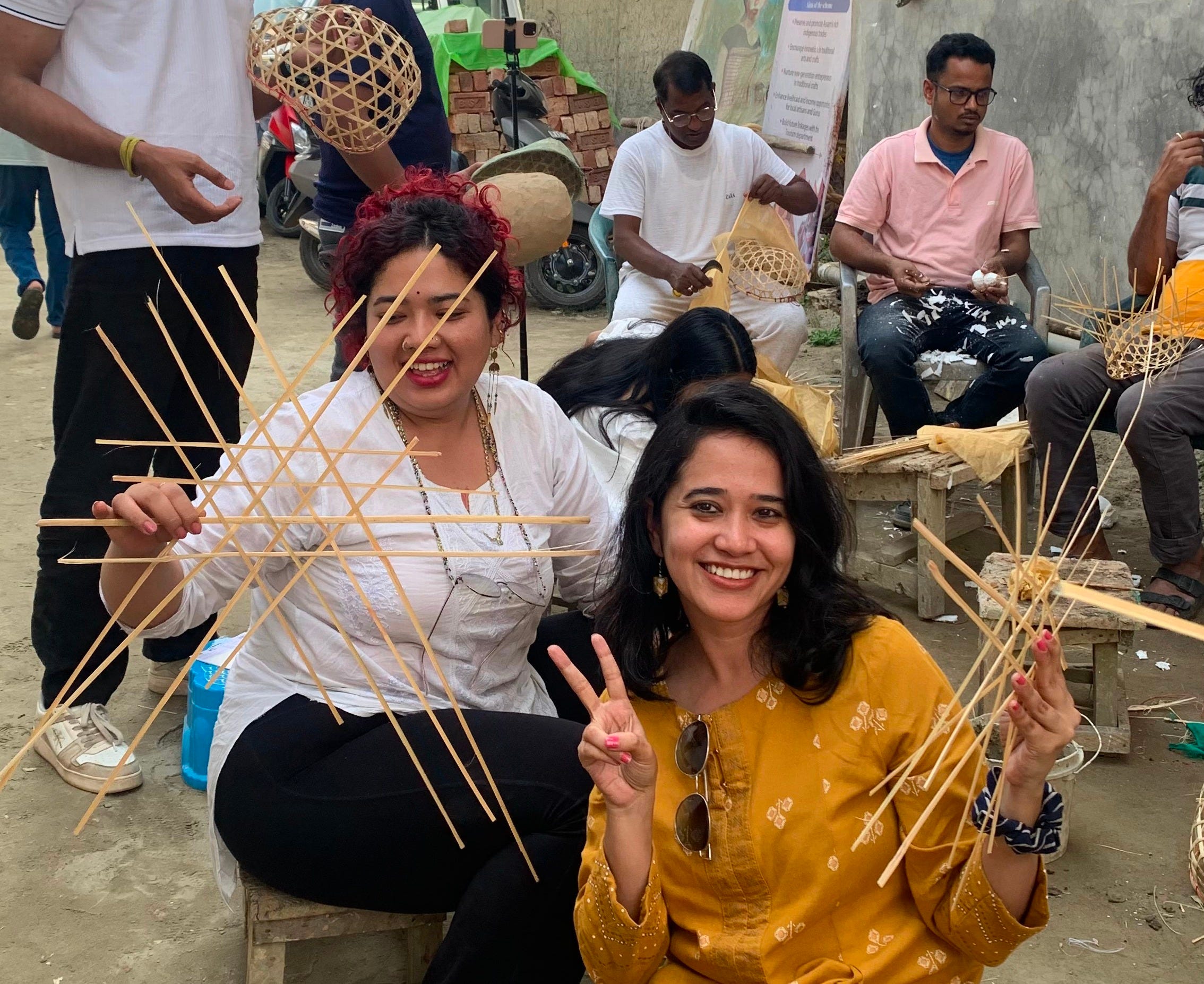
No matter how much experience one achieves as an enabler, entrepreneur or enthusiast of heritage artforms, I believe that once a student of craft is always a student of craft.
I’ve worked in the textile craft sector of India for more than a decade. Crafts and artisanal work hold a strong identity in the cultural fabric of a region and if you delve into it deeper you’ll find many insights beyond the art and aesthetics. There are some narratives about the irrelevance of hand-work in a consumerist, fast-paced society that we keep hearing of. I belong to the opposite side but with a belief in evolution. Not for making a craft work fast, but for it to be alive and attractive for the next generation to carry forward its baton.
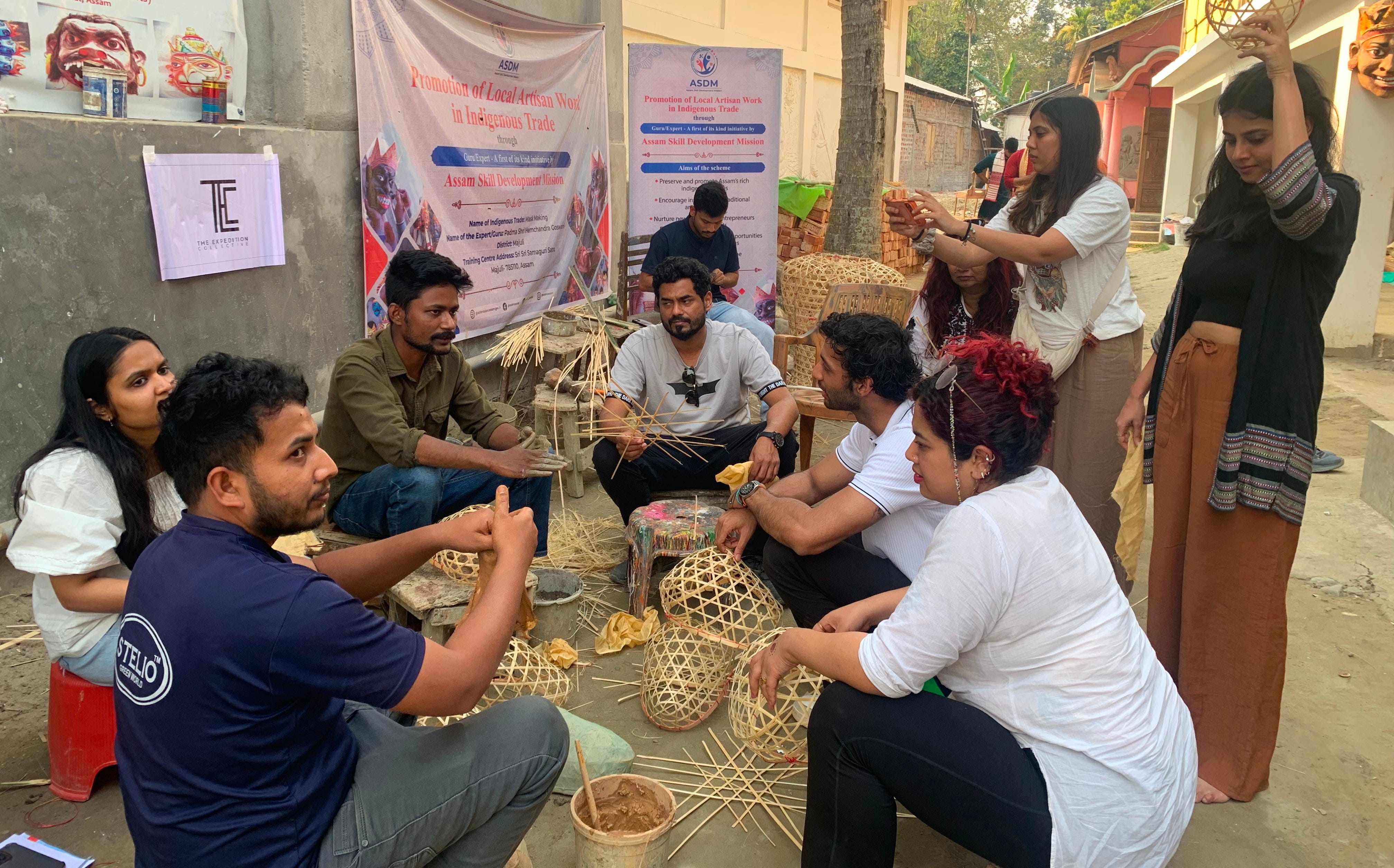
Majuli’s Mukha Xilpo is thriving and there are visitors and tourists who come daily to the humble Samuguri Satra (a Neo-Vaishnavite monastery and home to this artform) because the artisans kept evolving and improving it while keeping the soul and essence of the craft intact. While Hem Chandra Goswami brought creative enhancements and uplifted Bhaona performances, his son and students are involving people like us to explore the craft with creative freedom through such workshops.
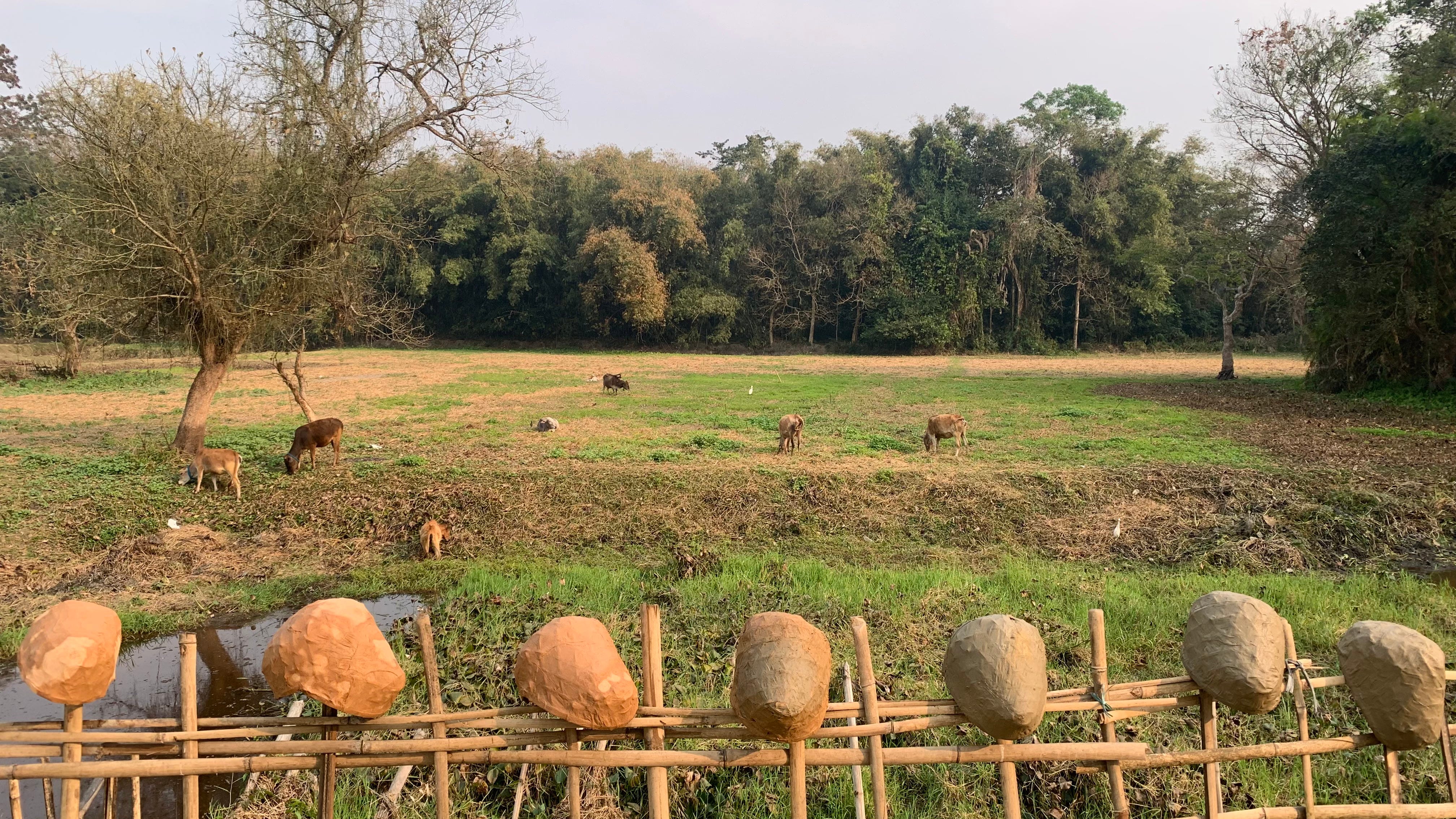
Heritage crafts also have hidden sustainability lessons that never stopped to excite me. The raw materials used in the craft from bamboo to potter’s clay are found abundantly in the island itself. Infact, the use of Kuhila (Sholapith) - whose structure basically resembles thermocol - was used because of its availability in the marshes. I remember one of our local craftspeople humorously adding, “I think Thermocol is a copied version of Sholapith”. Well, maybe it is.
If you’ve ever tried your hands at pottery, you’ll understand how soothing it is to indulge in the play, irrespective of the end result. The last time I was involved in any craft other than textiles was in my college days’ design projects. Majuli made me remember those days — but this time, it was much more relaxing as there was no competition, comparison or marking system.
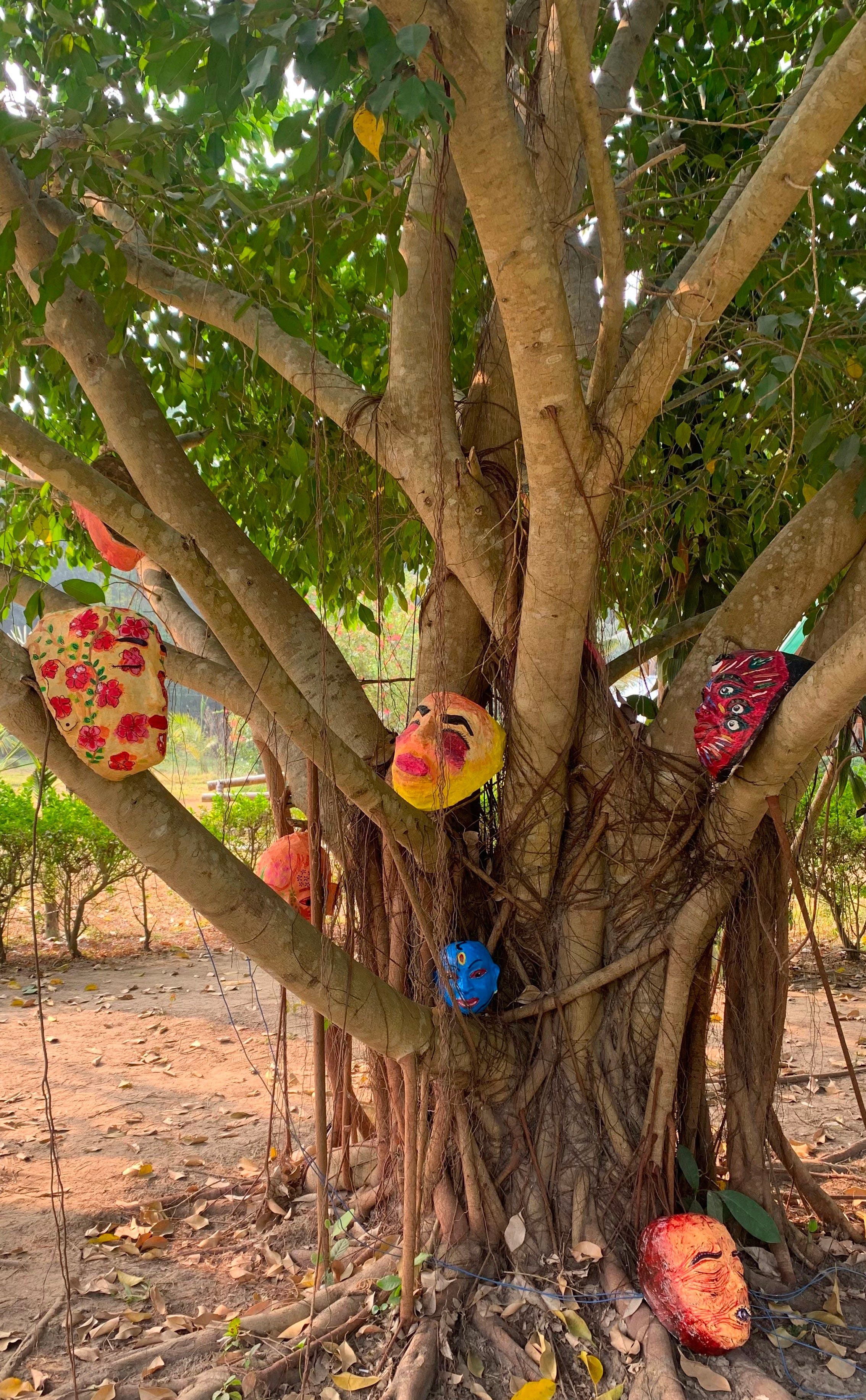
Sometime in the middle of painting my mask, I made a mental note to include more such hands-on workshops in my travels.
We were a group of ten, different by age, professional background, and life experience, but bound together by a common love for travel. Through sunsets at different points on the island, local food, tribal rice wine, games by a bonfire and learning Mukha Xilpo, we unmasked our inhibitions. I learnt that travel is not just about immersing in a land’s soul, but sometimes, consciously or unconsciously, tapping into our own.
I’m looking forward to more such immersive travel experiences, where I get the opportunity to not just be a viewer, but also a participant in learning a craft or skill from people who live by it.
I am Namrata Gohain, a designer-turned-storyteller, writer, and content producer. I document stories on responsible travel, crafts, cuisine, slow living, and my creative journey.
Comments
Nothing yet. Say the first thing.
Sign in to join the conversation.