
I’m delighted to be welcoming Cyndi Lee as a guest on my newsletter today.
Cyndi has been one of the most influential voices in modern yoga and meditation for decades, and I’ve admired the warmth, honesty, humour, and depth she brings to her teaching for a long time.
Her ability to weave contemplative practice together with the realities of being human has influenced countless practitioners and teachers around the world.
She’s also just a really good, funny and generous person, and I’m so happy to call her a new friend and share her perspective with this community.
SUBSCRIBE TO CYNDI'S SUBSTACK HERE
Several years ago, my friend, Ramit, invited me to guest teach a class at her studio, Jaya Yoga. I always love teaching there because the dedicated community is serious—in a light hearted way—about their practice. They understand what yoga is and they apply themselves. They are also really friendly and over the years I’d gotten to know a few of the regulars, including the local rabbi who always showed up incognito in his shorts.
Even so, I wasn’t sure that my new class was going to hit the spot for them. I know I’m not the only yoga teacher who tends to teach what they are practicing. It has to be that way because you really can’t teach something that you are not at least working on. In those days, my practice exploration was more about being on the floor than doing standing poses. No surprise. I didn’t know it yet but 7 months later I would have my first hip replacement, the second one coming just 90 days after that.
So I set myself an unusual assignment: could I create a class that only had one standing pose, which was Downward Facing Dog? Could I create an entire floor class that still included what we call in yoga teacher training, the “required elements” of a mixed-level class? Of course, I could and I did.
It was a warm, humid summer evening when I arrived at Jaya and the joint was packed like sardines. The mats were between one and zero inches apart, side to side and top to bottom. I prayed this would work because the class would involve a lot of props which also take up space.
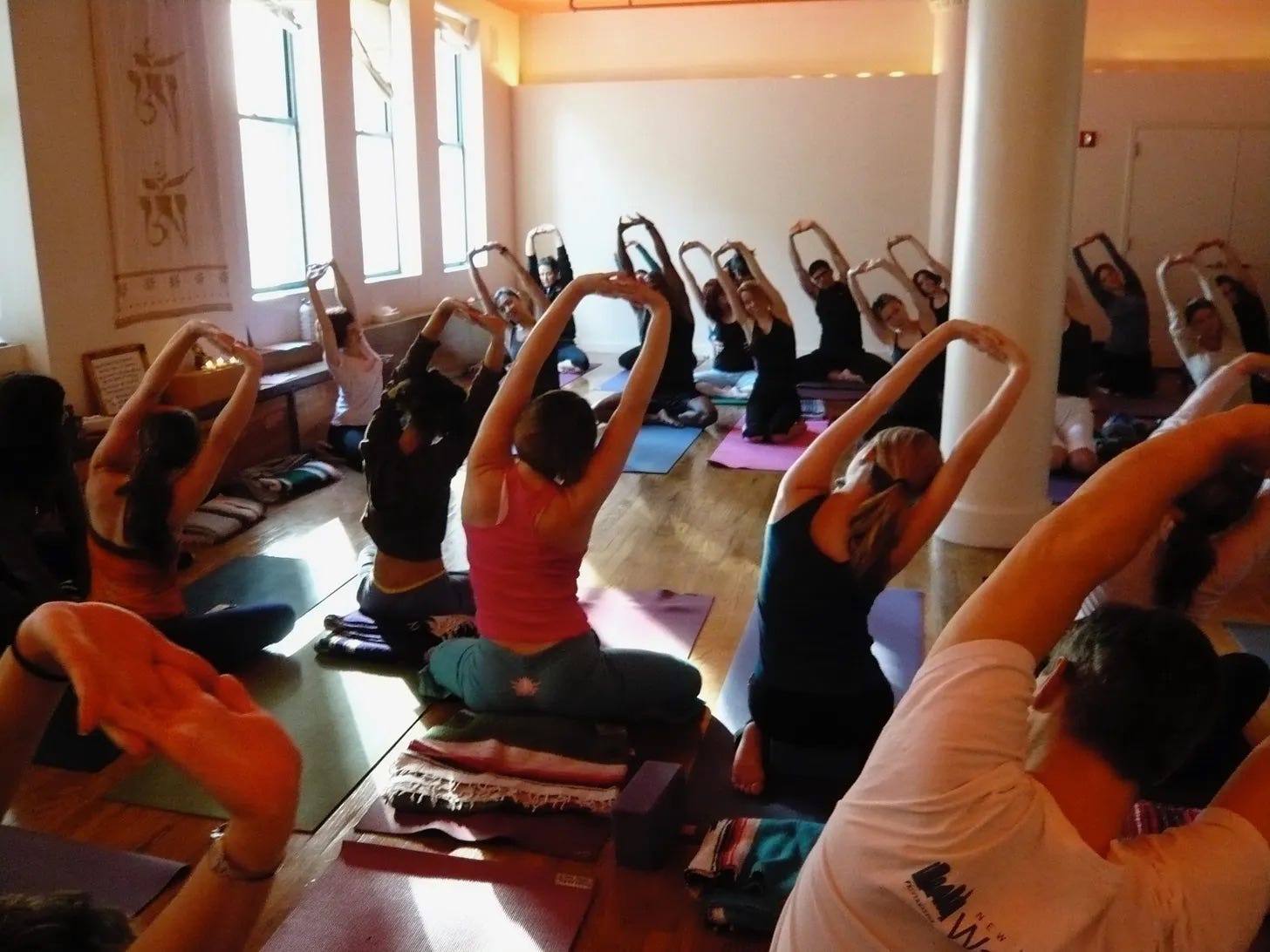
But, ya know, Brooklyners are used to tight squeezes and they know how to make space by making friends. And yogis are like that, too. Generous with each other, they scooched this way and that and no one got grumpy or kicked in the head.
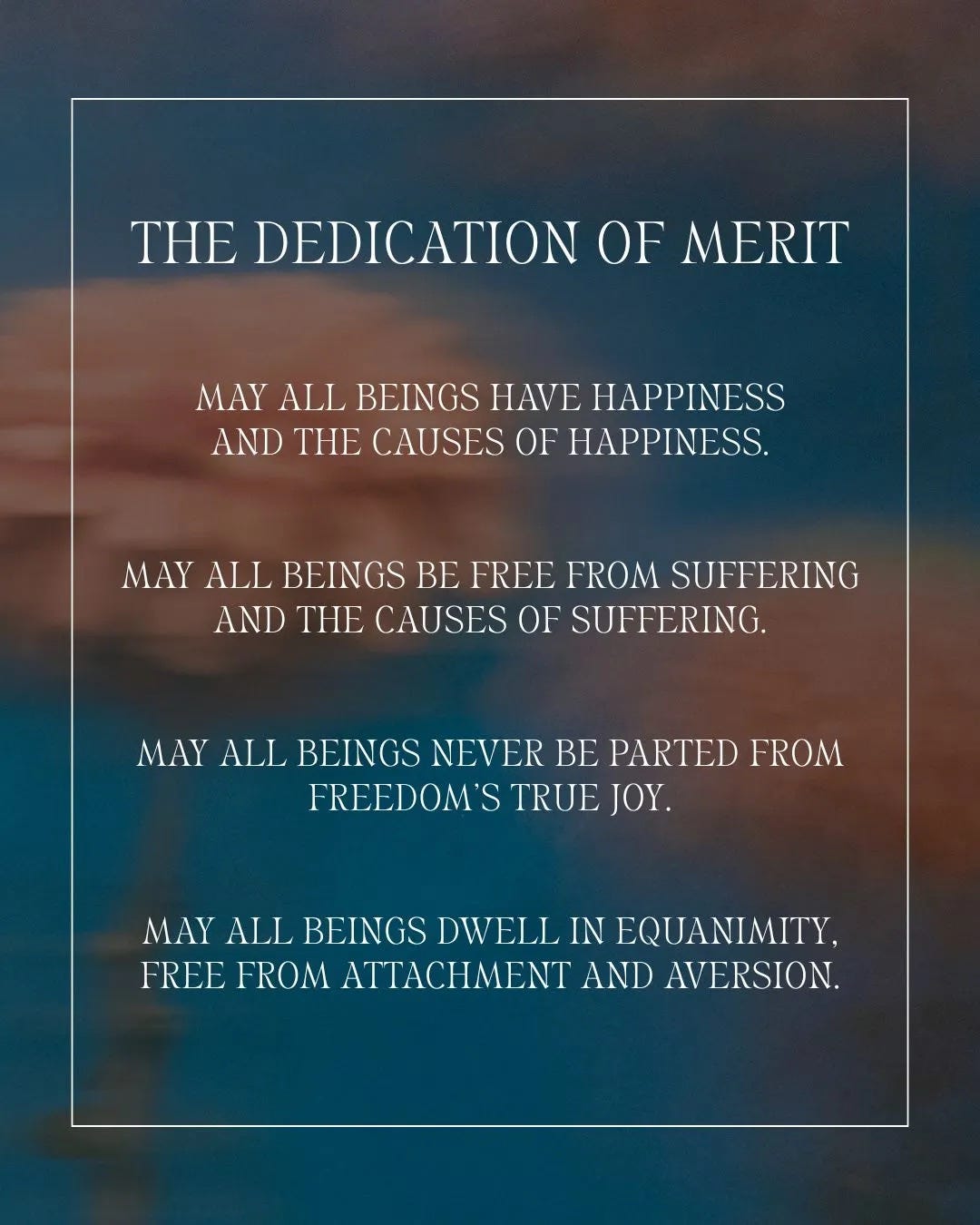
The students were game for this unusual yoga practice and willingly engaged in earth-bound forward and backward bends, twists, inversions, planks, pigeons, downward dogs and the fantastically named Lord Vishnu’s Couch. We end with a delicious down-regulating savasana, followed by the Dedication of Merit.
After class, a few of my regular students set out for dinner, with Ramit and me tagging along in our Jaya trucker caps. As we stepped out onto the busy streets of Park Slope, Ramit turned to me and said, “That class, that is how we should all be practicing now.”
I agreed, and that was the beginning of Long Life Yoga.
Long Life isn’t for people who are already old.
It’s money in the bank for your senior years.
Despite the crowded room at Jaya, it had been a stressless yoga class. Does that seem like an oxymoron? Well, I know that there are some yoga methods that create stress on purpose—loud music, very dim lighting, no ventilation—based on a notion that if you can do intense yoga in an aggressive environment, then you can handle anything in the real world.
I say, Bah! Isn’t life stressful enough? My cortisol spikes just reading the New York Times every morning.
Cortisol. Glucose. Hormones. This is what I really want to talk about. If you are not a teenager anymore, or perhaps you are over 50, you know that your hormones have changed.
Your whole body changes but it happens slowly, and not all the parts change at the same time. We don’t notice it, until we start to feel uncomfortable, or creaky or bloaty or different from how we used to be. That is because your hormones, which control everything, change whether you are paying attention or not. (ie,.brain fog….)
If you do pay attention, you can flip that scenario so that instead of your hormones making you feel ways that you don’t like, you can make them work for you.
Let’s take cortisol.
Did you know that if you exercise hard when you are tired, it can increase cortisol? So can intense physical activity. That’s not necessarily a bad thing. But if you engage in strenuous activity frequently without allowing enough recovery time, cortisol levels may remain elevated for longer than is helpful. Over time, this may make it harder to recover and build muscle effectively. You may experience fatigue, slower recovery and be at risk for more illness. This is one form of physiological stress.
Back in the day, we used to practice vinyasa yoga with high energy, passion and vigor. It was fun! Eventually, for many of us, that style of practice no longer felt sustainable. Recovery became slower, injuries accumulated, and our practice often felt more exhausting than energising.
It’s not a huge surprise that all of my vinyasa/ashtanga teachers now focus on other physical practices. Some do weight training at the gym to keep up their muscle strength, or slow flow variations of the Surya Namaskar. And one of them has returned to her dance roots, doing 15 minutes of ballet barre daily.
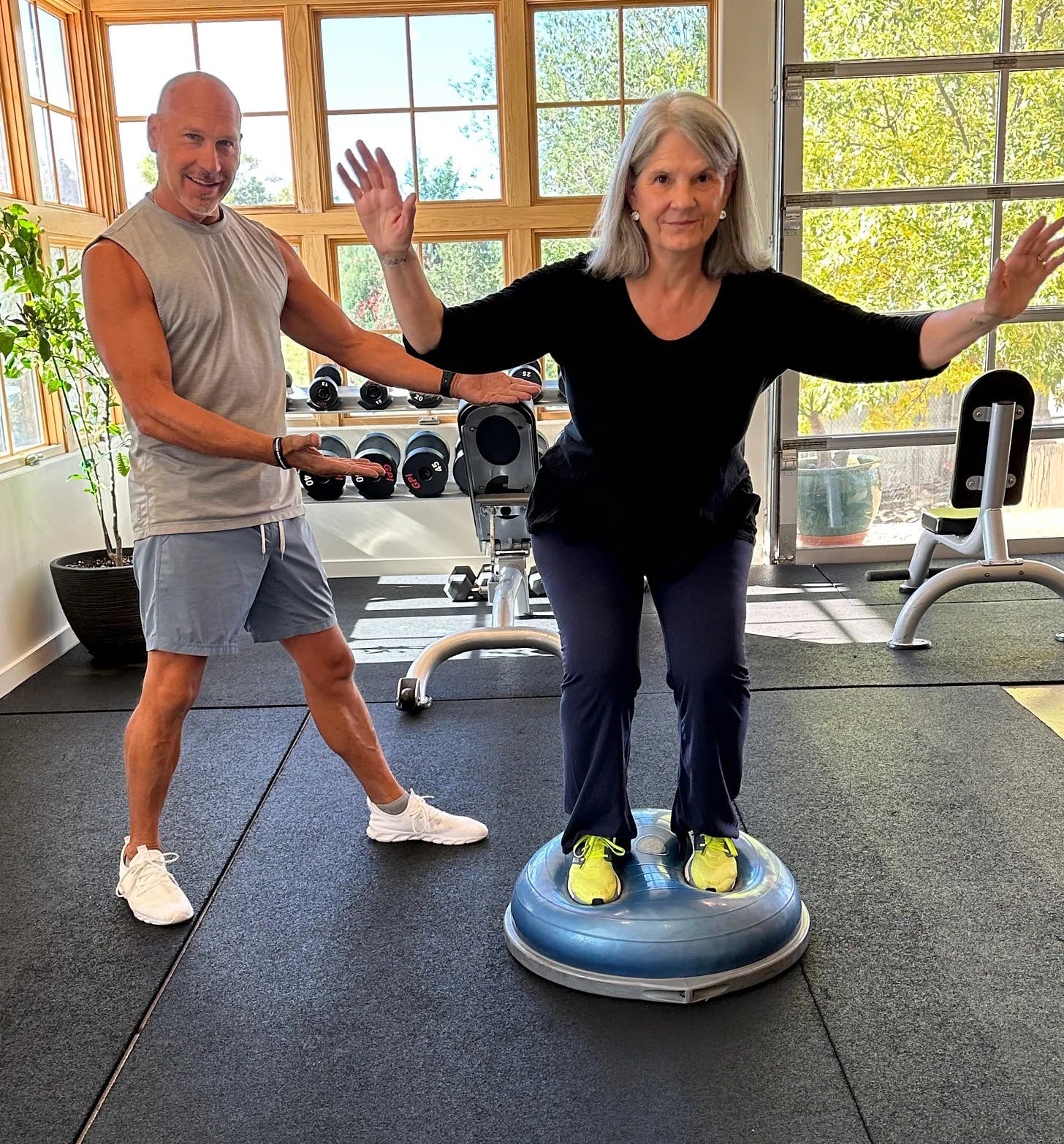
This is exactly what is recommended. If you can avoid overtraining—training too hard, too often and for too long — you can get the uplifting benefit of cortisol without getting stuck in flight-or-fight.
Long Life Yoga fits the bill perfectly. No longer a floor-bound class, I have evolved the Sustainable approach to include every kind of asana.
Our tools include strength building through longer holds and reps, flossing the joints, medium-pacing, rest intervals, conscious transitions, and layering instructions that help students keep attentional balance - another way to support steadier energy throughout practice.
Long Life Yoga is your #1 anti-aging medicine.
One of the most powerful aspects of Long Life Yoga is that it is non-performative. I have been in yoga classes where people will applaud when another student demonstrates an asana. To me, this is the anti-thesis of what yoga is about. If we are using our yoga for external validation, we are missing what it means to have a practice.
For 18 years, my life as a modern dancer in New York City, was built around performances. There were three phases in my life: pre-performance, performance, post-performance. I lived this cycle constantly. The anticipation and the follow-up were the biggest parts of my life. I was nervous about the future, and critical of the past. Talk about glucose spiking and crashing! Eventually, the rare evenings of performing when I felt vibrantly present weren’t enough for me to continue that life.
Now that I practice Long Life Yoga I am much more stable. Because it is non-performative, every class is intimate and interesting. Can I be in the pocket of my energy today? Can I have a fullsome conversation between mind, body, energy, ambition and being present with how everything keeps changing?
The Sanskrit word, Saddha, is often translated as practice, but it really means faith or confidence. This is how you will feel when you step onto your mat. No adrenal rush, no stress, no glucose highs and crashs.
Long Life Yoga is not just a class. It is a real life practice. It has no end and every day is a fresh start.
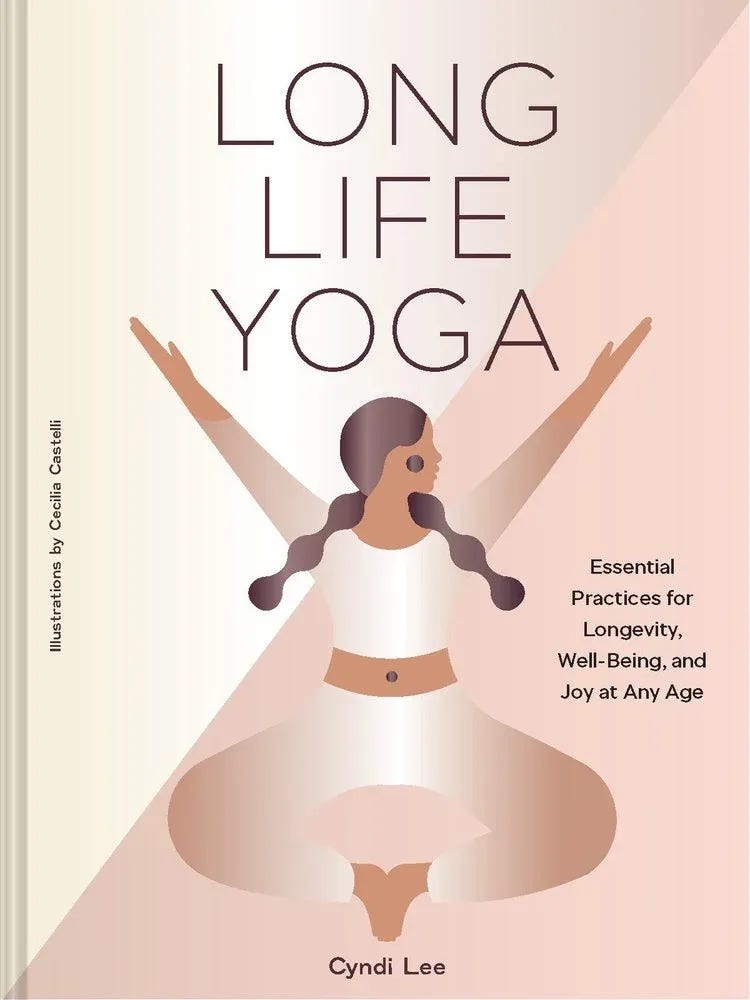
Buy Long Life Yoga on Bookshop.org
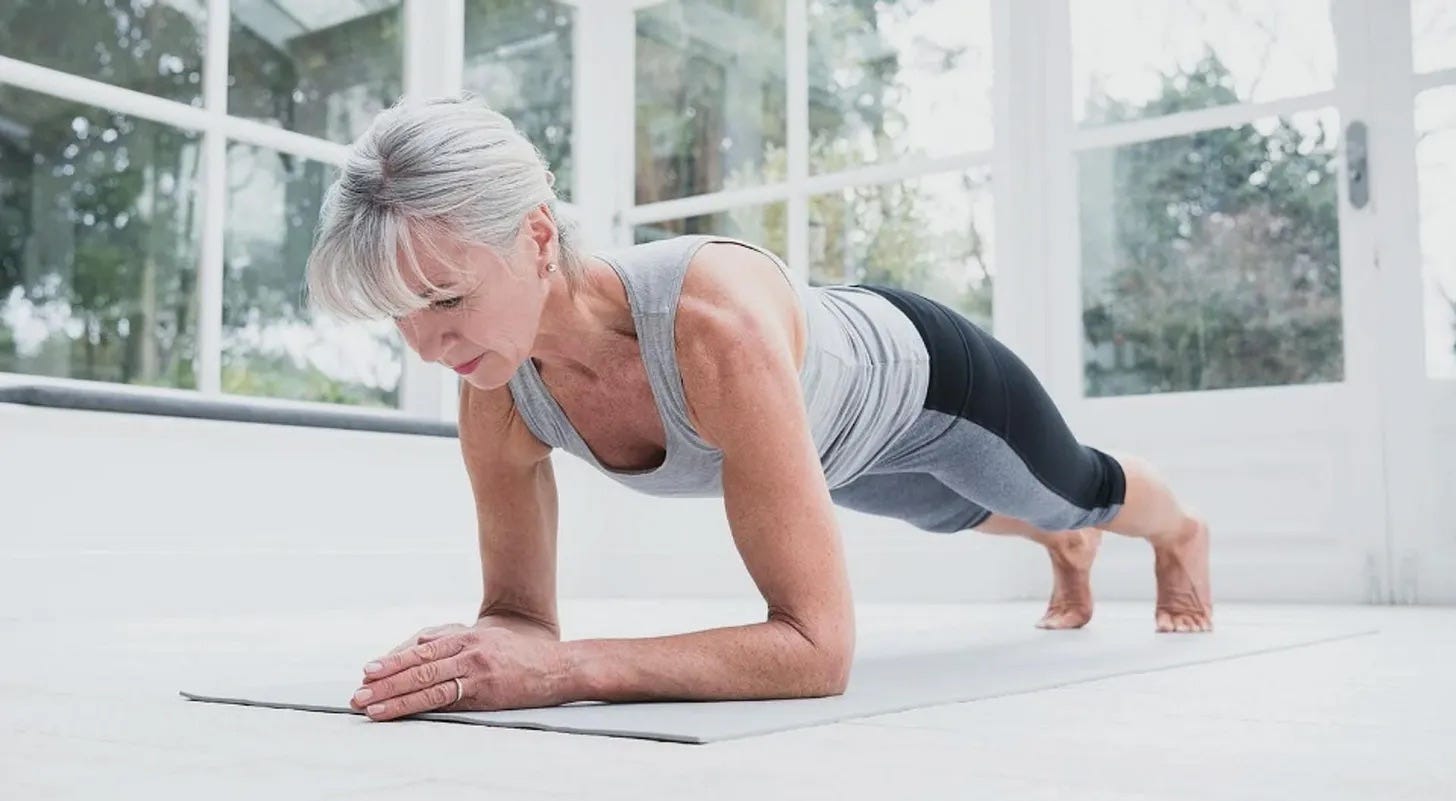
Join Cyndi Lee for two workshops at Souk Studio in NYC: Long Life Yoga Intensive on August 1st and The Dharma of Engaged Yoga on August 2nd. Sign up for them individually or join for the whole weekend.
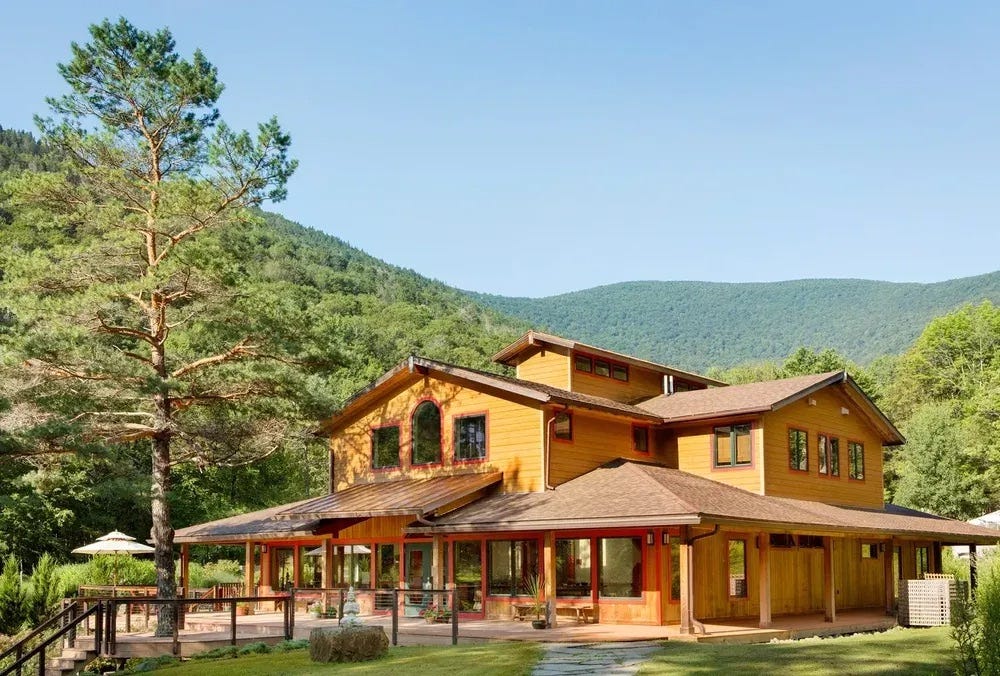
Lifting the Gaze is an opportunity to withdraw from the demands of your life and gather yourself together within the beauty of Menla and the warmth of community.
Traditionally, a spiritual retreat is a time to touch your mind and touch your heart. It offers you a concentrated period of practice to help you get familiar with who you are, as you are, right now.
Personal practice is never about being better or different. It is not about rejecting any part of you, no part of your body and no part of your mind, your emotions, your anger or your love. It’s about opening to the basic goodness that lives inside you right now.
We will use the tried and true practices of yoga and meditation to experience the traditional benefits of joy and ease.
MORNING SESSIONS will include silent meditation, a dharma talk, Q & A and sustainable yoga practice.
AFTERNOON PRACTICES will include pranayama, restorative yoga, group discussions and outdoor walking meditation
ONE EVENING SESSION will offer a silent guided meditation.
During the retreat you will:
develop your mindfulness/shamatha practice,
strengthen your practice commitment by recognizing and relaxing your obstacles; and
gain the skills and awareness to bring your innate goodness into the rest of your life.
Together we will connect the dots between why we practice, how we practice, and the results of practice.
We will show up for ourselves and we will show up for each other…and we’ll make it fun!
All levels are welcome. Modifications will be offered to support those with injuries or physical limitations.
Comments
Nothing yet. Say the first thing.
Sign in to join the conversation.