
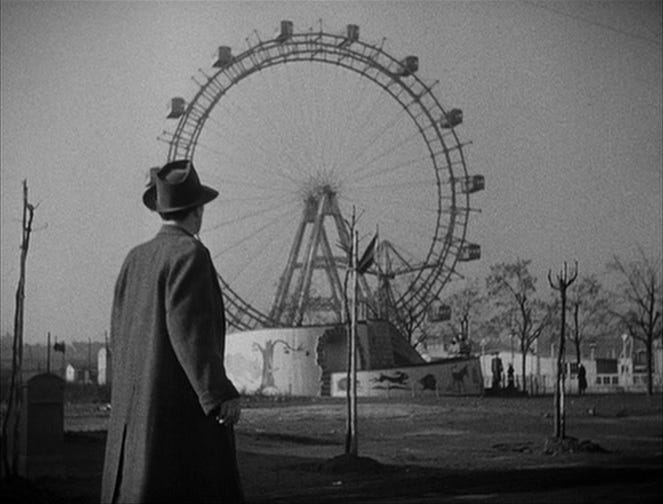
It might be important to finally explain why I chose the below shot as the defining visual identity for this Substack - y’know, beyond THE THIRD MAN being one of my favorite movies.
Here’s a brief primer - reminder, I don’t believe in spoilers - for those of you unlucky enough to have never seen THE THIRD MAN. Or, rather, for those of you lucky enough that you get to see it for the first time.
Struggling pulp fiction author Holly Martens (Joseph Cotten) travels to Vienna after World War II because his best friend, Harry Lime (Orson Welles), says he’s found him a job. But when Holly gets there? He discovers Lime is dead - and then, as he continues to look into his friend’s death, he discovers the truth may be much more complicated.
In this shot, Holly is looking up at the ferris wheel where, a few hours from now, he will actually encounter his dear old friend - not dead, but alive, alive and a monster of the sort poor Holly can barely conceive of. It’s the moment before he discovers the truth, before all his preconceived notions are ripped apart.
For my money, the shot is pregnant with all that meaning. You can feel it, right? There’s anticipation dripping off that glance towards the ferris wheel. That’s why I decorate this Substack with that shot - because it’s the moment right before the truth is revealed, when someone is trying, desperately, to understand a mystery.
And we haven’t even gotten into the ferris wheel! The entire movie has been about Holly’s search for Harry, for who he really was, for whether he’s even really dead. That ferris wheel, the place where he’ll learn the truth, is abandoned - it’s the remnant of past fun, an exact reflection of Holly’s relationship with Harry, a collegiate friendship that now exists solely as memory.1 Harry isn’t fun anymore. He’s creaking and haunted and frightening. Just like the ferris wheel. The good times are now a husk of themselves.
So…for the last three paragraphs, I’ve talked about how much this shot means. Why haven’t I talked about it being damn pretty too?
It’s probably not hard to tell that I have an ambivalent relationship to the way the internet has shaped culture. On the one hand, I see the opportunity for vastly expanded sets of influences, for incredible social connection, for limitless, possibility-fueled manipulation of images.
On the other hand? Sure seems like the internet has flattened us artistically.
Don’t movies just look…different these days? Don’t they feel flatter, less dynamic, less intriguing? There are a lot of reasons for that, but I would argue that one of them is that, film-making wise, the most influential thing the internet has given us isn’t Vimeo or YouTube or Reddit. It’s probably this Twitter2 account:
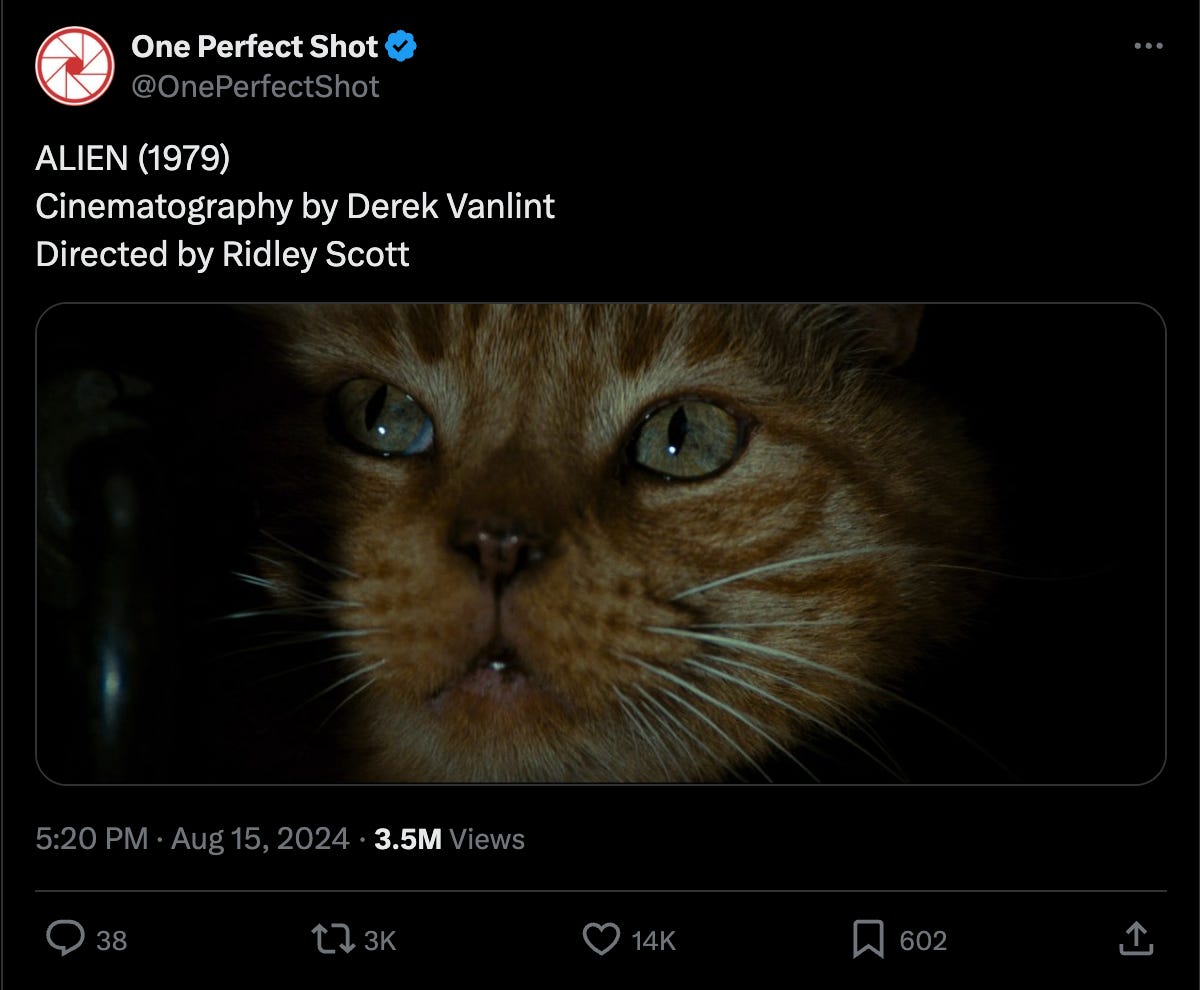
Here’s the thing - that’s not a bad shot. It looks fine. But is it…great? I mean, the name of the account is One Perfect Shot. Is this shot really ‘perfect’? There aren’t any layers of action, there’s nothing particularly interesting about the color, the framing sure isn’t remarkable. It’s a nice shot, but let’s be honest - it’s not even the most interesting shot in ALIEN.
When I say the internet has flattened us, this is what I’m talking about. I think we’ve grown to fetishize center-framed soft-focus images because they look great online. They make for great screenshots. And I think this is one of the many ways we’ve given up the intense connection our art form once had with our audience.
If the images that make up movies are less complex, is it any wonder that audiences feel like movies just don’t hit the same?
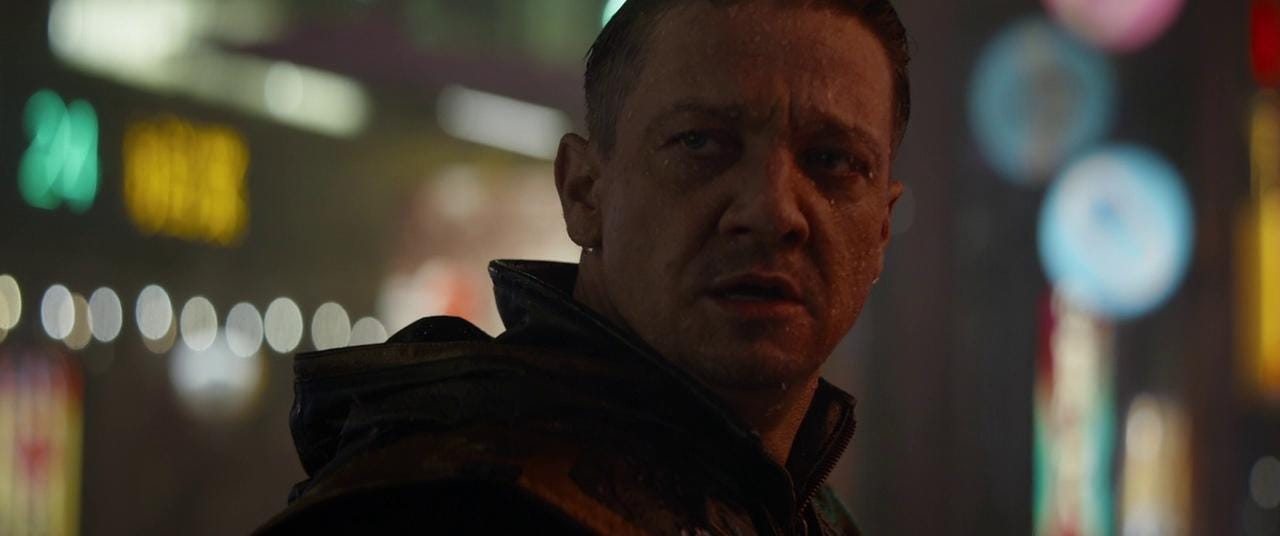
But jeez, Alex. Being a bit tough, aren’t you? Isn’t that shot of the cat just fine? Is there even a more interesting one in ALIEN?
I’d venture that there totally is - but it probably isn’t flashy. In fact, here’s a shot that I think is easily more interesting visually:
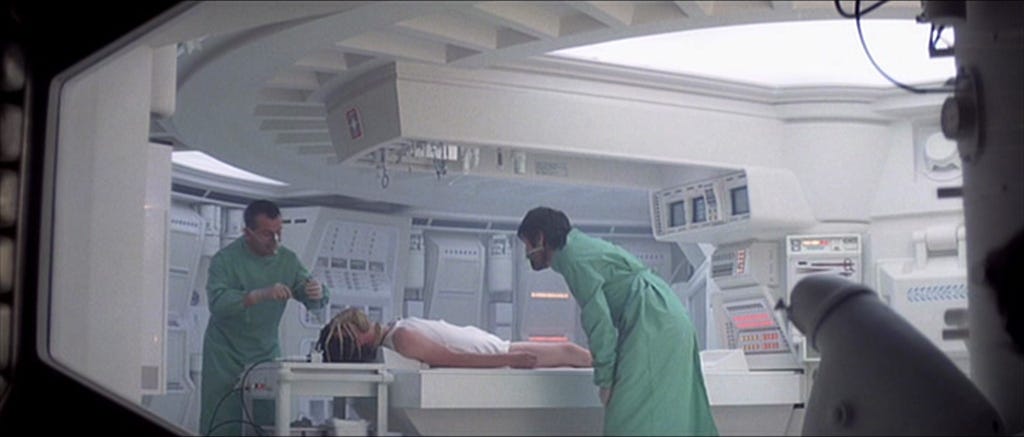
Sure, this isn’t mind-blowing. If I were to choose any word to describe it, I’d probably choose ‘workmanlike’.
And yet, it feels thematically rich in a way that that shot of the cat doesn’t. It conveys the threat of the Xenomorph beautifully - because the monster is literally in the background. You feel the threat because it’s right there, and because the framing and blocking draw your eye to that terrifying shape latched onto a face. There’s depth, there’s direction, there’s meaning. Frankly? You can’t look away. There’s terror.
That shot from ALIEN isn’t the kind of thing that would win any screenshot contests. It’s certainly not going to end up on One Perfect Shot.
But it’s a helluva lot more effective.
What is cinematography for? What’s the actual point of thinking about framing and lenses and blocking and movement? Why do we need to do more than just see the actors say the lines and do the movement? I mean…that’s what we’re here for, right?
Well…no.
The point of cinematography is psychological. It’s to guide the eye - and then, because some bozo said the eyes are the window to the soul - to guide the heart.
I find myself constantly returning to the work of the late, great film scholar David Bordwell and his wife and collaborator, Kristin Thompson. One reason I do this, of course, is that so much of it is available on the internet - there’s that positive side.
But another reason is that Bordwell never lost sight of the fact that film form is all about psychological effect. Sure, you could do this scene in close-ups - a style he termed Intensified Continuity. But why?
Take this great essay, in which Tim Smith expands upon Bordwell’s previous analysis of a scene from THERE WILL BE BLOOD to actually track the movements of viewers’ eyes during a scene:
I love this experiment, because you can actually see how a viewers’ gaze is being directed by camera movement, blocking and editing. I am the son of a science teacher, but I’m also an artsy fartsy little bastard, so I get a real kick out of seeing science prove my artsy fartsy inclinations true. Look at that video - you can see the way peoples’ eyes are literally being hijacked by cinematography.
Where go the eyes, there goes the heart. That scene is tense - partially because it avoids cutting, but also because it directs your eye so we’re constantly nervous, waiting for an explosion that never comes. By this point in the film, we know what these characters are capable of - Daniel Plainview has already dragged himself, legs broken, through miles of desert to stake a claim - and the manipulation of our eyes keeps us on edge, makes us wonder when someone is going to do something similarly jaw-dropping.
The cinematography is shaping how you experience the scene psychologically. You could shoot that scene a different way - in a bunch of choppy close-ups, say. But would that be as tense or gripping?
So am I saying that we should make our films by studying the specific “saccadic eye movements” of our audience? I’m obviously not.
What I’m saying is that the internet has convinced us that the point of cinematography is to make things look pretty, look good as a screensaver, have shallow depth of field and vibrant colors and look good when posted to a Twitter account. But that’s not what cinematography is for.
Cinematography is for intensifying your viewers’ experience of the story by influencing them psychologically. You can draw them into a character’s subjectivity or you can keep them at arm’s length. You can warm their hearts or unsettle them. You can do either or all four at different times. But the point is to affect them psychologically.
I fear sometimes that, in our zeal for very pretty bokeh,3 we’ve forgotten how to do this. We have decided that a gorgeous shot is better than a shot that tells you something.
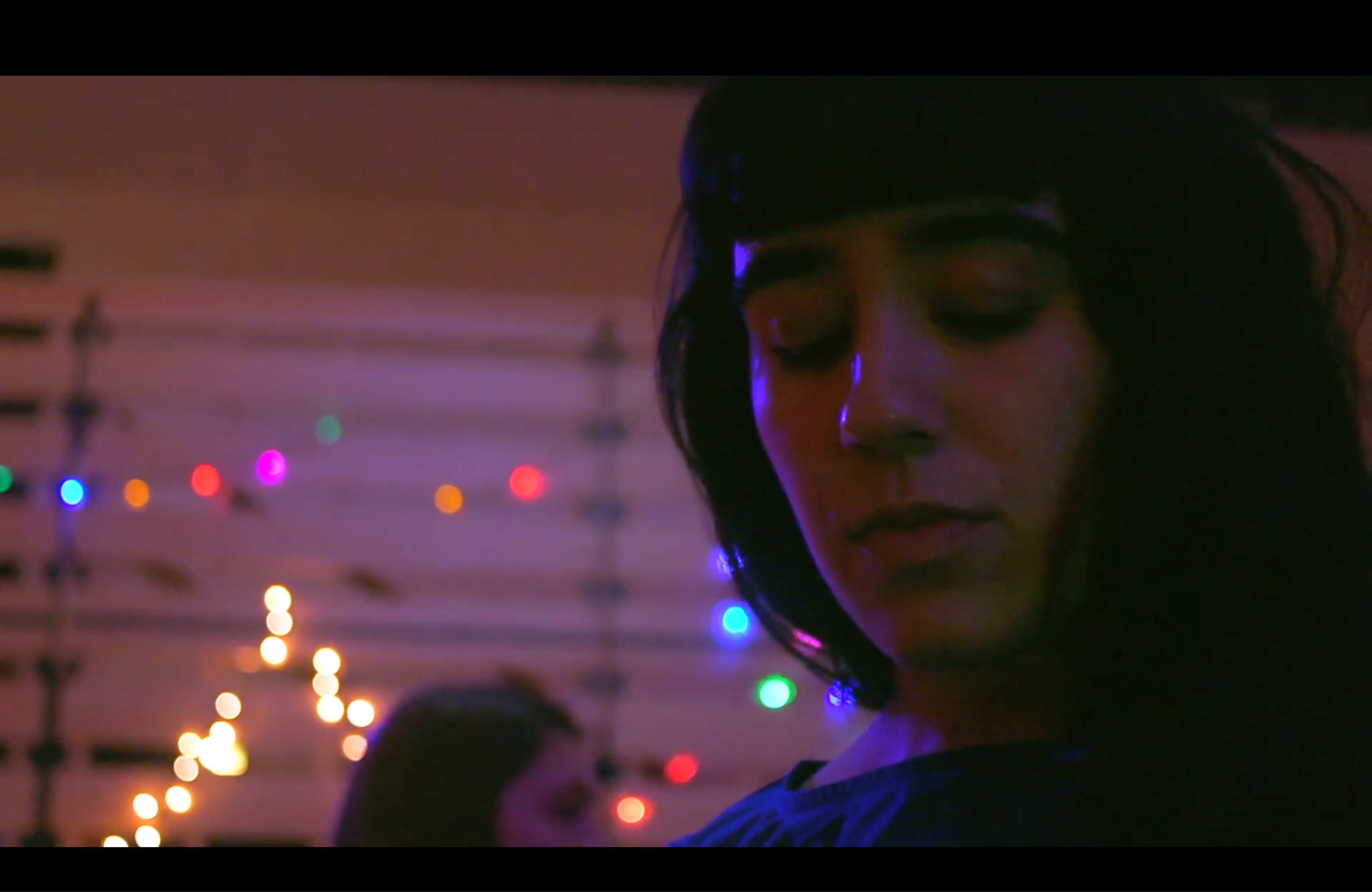
And to be clear, I am not against gorgeous shots. I love bokeh and I love vibrant color and I love shallow depths of field. I believe beauty is something worth pursuing - in life, and at the movies. But I also believe that, in the movies, beauty has to be secondary to telling the story.
In fact, this is one reason so many low-budget movies still work, despite how they may look. It doesn’t matter if your shot looks like it was recorded directly onto a potato. If it tells the story, if it affects people psychologically, that’s all that matters.
How did Bordwell put it?
Astute readers may notice that this is also kinda the plot of WHERE DOES DAISY GO WHEN SHE’S NOT WITH US?, a movie about someone looking for their friend from college and discovering they’re not who they remember. What’s that line? Great artists steal?
Sorry, but I refuse to call it ‘X’.
bokeh /ˈbō-kā / n. 1. The pretty out-of-focus dots of light that occur when a shot’s depth of field is shallow enough. 2. Student film catnip.
Comments
Nothing yet. Say the first thing.
Sign in to join the conversation.