
This newsletter is a compilation of recent disaster ~things~ that I think are cool, important, or otherwise of interest to people who are intrigued with disaster (broadly defined). There’s a little something for everyone!
Hello, My Saucy Little Cranberries!
Shall we begin with the GOOD news this month?
David Richardson appears to have been voluntold to resign!!
I wish nothing but the worst for him! A foolish, foolish man. I will always err on the side of rooting out the rot. It is okay to have standards! Even good, some might argue! The only positive thing I can say is he did inspire what I consider to be my snarkiest newsletter of all time.
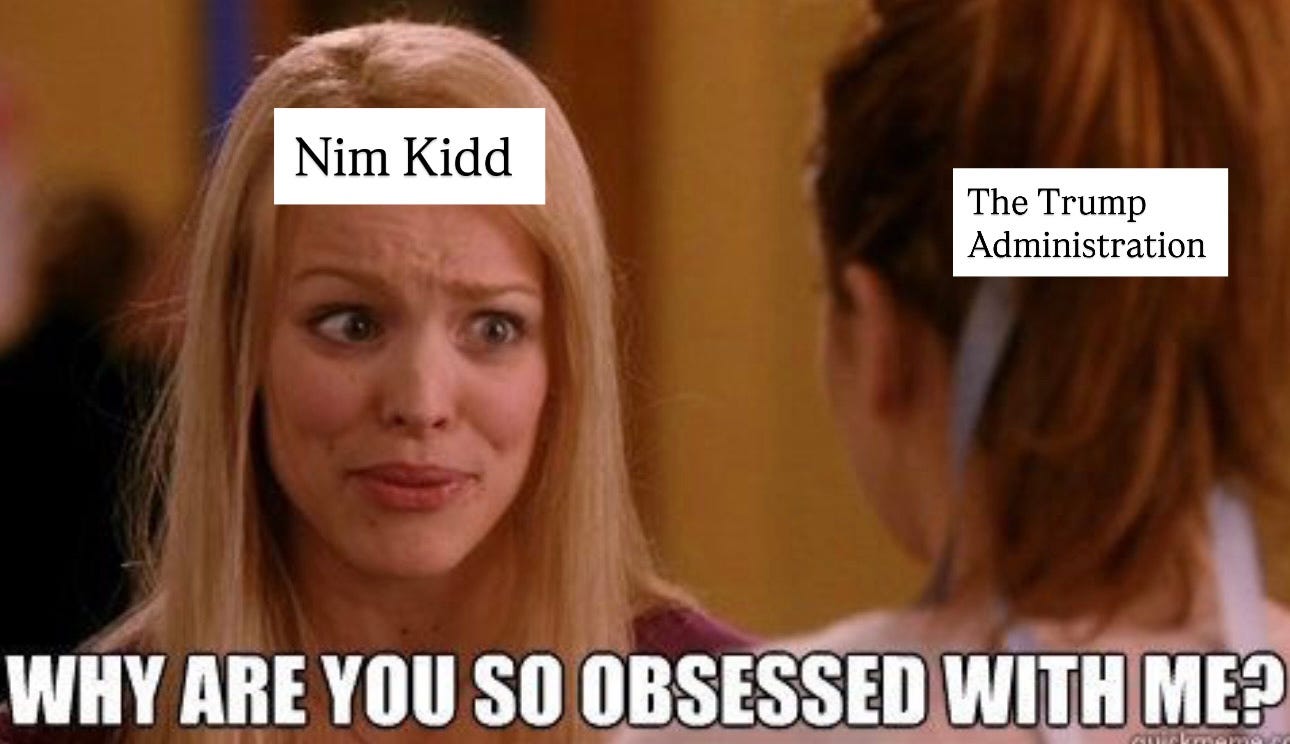
Tom Frank broke the news this month that the administration is considering moving FEMA Headquarters to Texas to entice Nim Kidd to take over as FEMA administrator. I — okay. I simply don’t have it in me to explain how stupid this is. It was, though, a fun little reminder that we are still in for plenty of surprises. Don’t get comfortable, kids. I have really come to peace this month with the fact that literally no one knows what is going to happen with FEMA or emergency management generally. I know I have been saying that all along, but this month, I guess I finally believed what I was saying. Spending time speculating is probably not a great use of our time and energy.
DHS ordered another investigation into whether the Biden administration discriminated against Republicans in dispersing aid during the 2024 hurricane season after the first investigation found there was no systemic effort to do so. Noem’s new investigation found the opposite. Mirror World is back at it. Of course, we know from decades of research that Republican states disproportionately receive disaster aid and that Republican voters do not tend to fit the demographics that are most likely to be systematically kept from getting assistance post-disaster. While anyone serious understands that any document coming from DHS is a complete fabrication, there are operational consequences. This situation is what is being used to justify ending post-disaster door knocking. We can expect this will disproportionately affect those who likely need the most help, including Veterans, people with certain types of disabilities, the elderly, single parents, and people without access to transportation, among others. More from CNN here.
I am going to continue to hold off on a deep dive into the “Fixing Emergency Management for Americans (FEMA) Act” because I think it is likely to change significantly before it ever gets close to being in a position to maybe one day become law. You can read a basic breakdown from the National Association of Counties. It’s a bit chunky, but you may also want to just read the bill yourself. Some general thoughts: while there are a decent number of changes proposed, the FEMA Act is not comprehensive emergency management reform. This does not solve all problems. It falls far short of creating a FEMA that is as effective, efficient, and equitable as it should be. Given the divergent political beliefs of the people involved with writing it, however, it is probably the best compromise we could possibly hope for in this particular political climate. There are things in here that would make FEMA more effective, such as removing it from DHS, and probably more equitable, such as the long-advocated-for universal aid application. As I said above, I’m not going to spend my time speculating about what is going to happen here. The politics of this are simply crazy. We’ll cross that bridge when, and if, we get to it.
The girls are fighting again, and by girls, I mean Noem and this sham of a FEMA Review Council. I am NOT speculating about this. You can’t make me. I suspect we will be discussing this in much greater detail next month. Kill me now. More from The Washington Post here.
There has been very little reporting on it, but CodeRED was hit with a ransomware attack. Hopefully, this is a reminder to everyone that although it is great to incorporate various forms of technology into emergency management, at the end of the day, you still need to be able to manage a disaster with a pencil and notebook. More from The Register here.
There has continued to be a stream of reporting about communities that had BRIC funding for critical mitigation projects taken away by the Trump administration. I wanted to highlight this one about a rural hospital in Oregon that was planning on using the federal funding to mitigate its earthquake/ tsunami risk. This is the kind of mitigation we know has to happen in preparation for Cascadia, and it’s just not at all realistic to think a rural hospital is going to be able to cover those costs – especially now. More from NPR here.
We continue to hear from local communities across North Carolina that recovery reimbursements are being delayed by the administration. This has never been a fast process, but it does appear to be going slower than usual. There are probably a few things going on here, but one I think is important to point out is that this will be used by some in the administration as another manufactured justification for eliminating FEMA’s role in recovery. More from The Washington Post here.
I was pleased to read this article about After the Fire’s annual summit. Always good to see disaster survivors organizing across disasters. A broad Disaster Movement continues to feel inevitable. More from The Washington Post here.
The podcast “Water Talk” is one of my go-to sources of information about water issues. They cover a wide range of topics because, of course, water intersects with just about everything. As you can imagine, many of the episodes are disaster-related, or at least disaster adjacent. I pay particular attention to their episodes about western water issues because I know that’s one of the emergency management topics I am weakest on. It’s so complicated!! *Reads Cadillac Desert again*
I was honored to be invited on the podcast as a guest this month. You can listen to that episode here. I also can’t pass up the opportunity to recommend one of the hosts, Dr. Faith Kearns, book again: Getting to The Heart of Science Communication. I consider it required reading for anyone doing any kind of public engagement work. You can read a short recommendation I wrote for it a few years ago here.
I really enjoyed this conversation between Dr. Sarah Miller and Dr. Kate Starbird for Matt Green’s State of Disaster. The conversation was largely about misinformation and disasters – one of the single most important issues in emergency management right now. Dr. Starbird is always my go-to for the latest research in this area, and it was great to hear her interviewed by someone in our field. I learned things! Like Dr. Starbird and other researchers in this area are shifting back towards using the language of “rumors” instead of “misinformation” – something I had been wondering about!
There is a new documentary out on HBO called “Thoughts & Prayers” about the “active shooter preparedness industry” that has emerged over the past several years. It is not clear to me how aware the general public is that this has itself become an industry. To that end, I think the value here is in naming and publicizing the industry.
The industry largely comes out of law enforcement but has infiltrated emergency management. It makes me really uncomfortable, to be honest! It would be quite useful for there to be deeper coverage of who exactly is involved in the industry and how they are influencing broader politics about gun laws. Has someone written this book?
Obviously, everything about America’s mass shooting problem is infuriating, but from an emergency management perspective, the thing that most frustrates me is that we are being pushed into a false reality of being told all we can do is prepare. This is actually one threat that we actually could really effectively mitigate! We don’t have to live like this! People around the world do not live like this! There is a range of very clear policy solutions to prevent gun violence (which incidentally are well supported among the public). But those policy solutions aren’t profitable. In fact, they would put a damper on this (ineffective) active shooter preparedness industry and take a swing at the much bigger older brother – the gun industry.
Of course, for those of us in emergency management, this is a familiar story that parallels many other types of hazards. Instead of actually mitigating our risk, people are left on their own to try and protect themselves, while a handful of people walk away making a killing. This industry is disaster capitalism at work. Follow the money and all that.
It’d be cool if you forwarded this newsletter to your friends, post it on social media, or undertake any other form of newsletter sharing you deem appropriate. I’ve heard some of you print out the memes to hang in your emergency management offices! Incredible.
In case you signed up for this newsletter without knowing who I am (a bold choice!), you can listen to this interview with me on Ologies. If you really want to dive in, you can read my book Disasterology: Dispatches From The Frontlines of The Climate Crisis to catch up (here’s a USA Today review). You can order it here and get it as an audiobook here.
Other places to find me: Blog. BlueSky. Instagram. TikTok.
This newsletter can be accessed for free, and I intend to keep it that way because eliminating barriers to disaster knowledge is important. However, there is a “paid subscriber” option for $5 a month, or whatever you’d like to give if you’re interested in supporting this work.
No posts
Comments
Nothing yet. Say the first thing.
Sign in to join the conversation.