
every time my wife and I go out for dinner, which is not often enough according to her and too often according to my spreadsheet, she picks up the plate.
not to eat from it. to look at the bottom.
she started doing this three years ago, after I mentioned, once, that you can tell who made the tableware by the backstamp. I should not have said this. it was a throwaway comment. it has become a ritual. the waiter brings the food, she lifts the plate, she reads the name, she puts it down, and she says: these are nice, I want these.
I say they cost ten pounds each. she says that is not expensive. I say we have plates. she says we have plates I bought in 2011 from a shop that no longer exists.
she is not wrong.
the ones she keeps wanting are almost always the same: speckled, rustic, the kind that look handmade but are not, the kind that show up in gastropubs and hotel restaurants and the sort of place that cares how the food looks on the plate. turn one over and it says Stonecast. under that, in smaller letters, England.
I have not bought my wife the plates yet. but I have bought shares in the company that makes them.
those plates are made by Churchill China, the largest ceramics manufacturer in the United Kingdom, one of the top five globally in commercial tableware, and a company that has been making things in Stoke-on-Trent since 1795. it employs around 700 people, turns over £76M, and exports to more than seventy countries. today, the market is pricing it as if it were on the verge of collapse.

for most of the last decade Churchill was that rare thing: a quiet compounder that nobody talked about. starting around 2014 the company made a deliberate decision that changed everything. it walked away from its low-margin retail business, Disney licences, Cath Kidston, branded homeware outsourced to Asia at single-digit margins, and concentrated entirely on hospitality: restaurants, hotels, pubs, caterers, the professional end where plates get used hard and replaced often. it automated the factory with a single-fire kiln that cut an entire firing cycle. it moved into performance ceramics, Stonecast, Art de Cuisine, reactive glazes. it turned Europe into a growth engine.
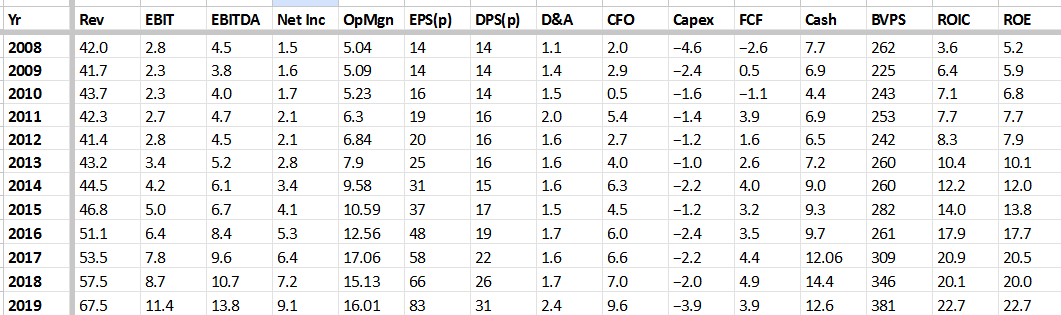
the result was a transformation you can read in five numbers. operating margin went from around 8 percent in 2013 to 16 percent in 2019. earnings per share went from twenty-five pence to eighty-three. return on invested capital hit 23 percent. revenue grew from £43M to £68M. and it did all of this with no debt, cash in the bank, and a rising dividend. the share price noticed: the stock went from under 400p to nearly 1,800p.
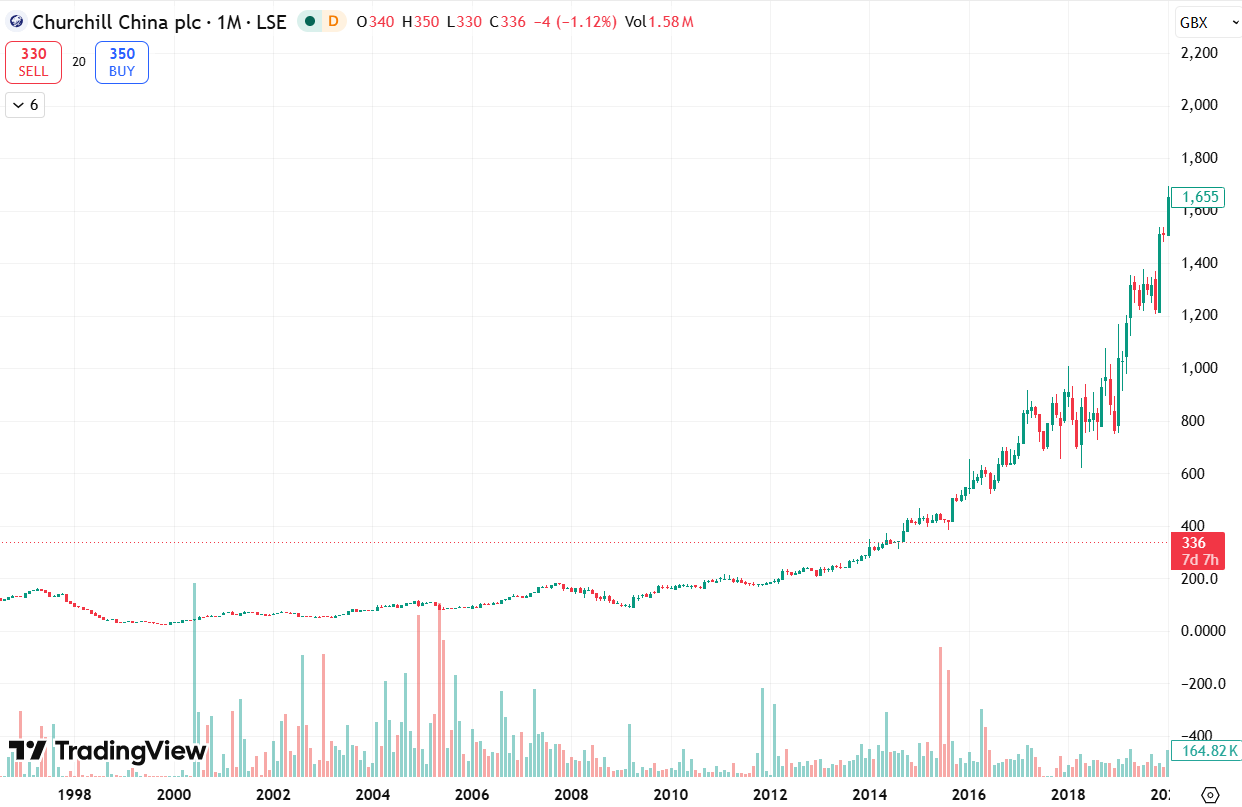
then the storm arrived. not one thing but several, all at once. Covid shut every restaurant in the country in 2020 and the revenue halved overnight. the business bounced back hard in 2021-22 as hospitality reopened and operators restocked, pushing revenue to a record £82M. but from 2023 the music slowed. energy costs reset higher. the 2024 Budget raised employer national insurance and the minimum wage at the worst possible moment, squeezing the restaurants Churchill sells to. the operators stopped opening new sites, stopped refurbishing, started buying cheaper.
2013: operating margin 8 percent, the old business at its best. 2019: 16 percent, the transformation complete. 2020: 4 percent, Covid shuts everything. 2023: 12.5 percent, the recovery stalls. 2025: 7.4 percent, the valley you are looking at today.

the margin that had climbed to sixteen fell to seven. and the market, having paid up for the good business on the way up, repriced it as a dying one on the way down. the shares fell from nearly 1,800p to 320p. an eighty-two percent collapse.
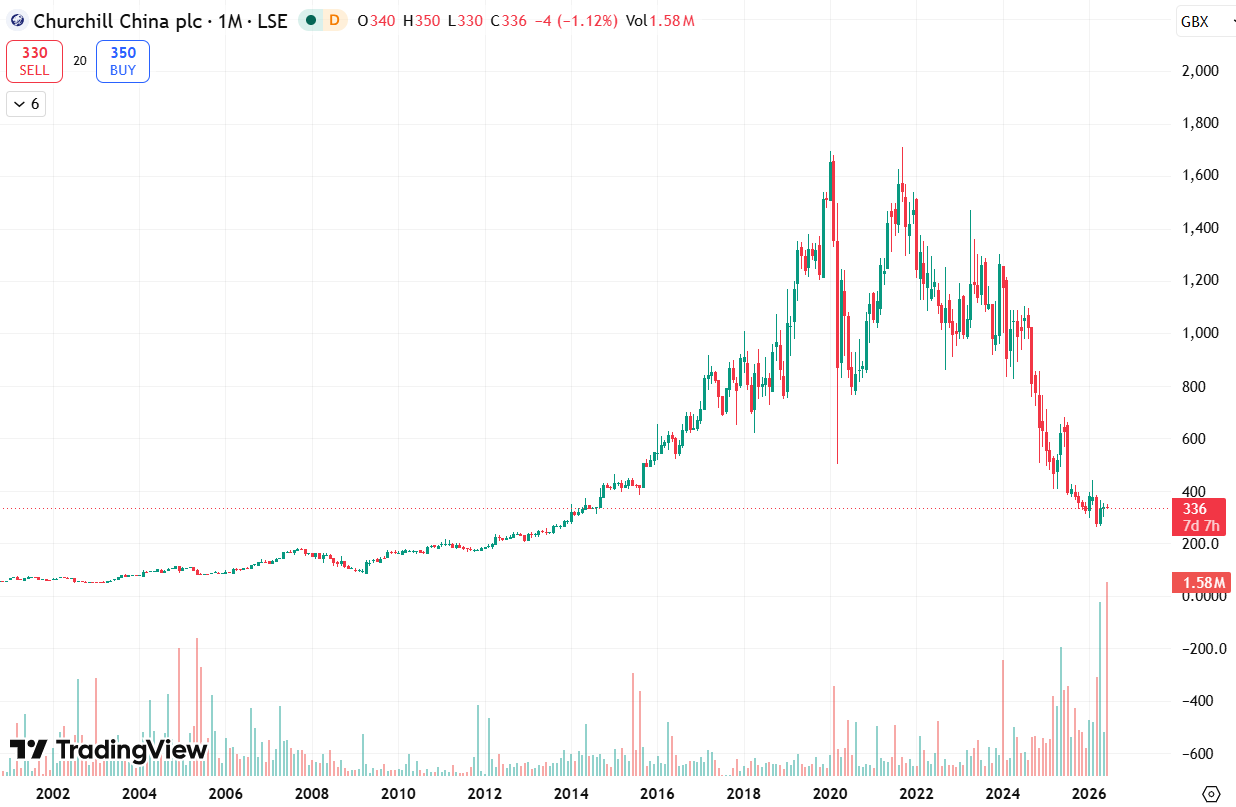
and, as is well known, when a stock is going up, the story writes itself: compounder, quality, moat. when it is going down, the story rewrites itself with equal confidence: dying industry, structural decline, the world has changed. the narrative follows the price, not the other way around. the price falls, the narrative darkens to match, and by the time the stock is truly cheap the story has become so grim that nobody wants to touch it.
Churchill at 320p carries the new narrative: that the golden decade was a fluke, that cheap imports and dying restaurants will grind the business to nothing, that 0.6 times book, 3 times ev/ebitda, 6.5 percent dividend yield, is not cheap but correct. what follows is my attempt to separate the noise from the reality, and to answer the only question that matters: is the death premise real, making this a value trap I should avoid? or is this the low point of a cycle, and the fear is the opportunity?
the story of the UK ceramics industry is the story of overleveraged companies dying in downturns while the underleveraged survive and consolidate. it has happened before. it is happening again right now. and each time it happens, the market gets a little more concentrated in the hands of the strong.
Stoke-on-Trent was once the capital of the world’s ceramics industry. Wedgwood, Royal Doulton, Minton, Spode, Dudson, Denby, Burleigh, Churchill, all from one cluster of Staffordshire towns. that cluster has been dying for decades, and the mechanism is always the same: energy costs, wage pressure, and a downturn arrive together, the companies with debt cannot absorb the blow, and they fall.
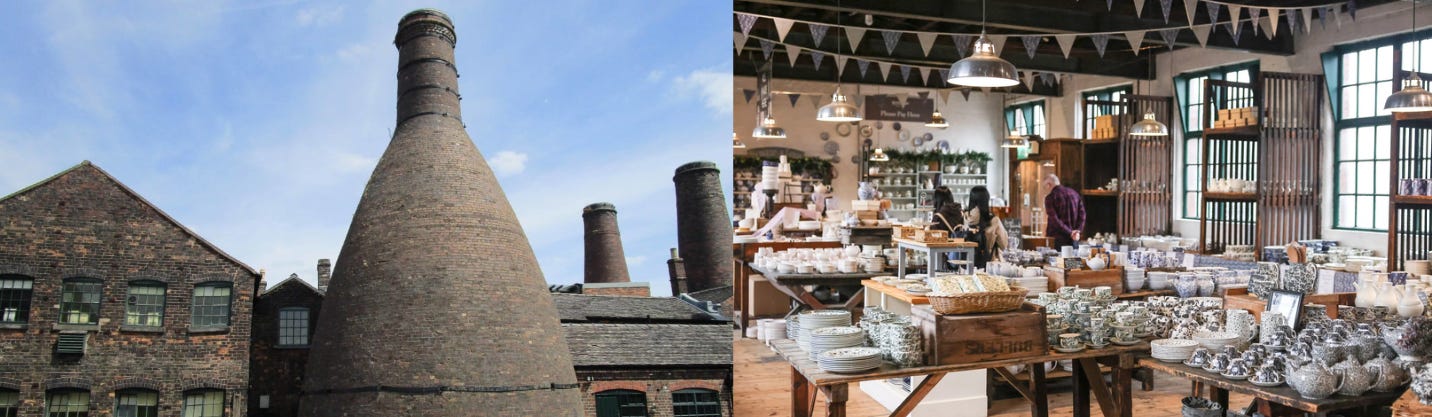
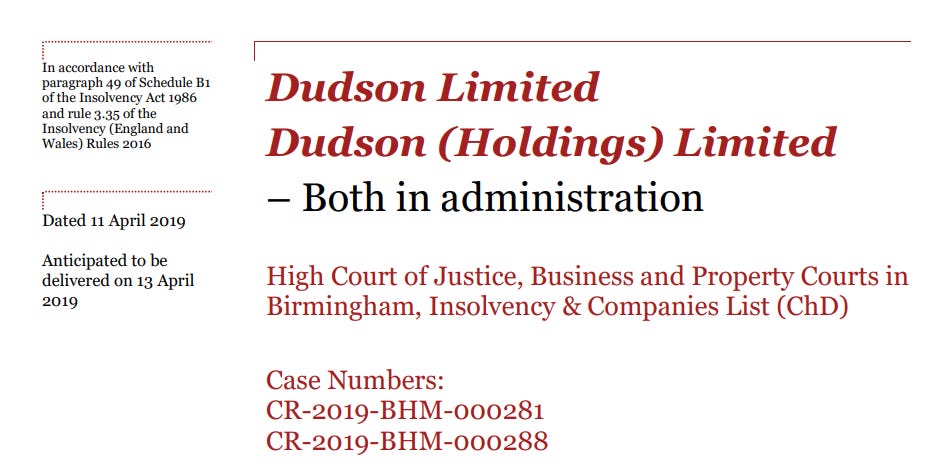
in 2019 it was Dudson, founded 1800, two hundred and nineteen years old, that entered administration. Churchill bought its brand, its intellectual property, and its proprietary reactive-glaze technology for £2.1M of its own cash, taking the science from the wreckage without the factories or the liabilities. the deal booked negative goodwill: the accountant’s term for paying less than the assets are worth because the seller has no choice. within eight weeks seventy-five Dudson product lines were running in Churchill’s plant. revenue jumped from £57.5M to £67.5M and the margin from 15 to 16 percent. the same year Churchill took full control of Furlong Mills, the shared clay and glaze supplier for the remaining Stoke manufacturers. it now owns the raw-material input for what is left of the industry.
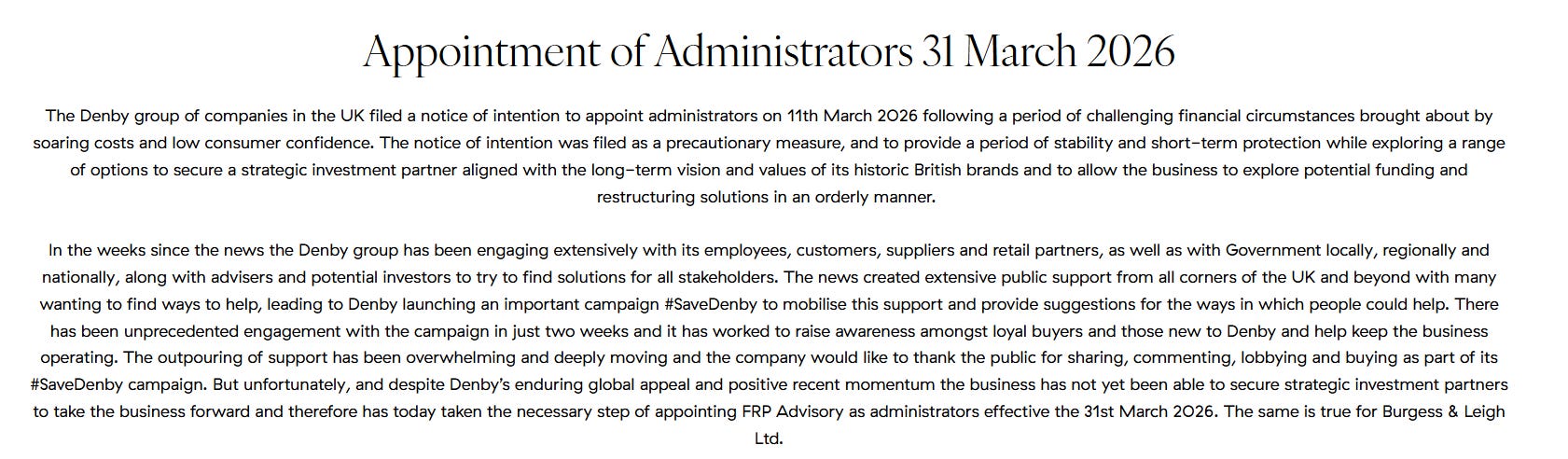
then, on 31 March 2026, Denby Pottery, founded 1809, two hundred and seventeen years old, six hundred employees, entered administration. Burgess & Leigh fell with it. Royal Stafford went into liquidation. the administrators cited the same three forces: energy, wages, weak demand. by April they announced that manufacturing would cease after two centuries. they could not find a buyer.
one survived and the others did not. the difference was not product or brand or heritage, because Denby had all three. the difference was £11M of cash, no bank debt, and a pension in surplus. Churchill could absorb three years of margin compression without breaking. Denby, owned by private equity since 2009, could not raise the money this time.
the pattern is clear enough if you are willing to read it: each downturn kills the leveraged and feeds the underleveraged. Churchill has walked through the financial crisis, through Covid, and through this cost shock, and walked out of each one larger. the playbook, wait for the leveraged competitor to die, take the brand and the science, integrate into existing capacity, is proven and repeatable. Denby’s customers need a new supplier. the number of British manufacturers who can deliver the same quality and 48-hour turnaround from a domestic factory is now very small. Churchill is the largest.
this is what I mean by consolidation, not death. you do not need to acquire anyone. you need to be alive when the others are not.
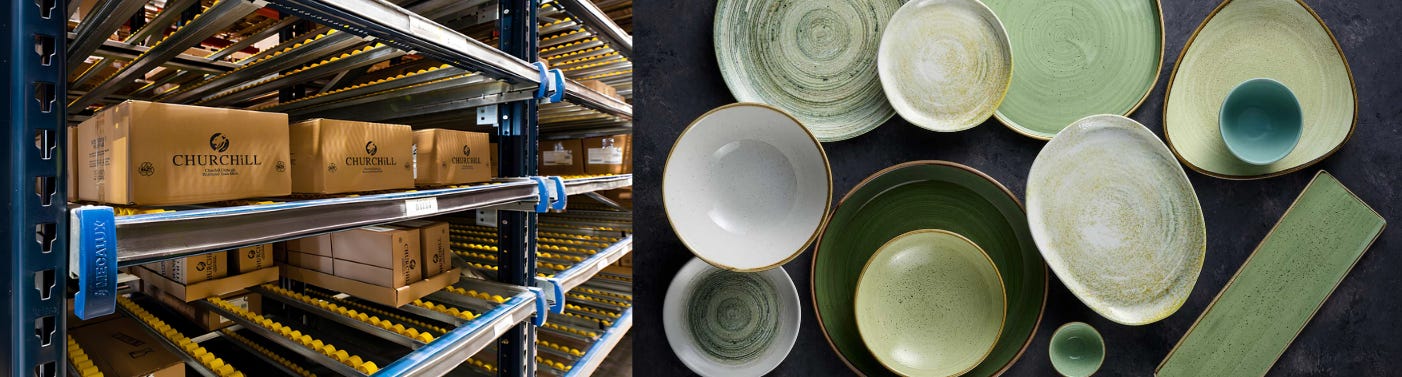
one thing that is easy to miss when you look at this as a cyclical business tied to restaurant openings is that underneath the cycle there is a base of revenue that is almost religious in its consistency. and it is the part that matters most.
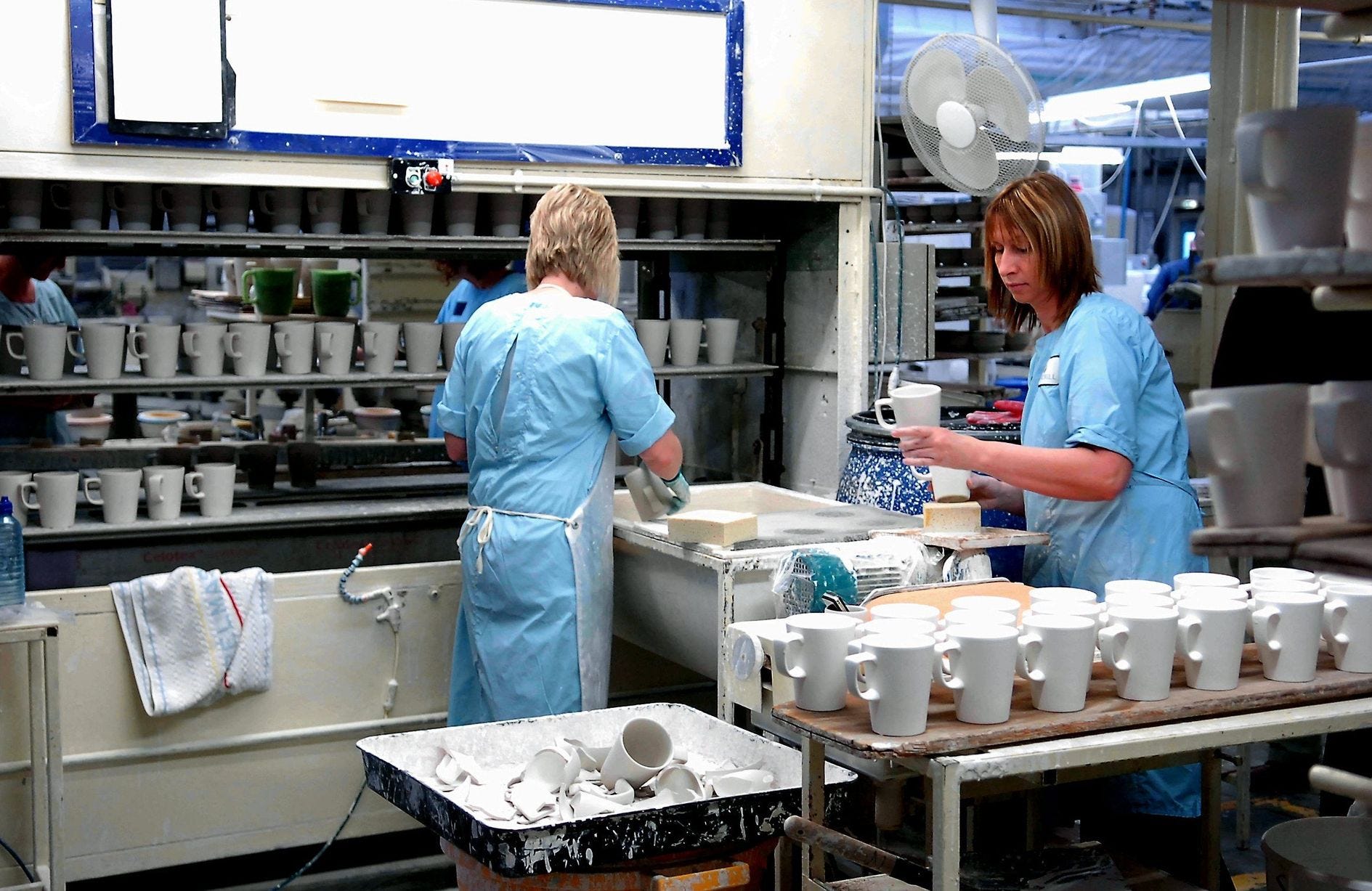
the revenue splits into two layers. the first is installation, a new restaurant opens, a hotel refurbishes, a pub group rolls out a new format, and this is genuinely cyclical. when operators are squeezed, they stop opening and the installation revenue collapses. the second layer is replacement: the plates that are already in service, in restaurants that are already open, that break and chip and get lost every week and are reordered in the same pattern because a table with five matching plates and one impostor looks wrong. that layer does not care about the cycle. it cares about gravity and wet tile floors.
I know this from a kitchen, not a report. my first job was washing dishes. the pay was terrible, the hours worse, and the August heat off the machine felt like a medical event. but what I remember is the sound: the crack of a plate on the tile, and the particular silence after, when the chef looks at you and nobody says anything. by the end of a weekend there was a box under the sink we called the cemetery, and it was never empty. the owner replaced them on Monday, same pattern, same supplier, no discussion.
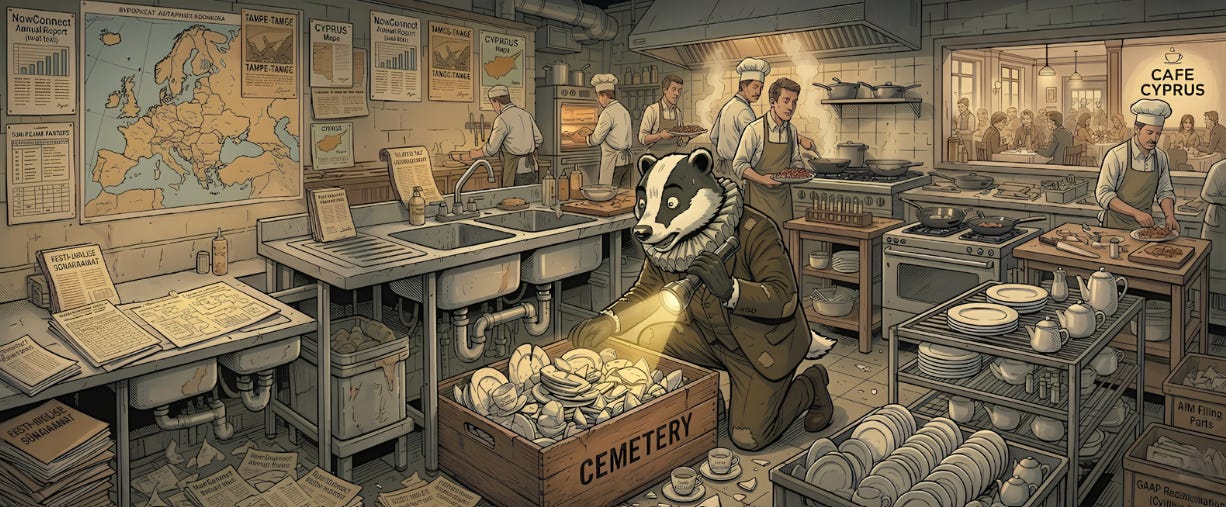
Churchill says it directly in its reports: replacement demand “continued at consistent levels” even in the worst years. the installation is what falls. the replacement is what holds.
“Replacement sales continued at a consistent rate but installations were delayed in the Rest of the World segment which was the main driver of reduced hospitality revenue.”
Churchill China - ANNUAL REPORT 2025
I estimated the split using the amplitude of past downturns and the geography of the current one. in 2025, the mature core, UK, Europe, USA, together ninety-two percent of hospitality revenue, fell just 0.6 percent, while the project-driven rest of the world collapsed 24. when ninety-two percent of a business barely moves in a year of reduced openings, that ninety-two percent is in huge part replacement. my central estimate is that roughly 80 to 85 percent of hospitality revenue comes from that, a recurring floor near £52 to £55M. it is my number, not the company’s, and I present it as such.
that floor is what changes the character of the investment. even if installation revenue went to zero, the business does not collapse, it retreats to a base that generates cash, covers the dividend, and waits for the cycle to turn. that is not a falling knife. that is a business with a built-in shock absorber.
and the reason the margin fell from sixteen to seven is not that the business got worse. it is operating leverage working in reverse. Churchill’s factory has a large fixed-cost base: kilns that run 24 hours a day, a workforce permanently reset higher by the National Living Wage, and energy that is structurally more expensive than pre-2021. when volume fills the factory, the margin expands faster than the revenue, that was 2019. when volume drops, the margin compresses faster, that is 2025. the same leverage that took it from five to sixteen on the way up is what took it from twelve to seven on the way down. and when volume returns, it works in reverse.
the narrative at 320p is not just that Churchill is in a valley. it is that the valley is a grave. that the UK hospitality market has permanently shrunk, that cheap imports from China and Turkey will grind away whatever is left, and that the golden decade was an anomaly in an industry heading for extinction. if that is true, no floor holds and 320p is correct. so I owe you the honest version of each claim, and what I found when I checked it.
the first claim is that Chinese and Turkish producers are slowly eating Churchill alive. this was true ten years ago, when Churchill still made commodity product in the same price band as the imports. it is not true today. the EU found dumping margins as high as 446 percent and, in February 2026, replaced the old graduated tariff of 13 to 36 percent with a flat 79 percent duty on all Chinese ceramic tableware, in force to 2031. the UK kept its own duties to July 2029. and in April 2026 China itself cancelled export-tax rebates on certain ceramics, raising costs on its own manufacturers. meanwhile China’s ceramics sector is in its own crisis, production down 12 percent in 2024, overcapacity in the low end, and the premium players describing themselves as still trying to climb into the brand value chain, which is the admission they are not there yet. the story of cheap Chinese imports displacing European tableware was the story of 2014. in 2026, landing that product in Europe costs 79 percent more than the factory price, and Churchill’s own report calls it “an opportunity to win new business.”
the second claim is that the restaurants are not coming back. this one has teeth, and I will not pretend otherwise. UK hospitality is 14.2 percent smaller than before the pandemic. closures are running at 3.4 venues a day in early 2026. German gastronomy has shrunk nineteen percent in real terms over six years. if that contraction is permanent, my normalised earnings are too high. but the composition matters more than the headline. what is dying is the independent pub, the casual-dining chain, the leveraged operator, the bottom of the market. hotels are only 4.7 percent below pre-pandemic and growing. full-service dining leads transaction growth. the preference for eating out over takeaway rose from 43 to 55 percent in a single year. the survivors are larger, better capitalised, more professional, a better customer for a premium supplier than the independent who just folded. and Churchill says it gained market share in every key market in 2025. a company being eaten alive does not gain share.
the third claim is that UK ceramics as a category is dying. Denby is dead. Royal Stafford is dead. Burleigh is dead. how long before Churchill follows? but this misreads the cause of death. Denby died of leverage, not of product. the same storm hit Churchill and Churchill is still standing, because it had £11M of cash, no bank debt, and a pension in surplus where Denby had private-equity ownership and a funding gap. the balance sheet is what separates the survivor from the corpse, and Churchill’s is the strongest in the sector: zero financial debt, £10.8M of cash, a pension surplus of £7.7M that swung roughly £18M in five years as rates rose, freehold property the directors say is worth more than its book value, total equity of £61.5M or 559p per share against a 320p stock price. the pension is not a cheque I can cash, it lives inside the scheme, rate-sensitive, and the trust draws £1.75M a year from late 2026 to 2029, but it is ballast, and ballast matters when the storm is this bad.
and underneath all three answers sits the service model. £21M of inventory in warehouses in Stoke and the Netherlands, covering every active pattern in every colourway, the thing that lets Churchill deliver 98 percent of orders inside 48 hours. a chef who breaks six plates on a Friday night does not wait for a container from China, less so now that the container costs 79 percent more. he calls the supplier who has the plate today. inside that model sits a growth engine that is easy to miss in the noise: European revenue went from £24M in 2021 to £33M in 2023, dipped on delayed installations, and then turned, in the second half of 2025 it ran seven percent ahead of the prior year. Europe is the runway.
what we have in front of us is a business with 230 years of history that restaurant operators keep choosing for its durability, its proximity, its availability, and the simple fact that when a plate breaks on a Friday night the replacement arrives on Saturday morning. since it left retail behind in 2013, Churchill has generated positive free cash flow in every single year bar two, Covid, when every restaurant in the country closed, and 2022, when the post-pandemic restocking distorted working capital. thirteen years of cash generation through good times and bad. it is also, without question, one of the highest-quality names left standing in its niche, and yet it trades at 3x EBITDA and 0.6x book value while a dozen quoted peers, from Portmeirion to Noritake to Vista Alegre, most of them lower quality and none of them cheaper, trade at a group median near 10x EBITDA and 1.3x book. Churchill has the highest free cash flow yield but one. the discount is real. it is not a screen artefact.
before the scenarios, the anchors, because every number that follows hangs from them. 11 million shares, 320p, market cap £35M, cash £10.8M, no bank debt, book value £61.5M or 559p a share. strip the cash and you are paying £24M for the operating business. capitalise that at the cost of capital and the market is saying the sustainable earning power is roughly £5M, below what the business earned in its worst year, and barely half the £9.4M its own board sets as the on-target bonus threshold, their audited definition of what a normal year looks like. the market is paying for a permanent ceiling slightly worse than the worst normal year on record.
the ten-year post-transformation average operating margin is 12.3 percent, on returns above the cost of capital. on mid-cycle revenue of £80M at twelve percent: normalised operating profit near £9.5M, within a whisker of the board’s own number. net profit around £7.2M. owner earnings, net profit plus depreciation, less maintenance capex and working capital, roughly £7.2M. against £24M for the operating business, that is close to a 30 percent owner-earnings yield. a gilt pays 4.5.
now the three worlds:
in the first world I am wrong. the hospitality market has permanently shrunk, margins never recover past the old pre-transformation levels, and Churchill becomes a smaller, leaner version of itself indefinitely. revenue settles around £60 to £65M, the operating margin resets to six or seven percent, and the business earns roughly £3.5 to £4.5M forever. capitalise that at no growth and the equity is worth roughly 280 to 340p. that is roughly where the stock trades today. in this world you do not lose much, you do not make much, and you collect a 6.5 percent dividend while you wait to be proven right or wrong. the current price already pays for this outcome. I give it about two chances in ten.
in the second world, the base case, Churchill stays under pressure for another year or two, the cycle turns gradually, and the business returns to something close to normalised: £80M of revenue, a twelve percent margin, £9.5M of operating profit, owner earnings of £7.2M. the going-concern asset floor alone, book adjusted for a prudent freehold uplift, half the pension surplus, a haircut on inventory, sits at 525 to 540p. layer the normalised earnings on top and the equity is worth 600 to 720p. I give this world about five chances in ten.
in the third world, the bull, everything in the base case happens and something extra lands. Churchill runs the Dudson playbook with Denby’s brand or customer base. European penetration accelerates behind the tariff wall. the operating leverage that took margins to sixteen works again and earnings approach the 2019 peak of £11.4M, a figure that is not hypothetical, it sits in the company’s own accounts. the equity clears a thousand. I give it roughly three chances in ten.
weight the three and the business is worth a little under 650p against a 320p price.
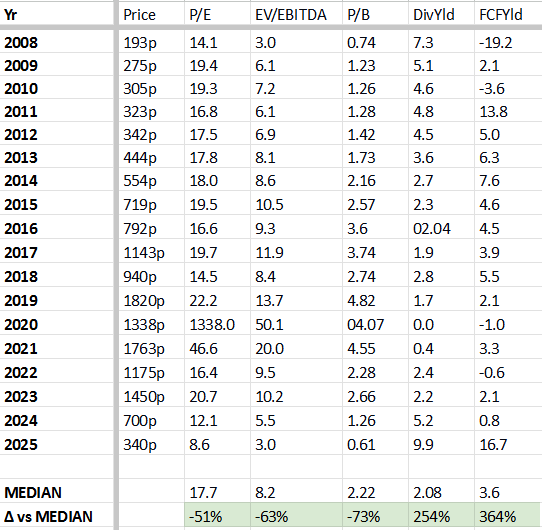
the bear, at roughly 310p, is within spitting distance of today. you lose almost nothing if I am wrong. the blend of base and bull averages around 750p roughly 130 percent above the current price. the downside is flat and the upside is a double. and the only outcome that loses real capital, a genuine stress and forced wind-down to around 200p, requires the business to break in a way that zero-debt companies with £11M of cash and covered dividends almost never break.
and because the value is not really in doubt, the timing is, the honest way to read the return is a table. take the blended value of roughly 650p, add the 6.5 percent dividend you collect while waiting:
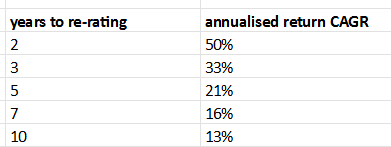
double-digit returns survive at every timeframe up to a decade. even if I am five years early, which would be spectacularly early, the return is north of twenty percent. for the return to fall below double digits the re-rating would need to take more than ten years, which is to say the market would need a full decade to notice that a company trading below its own asset floor, paying a covered dividend, and gaining share in a consolidating industry might not actually be dying.
Churchill is not a safe bet. I want to be clear about that because everything above might have made it sound like one.
the CEO owns 0.2 percent and is not buying. the founding family sold shares in April, the same week the non-executives were buying small. the dividend is paid and covered, but buybacks are nonexistent despite £11M of cash at a forty percent discount to book. the sell-side has been wrong twice running. the auditor changed. the stock is illiquid. there is plenty here to keep you up at night.
and yet.
the risk of permanent capital loss looks well protected. the business sits on a floor of hard tangibles and the earnings-power value even in the frozen-trough case roughly equals the current share price. if I am wrong, I lose time, not capital, and I collect 6.5 percent while I wait to find out. Churchill has generated positive free cash flow in every post-transformation year bar the two that nobody could have generated it in. it gained market share in every key market in 2025 while its competitors entered administration. the replacement base held through every downturn I can find in the data. these are not the characteristics of a business heading for the grave.
I do not know when the cycle turns. I do not know if the board will ever learn to allocate capital properly. there are more questions open than closed, and anyone who tells you otherwise is selling something.
what I do know is that the sushi place next to my house still serves its omakase on Churchill plates, and until the day they replace those with something printed by a 3D machine, I will hold the view that this is a boring, centuries-old business that makes a product people break and reorder, in a market that is consolidating into fewer hands, at a price that does not reflect any of that.
my wife still wants the Stonecast set. I told her I would buy it when I finished the write-up. she said I have been saying that for three months. she is not wrong. the plates, like the re-rating, appear to be a question of timing.
the kiln still burns in Stoke-on-Trent,
two centuries of plates, not one of them bent.
the grave they dug was for Denby, not this —
I bought the floor and I bet on the twist.— DCE
this is not financial advice. I own shares in this company and have been building a position over the past five months. I may buy or sell at any time without notice. the stock is listed on AIM and is illiquid. the margin recovery I describe is not certain. the replacement-revenue estimate is my own calculation. all other figures are from Churchill China’s audited annual reports 2007 to 2025, the 2025 interim results, RNS announcements, EU Implementing Regulation 2026/274, and the UK Trade Remedies Authority notice of 2025. do your own work.
if you have questions about the company, the cluster, the moats, or why a plate that breaks every year is a better business than a plate that lasts forever, ask below. I read everything. I answer most things. I draw the line at interior design advice, because my wife has already explained, repeatedly, that I am not qualified.
No posts
Comments
Nothing yet. Say the first thing.
Sign in to join the conversation.