
Hello everyone! My newsletter has been on the backburner for a bit. I’ve been focused on client deadlines while juggling family life and life’s unexpected curveballs…like snow. So much snow. Will Spring ever come?
I’m working on a new Readability book review for next week. Let’s just say it’s timely, considering current events and conversations...
Today, though, I’m answering a question that came in from a writer-slash-business owner. She wants to know if she should adapt her workbook into a book.
Also, details on an online summit I’m presenting at this week for authors who want their books to support their overall business goals. You can still access the session until until the end of tomorrow, April 1. Details below.

A writer asked me a great question last week: Can my workbook become a book?
I like this question, because it gets at something people forget in this media-centered world: Different formats do different work.
A workbook facilitates action in the moment. A how-to book, which is where this writer would likely be heading, builds the thinking that makes that action meaningful, repeatable, and transferable.
To make that shift, you’re not just adding more words. You’re changing the job of the writing.
You move beyond prompts into explanation. You bring in examples. You start to guide the reader through a sequence—so they understand not just what to do, but why it works, and how it connects. The book might go deeper, or it might go broader. It depends on what you want the reader to walk away understanding.
The workbook exercises don’t disappear, but they’re no longer the main content. They’re there to support the thinking, not replace it.
I think about how I used Bill Burnett and Dave Evans’ book Designing Your Life. I needed that book back in 2019 – I had questions about my future that needed to be answered but I was tied up in emotional knots. Their book includes exercises that truly helped me figure out my career path and the changes I needed to make in my life. I still have all the notebooks and journals those exercises inspired.
But the exercises alone didn’t convince me to do the work – it was the supporting text that did, the argument put forward by Burnett and Evans. They led me through the material. When I understood the premise, I completed the exercises and – here’s the key – I knew what to do with my responses. That’s what a good how-to book does.
Back to the question at hand…
It’s not enough to say “it would be nice to have a book.” If I were working with this writer in a book coaching session, I’d want to explore this in a concrete way. What changes—for you and for the reader—when this becomes a book?
I suspect the writer would want to talk about structure, asking, “How do I change this into that?” Instead, I’d encourage them to pause and explore the book’s purpose. I’d want to get clear on what the book is actually doing for the writer—and for her readers. Do they need a quick win, or do they need more guidance, more context, more background to really internalize the lessons or responses to the exercises? What does this book do that the workbook cannot?
We’d also talk about investment. Because a book is a commitment of time, money, and energy. We’d turn our attention to the business case for the book and the desired publishing path. The answers arising from this work would help the writer decide if the outcome was worth the investment. (Did you know book coaching can help you decide not to write a book, too? I have a story about that for another day.)
All of this exploratory work would give the author what they needed to answer their question, “Can this workbook become a book?” Sometimes the answer is yes. Sometimes, it isn’t—the workbook is already doing the job. If the book isn’t doing something specific for you, it’s very expensive busywork.
But if the answers show you an exciting pathway ahead, with real payoffs for you and for your readers, you might want to open your laptop or pick up a pencil and begin sketching out your future book.
If you’re in this decision right now, book a free introductory coaching call with me. We’ll look at what your workbook is meant to do and what you think a book might do differently.
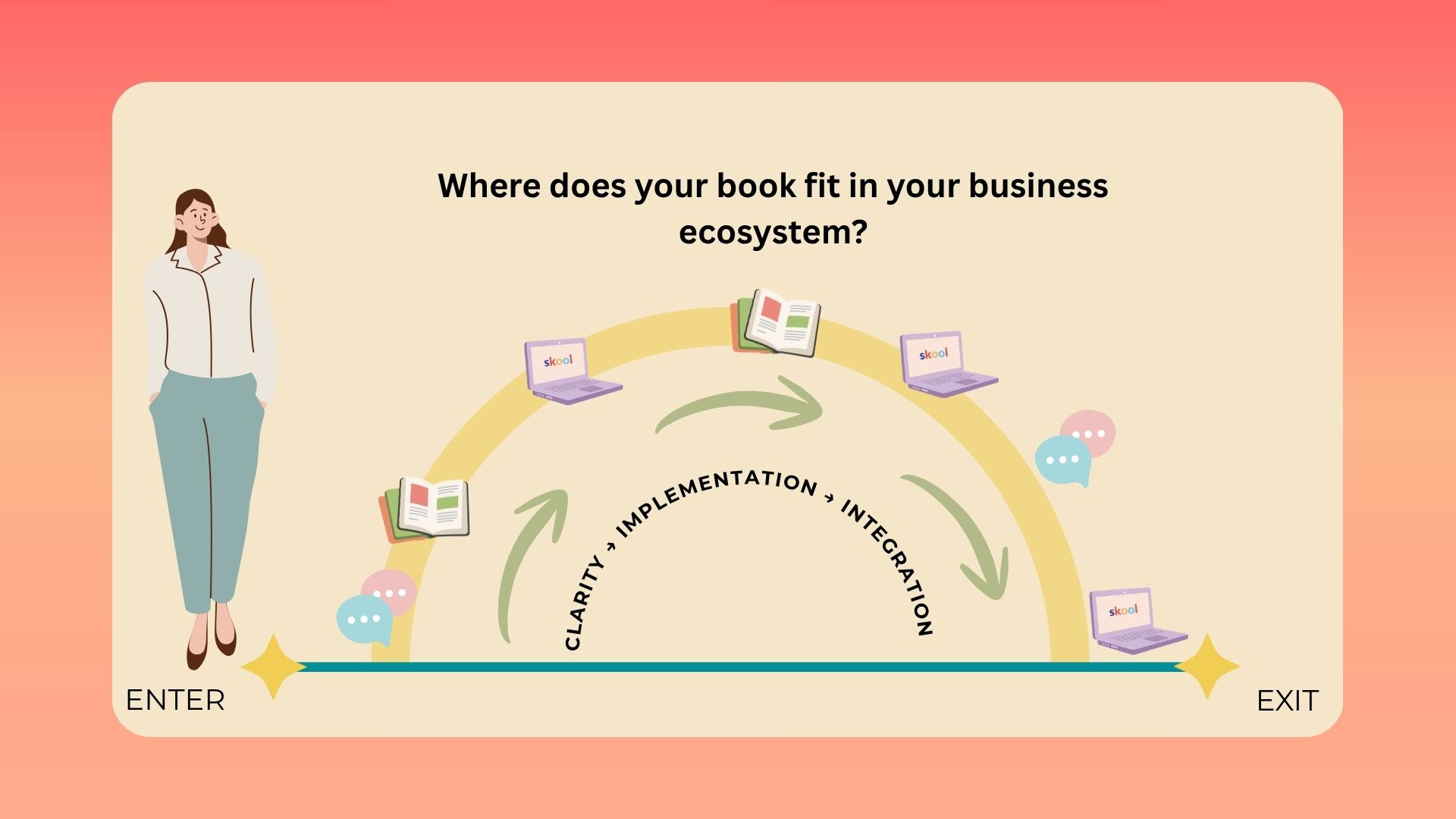
Your book could be a powerful support tool in your business. If it’s aligned with the transformation you’re promising to your clients or community, it can be a source of discussion, inspiration, even a way to integrate the message you’re sharing.
Even better, aligning your book with your community and business ecosystem can extend the life of your book.
But does your book fit in the ecosystem you’re building today? That’s the topic of my presentation this week in the Built to Be Seen Summit, happening March 30, March 31, and April 1. The Built to Be Seen Summit is a free virtual event, where 50+ speakers are sharing how they’re building businesses around their expertise by creating communities on the Skool platform.
My recorded session is called “Your Book as Growth Tool.” It’s about how authors with Skool communities — or any community — can position their book within their larger business ecosystem. Hint: It’s all about is the transformation we promise to people who come into our community—and who pick up our books.
If you’ve published a nonfiction book or memoir or you’re writing one now, come watch my session between now and Wednesday, April 1 at midnight. Free registration to the Summit at this link.
If you want to go further, I’ve got a free Ecosystem Alignment Kit to help you explore the transformation you deliver and whether your book plays a role. Included is a downloadable scorecard and an option to schedule a free 20-minute call with me to review your results.
Your book isn’t a one-time product or a project you once completed — it comes to life when it moves through the world interacting with real readers. It’s “built to be seen”!
Access the Built to Be Seen Summit
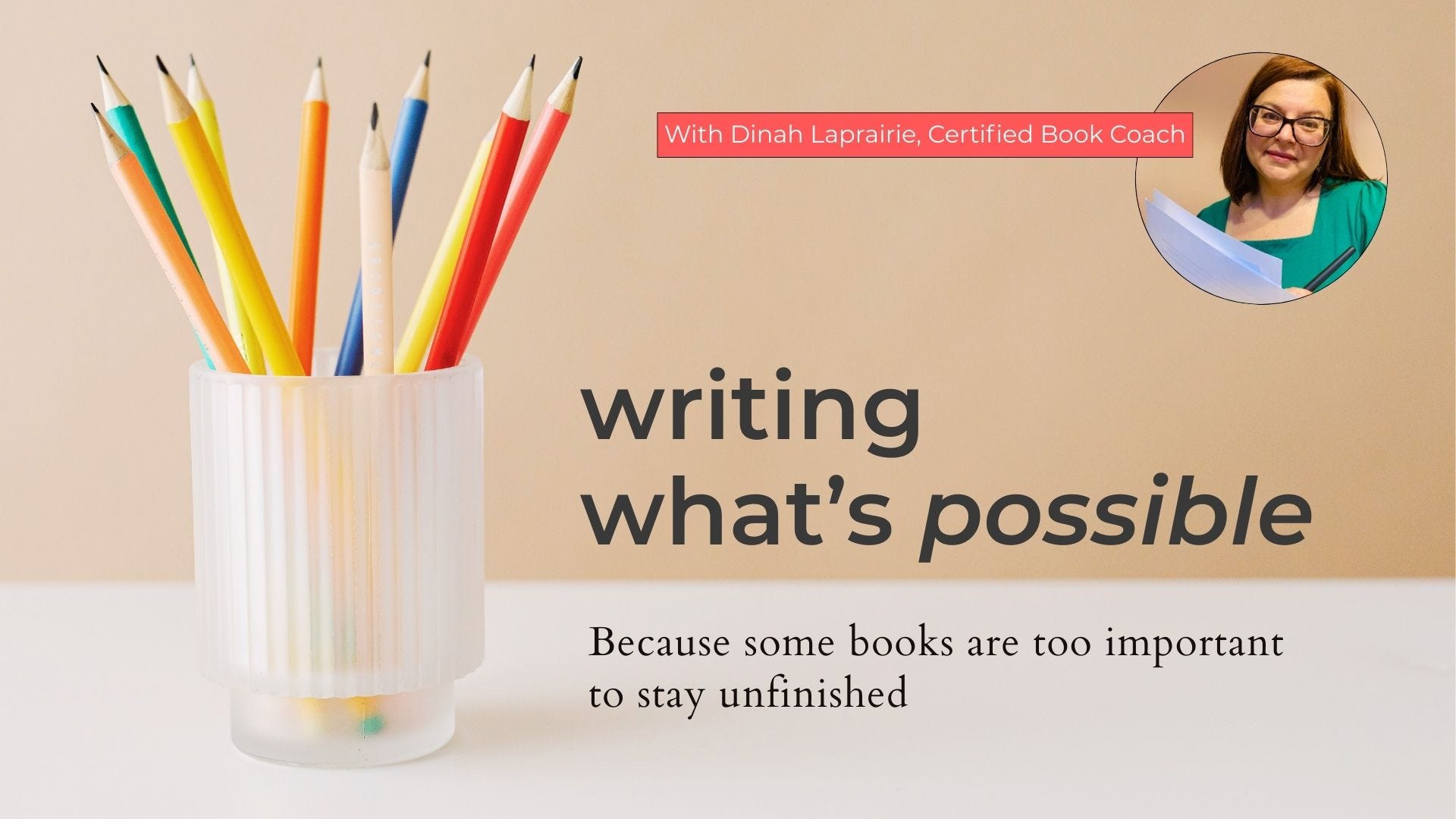
If you’re writing a book and seeking a place to connect with other writers, join us in my online community Writing What’s Possible. I’m spending a lot of time there lately, and we’ve got some wonderful people I’d love to introduce you to.
What is it? Writing What’s Possible is a community for nonfiction and memoir writers who believe their work matters.
Who is it for? We’re writing books in the middle of full lives — across seasons, careers, and commitments — and we care deeply about the impact our work will have on real readers.
Is it for you? We create books to inspire meaningful change, We write books we can stand behind — books that earns reader trust and reflect our integrity.
What’s inside? You’ll find:
🏡 A welcoming place to return to your manuscript
✍️ Cowriting sessions with others who understand the long project
💬 Conversations about craft, clarity, and reader trust
🌱 Support around the writing life

Back next week with a new book review! You’ll find my earlier ones here. Make sure you get the next one in your inbox by subscribing to this newsletter.
Comments
Nothing yet. Say the first thing.
Sign in to join the conversation.