
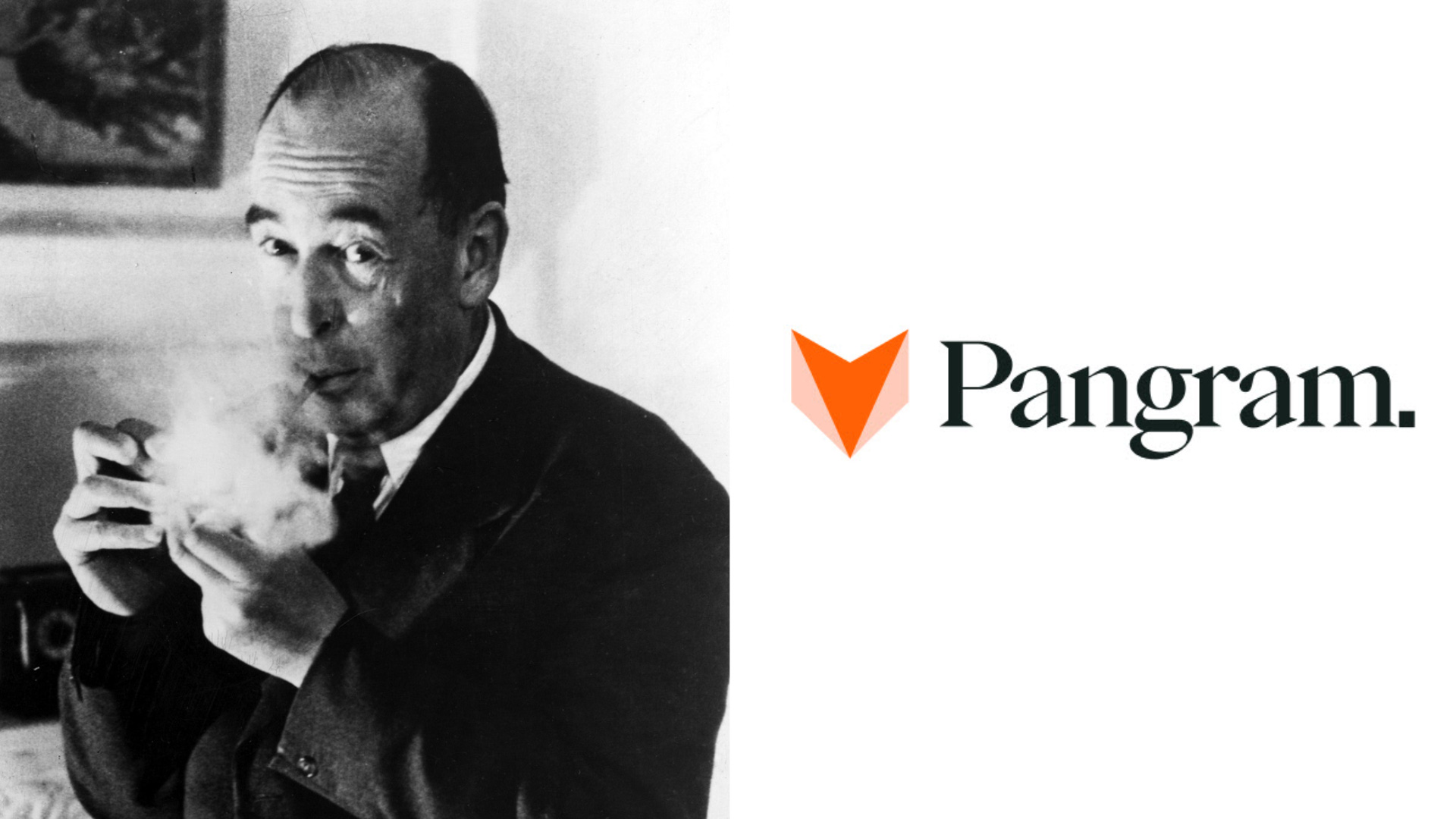
A little over a week ago, Substack announced it was partnering with Pangram, the current leader in AI-detection software, to incorporate Pangram’s tools into Substack. Both writers and readers can now check whether Substack content was likely written by a human, likely written by an AI, or somewhere in between. Once known for its neutral-to-negative posture regarding AI in the past, Substack now joins most other sectors of society of using AI to fight AI’s encroachment in its space.
There is a lively back-and-forth between various Substack writers on whether this is a good idea, whether Pangram even works, and whether AI writing is ever permissible on Substack. That debate will probably go on for a while and I’m not going to try to recap it.
The main thing I want to write about the situation is how Substack is trying to protect readers and writers from AI writing, but is risking something much more valuable in the process.
AI slop is out of control. Nobody denies this. Trust is already in a free-fall in American society and AI is only pouring gasoline on that fire. Re-establishing trust and authenticity among ourselves and one another is a matter of civic and cultural urgency, and writers have their part to play in making that happen. But the ends do not justify the means. Using AI to prove the work of humans is truly human in order to prove to other humans “you can trust this human because I, an AI, think a human wrote these words” is is doomed to fail, and it will bring other consequences with it.
Pangram is good–arguably even the best at the moment for what it does–but it is not perfect. Even if it were, using Pangram for this purpose reinforces the suspicion and distrust that led to this situation in the first place with a top-down solution that can’t truly address the underlying problem. By forcing writers to play by this new game, this suspicion and distrust that writers have of others (and often themselves!) now becomes structural, and what is structural becomes incentivized. It can be measured. It can be gamed. It can (and will) be weaponized by people who want to attack, harass, and slander the out-group they despise. Goodhart’s Law–”when a measure becomes a target, it ceases to be a good measure”–now makes fully-human written content a poor measure of good writing using a poor judge to make that measurement at scale.
Knowing that your writing will be judged by others, and that you now have the power to audit the writing of others, is the price of admission to using Substack. In time, it will prove too high a price for some. But there is a way forward.
I’ll leave it to Zack Grafman to judge where this quote lands on the Top 10 Most Quoted C.S. Lewis Quotes of All Time, but this classic from The Four Loves remains undefeated for a reason:
“To love at all is to be vulnerable. Love anything and your heart will be wrung and possibly broken. If you want to make sure of keeping it intact you must give it to no one, not even an animal. Wrap it carefully round with hobbies and little luxuries; avoid all entanglements. Lock it up safe in the casket or coffin of your selfishness. But in that casket, safe, dark, motionless, airless, it will change. It will not be broken; it will become unbreakable, impenetrable, irredeemable. To love is to be vulnerable.”
There is a corollary to love embedded in Lewis’ thought here: trust. To trust at all is to be vulnerable. Trust anything and your heart will be wrung and possibly broken. If you want to make sure of keeping [trust] intact you must give it to no one. Trust and love are two sides of the same coin, and trying to live without one or the other will change your heart into something unbreakable, impenetrable, and irredeemable.
AI detection software, especially Substack’s use of Pangram, is an attempt to keep our love and trust intact, and in the process leads us to lose both. To confront the possibility that someone is lying to you about their work, that they’ve outsourced their brains and creativity to a machine who will do it for them, and that they might possibly get success and reward for it is a terrible prospect to face. Why not use AI to smoke out the imposters? If people are going to lie and cheat by the sword of AI, why should their reputation die by the sword of AI as well? Shouldn’t we have an external authority to arbitrate our suspicions about the work of others?
Perhaps. I’m not going to rule out the usefulness of AI detection software categorically. There are situations where accountability is required, especially if someone is actively lying about their use of AI in their work in an institutional setting. But Substack is not that. It is a place that wants to cultivate writers and the love of the craft of writing. Attempting to wrap our writing with the little luxury of a button you can click that will confirm that the article you’ve spent months agonizing over and anxiously typing and re-typing is, in fact, fully human–and that the incisively viral article that is getting read and shared dozens time more than yours was speed-written by a machine in five minutes–will lead us to lock our love and trust in a casket and coffin of “accountability” in the name of selfishness. Instead of the discipline of writing being a gift to freely give to others, our writing becomes a weapon in a culture war without and a litmus test for purity within. It no longer becomes a vocation by which the Lord is glorified, but a performance to signal to one group of people that “I am one of you” and to another group of people “You are a threat to me.”
I don’t know what Lewis would say if he were here and commenting on the situation, but I know he would agree that love and trust is the way forward. We cannot give to others something that we do not have ourselves. Whether an individual is someone of love and trust will show up in their writing, speech, and conduct. To be a person and writer of love and trust does not mean you become a spineless doormat. Proper accountability is a necessary ingredient of healthy relationships. But Pangram on Substack is a poor tool for keeping people to whom we do not have a meaningful relationship with accountable. Deliberately choosing a posture of love and trust opens yourself to deception from others. It opens you to being manipulated, taken advantage of, and left behind. But being vulnerable is what gives the craft of writing its power. It’s what allows you to say things AI cannot say. It allows you to endure skepticism and suspicion with integrity. No AI detection tool can make you vulnerable; it can only take it away, and take away your ability to love and trust in the process.
You don’t have to play this game. I am not going to play this game. Writing is for my mind what strength training is for my body, and I will not give it up. I do not care what the score for this article is. I don’t care what your score is for your work. If I trust someone, I will seek to love them; if I love someone, I will seek to trust them. Perhaps I will get hurt along the way, but where there is heartbreak, there is love and trust. And in a culture where love and trust is in dwindling supply, that is what I want to give, and I cannot give others what I do not have myself.
Going forward, I am going to include a weekly roundup of 3-4 articles covering the tech sector and Internet culture that I think are worth your time, with some commentary on my own. I’ve wanted to do something like this for a while, and having spent nearly a year of bi-weekly radio appearances on Carmen LaBerge’s show, I’ve got the workflow to make this happen. Cards on the table: I may make this the feature that causes me to turn on paid subscriptions, but that’s a decision I’ll make later on.
For now, here is This Week in Digital Babylon (And Other Things to Read).
First and foremost: this is one of the most beautiful things I have ever read on the Internet. I am not exaggerating. This is breathtakingly gorgeous, and makes a story about “death bots”–or custom AI chatbots programmed with the writings, photos, and memories of loved ones to keep them alive–all the more devastating in its critique of an emerging use case for AI chatbots. It’s not an accident that a society that is culturally “stuck” everywhere else would also be increasingly stuck in the face of grief and loss, and while the story paints a very compelling picture that death bots are a comically pale imitation of our loved ones, it is not surprising that more people are considering them. This was a story that I discussed on The Reconnect with Carmen LaBerge, which you can find wherever you get your podcasts.
As the backlash against smart glasses continues to mount, Meta is facing moderation decisions it cannot easily answer. The real solution, of course, would be to disallow all smart glass-captured content, but that betray the very point of all the advertising around them. I have to admit, when I published my smart glasses article at The Gospel Coalition a little over a year ago, I didn’t think there would be this much pushback against smart glasses. Even though these glasses are still selling phenomenally well, it seems the public recognizes the privacy concerns and are responding accordingly, and I am pleasantly surprised and thankful for that.
A new social media ban is set to begin in the UK, one where teenagers will be unable to access apps like Instagram, YouTube, and TikTok from midnight to 6AM. This piece interviews a variety of teenagers and parents with their own take on the ban, but the one that interested me most was UCL's Knowledge Lab researcher Dr. Sarah Turner, who said in response to a ban that:
“If you don’t have parents who take you to places or a community where there is a space to hang out, then you will be disproportionately affected by this. There is undoubtedly harm online, but there needs to be more research. We’ve told teenagers to use these systems, they have socialised themselves into it, and now we’re saying they can’t use them.”
Respectfully: saying that teenager cannot use social media apps during the period of time where they should be sleeping is ridiculous. They need sleep. They want sleep. A conglomerate of Digital Babylon’s empires can and has made sleep optional and the need to be constantly using their products and services necessary to their survival. This order must be reversed.
On the Internet Culture front: a slide in a presentation at San Diego Comic Con mentioned ChatGPT, and now people who are almost certainly using AI in some aspect of their lives are horrified at the prospect that this one passing reference indicates that generative AI was used in the creation of the film. Hypocrisy is a necessary ingredient for purity spirals; it requires that you increasingly signal to others that you are not a Bad Person even as you cover up the habits and practices you accuse a Bad Person of doing. The end result is miserable for everyone, including those who worked on a movie and likely had nothing to do with a Powerpoint presentation that committed the sin of leaving in one passing reference to ChatGPT.
This is a lengthy piece of technical history, but near the top of the piece is an anecdote about how unpopular AI is among the general public–even though their habits and usage tell a different story:
Meet my Mom. She is a bit of a legendary asskicker. She was also bigly up in arms about Elon Musk’s Colossus buildout in Memphis back in 2024 (along with about a zillion other people). And with reason! The community’s first contact with the project, in June of 2024, was learning that a decision had already been negotiated under NDAs over the preceding months, with City Council members finding out from the local news, and the facility’s location initially withheld from the public due to “global security concerns.” Within weeks the thing was humming along on dozens of allegedly unpermitted gas turbines.
So she was mad about the smog3, and mad about the water and the power4, and mad about Elon Musk in his capacity as Elon Musk, and mad about whether one dollar of the multibillion-dollar bounty would ever reach an actual Memphian.
What she wasn’t mad about was AI.
My Mom loves AI. She sends me AI-generated tattoos she thinks I ought to emblazon on my body, and posts AI-generated makeovers of our whole family as Christmas cards, and writes “sharing again — it’s so cool” on the most AI-slop-possible rendering of a bunch of kids contorting their bodies into something that maybe sorta looks like the face of Jesus. She is not out there railing against her God-given right to post the following image publicly on the internet for all to see:
You can probably imagine what the image in question is, or just go read the whole thing for yourself. He connects the current fight about AI data centers to a piece of our forgotten past that is worth your time and attention.
Thanks for reading. 2026 was the year where C.S. Lewis finally clicked for me, and as I think about what it means to love and trust in the midst of the most significant love/trust crisis I’ve ever faced in my life, I have found comfort in this quote as a light for the way ahead (don’t worry, my marriage and family is doing fantastic).
Reminder #1: I am looking for someone to design some assets for Passing Through Digital Babylon! Substackers, if you have someone you’d recommend to design a logo, wordmark, etc, please comment with a lead! If you’re a graphic designer, shoot me a DM with your rates. I want a human to design these and am willing to pay to do so.
Reminder #2: I will be at the THINQ Summit 2026 in Nashville on Oct 1-3 representing What Would Jesus Tech?. I’m excited to join Carmen LaBerge’s entourage and looking forward to good conversations with the others in her group. If you’re planning on being there, I would love to connect. Shoot me a DM and let me know.
Together, we are passing through Digital Babylon.
Austin
Thanks for reading Passing Through Digital Babylon! This post is public so feel free to share it.
No posts
Comments
Nothing yet. Say the first thing.
Sign in to join the conversation.