
Hi friends! Sending this out a day early because I wanna give you a reminder that our first DIARY CLUB meet up is happening tomorrow, May 30, from 3-4:30pm via Zoom (link can be found in the subscriber chat, or in the diary prompts post here). Even if you haven’t had a chance to work with this month’s diary prompts, you’re more than welcome to pop in! This will be a space to journal, talk about grief, and compassionately witness one another.
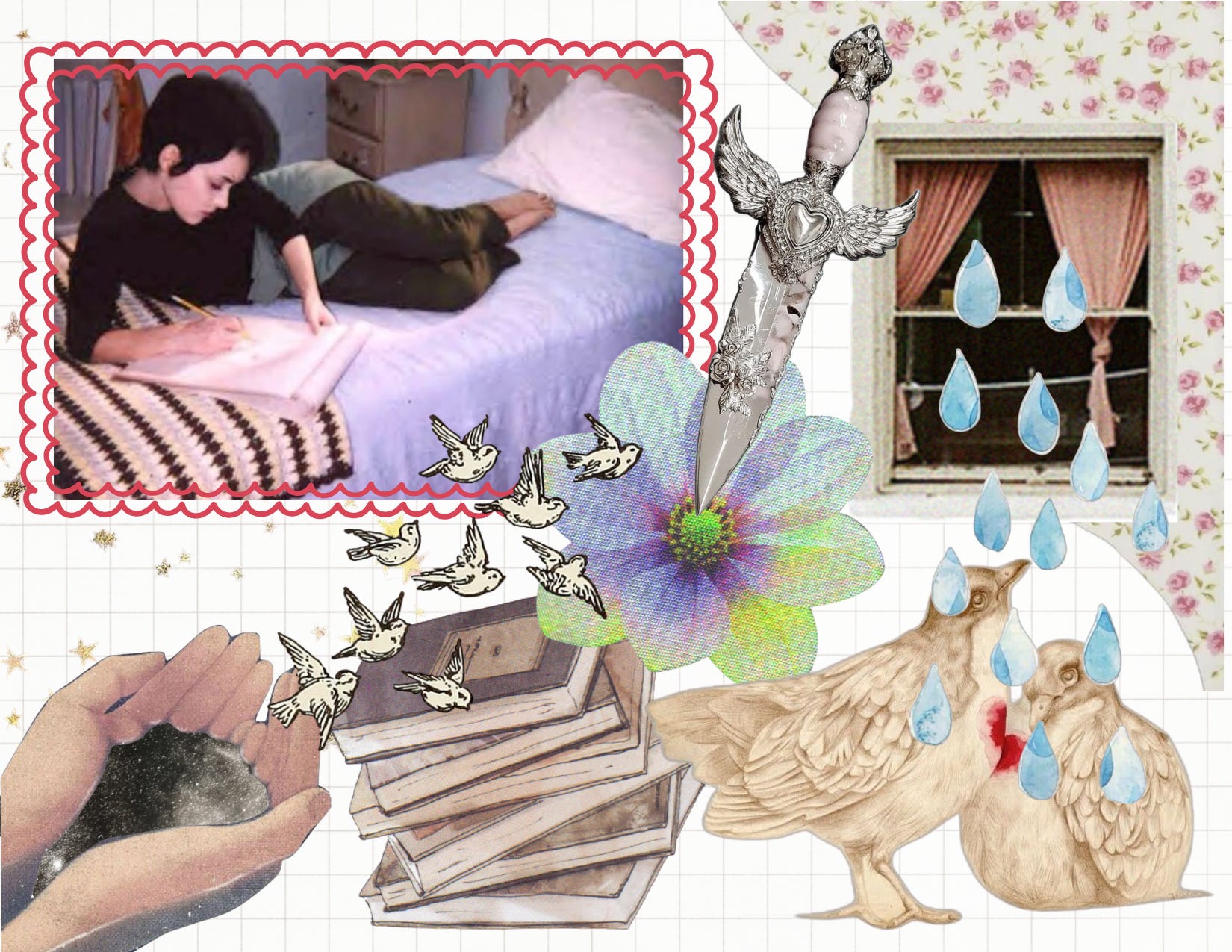
Like many adolescents, I grew up writing lots of angsty poems in my journals, poems about love and heartbreak, about grief and the desire to die. As an adult, I’d look back at these poems and feel so much shame and embarrassment moving through my body. The poems were SO CRINGE, I declared.
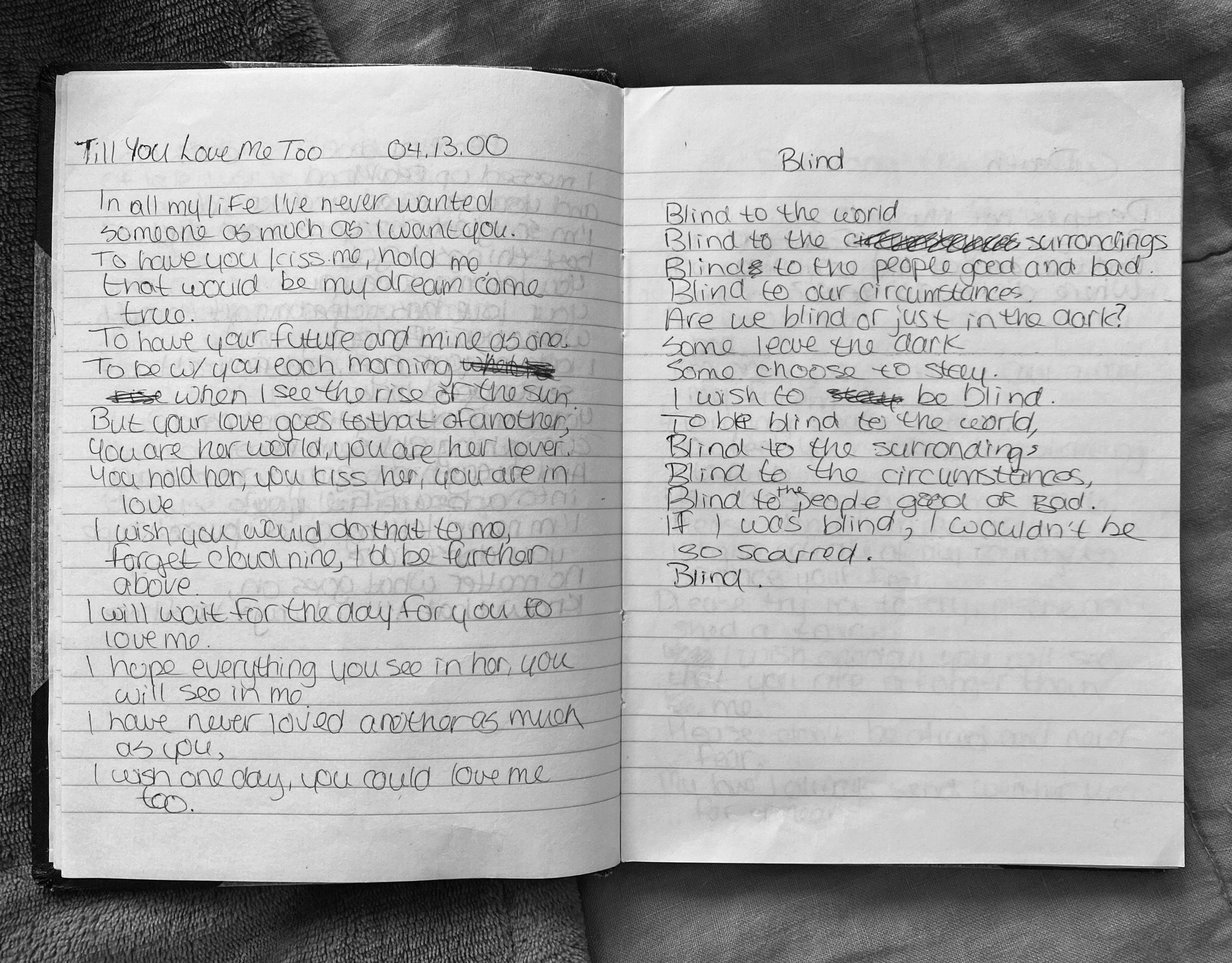
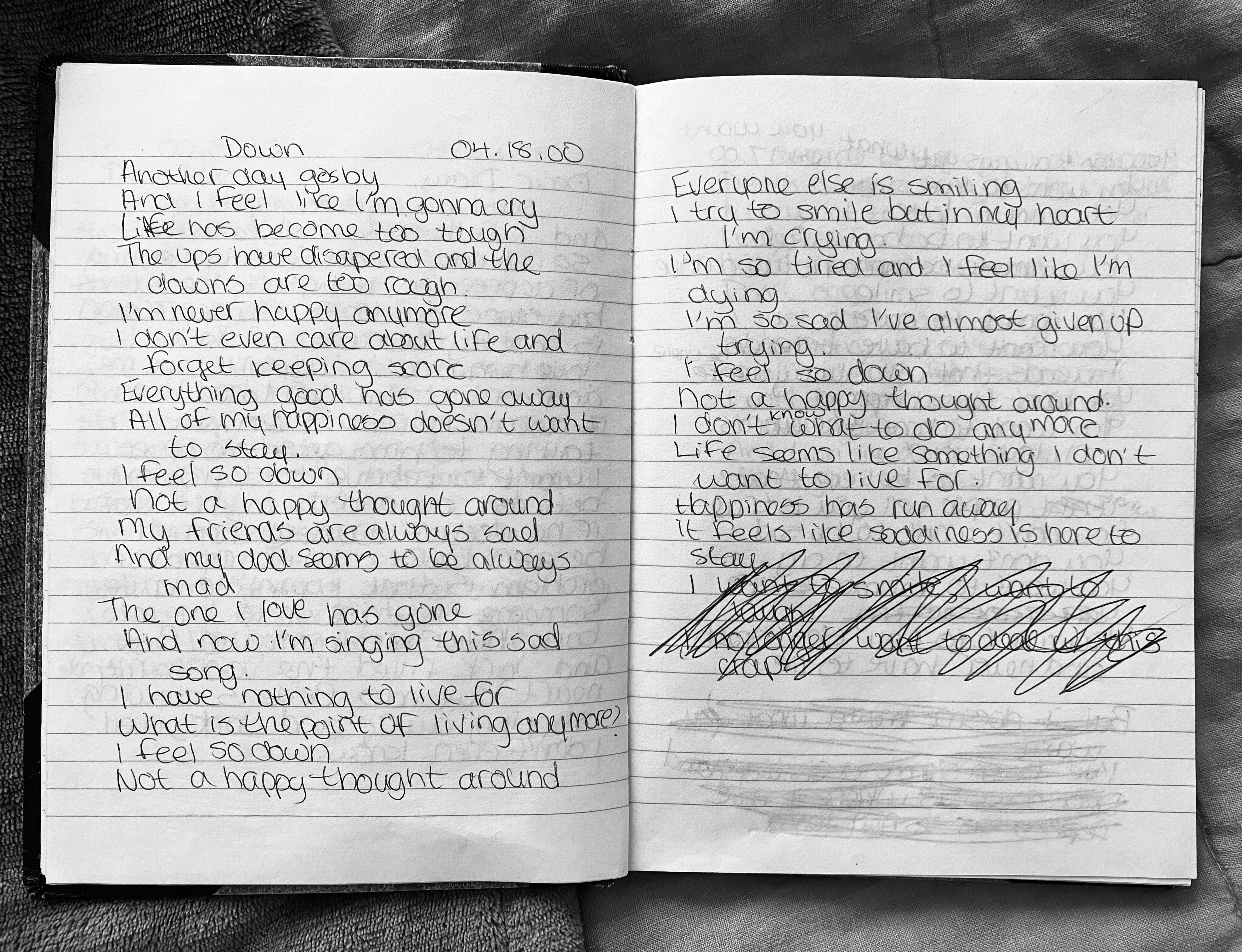
What my reaction to my adolescent poetry revealed was an inability to love the younger versions of myself. I felt ashamed of how I always yearned for boys that would never choose me, who would only hang out with me in secret and then date my best friends publicly. I also wasn’t ready to reckon with what these poems revealed: that I’d been so sad, so lonely — to the point that no longer living called to me like a siren song.
At some point in my teenage years, I stopped writing poems. Stopped writing completely. It wasn’t until I was twenty that I found my way back to poetry again. This time, though, I had to create some distance between myself and the speaker of the poem. I needed a foil — someone not me to speak these words into being.
For my end of year project for an English lit course, I wrote poems in the voices of characters from the books we’d read: Kathy Acker’s Blood and Guts in High School; Don Delillo’s White Noise; Daniel Clowes’ Ghost World. My distancing act could only get me so far. Unsurprinsgly, I find myself all over these poems – both in the words but also the images I selected.
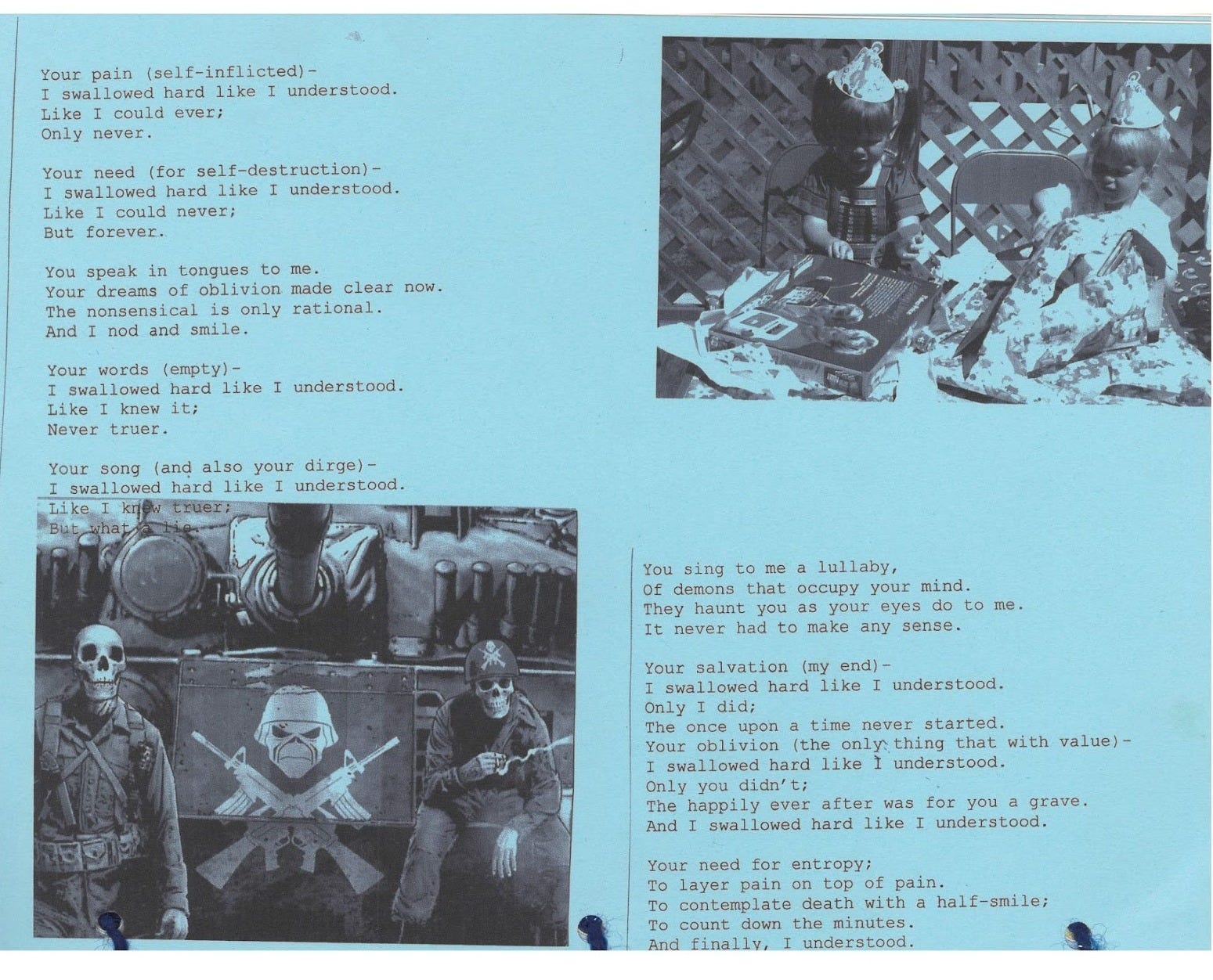
The most stark evidence is the juxtaposition can be found here, alongside this poem, “I Swallowed Hard Like I Understood” (shout out to 65daysofstatic for their song of the same title, which I clearly stole). Juxtaposed with the image of skeletal soldiers is a picture of my cousin (on the left) and I when we must have been around three years old. The joy of two children opening up birthday presents set alongside an image of war.
I wish I could remember why I made this choice. All I have are speculations. That I was foreshadowing a wounding to come with the words “The happily ever after was for you a grave.” There is an acknowledgment that I would (had) come to know death intimately. That one day, the little child in the photograph, would have a “need for entropy; / To layer pain on top of pain.” Death and childhood are inextricably linked.
As if in a process of maturation, a bildungsroman through poems, I see how I layered pain on top of pain in a poem I wrote for Jeanette Winterson’s Written on the Body.
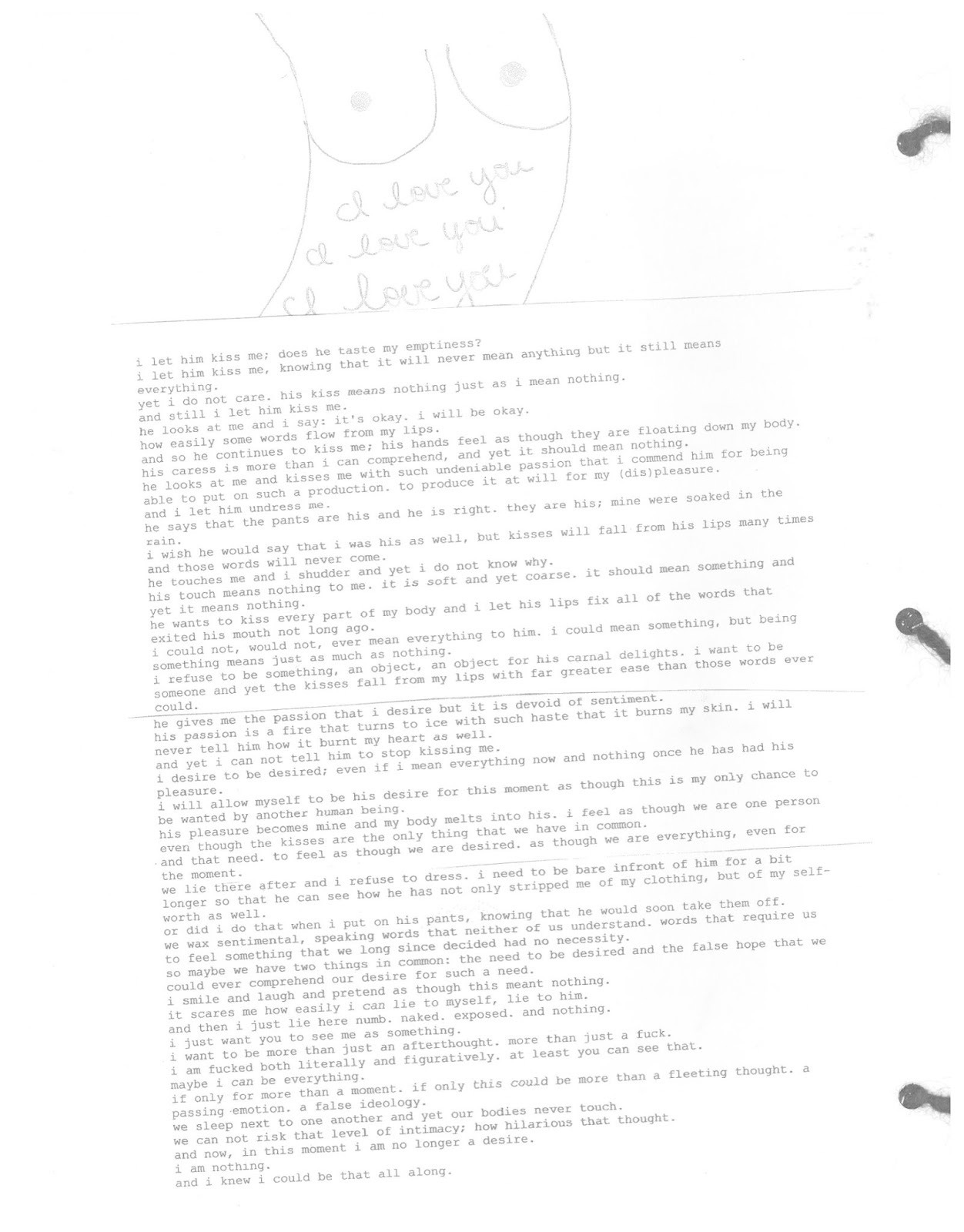
The speaker recounts how the beloved wants to kiss every part of my body and i let his lips fix all of the words that / exited his mouth not long ago. / i could not, would not, ever mean everything to him. i could mean something, but being / something means just as much as nothing. In the landscape of desire, the truth wounds but does not diminish one’s wanting: his passion is a fire that turns to ice with such haste that it burns my skin. i will / never tell him how it burnt my heart as well. / and yet i can not tell him to stop kissing me. The desire to be everything. / if only for more than a moment is what the speaker must accept.
But their longing is to hear the words I love you I love you I love you that are written on the body above the poem like an incantation, a prayer, a spell. Knowing that they’ll never hear these words, they turn themself into nothing and i knew i could be that all along.
In this poem, I find so much wisdom – a wisdom that I had denied existed in this younger version of me: for if I truly knew that connection required me to sacrifice my self-worth (i will allow myself to be his desire for this moment as though this is my only chance to be wanted by another human being)how could I continue to do so? I created a different story, one in which I have no clue how traumatized I am. A story that allows me to ignore the fact that I am both a victim and an active participant in my wounding/wanting.
After I submitted my final project, my professor told me that I should apply to the Creative Writing program. I was shocked. Never thought that my poems were good enough to pursue. But I took his advice and was accepted. I went in thinking that I was poet and then quickly learned that — in the eyes of my professor — I was not. Every poem I submitted would come back with the same notations: cliché, cliché, too cliché, too trite, a bit of a cliché.
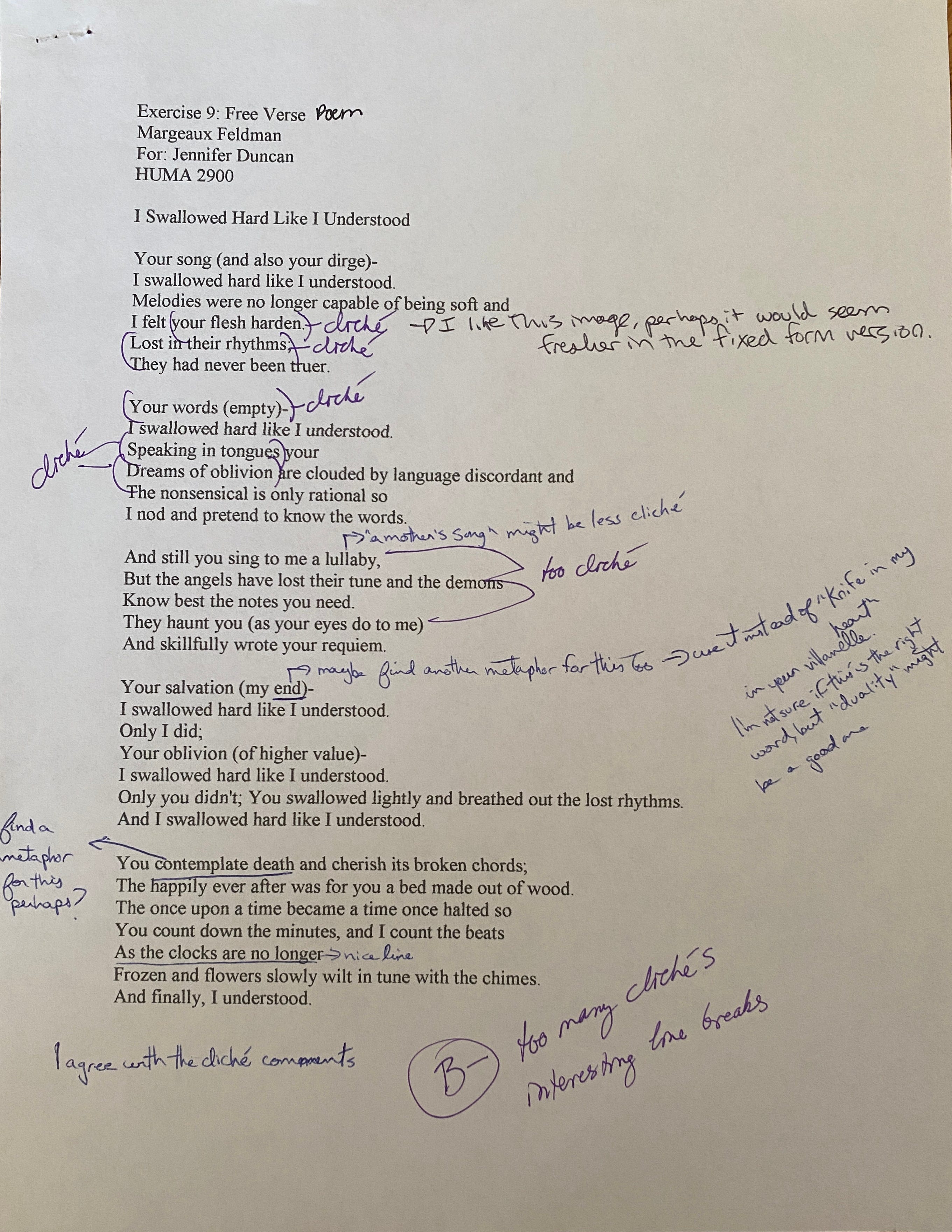
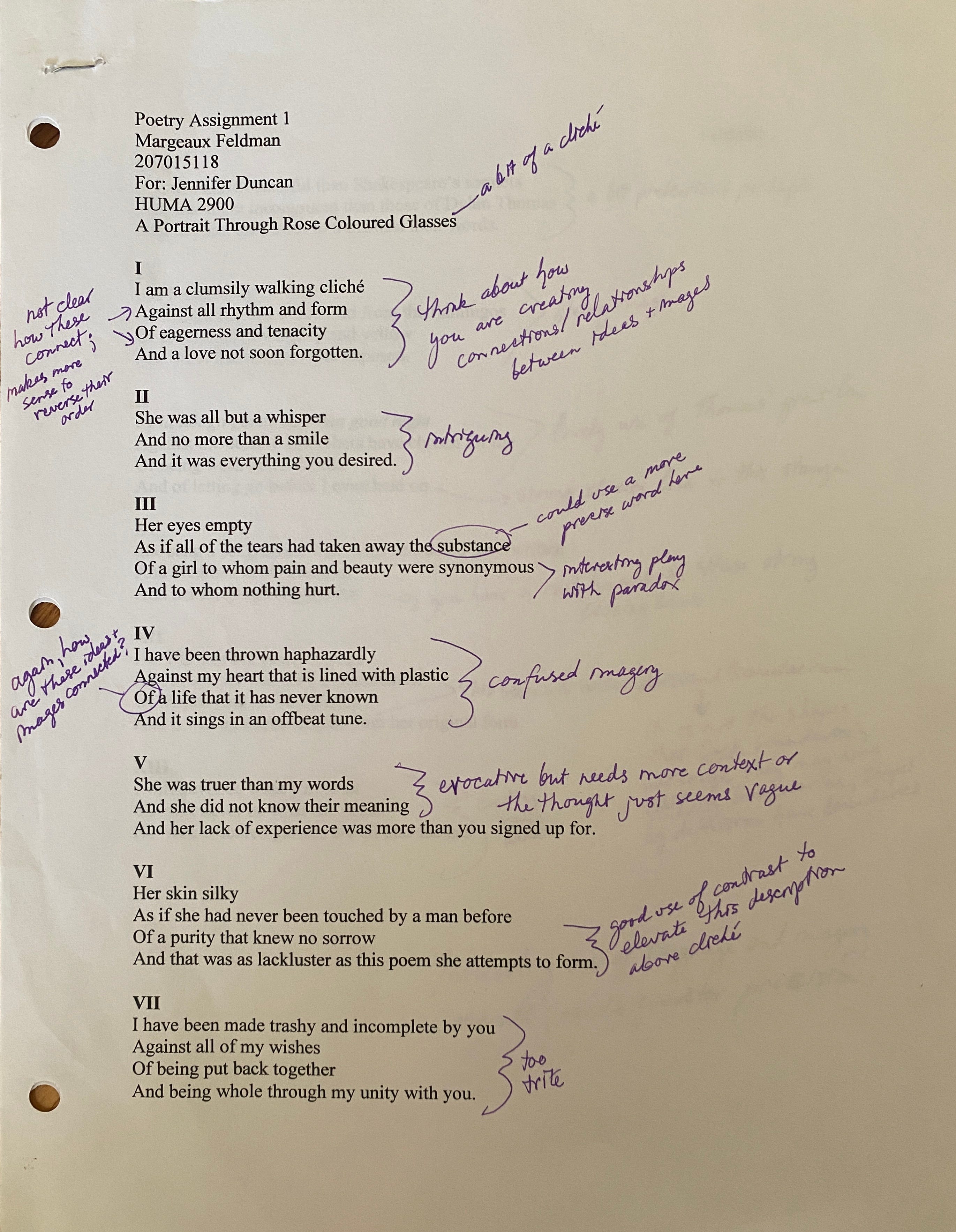
After that class, I stopped writing poetry. I turned my attention to writing essays and critical theory. It wasn’t until the summer of 2024, over 15 years after my creative writing class, that I’d push through the fear and anxiety of being a “bad poet.” Now in a creative writing MFA, and inspired by the poems Jade sent me in the early days of our courtship, with their encouragement, I took a poetry class once again.
Jade and I had been sending each other poems for months. They’d write one in less than ten minutes and send it to me. It was brilliant and beautiful. I’d stare at the lines in my notes app for hours, painstakingly agonizing over every word choice, worrying if it was “too cliché.” I soon realized that my fear of being cliché was getting in the way. That, in fact, I actually love clichés. If it’s been said so many times that it’s become cliché, it’s clearly because so many resonate with that image.
This pressure to always be fresh, inventive, and original was suffocating. Ideas do not exist in a vacuum. We’re constantly being influenced by one another. Every cliché, to me, is a moment of connection. So I will write of rose colored glasses, and wishes of being put back together again, of lullabies and being haunted by empty words. If my poems are too cliché for you, then so be it.
The fear of being cliché and the shame I’ve felt towards my adolescent poetry do not serve me. The more I shame myself for being cringe, the more I hate myself. And I’m just not willing to do that to myself any longer. So here’s my latest poem:
Text within this block will maintain its original spacing when published
i spent so much of life
locking away parts of me
in attics and basements
cutting out little holes
in the name of love
always too sensitive,
always too much, too wounded
just get over it already
these days, i’m called
wound dweller, uttered like
a scarlett letter i cannot remove
and i cannot argue,
for i am emotional hemophiliac
skin too thin for these
third-degree burns to become scars
perhaps i do dwell in wounds
but have you ever wondered if
the wound holds more than shadow
if perhaps a wound is an opening
a window letting the light in
there is so much medicine
in what aches for our attention
and so i invite my wounds to the table
call back all of me that i cut away
say please forgive me
what a gift, to let all of myself
be here, be loved, be held
with all these holes in my heart
together we birth new worlds
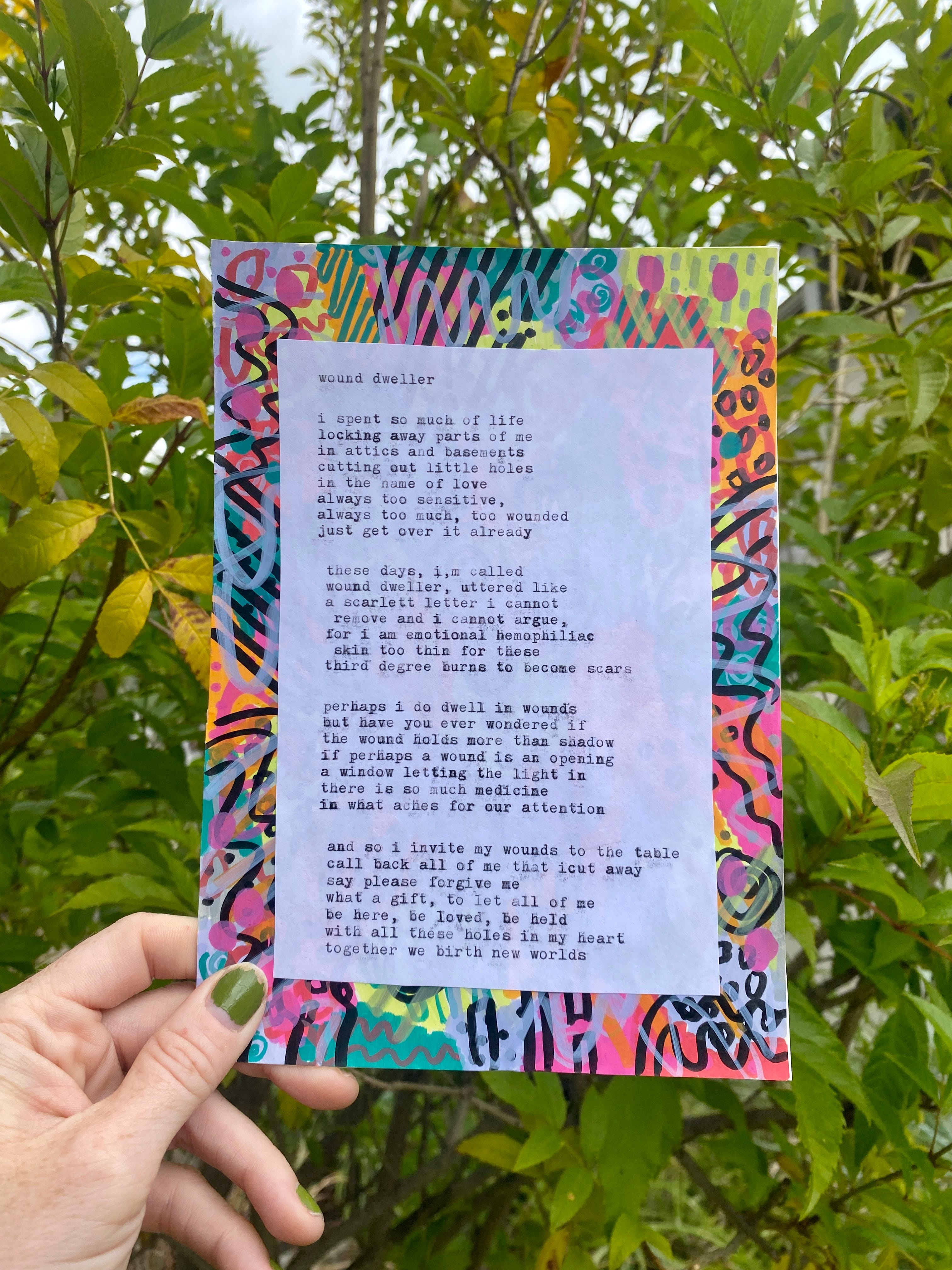
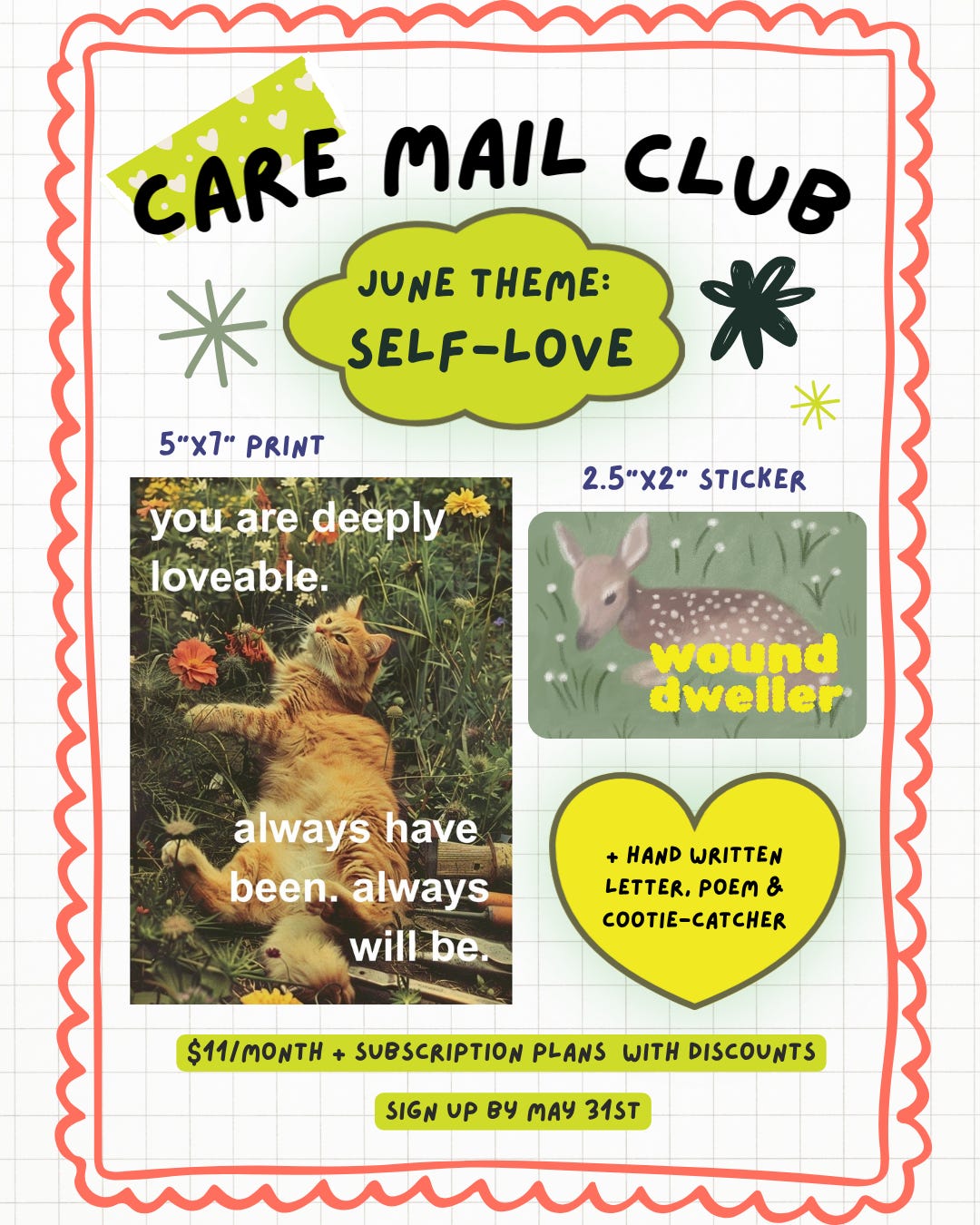
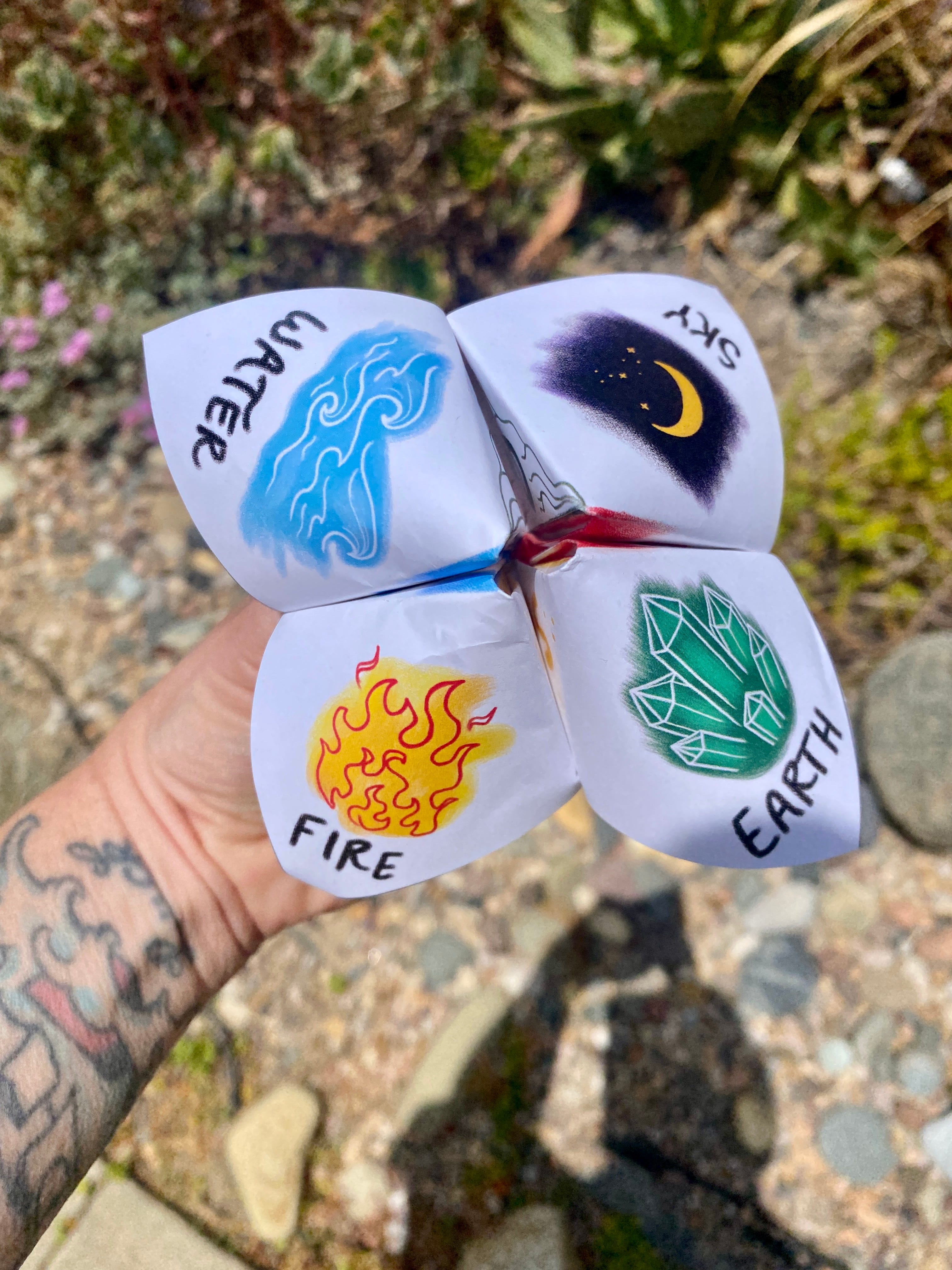
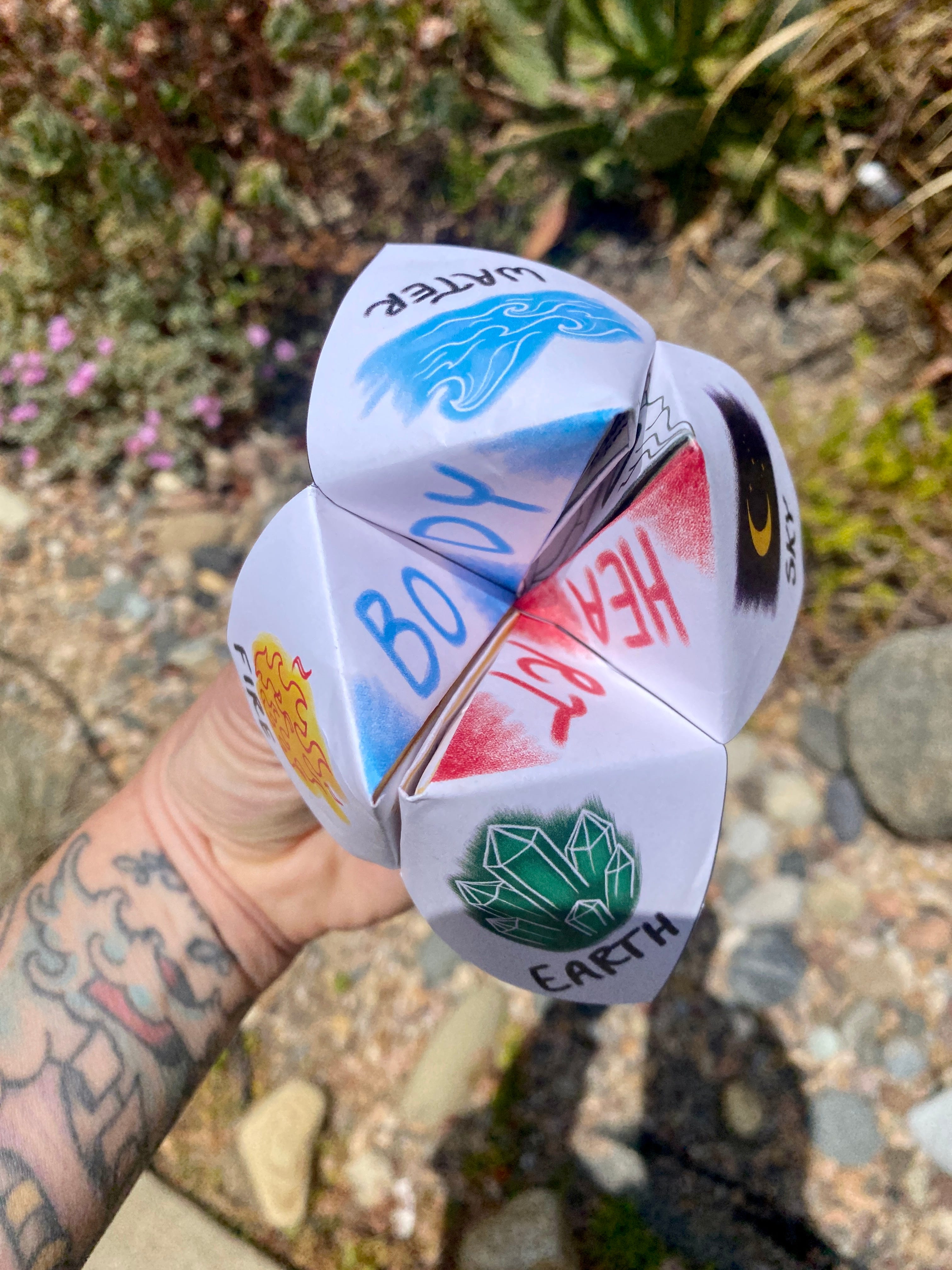
If you’d like a copy of this poem, written on my typewriter, and placed atop of my art, you can sign up for June’s snail mail offering, which also includes a “wound dweller” sticker, art print of one of my memes, and a 90s throwback: cootie catcher! (If you’re asking yourself “What’s a cootie catcher?” scroll down!)
Comments
Nothing yet. Say the first thing.
Sign in to join the conversation.