
This week continues Matthew’s emphasis on parables. Instead of one long story, however, chapter 13 weaves several mini-stories into a parabalooza!
The Cottage is a reader-supported, author-crafted newsletter.
That means two things: 1) there are no ads, no grants, no corporate sponsors, and 2) there’s no AI writing — and there never will be.
Every word is from my heart and soul.
The Cottage exists because human beings committed to creativity, community, original thinking, challenging ideas, and the joy of being on a spiritual journey provide encouragement and support for this work.
If you are able, please consider becoming a paid subscriber.
Thank you if you already contribute. I’m truly grateful.
Jesus put before the crowds another parable: “The kingdom of heaven is like a mustard seed that someone took and sowed in his field; it is the smallest of all the seeds, but when it has grown it is the greatest of shrubs and becomes a tree, so that the birds of the air come and make nests in its branches.”
He told them another parable: “The kingdom of heaven is like yeast that a woman took and mixed in with three measures of flour until all of it was leavened.”
“The kingdom of heaven is like treasure hidden in a field, which someone found and hid; then in his joy he goes and sells all that he has and buys that field.
“Again, the kingdom of heaven is like a merchant in search of fine pearls; on finding one pearl of great value, he went and sold all that he had and bought it.
“Again, the kingdom of heaven is like a net that was thrown into the sea and caught fish of every kind; when it was full, they drew it ashore, sat down, and put the good into baskets but threw out the bad. So it will be at the end of the age. The angels will come out and separate the evil from the righteous and throw them into the furnace of fire, where there will be weeping and gnashing of teeth.
“Have you understood all this?” They answered, “Yes.”
And he said to them, “Therefore every scribe who has been trained for the kingdom of heaven is like the master of a household who brings out of his treasure what is new and what is old.”

Matthew 13 is a parable lightning round, a kind of parable party!
The chapter has seven parables, some explained and some not, with extended quotes from Hebrew scriptures. Five of those parables are included in today’s text. Throughout the passage, Jesus shows himself a master storyteller.
The central imagery, however profound each parable’s theological meaning, is commonplace, charming, and perhaps even cozy: mustard seeds, yeast, a secret treasure, pearls, and net.
The kingdom of God is like small seeds.
The kingdom of God is like yeast.
The kingdom of God is like hidden treasure.
The kingdom of God is like a fine pearl.
The kingdom of God is like a fishing net.
I don’t know about you, but when I was a child, I certainly didn’t think about the kingdom of God being like any of those things. Instead, when (and if) I thought about the kingdom of God, I imagined a regal palace adorned in gold, bright and bejeweled, guarded by knightly-angels. The kingdom of God would be like that — an opulent place of prestige, possessions, and power.
But that’s not how Jesus described the kingdom of God. No gilt-clad throne rooms for him. Nothing to awe wide-eyed peasants. No warriors protecting the king.
Indeed, there’s nothing in these mini-parables truly fit for what we think of when we think of a king or a kingdom.
Seeds, yeast, hidden treasure, a single pearl, and a fishing net.
What kind of kingdom is this?
Today’s reading leaves out Matthew 13:34-35, but I think they may be the most important verses in the chapter:
Jesus spoke all these things to the crowd in parables; he did not say anything to them without using a parable. So was fulfilled what was spoken through the prophet:
“I will open my mouth in parables,
I will utter things hidden since the creation of the world.”
Things hidden since the creation of the world.
Like the meaning of “kingdom.” We human beings may have thought a kingdom to be a golden palace. But not Jesus. The “kingdom” instead is like ordinary things, found in everyday experience, shared longings and simple hopes.
The seeds become a safe haven for birds. A place to nest. The yeast grows into bread, the most universal of provisions. Hidden treasure reminds us of the journey and quests in our lives. A single pearl, a search for wisdom. And a fishing net gathers abundance — but it also teaches us discernment and calls us to moral choices.
These are widespread hopes and dreams, understandable to many people in myriad cultures — safety, something to eat, spiritual means, beauty and wisdom, and to know good from evil.
That’s the kingdom of God.
No gold. That’s not it. No trappings of empire. That’s not the kingdom.

Instead — Things hidden since the creation of the world.
My husband and I just returned from Ireland. We spent three weeks walking along small lanes and old roads, delighting in tiny cottages and worn churches, wandering among sheep and goats, seeing holy shrines and ancient wells, enjoying rocks and flowers, listening to medieval chant and traditional Irish songs, and drinking strong whiskey and dark Guinness.
The only gold we saw was in an archeology museum — mostly Bronze Age lunulae (flat, crescent-shaped necklaces). The ancient gold was beautiful, but no more so than the humble, holy things of ordinary life.
The kingdom of God is like flower boxes on a pub.
The kingdom of God is like a seagull sitting on an urban roof.
The kingdom of God is like daisies growing in the rocks.
The kingdom of God is like a hidden doorway.
The kingdom of God is like the rowan berries.
The kingdom of God is like a stone cottage along the road.
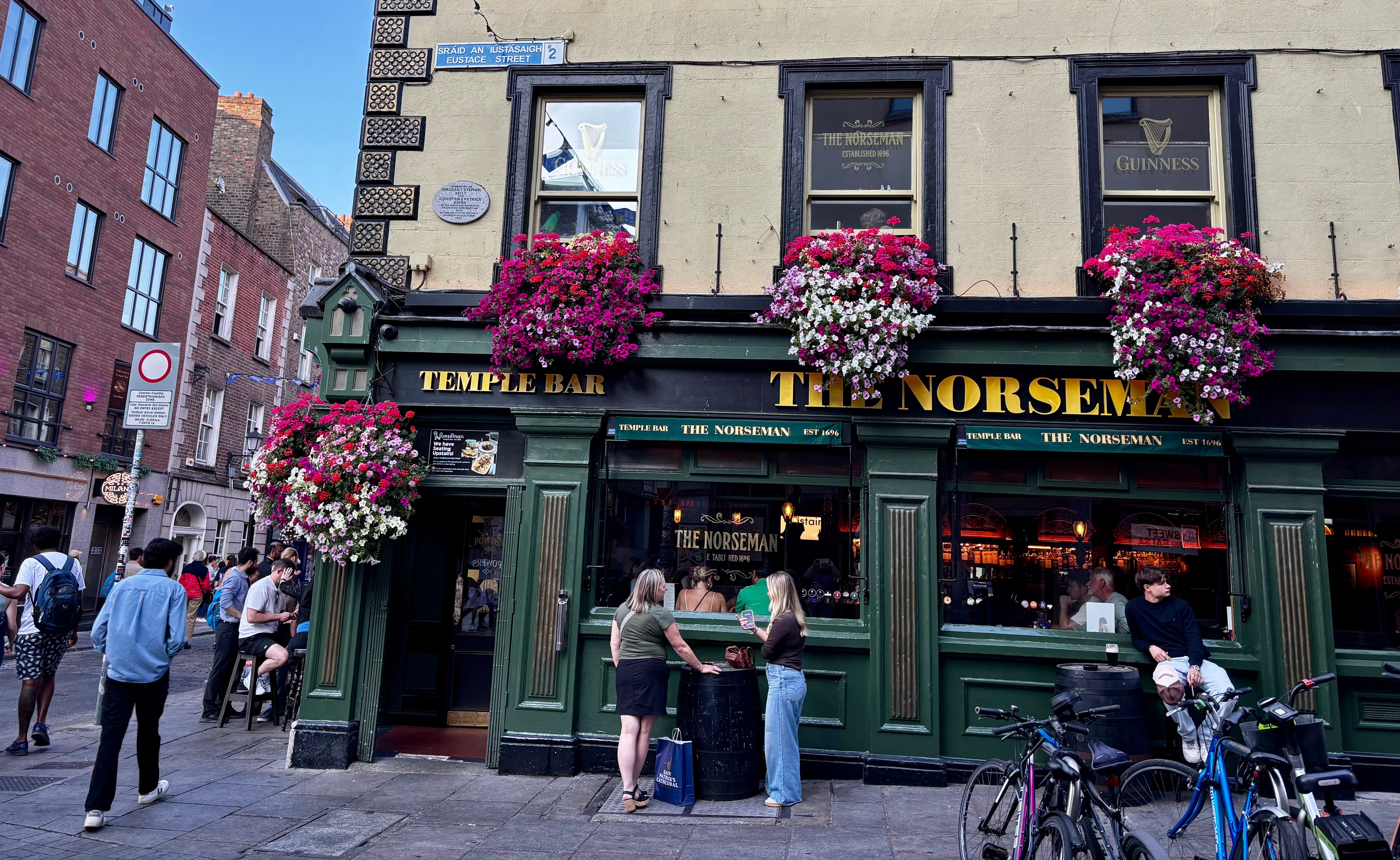
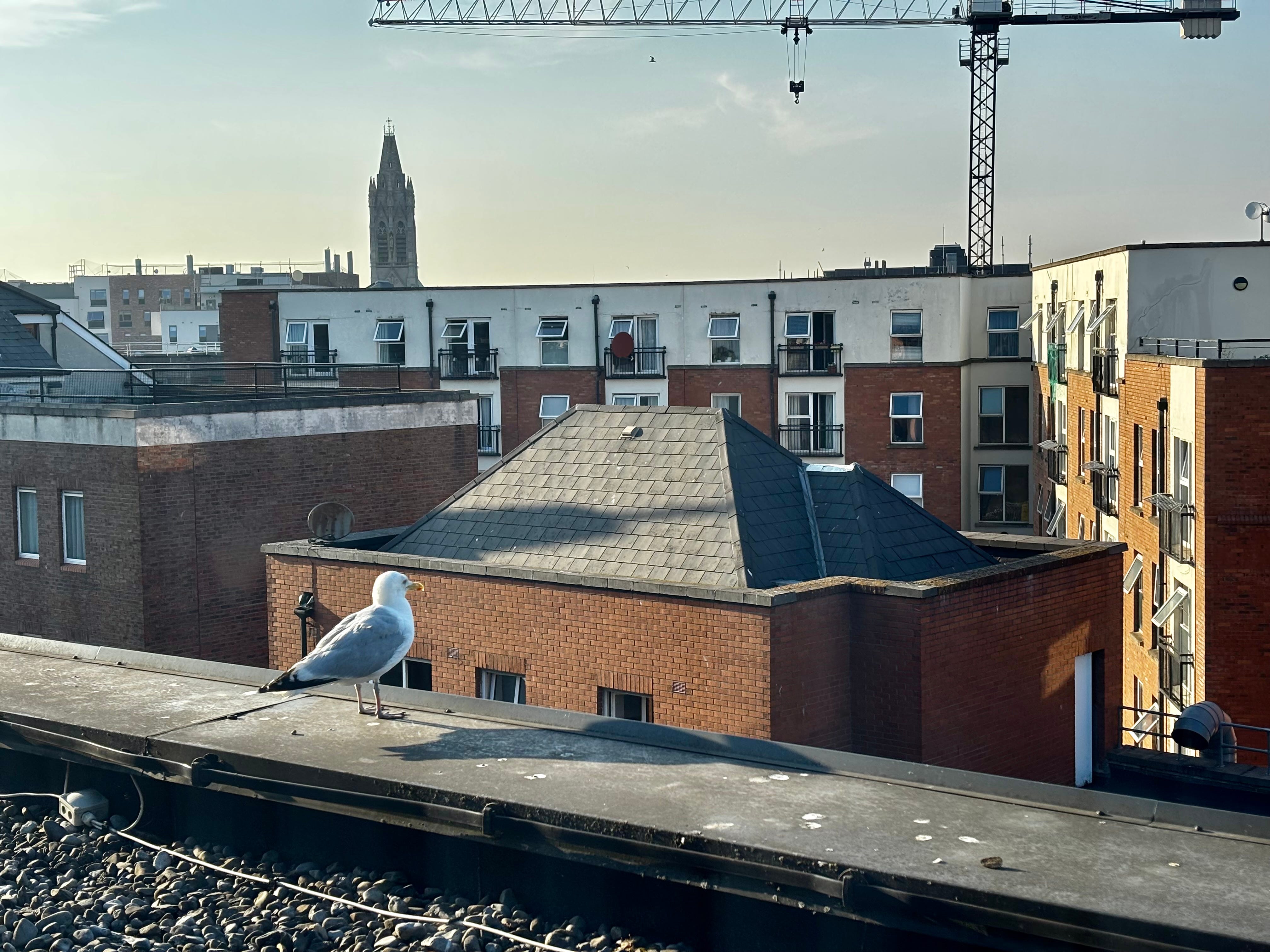
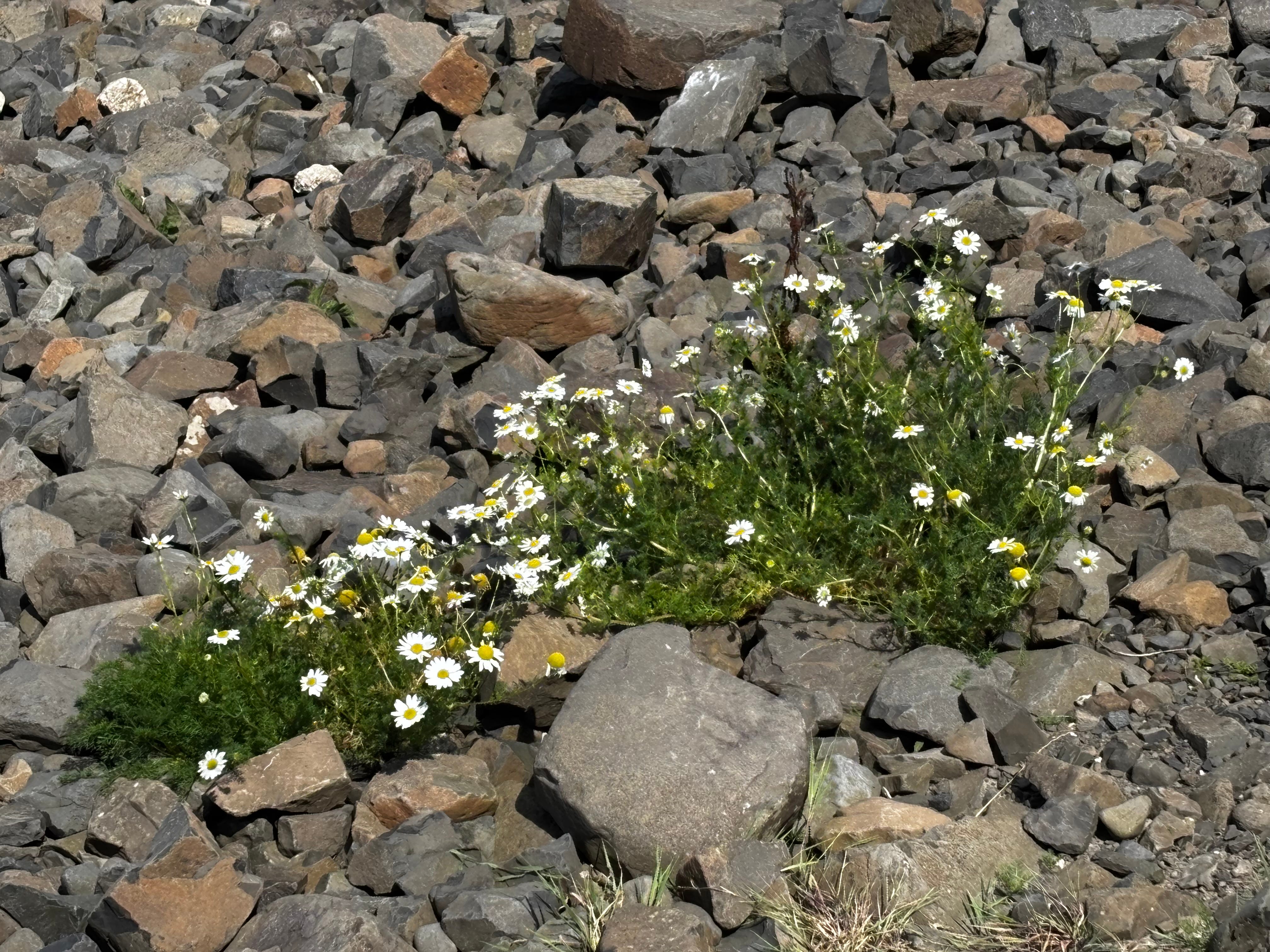
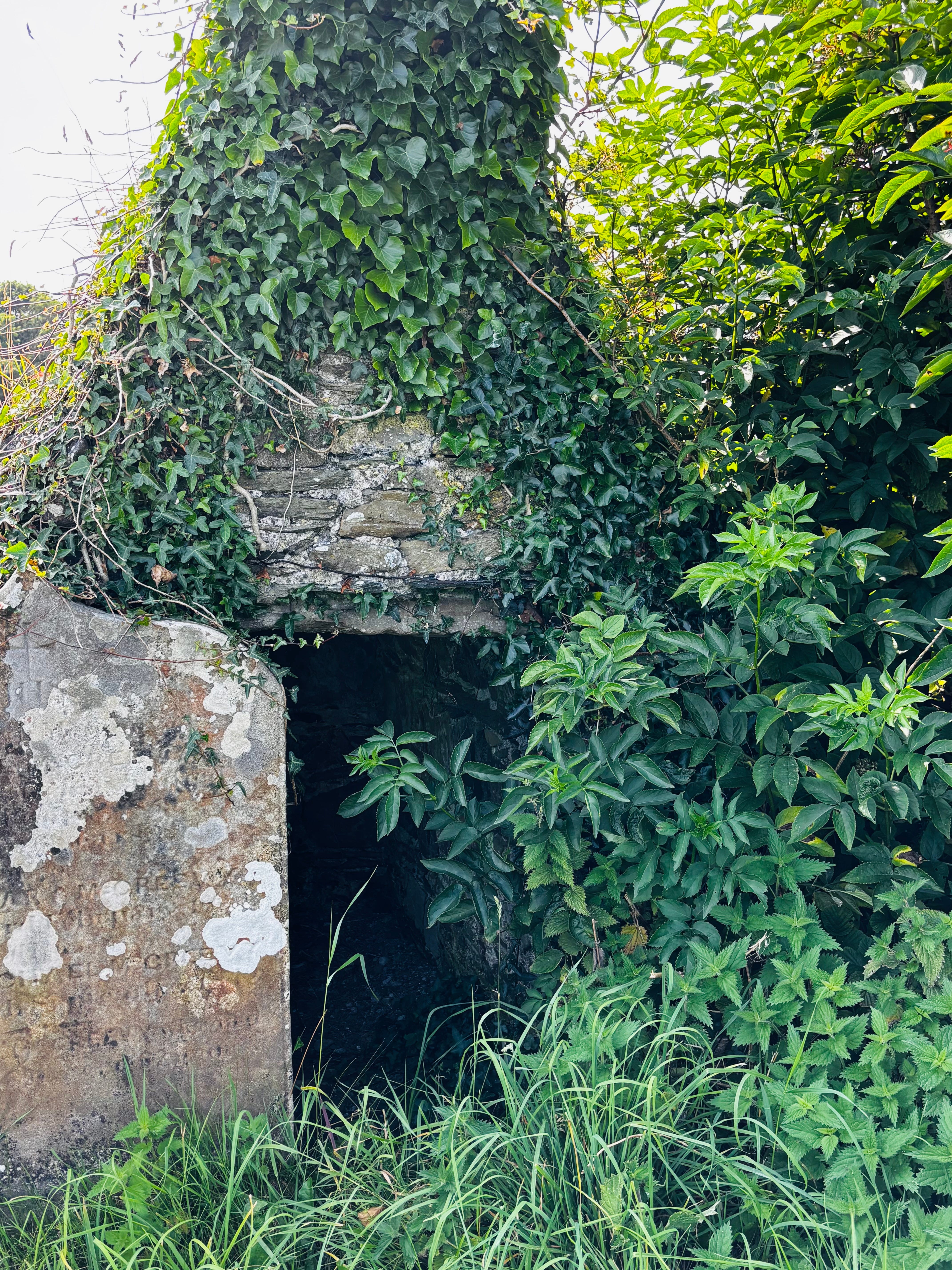
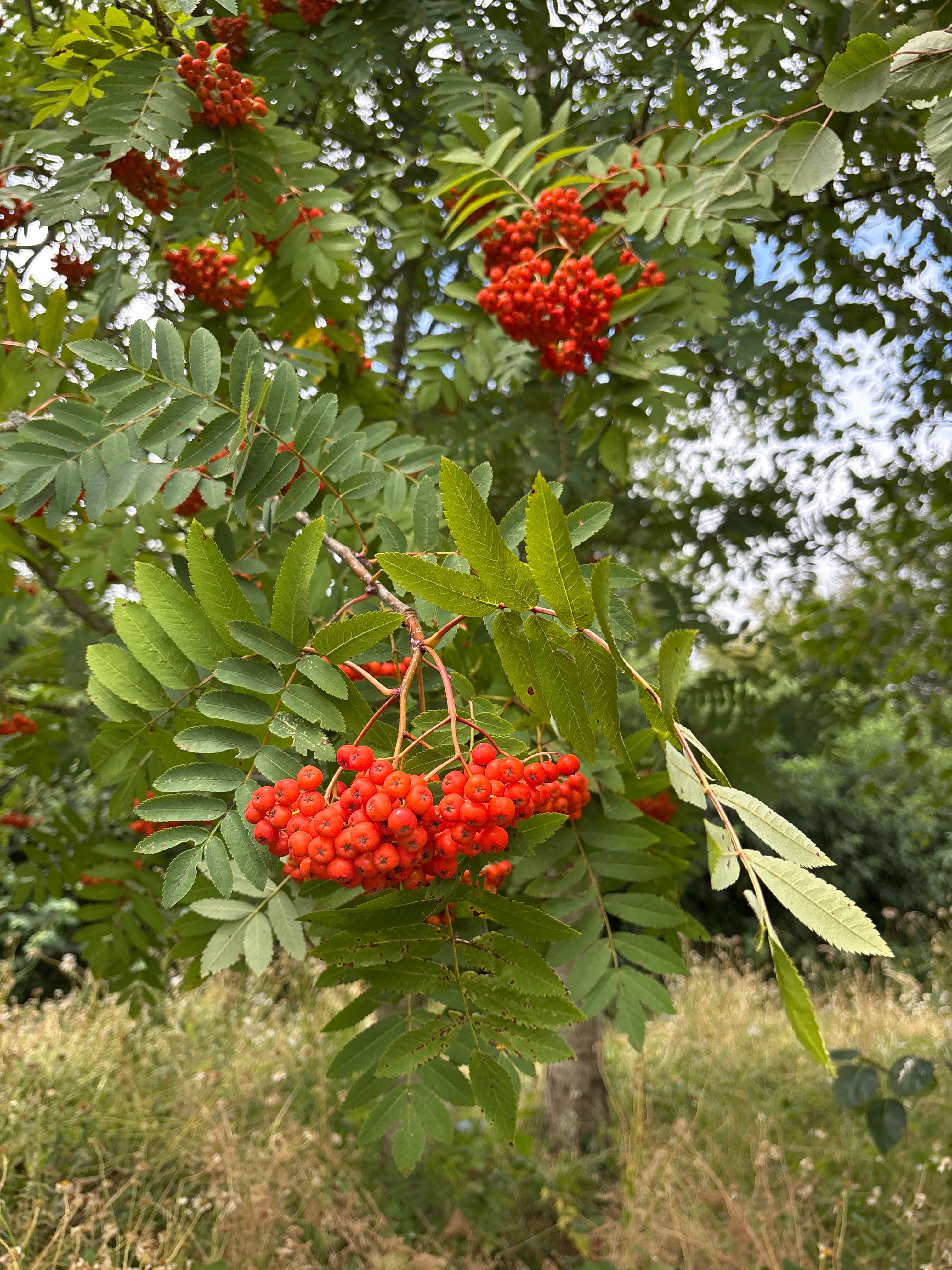
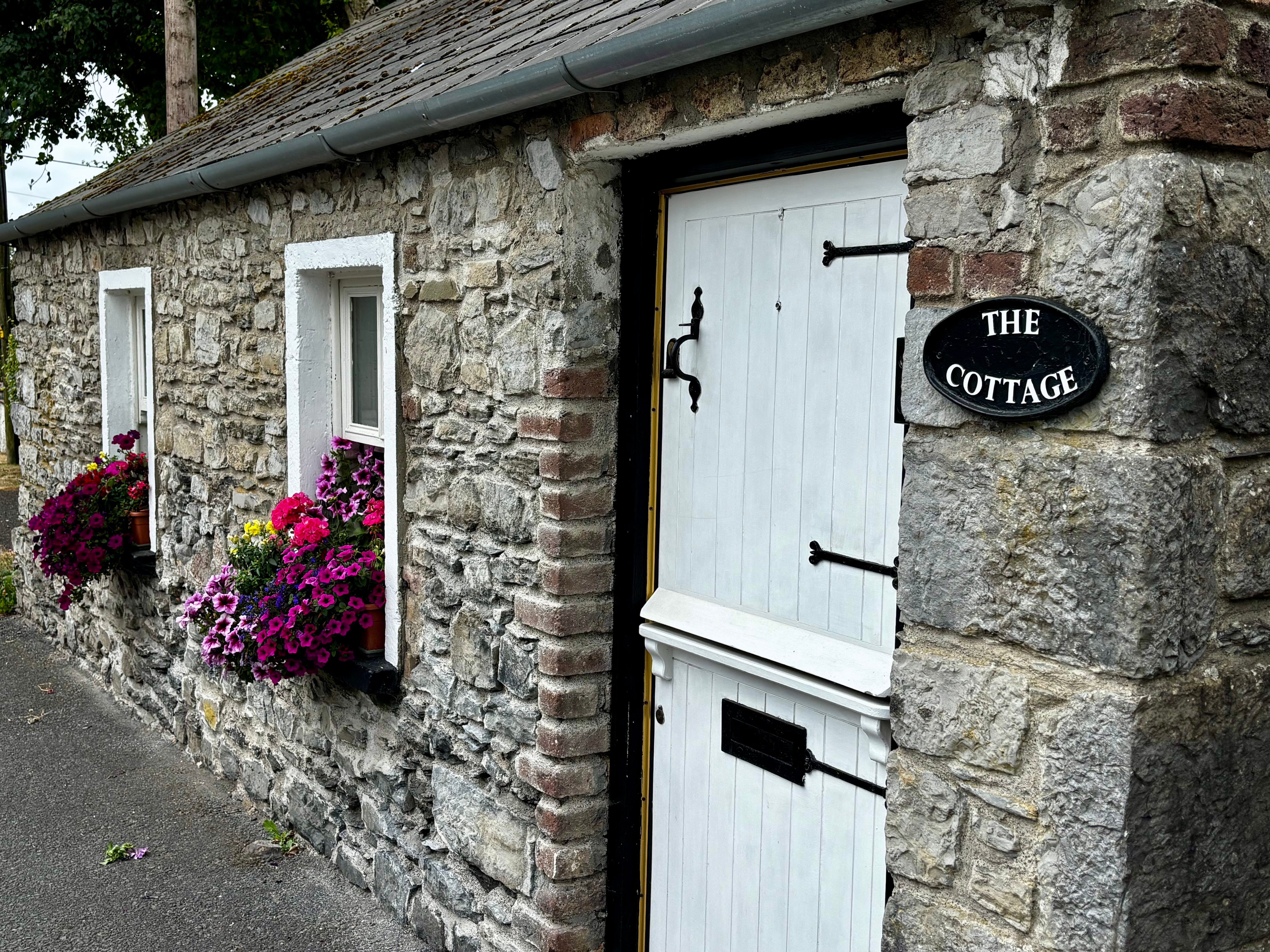
God is in the ordinary. The kingdom is what we see everyday. The sacred is known in all that surrounds us.
So fitting for the season after Pentecost; we are always in Ordinary Time.
The kingdom of God is like….
What is the kingdom of God like to you?
At the end of this passage, Jesus asked his followers: “Have you understood all this?”
They answered, “Yes.”
I wonder. Did they really understand “all this”?
Do I?
It is a kind of love, is it not?
How the cup holds the tea,
How the chair stands sturdy and foursquare,
How the floor receives the bottoms of shoes
Or toes. How soles of feet know
Where they’re supposed to be.
I’ve been thinking about the patience
Of ordinary things, how clothes
Wait respectfully in closets
And soap dries quietly in the dish,
And towels drink the wet
From the skin of the back.
And the lovely repetition of stairs.
And what is more generous than a window?
— Pat Schneider, “The Patience of Ordinary Things”
One-o-clock. A floral teapot and a raisin scone. comes into his own, mysterious on the stairs, the red spoon and the salt-glazed cup, is a tick, a purr, a drop. The spider the doors are bolted and the keys tested an electric room — a domestication
After a friend has gone I like the feel of it:
The house at night. Everyone asleep.
The way it draws in like atmosphere or evening.
A tray waits to be taken down.
The landing light is off. The clock strikes. The cat
a black ambivalence around the legs of button-back
chairs, an insinuation to be set beside
the saucer with the thick spill of tea
which scalds off easily under the tap. Time
on the dining-room window has fallen asleep
among complexities as I will once
and the switch turned up of the kitchen light
which made outside in the back garden
of closed daisies, an architecture
instant and improbable.
― Eavan Boland, “Nocturne”
Freeman Patterson once said, “If you do not see what is around you every day, what will you see when you go to Tangiers?”
How can we ever learn to see the extraordinary if we never learn to see the amazing ordinary? Our eyes, inner and outer, need to be exercised. Musicians know that about their ears. Unless they practice daily, they’ll lose their ability to hear the tiny differences of tone and note.
The same is true if we want to learn how to see attentively. The best way to learn how to see is to practice seeing.
It may mean beginning small. Steal a half hour at lunch time and look at the people around you at the restaurant — look at how the light plays across their faces, drapes their clothes, and so on…
Take an hour in the evening to observe how the light changes as it moves across your yard or through your apartment. Pick something around you and check how it looks at different hours of light throughout your weekend.
— J. Brent Bill
Comments
Nothing yet. Say the first thing.
Sign in to join the conversation.