
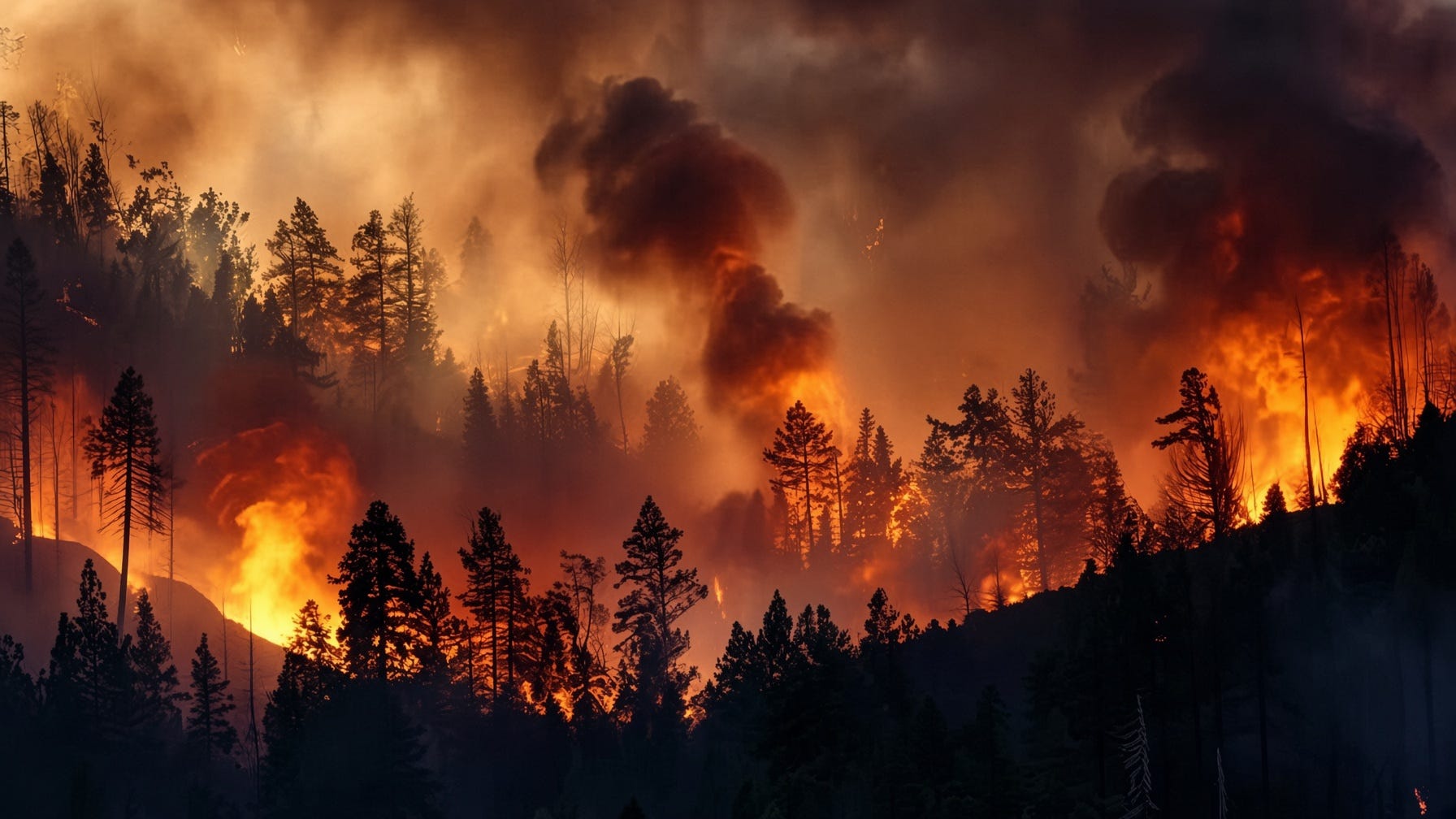
Wildfire “prediction market” bets involve people wagering (via platforms like Polymarket or specialized sites) on real-world outcomes of wildfires—such as acres burned, containment timelines, spread to specific areas/cities/counties, duration, or related impacts—rather than traditional sports or elections.
These emerged notably during the January 2025 Palisades and Eaton fires in the Los Angeles area (which killed 31 people and destroyed over 16,000 structures). Polymarket hosted roughly 20 related markets, with total volume reported around $1.2 million (one containment-related market alone saw hundreds of thousands in volume). Bettors traded on questions like total acreage, whether flames would reach places like Santa Monica by a certain date, or when fires would hit specific containment percentages. Markets typically resolve based on official data (e.g., from CAL FIRE or similar).
A dedicated California-focused platform called Wyldfyre (wyldfyre.io) launched around June 2026, positioning itself as the first standalone prediction market for wildfire risk there. Its slogan is “You can’t predict fire. But you can trade on it.” It prices risk for counties, cities, and regions in real time using sources like NASA FIRMS hotspot/satellite data and National Interagency Fire Center (NIFC) fire perimeters, plus crowd-sourced trading. At launch/early stages it offered only simulated/paper trading (virtual points, no real-money payouts yet, with “real money coming soon”), framed some contracts around claims-adjusting scenarios, and claimed the crowd wisdom would improve forecasting beyond models/satellites. High Country News (an independent Western U.S. magazine focused on the region’s environment and communities) first reported on it; the site briefly went offline after coverage, then returned with added disclaimers, terms of service, and contact info, emphasizing it is “not an emergency information source.”
Key Concerns
Perverse incentives / arson risk: Because wildfires (unlike hurricanes or earthquakes) can be started or influenced by a single person with a match or accelerant, tying financial outcomes to fire size, location, or persistence raises fears of deliberate ignition or interference to “win” a bet. A U.S. Forest Service spokesperson told High Country News that systems linking financial gain to wildfire outcomes risk encouraging misuse including arson and are incompatible with their mission. Ethicists noted it could devalue human life and create dangerous markets.
Survivor and community reactions: Wildfire survivors described the practice as “morally reprehensible” and “salt in the wound,” viewing it as gamifying trauma and loss while people evacuated or lost homes.
Insider trading / public safety: Concerns about those with privileged knowledge (firefighters, land managers) potentially trading, or people interfering with ongoing fires.
Broader framing: Sites like Futurism described Wyldfyre as a “grim” example of treating catastrophe as a financial opportunity amid economic pressures, arguing the incentives are irrational not to exploit in a high-stakes system. Prediction News (a niche outlet covering prediction markets) framed the launch as testing whether catastrophe risk can support a specialized liquid venue, potentially attracting insurance-sector players for hedging, while noting competition risks for broader platforms.
In early August 2026, a group of U.S. senators (including from Oregon, California, Nevada, and others) sent a letter to the Commodity Futures Trading Commission (CFTC) asking about plans to restrict or ban such wildfire event contracts on prediction markets (domestic or offshore). They cited the Polymarket LA fire activity, the Wyldfyre-style platform, community suffering being minimized for profit, and the arson/public-safety risks. Kalshi has stated it avoids wildfire markets due to perverse incentives; Polymarket has argued its markets provide information (though reports indicate it has not hosted active wildfire ones recently in some periods). Wyldfyre has been described in some coverage as later inactive or shut down.
Independent coverage (especially High Country News reporting by Kylie Mohr) originated much of the detailed public discussion of Wyldfyre and survivor perspectives. On platforms like X, alternative voices have amplified the story, sometimes linking it to wider theories about fire conditions, weather modification, or profit motives around disasters. Prediction markets in general aggregate crowd probabilities via trading (prices reflect implied odds), and proponents claim informational value, but wildfire-specific ones have drawn outsized ethical and practical pushback precisely because of how easily outcomes can be influenced. As of mid-August 2026 reporting from these sources, active real-money wildfire markets appear limited or paused amid the scrutiny.
⬩➤ Article: Are the Wildfires Happening Around the World Right Now ‘Normal’ or Something More Nefarious, Like DEWs? You be the judge…

🌿 Zeolite Toxin/Heavy Metal Detox
🎯 Dr. Peter McCullough’s ‘Ultimate Spike Detox’
🪱 Parasite Cleanse Products ⬩➤ Take Probiotics When Cleansing
💧 Chlorine Dioxide Drops For Drinking Water
💦 Chlorine Dioxide (MMS) Toothpaste, Mouthwash, Skin Care
🍑 Vitamin B17/Apricot Seeds/Laetrile/Amygdalin (Cancer Fighter)
🌿 Organic CBD Products For Humans and Pets
⭐ EMF Protection For Humans and Pets
No posts
Comments
Nothing yet. Say the first thing.
Sign in to join the conversation.