
You know what you’re spending on AI.
Do you know what you’re getting for it?
Can you see whether the way you work with AI is actually improving over time?
Where are the opportunities for improvement?
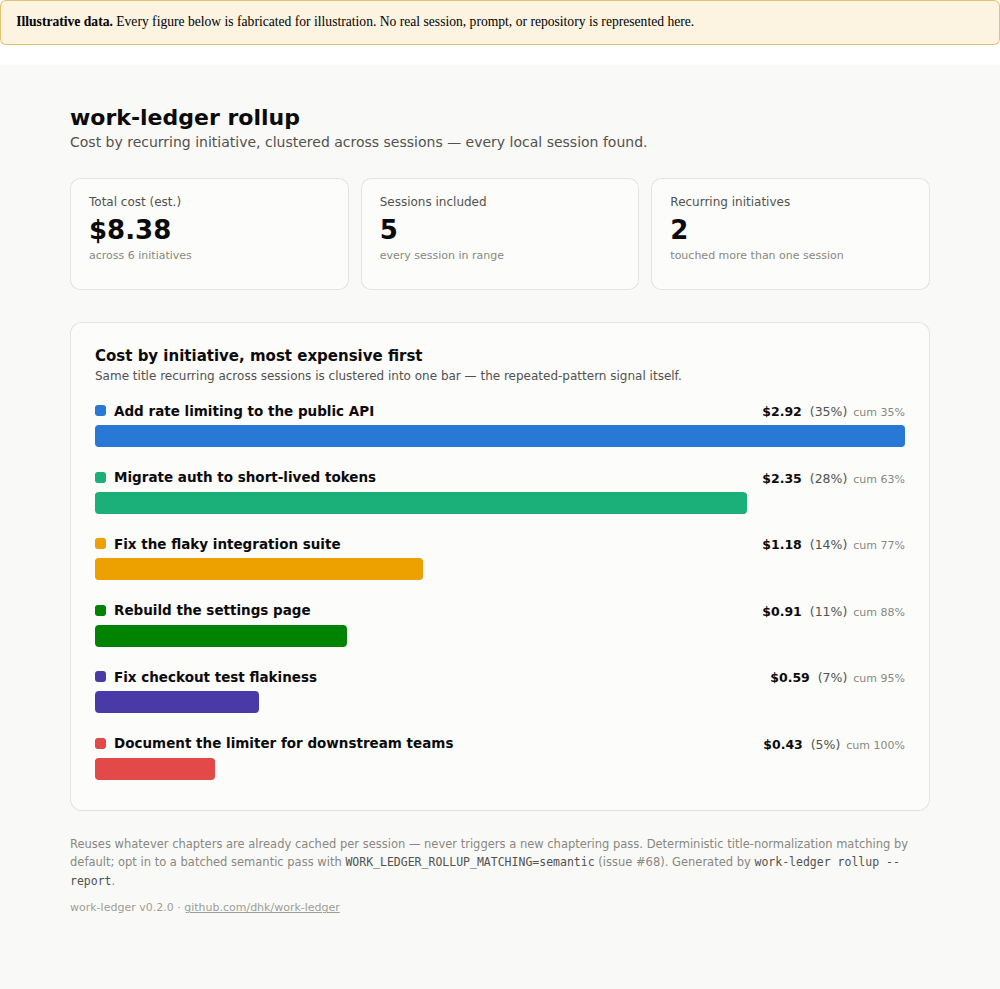
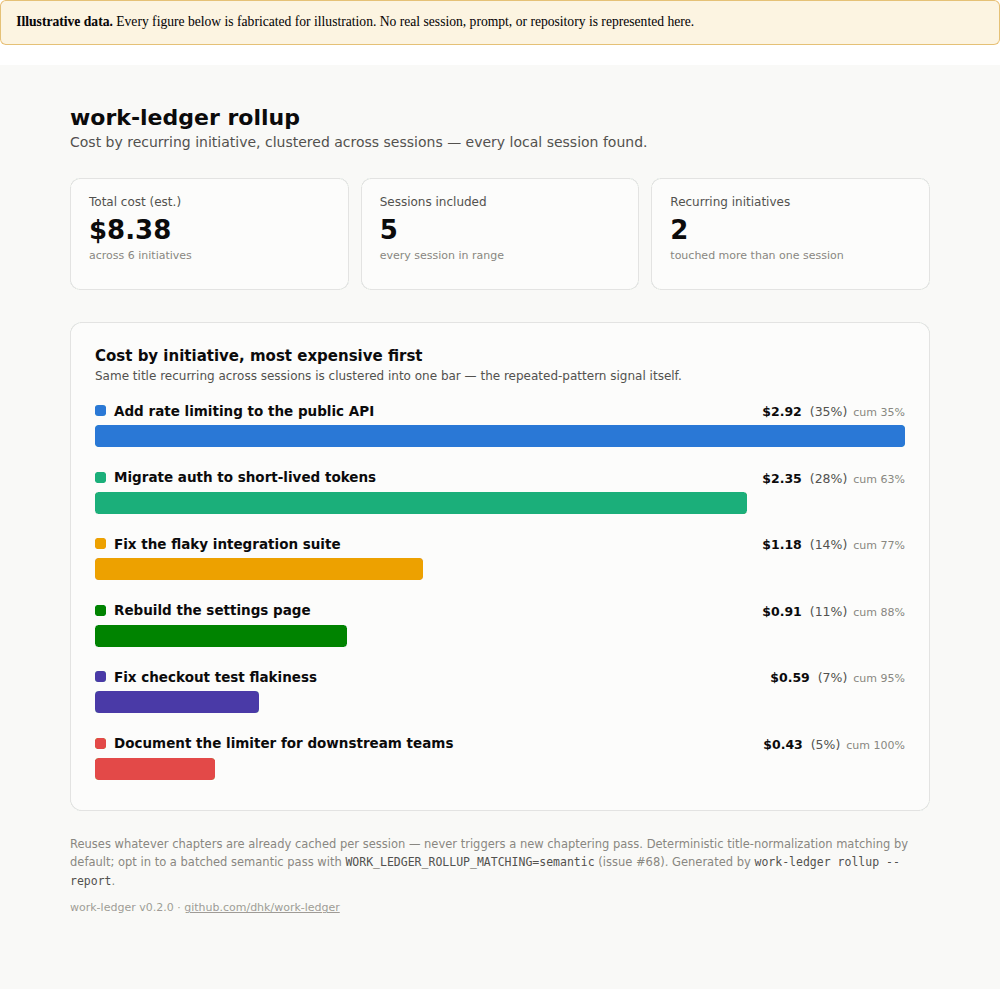
That’s what Work-Ledger is about. It turns the record of how work actually happened into evidence for making the work better.
Like many of my initiatives, it started with an itch. In this case, it was running out of tokens on my Claude Personal account.
The first question was “What’s Claude doing?” That turned into the three questions that underpin Work-Ledger:
What am I getting for it?
Where is AI doing unnecessary or repeated work?
How should I change my tool usage & workflow to get better results?
Work-Ledger is MIT-licensed, open source.
One shot install, here: `python3 -m pip install --user work-ledger`
About Work-Ledger: the walkthrough page
Repository: all the good stuff!
I’m looking for testers, contributors, users, critics! Give it a shot and tell me what you think. All feedback gratefully received, to workledger@dhk.io
I research, build and write about the thoughtful application of AI. We’re still early enough that the real barriers to effective use are not well understood. They’re not just about access to models or prompting skill; they’re about judgment, workflow, evidence, standards, and how individual learning becomes shared capability.
Comments
Nothing yet. Say the first thing.
Sign in to join the conversation.