
This week’s post, our twenty-sixth following our review of Fulla Abdul-Jabbar’s Who Loves the Sun, features Marlen Haushofer’s The Fifth Year, first published in German in 1952 and in English translation in 2026 by New Directions. New Directions was started in 1936 by steel magnate heir James Laughlin. It has risen to become one of the most prestigious houses in American publishing, especially renowned for republished modernist classics, literature in translation, and poetry anthologies. It is our second review of a New Directions book this year, after John Schneider’s piece on Giada Scodellaro’s Ruins, Child.
A few months back, Lincoln Michel posted the above note about the market for very short stand-alone books. As a vocal fan of little books, I certainly recognized the situation he was pointing out. Of the type of book he described here, I could point to maybe five or so written by Anglophone (let alone American) authors from the last decade. Claire Keegan’s Small Things Like These is the obvious one; Helen DeWitt’s The English Understand Wool and Sarah Manguso’s 300 Arguments are a couple more. At this point I have to start looking at some of the data I keep; we can add Andrea Long Chu’s Females, Jessica Au’s Cold Enough for Snow, Zadie Smith’s Intimations, Ben Lerner’s The Hatred of Poetry. There are undoubtedly several more, especially on tiny presses, but such exceptions only prove the rule. Pamphlet culture is long dead; were an American Karl Marx to publish The Communist Manifesto today, it’d include 200 pages of filler from his Neue Rheinische Zeitung journalism.
Why is this the case? It is, from a certain distance, a bit counter-intuitive. As everyone will tell you, our attention spans are getting shorter; we consume much of our media and information in portions of 200 characters or 8 seconds; my high school students recently asked me to fast forward through the opening credits of a movie because they were getting bored.1 Shouldn’t the novella, or better yet, the novelette, be all the rage? Add cataloguing culture to the mix—shorter books equals more books to log online—and you’d have reason to believe César Aira would be a bestseller. But culture is strange, perhaps even dialectical. Movies have gotten longer in recent years. Episodes of TV, unfettered from network cable, are no longer 22 minutes. And from what I can tell, books have not gotten shorter in the twenty-first century, with some evidence suggesting they’ve gotten longer.2 Nor is the short story experiencing any notable popular renaissance (au contraire). In some cases, thin is in; in others, fat is where it’s at.3
While many people have complained about bloated run times at the cinema (are we sure that Smile 2 needs more time to tell its story than Citizen Kane?), it would seem that studios and publishers are simply listening to the market. From a crude value proposition, a ticket to The Odyssey will run you just as much as one to Minions & Monsters, at half the per-minute cost. Much of our leisure time activities are priced by the minute—from SkyZone to pickleball court rentals—and so it’s not insane for producers to suppose or consumers to feel that longer movies, bigger books are better deals.
Is there a distinction between SkyZone and art? Marvel is often cited as a driver of running time inflation, and Martin Scorsese famously made a bunch of people mad by comparing MCU films to theme parks. Bracketing off the fact that I’m 35 and my neck cowers at the thought of a roller coaster, I’d probably be pissed if I paid $15 for a roller coaster that lasted like thirty seconds. On the continuum from bounce houses to Stan Brakhage, you might have to put The Avengers closer to the left. And as for books—I haven’t read a page of the series, but is it possible to argue that the value of Dungeon Crawler Carl resembles that of an escape room more so than that of Virginia Woolf?
Despite the superior insight of publishing, I’m reluctant to admit that tiny books are doomed to fail. Claire Keegan’s Small Things Like These, Chimamanda Ngozi Adichie’s We Should All Be Feminists, and Claudia Rankine’s Citizen all became quite ubiquitous in large part because of their humble lengths. I kind of doubt that the woman who read Citizen during a Trump rally would have found The Love Songs of W.E.B. Du Bois quite so wieldy. I’ve recommended my sister a lot of books over the years and one of the few she’s actually taken up is Small Things Like These, no doubt and understandably because it’s a relatively minor time commitment. I, for one, have purchased and read some bad books that I wouldn’t have otherwise were they twice the length. I am the market inefficiency—capitalize on my weaknesses!
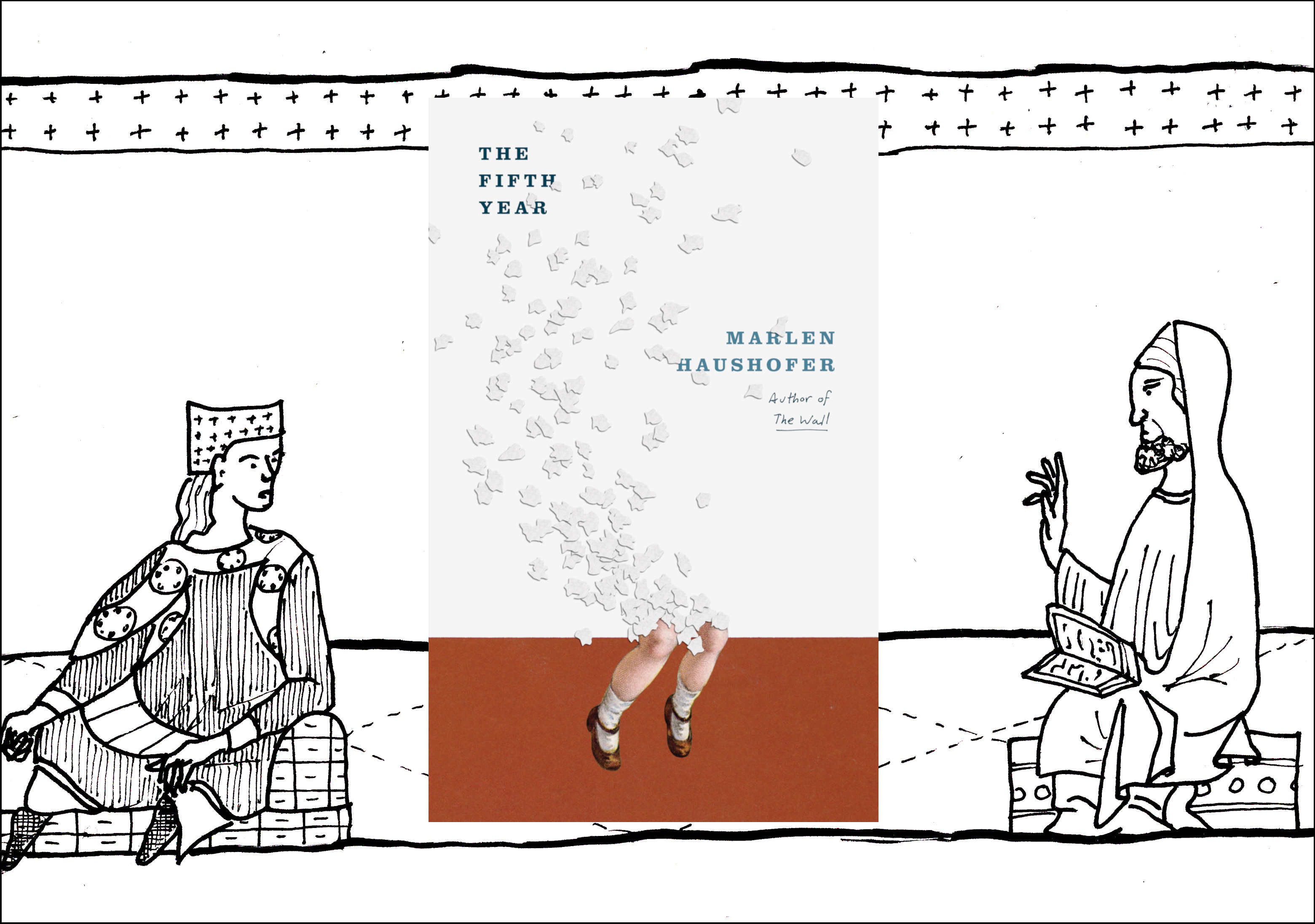
As Michel’s note implied, the main exception to the soft ban on tiny books in American publishing is works in translation. The aforementioned Aira, Alejandro Zambra, Edouard Louis, Valeria Luiselli, Annie Ernaux, Laszlo Krasznahorkai, and many other living and dead writers have had several wispy volumes published in recent years. Zambra and Louis, for two, have had several such books published by conglomerate presses, but more often such works come out on small presses like New Directions (Aira and Krasznahorkai), Coffee House (Luiselli), or Seven Stories (Ernaux). Such presses are not quite as beholden to the market. But why translations? Evidently, there is more of a space in other countries for books of such brevity. Perhaps Argentinians lose their shit for 96-page postmodern autofictions about Carlos Fuentes. Whatever the case, they are circulating, available for import. However, a lot of these authors publish works of more conventional length. As often happens, the tiny books come on the heels of major successes that are longer, sometimes considerably so. Before the translation of Krasznahorkai’s Chasing Homer (96 pages), there was Satantango (274 pages); before Roberto Bolaño’s By Night in Chile (112 pages), there was The Savage Detectives (577 pages). Similarly, Marlen Haushofer’s The Fifth Year (80 pages; first published in 1952) comes on the heels of The Wall (240 pages), first translated to English in 1990 but reprinted to considerable fanfare in 2022. The order of translation rarely follows that of original publication, and may, in some cases, roughly follow an order of critical reputation. Thus, as more of an author’s books are translated, we might suspect some barrel scraping. After Portnoy’s Complaint and The Ghost Writer are published in Estonian, after The Counterlife and Goodbye Columbus, eventually the urbanites of Tallinn will hear about an exciting new Philip Roth translation—The Humbling—and anticipate an obscure minor masterpiece.
There is, I think, reason to fear some of this phenomenon with the translation of The Fifth Year. Haushofer, an Austrian whose publishing career lasted only from 1952 to 1970, was not especially prolific. Four of her five full-length novels were translated by 2013, and New Directions’ immediate follow-up to The Wall was a first translation of her novella Killing Stella. With The Fifth Year—translated by Shaun Whiteside, who translated The Wall and Stella—we are creeping toward the last of her available fiction. Moreover, The Fifth Year is her first book, and so the whole thing smells a bit like a curio, perhaps a little apprentice work.
That’s not the case. This being my first Haushofer, I have no frame of reference, but it does feel a bit minor, slight, presaging. Becca Rothfeld’s recent review of four of her books reinforces this impression, discussing The Fifth Year mostly in the context of later works that develop its ideas in greater depth. But a book’s a book and not a foretoken; it probably ought to stand alone to be worthy of much interest. Even in the absence of this context, and in spite of its slightness, The Fifth Year is catching. It is the story of one full year in the life of Marili, a four-year-old girl living on an Austrian farm with her grandparents. It opens with the Proustian image of Marili lying in her bed, deep in thought, and The Fifth Year has some resemblance to the early pages of Swann’s Way. If the primary psychosexual conflict in Proust is the mother-son dyad, in The Fifth Year we get an Electra lite dynamic between Marili and her grandfather. One of the most interesting subtextual threads of the novel is Marili’s awakening identity as a girl. While she loves and respects her saturnine grandmother, she adores her more permissive, boisterous grandfather. In one passage, she rejects her grandmother’s life of domestic passivity and insists instead that she would “rather be a man and talk as loudly as Grandfather, one day I’d also like to have a beard.” Yet we are immediately told that Marili didn’t truly believe this, that “Deep in her heart she knew for certain that she would never have a beard like Grandfather’s — never. There was no point in worrying about it.”
Haushofer shows how gender, power, and size become bound together in Marili’s understanding of the world. She not only admires her strong, exceptional Grandfather, who alone is allowed to wear shoes in the house and make a mess of the floor, who is contrasted with the stooping, frail Grandmother, but also the “hapless giant Goliath” cruelly defeated by David. While it may seem the story of a fall, Haushofer complicates the inevitability of this trajectory. In a later scene, Marili trounces a cruel, older boy who threatens to drown a litter of kittens; occupying the role of David, she recognizes the pride in her Grandfather’s voice when he calls her “an awful witch.” The relations among size, power, and gender are perhaps not so determinant.
Aside from Proust and Carroll (like Alice’s, Marili’s experience of the world is quite preoccupied with scale), the narrative calls to mind a work in the tiny book hall of fame, Claire Keegan’s Foster. While focalized through Marili, the secondary plot that we infer from Marili’s experiences is the prolonged grieving of her grandparents for their five dead children. Marili’s father is never mentioned, but her mother seems to have been the last in a string of deaths from war and disease. For her Grandmother especially, Marili is a kind of supplement for these dead children, a substitute for but also a reminder of their absence. Thus is explained much of Grandmother’s melancholy and anxiety, but it doesn’t make womanhood or motherhood any more attractive. (Grandfather is also sometimes sad but remains a good hang.) There is a foreboding throughout much of the novel, in part due to the shadow of so many early deaths, but that foreboding is equally concerned with life, that Marili may not die but instead become her grandmother. It’s a bit more understated than Foster, but both pull off a kind of dual narrative combining the naive primary story and that of the wearier adults’ lives in the background. The Fifth Year is short, and perhaps a minor work, but certainly warrants its translation and publication on its own terms.
On the other hand, it is perhaps a problem that the tiny books that do get published are often priced similarly to their higher-BMI brethren. The paperback of The Fifth Year is listed at 80 pages, but let’s just say the font size is doing a lot of work there, and it’s really more like 50 pages of standard text. New Directions lists the novel for $15. By comparison, New Directions is also publishing The Hothouse, a newly translated novel from Wolfgang Koeppen, that runs 240 pages of much smaller font; it sells for $18. The cover of The Fifth Year is very pretty, and cost of production is complicated a bit by having to pay for both the rights and the translation, but I’m not sure it makes a ton of sense for the two books to cost so similarly. If I’m being honest, I’d feel much more comfortable recommending it to a friend for eight dollars than fifteen. Does this mean that I am, in the last instance, treating this aesthetic object as I might a bounce house? Reducing the careful representation of an Austrian girl’s ineffable childhood impressions to the same plane as a session at an axe-throwing lodge? Kind of. Certain experiences are, I think, great enough to transcend such calculus. I’d have no gripes paying whatever price for The Crying of Lot 49 or The Death of Ivan Illyich. Ditto Brief Encounter, Rushmore, Badlands. And people pay exorbitant costs for brief experiences all the time. When literary works are a notch or two below such heights, the vulgar tyrants time and money lurk in the wings. Honestly, even were The Fifth Year a bad novel, I’d feel a bit cheated by its length at that price. As the opening credit sadist once invoked, we often find ourselves with the paradoxical complaint: “Boy the food at this place is really terrible; and in such small portions!”
Editor’s Note: Dhimmi Monde is eleven months old, and soon it will be our one year anniversary. To celebrate, we are giving away some extremely limited edition merchandise:
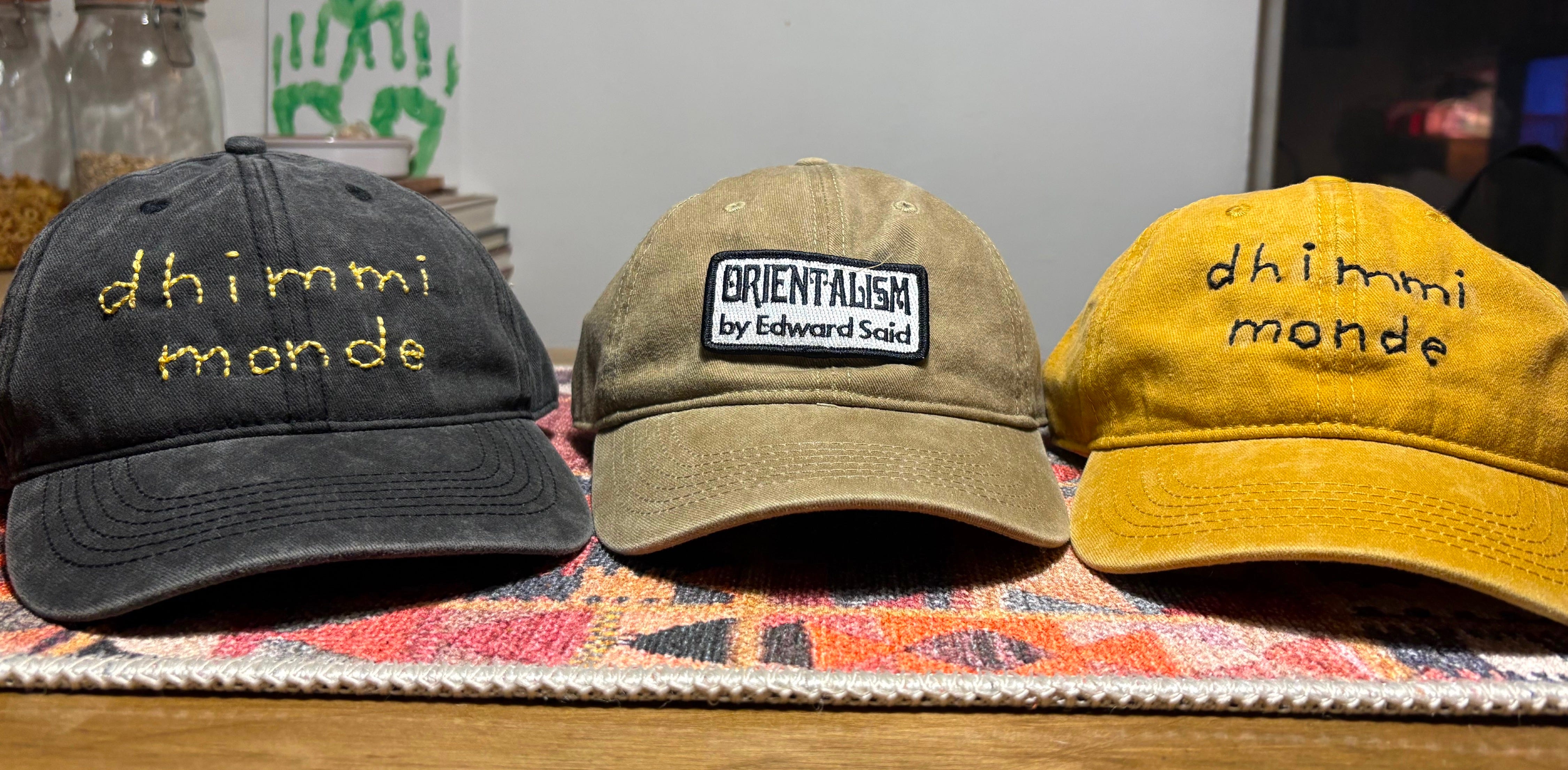
For a chance to win, tell us about a small/indie press book you’d like to see on Dhimmi Monde by commenting on the post below:
Wait ‘til I show them a Woody Allen film.
Obviously, the pre-twentieth-century novel is another story.
No posts
Comments
Nothing yet. Say the first thing.
Sign in to join the conversation.