
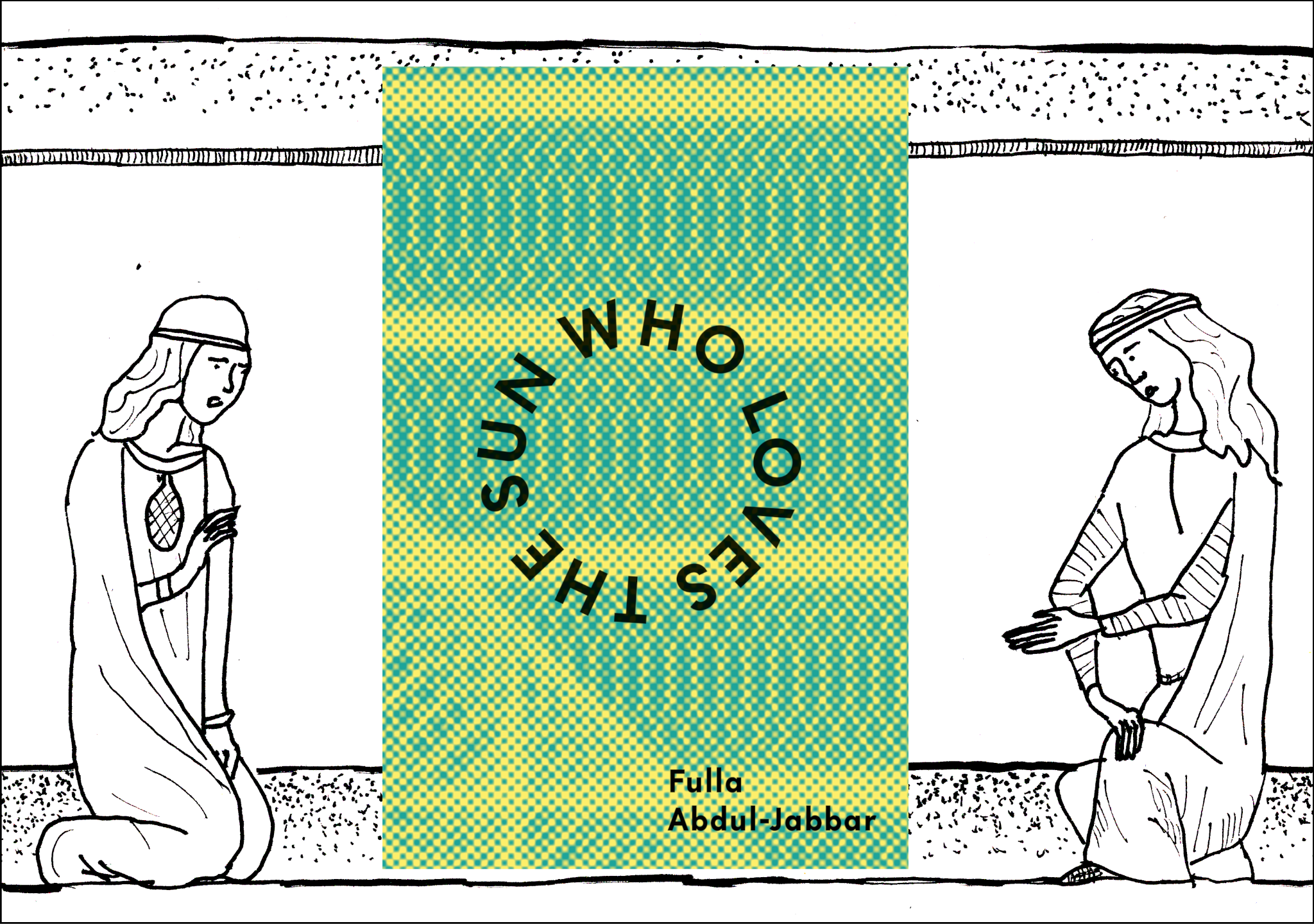
This week’s post, our twenty-fifth following our review of A. Natasha Joukovsky’s Medium Rare, features Fulla Abdul-Jabbar’s Who Loves the Sun, published in 2023 by Meekling Press. Founded in 2012 by a group of Chicago-based MFA students, Meekling Press is a “very small press” with a catalog including numerous beautiful books printed and bound by hand.
Some sentences come easily, others take weeks. Like the sentence you just read, for instance: I wrote it in about ten uninterrupted seconds. Now contrast that with the following sentence, which I wrote for a review in Dhimmi Monde a few months ago:
The publishing industry is shrinking, the percentage of Americans who read novels is shrinking, and, now, literature itself is shrinking.
That little sentence took much longer. From the outset I knew what I wanted to say—that reading and publishing are in decline—but I didn’t feel confident saying it. Are they in decline, really? It certainly feels correct, but I could imagine endless caveats and nuance. So I started skimming articles and hunting down citations. After a few hours divided over two days I arrived at a claim that was, if not categorically true, then, at the very least, defensible. I wrote the sentence, inserted some hyperlinks, and then there I was: two days gone, a whole twenty words further along in my book review.
If you’re a writer, then you know this pain. It’s the pain of tweaking a five-word clause ad nauseum only to end up exactly where you began, or conducting weeks of research to support a paragraph that doesn’t even make it into the final draft. It’s a pain that has become especially acute in the era of generative artificial intelligence, when it is now possible to shunt such unglamorous tasks onto computers. I could have easily fed Claude a prompt, copied the response into a footnote, and moved on with my day. Perhaps I should have. Would anybody know the difference?
That question isn’t rhetorical. I really am curious whether anyone would know the difference. I insert hyperlinks into my writing for all the same reasons every other writer cites their sources: to earn the reader’s trust, to give due credit, and to facilitate independent verification. But if I’m being honest, sometimes I just want people to know I put time and effort into my work. Citations are my way of saying: take a look at all this shit I had to read just to write this 800-word book review.
It’s meager compensation for my labor. And now, apparently, even that is being taken from me. As software continues to generate a larger and larger percentage of all text on the internet, the value of human-generated writing does not therefore increase as some kind of artisanal, heirloom alternative. Rather, all writing suffers under a growing shroud of suspicion and doubt. The result is a depressing witch hunt.
For example, yesterday I read an excellent essay by Alexander Fayne where, in a single sentence, he universalizes a mid-twentieth-century poet’s sense of impending doom by invoking “what Eric Hobsbawm called ‘the expectation of apocalypse.’” The Hobsbawm line condenses a complex point brilliantly; but did Fayne have to sit down and read Hobsbawm’s entire 1,000-page historical trilogy just to add these four words to his essay? Or did he already recall the line from something he read years ago? Or did he find it cited in a recent article about climate change? Or did a friend recommend it?
Or did he ask ChatGPT?
Of course I don’t actually think Fayne asked ChatGPT. The point is that I would be hard-pressed to prove it, just as you would be hard-pressed to prove ChatGPT didn’t compose the sentence you’re reading right now. Tools that purport to detect AI-generated writing—such as Pangram, which recently partnered with Substack—may help. But somehow I feel they treat the symptom and abet the disease, fueling a culture of distrust that condemns all writing as AI slop until proven innocent.
This is why I was intrigued by Fulla Abdul-Jabbar’s Who Loves The Sun, a mixed-genre memoir that takes an unusual approach to citation while drawing upon Abdul-Jabbar’s background as a professional biochemist. As she explains in the opening pages, the book emerged from her unlikely fascination with scientific posters, those ugly 3’x4’ slabs of text and image that young researchers erect at academic conferences to advertise work-in-progress.
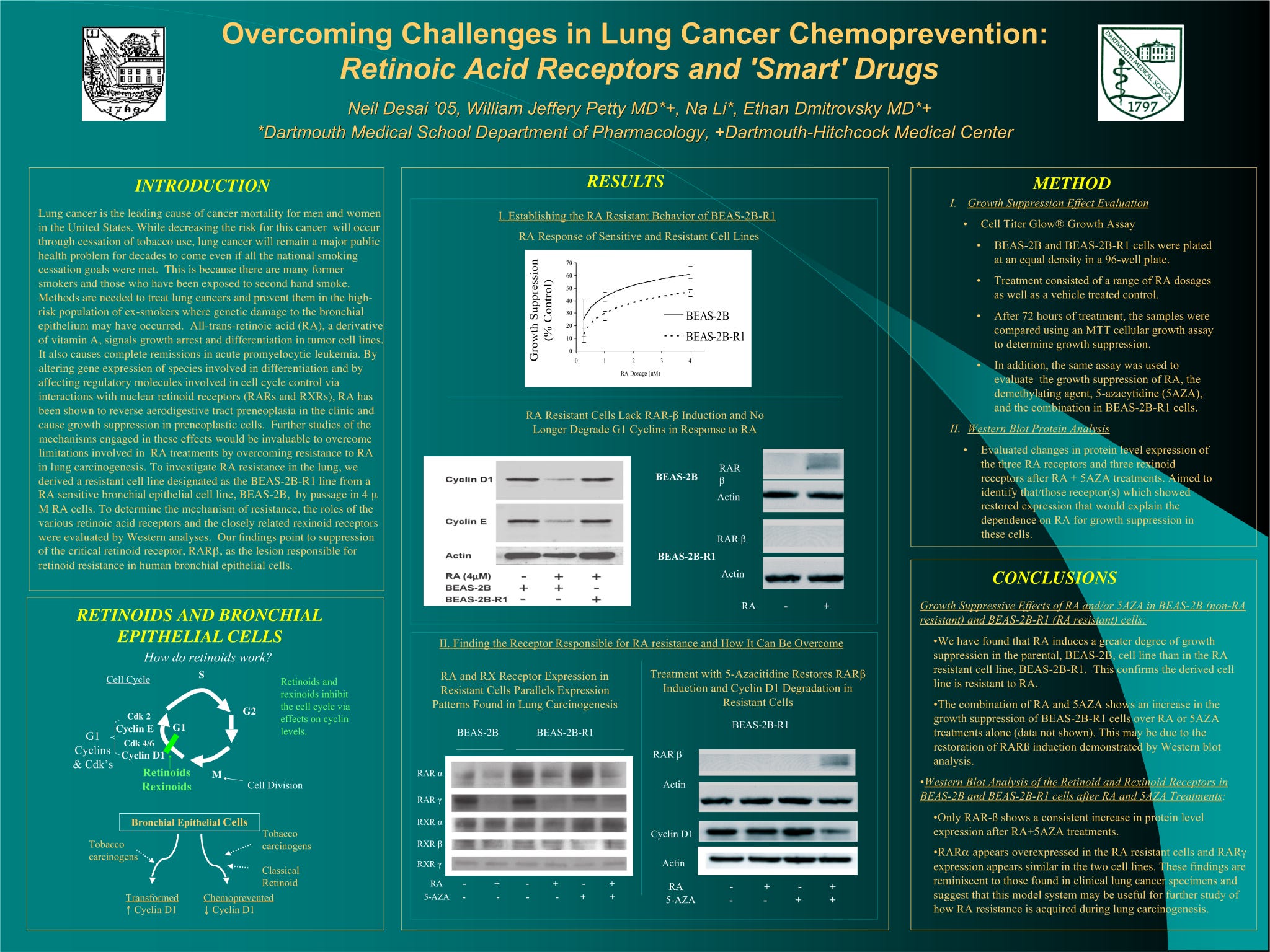
What follows is a tableau of poster-related vignettes: a failed first attempt to write an abstract for a scientific poster; an alienating trip to a design conference at the MIT Media Lab; a cherished poster about Akhenaten, the ancient Egyptian pharaoh, created for an elementary school assignment; a presentation about posters delivered at an academic symposium convened to imitate and ironize academic symposia; and a think-aloud account of reading a poster about lung cancer prevention.
Together these threads appear to be twisting toward a denouement, a moment when Abdul-Jabbar will step back and reveal the incisive something that these experiences taught her about science, art, language, and communication. But that moment never arrives. Instead, with no announcement or fanfare, the topic simply changes. The second half of Who Loves the Sun unfurls in a stream of impressionistic fragments about stasis, change, memory, and loss, with hardly a mention of posters.
In a final section titled “Notes on Source Notes,” Abdul-Jabbar concedes her defeat. She explains that in creating the book she had set out to do something “research-based.” She had planned to connect with scientists and graphic designers, to attend poster sessions, to collect specimens and create models and deliver presentations. “I ended up doing a lot of these things,” she writes. “And then not using most of it.” At some point the “very hard work” she had invested into gathering legitimate sources became displaced, which made it difficult to explain how those sources related to the final product. Nevertheless she lists them for us. Some examples include:
Thomas H. Maugh II, “Poster Sessions: A New Look at Scientific Meetings,” Science 28 (1974): 1361.
Dieter Schmidmaier, Poster Sessions in Library Science: Guidelines (The Hague: International Federation of Library Associations and Institutions, 1984).
Stephen Block, “Do’s and Don’ts of Poster Presentation,” Biophysical Journal 71, (1996): 3527.
A typical bibliography documents the external sources referenced within a text. Yet none of the above sources are referenced in—or appear even obliquely to inform—Who Loves the Sun. What Abdul-Jabbar’s bibliography documents instead is a kind of failure of reference, the unbridgeable gap between the work she did and the object she created. As she herself puts it: “this bibliography is a trashcan full of what these words used to be.”
I find this instructive. The more we integrate AI into our writing, the more it can seem that all writing simply is an output generated from a discrete set of inputs. We feed a prompt to an LLM and it spits out a response; we feed sources to a human and it spits out an essay.
Abdul-Jabar’s anti-bibliography is a good reminder of the flaws in this logic. We can never really know what went into creating a text, because we cannot know, from reading, how long it took to write a book or what kind of external aid was involved, and also—and more fundamentally—because not every input can be traced to a written output. The majority of writing is wasted effort: abandoned drafts, unused research, discarded feedback, ambient thoughts that lead nowhere. This work almost never shows up on the page, but it is not for that reason any less work.
Toward the end of her “Notes on Source Notes,” just after she describes her bibliography as a “trashcan,” Abdul-Jabbar continues to puzzle over what her sources mean for her book. “A source,” she writes, “is something from which comes something. A point of origin.” This final word, origin, reminded me of Edward Said’s 1975 study, Beginnings: Intention and Method, in which he contrasts the passive, hermetic concept of origins with the active, secular concept of beginnings. By using scientific posters as a jumping-off point to grasp much larger ideas about knowledge and communication, Abdul-Jabbar seemed to deploy what Said, by way of Erich Auerbach, touts as an Ansatzpunkt, a delimited point of departure that gathers the chaos of history onto a human scale while affirming, through an act of trust that can never be guaranteed in advance, that such an endeavor can and will lead somewhere meaningful.
I thought it might help my review of Who Loves the Sun if I revisited Beginnings, which I hadn’t touched in many years. So I dug out my copy and began re-reading. The prose is dense, and it consumed all my scant free time for a whole week. After about two hundred pages I stopped. I didn’t find anything worth using in my review.
No posts
Comments
Nothing yet. Say the first thing.
Sign in to join the conversation.