
For fifty years, the health-conscious among us dutifully choked down egg-white omelettes. These culinary aberrations tasted like damp ceiling tiles and puritanical misery. We tossed the golden yolk, arguably the most nutrient-dense biological starter kit on the planet, straight into the garbage. We did this because public health authorities commanded us to, utterly convinced that the yolk was a lethal, ticking time bomb for our hearts.

It was a dietary dogma built on staggering institutional hubris and a fundamental misunderstanding of human biology. Today, those same authorities are quietly sweeping half a century of disastrous advice under the rug, while the whole egg rightfully reclaims its status as nature’s original superfood.
To understand the tragedy of the egg-white craze, you have to understand what we were throwing away. When you separate the white from the yolk, you are left with just water and a bit of protein. The yolk is where the magic lives. Beyond a perfect amino acid profile, the whole egg delivers critical nutrients that are surprisingly rare in the modern diet.
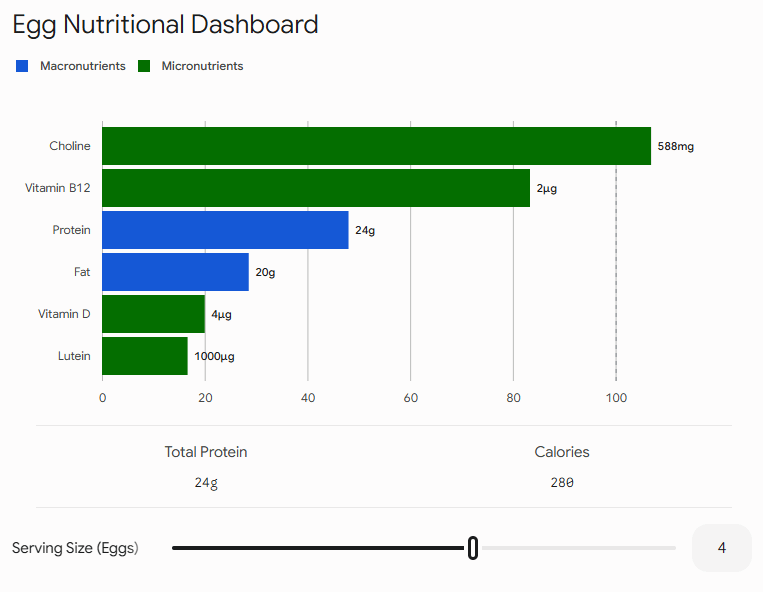
Choline. Eggs are one of the best dietary sources of choline, crucial for brain health, memory, and liver function.
Lutein & Zeaxanthin. These powerful antioxidants accumulate in the retina, protecting against macular degeneration. The natural fat in the yolk makes them highly bioavailable.
Vitamins D & B12. The yolk provides naturally occurring Vitamin D for immunity and B12 for nerve function and energy.
So how did we end up fearing such a perfect food?
The war on the egg began in the late 1960s with a simple, albeit deeply flawed, logical leap driven largely by the fact that total cholesterol was one of the few biomarkers scientists could easily and accurately measure at the time. Early observational studies were notoriously lacking in scientific rigour or randomised controlled trials. These studies suggested a loose correlation between heart disease and high blood cholesterol. Because eggs contain cholesterol, researchers assumed eating eggs must cause heart disease. It was a panic born not of biology, but of bad science.
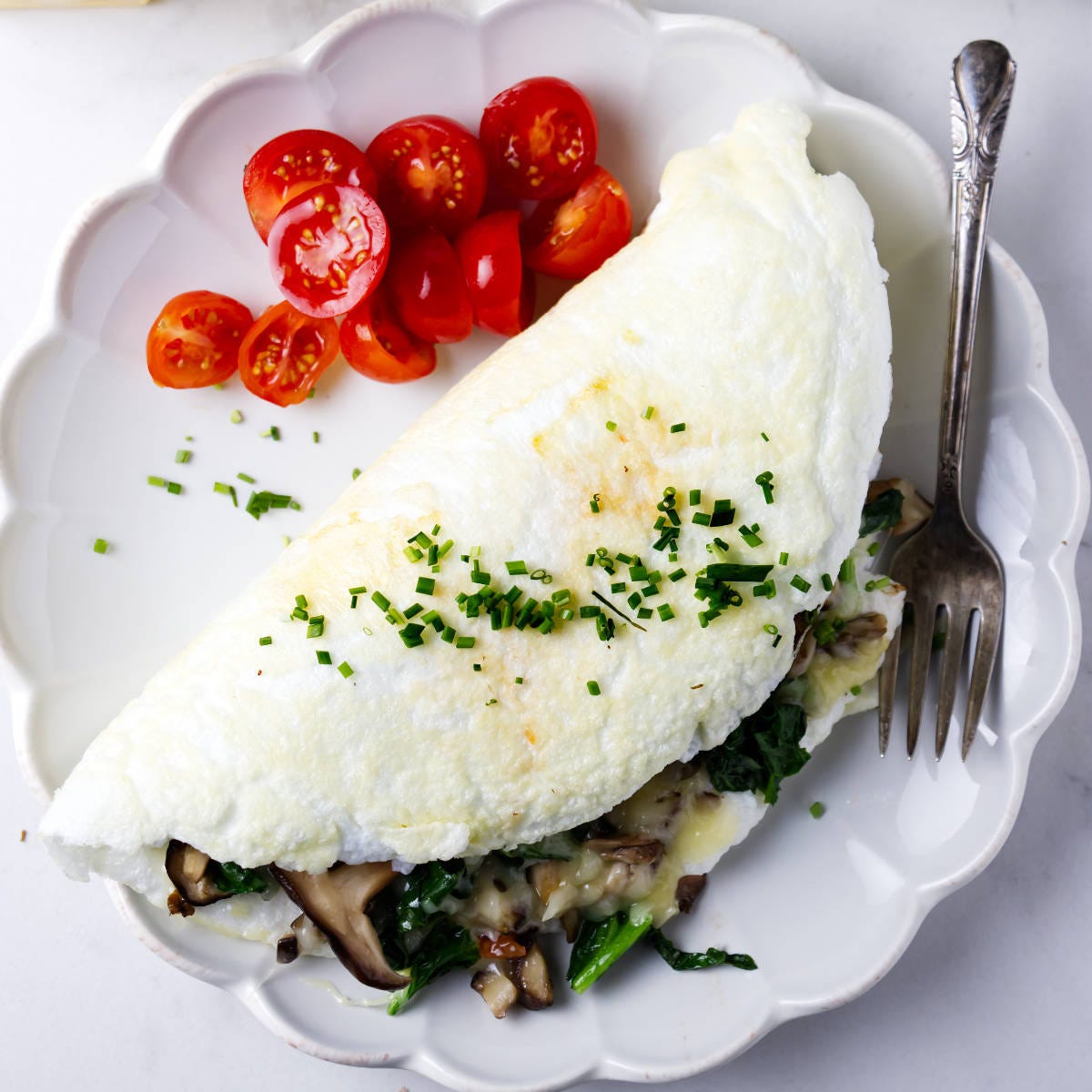
In 1968, the American Heart Association officially capped dietary cholesterol at 300mg per day, a mandate swiftly echoed by Australia’s National Heart Foundation, which restricted the public to just three to four eggs a week. The local egg industry plummeted as a consequence. Australian per capita consumption, which had been well over 260 eggs a year in the 1960s, practically halved, crashing to just 137 eggs by the late 1990s. Meanwhile, the egg white became the ultimate symbol of health and virtue. It was devoid of fat and cholesterol but stripped of nearly all micronutrients.
It wasn’t until 1999 that Harvard researchers analysed decades of prospective data from nearly 120,000 men and women and found the truth. Eating eggs showed absolutely zero significant association with an increased risk of coronary heart disease or stroke in healthy people. More recently, the tide has turned completely, with modern research suggesting high consumption isn’t just neutral but actively beneficial. A massive 2018 study published in the journal Heart following half a million adults found that daily egg consumers actually had an 18% lower risk of cardiovascular disease death compared to those who avoided them. Furthermore, clinical trials have shown that eating up to three whole eggs a day can actively improve cholesterol profiles by increasing HDL (the “good” cholesterol) and making LDL particles larger and less prone to oxidation.
Forced by this undeniable evidence, authorities including Australia’s National Heart Foundation and the US Dietary Guidelines finally dropped their strict daily limits. Yet, there were no public apologies, no major retractions, and no accountability. After four decades of peddling aggressive misinformation that actively damaged the metabolic health of the population and nearly destroyed a vital agricultural industry supplying real, affordable whole food, the authorities simply waved away their catastrophic error. With a bureaucratic shrug, they quietly reclassified dietary cholesterol as “no longer a nutrient of concern,” acting as though there was nothing to see here.
The fatal flaw in the 1968 guidelines was the assumption that human beings are passive buckets where pouring cholesterol in makes the blood cholesterol rise.
But the body is an active, highly intelligent system. Cholesterol is not a hazard we accidentally ingest. It is an absolute biological necessity. Every single cell requires it to maintain the structural integrity of its membrane. It is the foundational precursor for vitamin D, cortisol, oestrogen, and testosterone. Because it is so vital, human evolution did not leave our supply up to the whims of our daily foraging. It built a master factory in the liver.
The liver produces about 80% of the cholesterol in your bloodstream on any given day. It operates this factory via a strict negative feedback loop controlled by an enzyme called HMG-CoA reductase.
When you eat a three-egg omelette, the cholesterol is absorbed and transported to the liver. The liver senses this incoming supply and immediately dials down the activity of HMG-CoA reductase. It produces less internal cholesterol to compensate, keeping the equilibrium stable. Blaming dietary cholesterol for high blood cholesterol is like panicking that driving down a slight hill will make your car dangerously accelerate, completely ignoring that the cruise control automatically eases off the throttle to keep your speed perfectly stable.
If the egg didn’t break the system, what did? The answer lies in what we replaced our whole foods with. We traded the egg for metabolic chaos.
Let’s think of your metabolic system like a massive distribution network. The liver is the central warehouse, and your arteries are the highways.

When you overwhelm the liver with inputs it cannot easily regulate, specifically the fructose in sugar, it triggers a state of emergency. The warehouse cannot store limitless fructose, so it converts the excess directly into a new cargo of fat through de novo lipogenesis. To avoid a dangerous backlog on the warehouse floor (fatty liver disease), it aggressively packages this fat into delivery trucks called Very Low-Density Lipoproteins (VLDLs) and dispatches them onto the bloodstream highway.
Simultaneously, chronic consumption of sugar drives up insulin levels. High insulin acts like a panicked dispatcher, artificially jamming the “on” button of the cholesterol factory and completely overriding the warehouse’s natural feedback loop, forcing even more trucks onto the road.

Add seed oils to the mix, and you create a perfect storm. When the liver manufactures fat from sugar, it naturally produces highly stable saturated fats. But the liver also packs whatever dietary fats you eat into those same VLDL delivery trucks. If you consume seed oils, the warehouse ends up loading the trucks with fragile, highly unstable omega-6 fats. Now, these freshly minted trucks find themselves circulating on an oxygen-rich highway. Packed with this highly reactive cargo, the trucks essentially burn. They literally oxidise as the unstable fats react with the natural oxygen in your bloodstream.
They sustain heavy damage and shrink into dense little hazards. Because they are now so small and damaged, these burnt out trucks slip right through the highway’s guardrails, embedding themselves deep into the arterial walls. This triggers a massive immune response, creating an inflammatory emergency that forms the very plaques we associate with heart disease. Instead of making their deliveries and going home safely, they become the pileup that blocks the highway.
👉 Click here to play with the interactive Metabolic Highway Simulator

You do not get a dangerous lipid profile from eating a single-ingredient, nutrient-dense egg. You get it by systematically shattering the liver’s feedback loop with the chronic consumption of sugar and seed oils. Here lies the ultimate and unforgivable irony of the past fifty years. This catastrophic combination of refined carbohydrates and oxidised omega-6 fats is exactly what public health authorities explicitly instructed the population to eat. When they terrified the public away from eggs and natural animal fats, they aggressively ushered in the “low-fat” era. Missing flavour was replaced with cheap, liver-crushing sugar, and traditional cooking fats were swapped for supposedly “heart-healthy” seed oils and synthetic margarines. They didn’t just mistakenly ban a superfood. They systematically engineered and prescribed the very metabolic poison that fuelled the modern cardiovascular disease epidemic.
The experts were catastrophically wrong. It took them five decades to silently admit it, but the science is finally settled. The egg was never the villain. It was the golden scapegoat for an era of spectacularly bad science. It is perfectly safe to stop apologising for your breakfast and enjoy your eggs again, yolks and all.
Comments
Nothing yet. Say the first thing.
Sign in to join the conversation.