
On a long and growing list of issues, the Kremlin and the White House are aligned and acting in mutual support. The latest is Hungary.
For slightly more than a decade and a half, Hungary has been in the grip of Viktor Orban, an authoritarian who dissolved the lines between the government, the judiciary, and the media to create a corrupt society in which having a friend in Orban’s network of family and cronies is the only way to advance. Orban explicitly modelled his Hungary after Putin’s Russia, and he benefits handsomely from Putin’s generosity. In exchange, Orban’s foreign policy amounts to little more than running interference for Russia within the European Union and NATO.
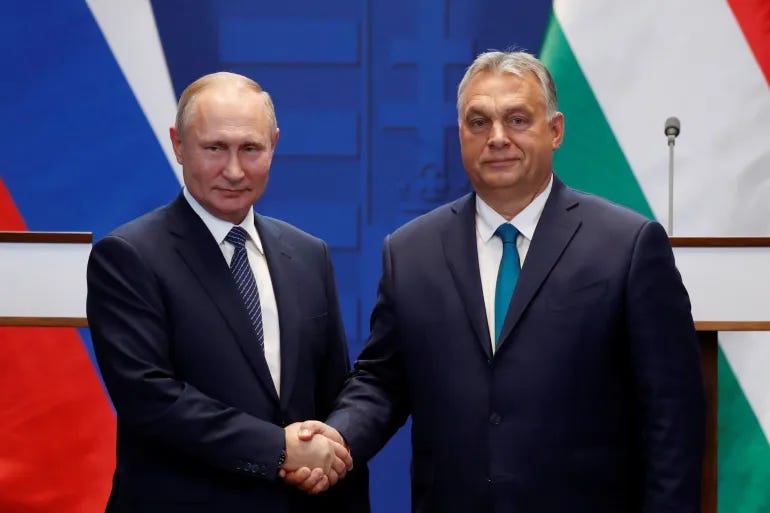
In an infamous 2014 speech, Orban put a name on his style of government. He called it “illiberal democracy.” By that, he meant Hungary was doing away with liberalism. No more immigration. No more tolerance of diverse views and state neutrality on such matters as religious preference. In their place is classic blood-and-soil nationalism tarted up with religion: Like Putin, Orban has embraced Christianity, at least as a political wedge. These days, he has mostly replaced the label “illiberal democracy” with “Christian democracy.”
Not surprisingly, MAGA intellectuals — that’s not entirely an oxymoron — have long lionized Orban and portrayed Hungary as a glowing success. And the Trump administration has added its heft to Putin’s, giving Orban its vocal support in public and God knows what else in private.
This week, the Kremlin and the White House effectively became a tag-team of foreign interference as American Vice President J.D. Vance stood on a stage alongside Viktor Orban and repeated a Moscow-crafted narrative about how Hungary is threatened by Ukraine and undermined by the European Union. It’s complete nonsense, of course. But there was J.D. Vance, in Budapest, touting “Christian democracy” and sounding exactly like one of the well-remunerated American cranks who popped up on Russia’s RT to promote the Kremlin line in America.
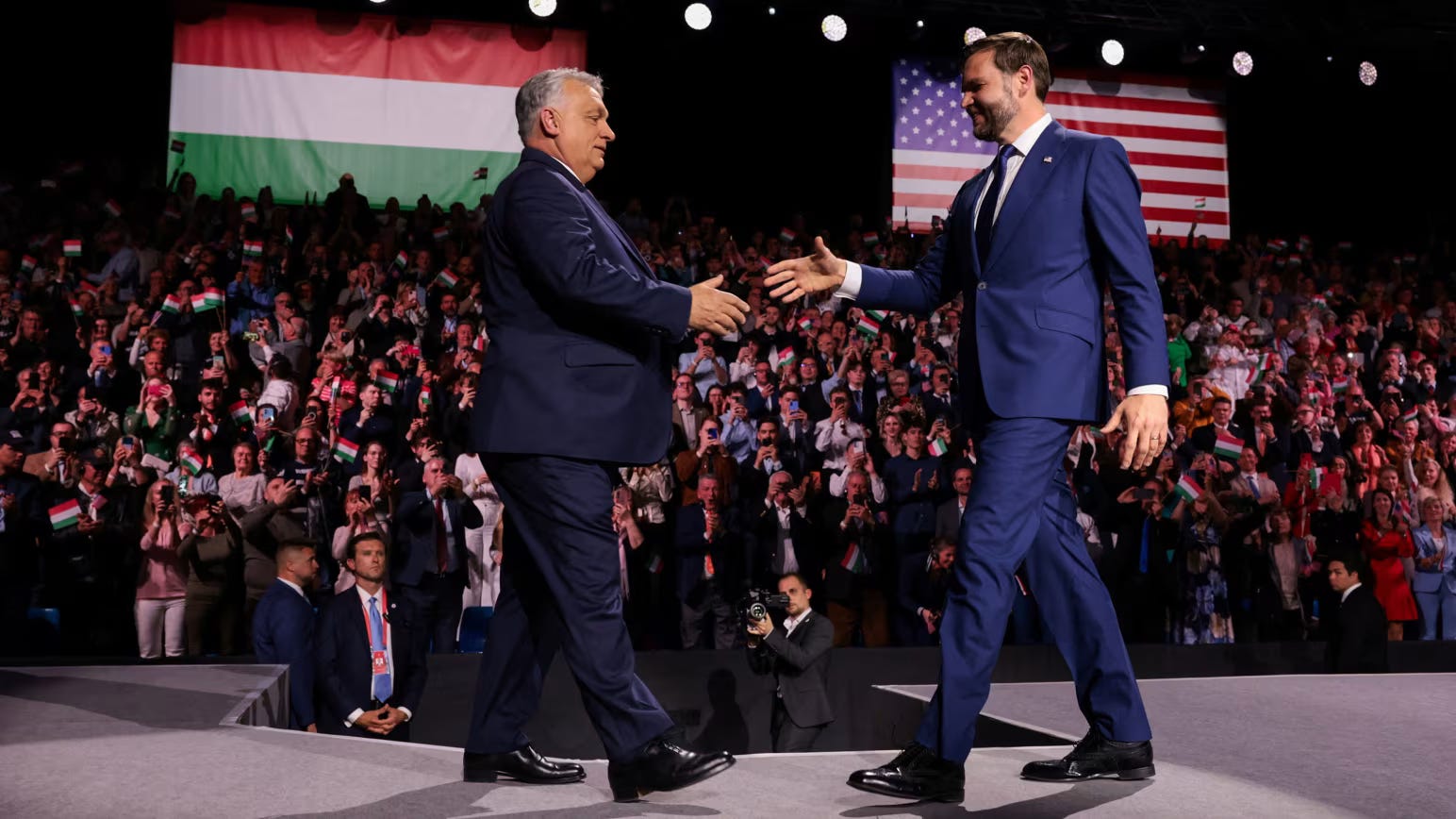
The reason for this impromptu Russian-American alliance is the election this Sunday in Hungary. Despite the government’s massive structural advantages — including overwhelming control of the media and an electoral system designed to favour Orban in every possible way — Orban is losing. Putin is desperate to prop up his most effective cat’s paw in Europe. And the Trump administration, as usual, wants what Putin wants.
But why is Orban losing? That’s the key here.
Remember, Orban came to power in 2010 on the leading edge of the same populist, far-right wave that brought Donald Trump to power and threatens to bring similar figures to power in the United Kingdom, Germany, and France. His “illiberal democracy” is thus a glimpse into our collective future if we follow the same path.
So what has “illiberal democracy,” or “Christian democracy,” delivered to the people of Hungary?
I won’t write an essay about economics in Hungary, or civil and political rights. I’ll just provide some basic measures. And I’ll mostly use the many other central and Eastern European countries that, like Hungary, emerged from the Warsaw Bloc when the Soviet Union fell and joined the European Union.
If “illiberal democracy” delivers the goods, we should see it clearly enough.
Let’s start with the most basic yardstick — GDP per capita. How has the Hungarian economy done since Orban took power in 2010 and dominated life in Hungary?
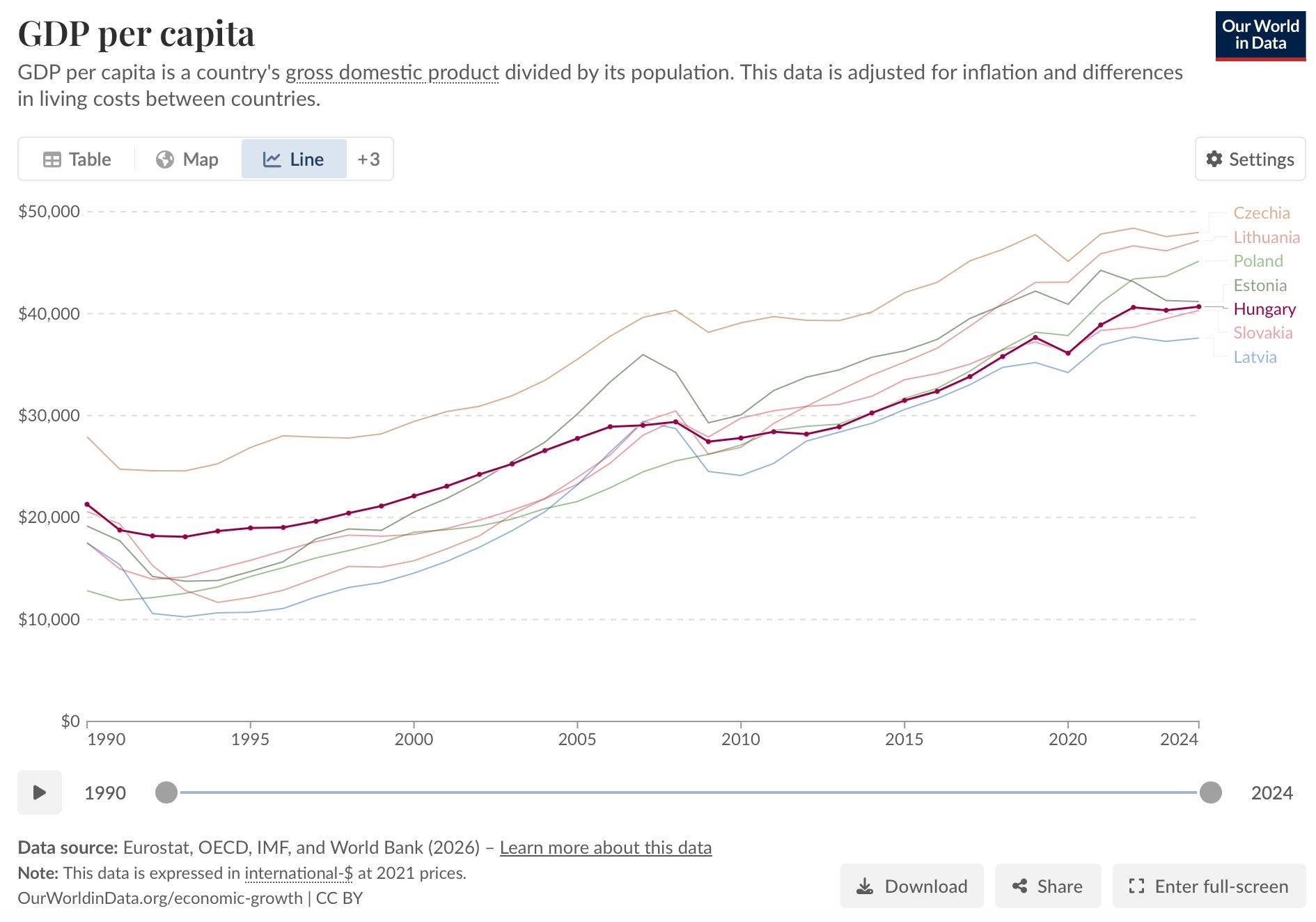
So Hungary started in second within its seven-country post-Communist cohort. Like all the others, it suffered in the tumult of the post-2008 global economic crisis. But then it really diverged: Its recovery was much slower. And today Hungary is tied for sixth spot out of seven. And remember, this is with a steady flow of money from the European Union propping up Hungary.
Why might Hungary have performed so badly? We know corruption is poisonous to economic growth. And we know that states in which lines between institutions are blurred and nothing important happens without the approval of the boss and his network of cronies are states in which corruption flourishes.
Following are trend-lines for perceived corruption in several countries as measured by Transparency International. The lower the score, the greater the perceived corruption.
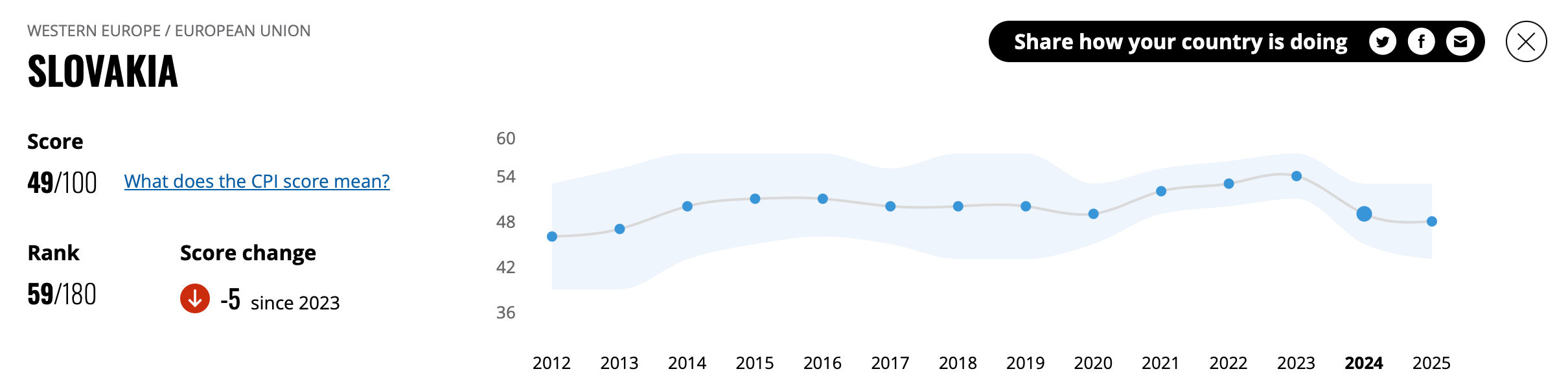
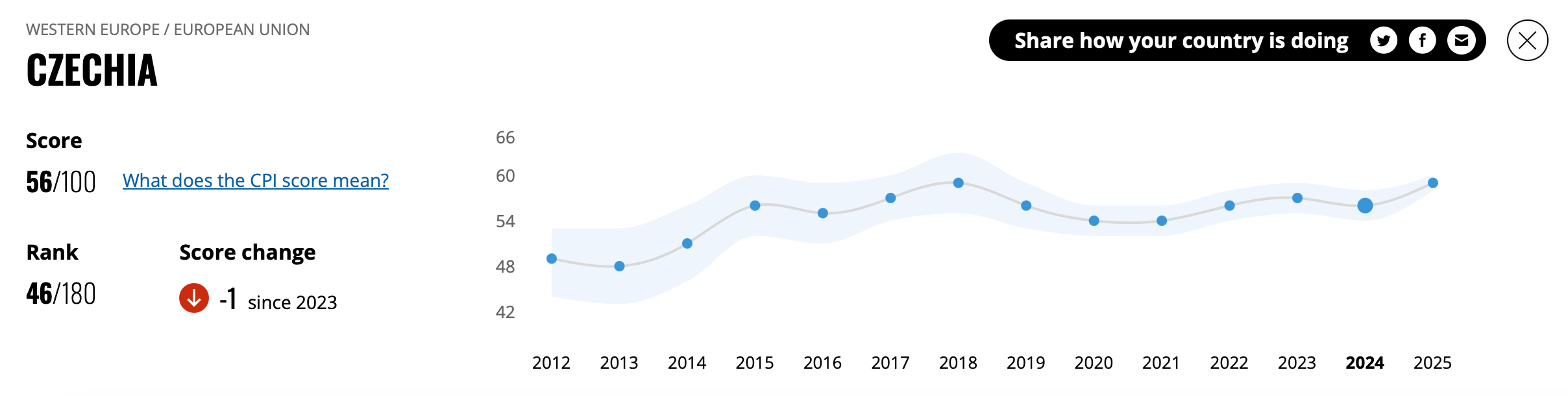
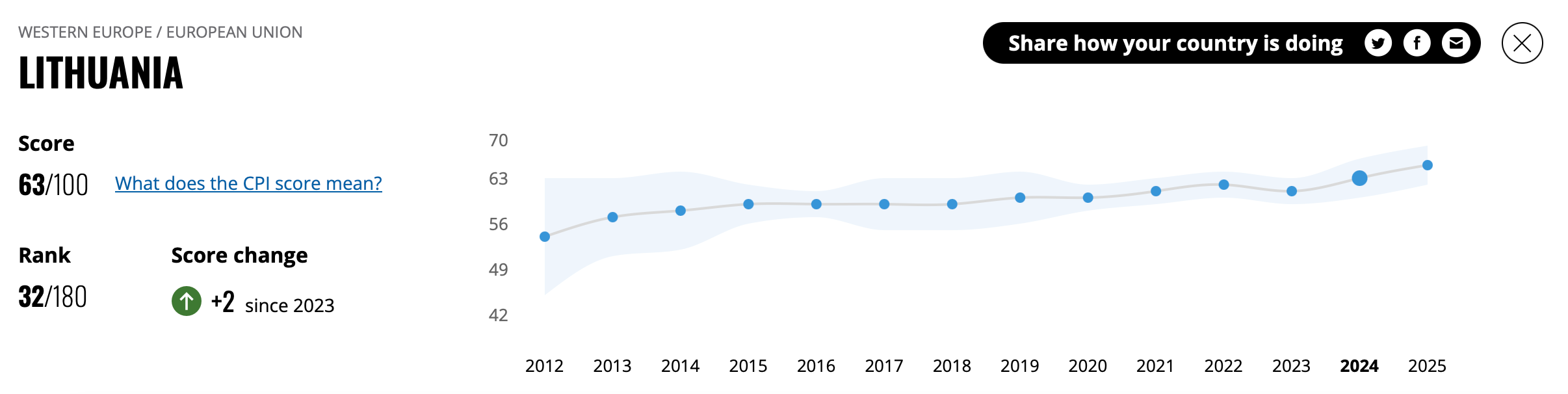
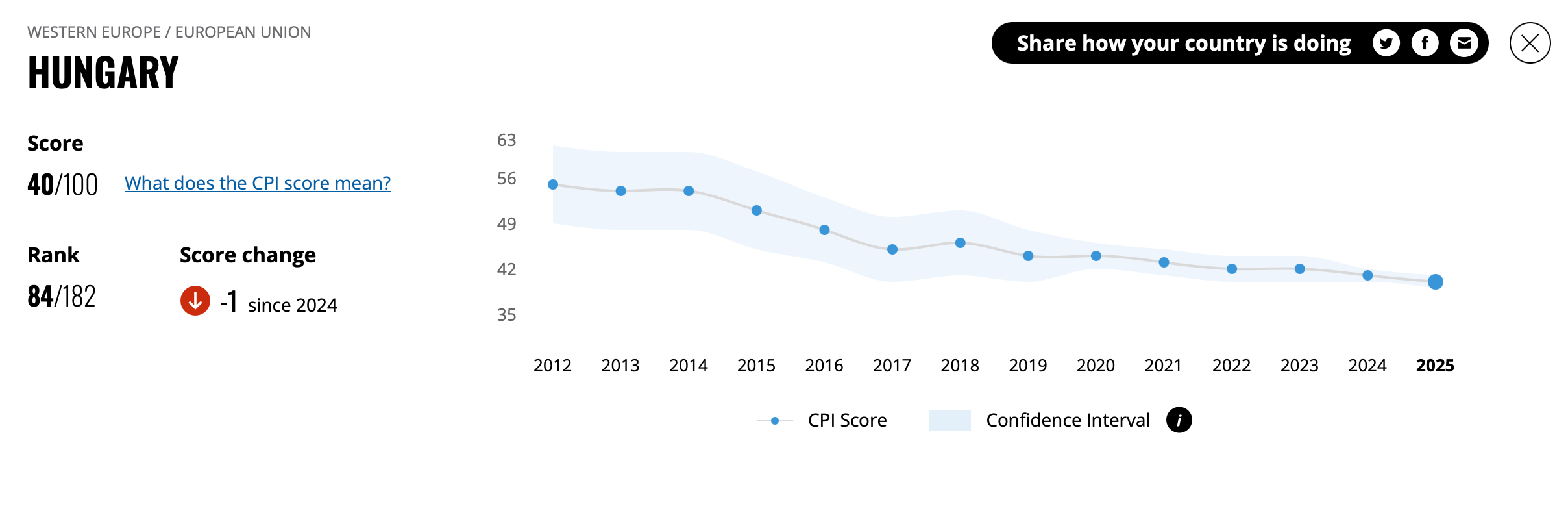
It’s not hard to spot the difference, is it?
Usefully — for present purposes — another peer country of Hungary’s went a long way down the same path as Hungary. In Poland, the far-right won power in 2015 and it set out to politicize the judiciary, dominate the media, and take the various other steps Orban learned from Putin. But then it lost power in 2023.
So what does Poland’s corruption trend-line look like?
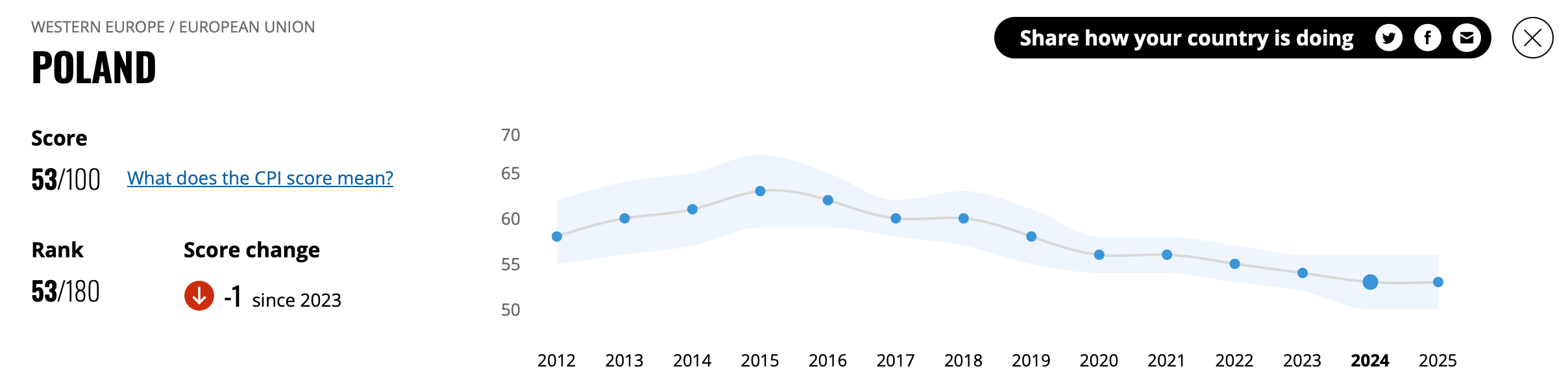
So what does “illiberal democracy” reliably deliver?
Corruption.
And what does corruption produce?
Less economic growth.
Ordinary people may embrace illiberal democracy because they feel they are falling behind economically. But illiberal democracy doesn’t help ordinary people. It helps the rich, the powerful, the connected. But ordinary people? It screws them. Which is the principal reason why, despite all Orban’s manufactured advantages, he is in danger of losing power.
And notice I’ve said nothing about civil and political freedom.
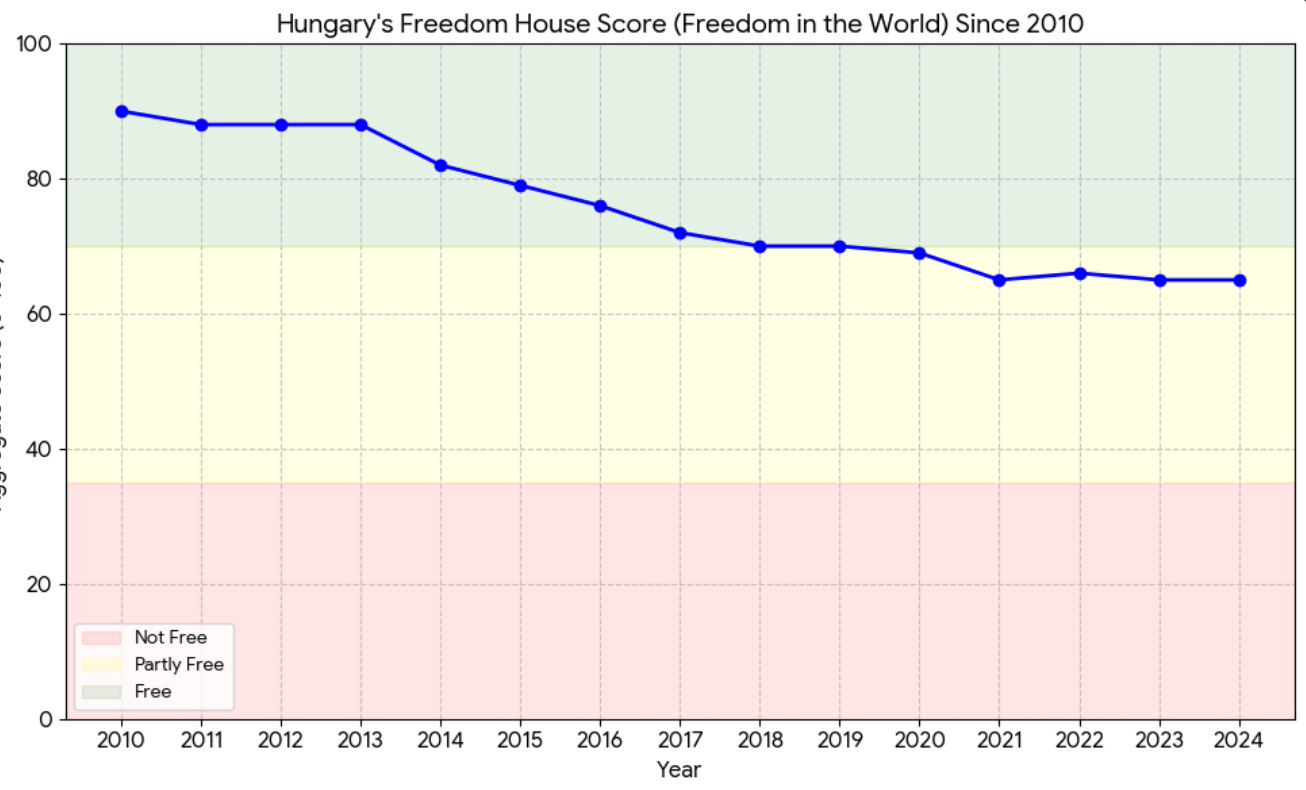
Here is Hungary’s aggregate score for civil and political freedom as measured by Freedom House, the venerable Washington DC NGO.
If you’re wondering how that compares to Hungary’s peers, here you go:
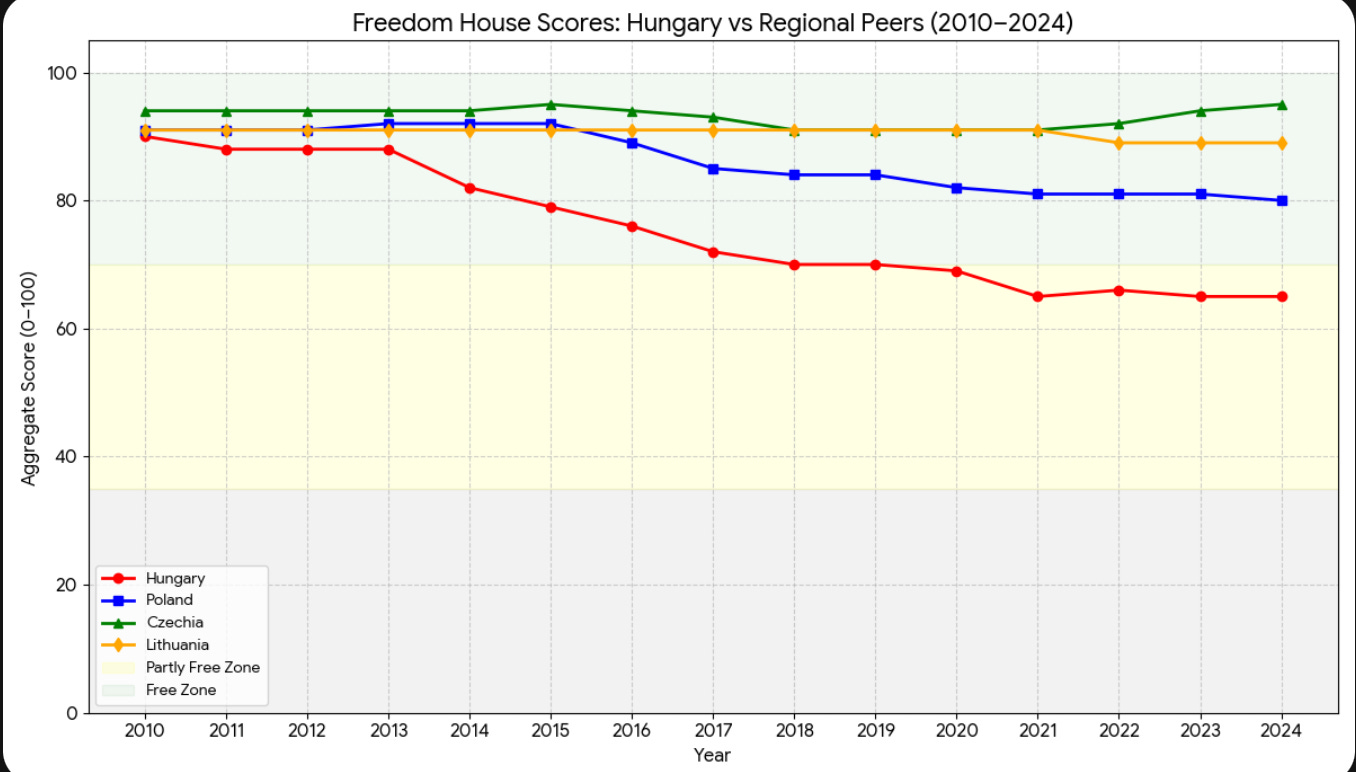
Notice Poland’s line: The moment the far-right took power in 2015, it started to decline rapidly. It will take many years of concerted effort by liberal democrats to restore what was lost.
So that’s “illiberal democracy” in a nutshell: You give up some liberty. In exchange, you get a more corrupt society. And you get poorer.
Plain old liberal democracy has plenty of faults, needless to say. But it makes people freer. It reduces corruption. And it boosts economic growth.
I think I’ll stick with liberal democracy. How about you?
Comments
Nothing yet. Say the first thing.
Sign in to join the conversation.