
Get Scipio’s latest book, The Empire of Lies: the American Empire unmasked.
Buy Anatomy of a Revolution today!
Information is a weapon. Arm your family and friends.
Hit the Tip Jar and help spread the message!
This post contains affiliate links, which means I may receive a commission or affiliate fee for purchases made through these links.
Meet Scipio & get practical tools for wellness and preparedness at the Sovereign Health Summit — save 5% with promo code SCIPIO.

Unlock the mysteries of Biblical cosmology and enrich your faith with some of the top rated Christian reads at BooksOnline.club.
Expand your horizons @ BooksOnline.club!
Click the image below and be sure to use promo code SCIPIO for 10% off your order at HeavensHarvest.com: your one stop shop for emergency food, heirloom seeds and survival supplies.

Related Entries
I first came to the Septuagint the same way the prolific Protestant theologian and exegete Adam Clarke did: by seeking to understand how the New Testament authors, the blessed Apostles of Christ, understood the Old.
In the process of unlearning Dispensationalism so many years prior to now, I would constantly refer back to the Old Testament (OT) verses the Apostles had used in order to argue for the now present reality of the Kingdom of God. What one will quickly begin to realize when doing so is that the OT verses quoted in the New Testament (NT) are, more oft than not, far different from the ones found in our English Bibles. Quite often, the arguments put forth by St. Peter or St. Paul depended on a form of the text preserved in the Greek OT, as opposed to the later Hebrew tradition known as the Masoretic Text (MT), named after the group of Hebrew scholars who preserved it.
Once that pattern became apparent to me, it became rather difficult to reconcile the far too common theological fiction that the Septuagint (Greek for The Seventy, hereafter referred to as the LXX) was merely a useful but subordinate witness to the “purer” Hebrew text. Though thoroughly disproven with the discovery of the Dead Sea Scrolls (or even a cursory reading of the NT), the Greek OT is even alleged by certain zealous KJV advocates, such as Jack Chick or David W. Daniels, to be a third century fabrication. The KJV’s original translators, however, considered it to be a providential act of God in redemptive history, which they detail at length in the preface to the 1611 edition (emphasis mine):
But when the fulnesse of time drew neere, that the Sunne of righteousnesse, the Sonne of God should come into the world, whom God ordeined to be a reconciliation through faith in his blood, not of the Jew onely, but also of the Greeke, yea, of all them that were scattered abroad; then loe, it pleased the Lord to stirre up the spirit of a Greeke Prince (Greeke for descent and language) even of Ptolome Philadelph King of Egypt, to procure the translating of the Booke of God out of Hebrew into Greeke. This is the translation of the Seventie Interpreters, commonly so called, which prepared the way for our Saviour among the Gentiles by written preaching…
Before acknowledging their indebtedness to the LXX for their translation, the KJV’s translators put forth a catena of Patristic citations to validate the venerability and reliability of the text.
My own usage of the 1611 only highlighted this issue for me. The original 1611 edition contains the writings called the Apocrypha or Deuterocanon, the latter term meaning, more literally, “second canon.” That discovery raised the obvious question: what were these books, and why had they disappeared from the Bible I had been handed? The answer, I would come to learn, was bound up with a far larger issue: the relation between the Greek OT tradition, the later Rabbinic canon, and the inherited assumptions of the English-speaking Christian world.
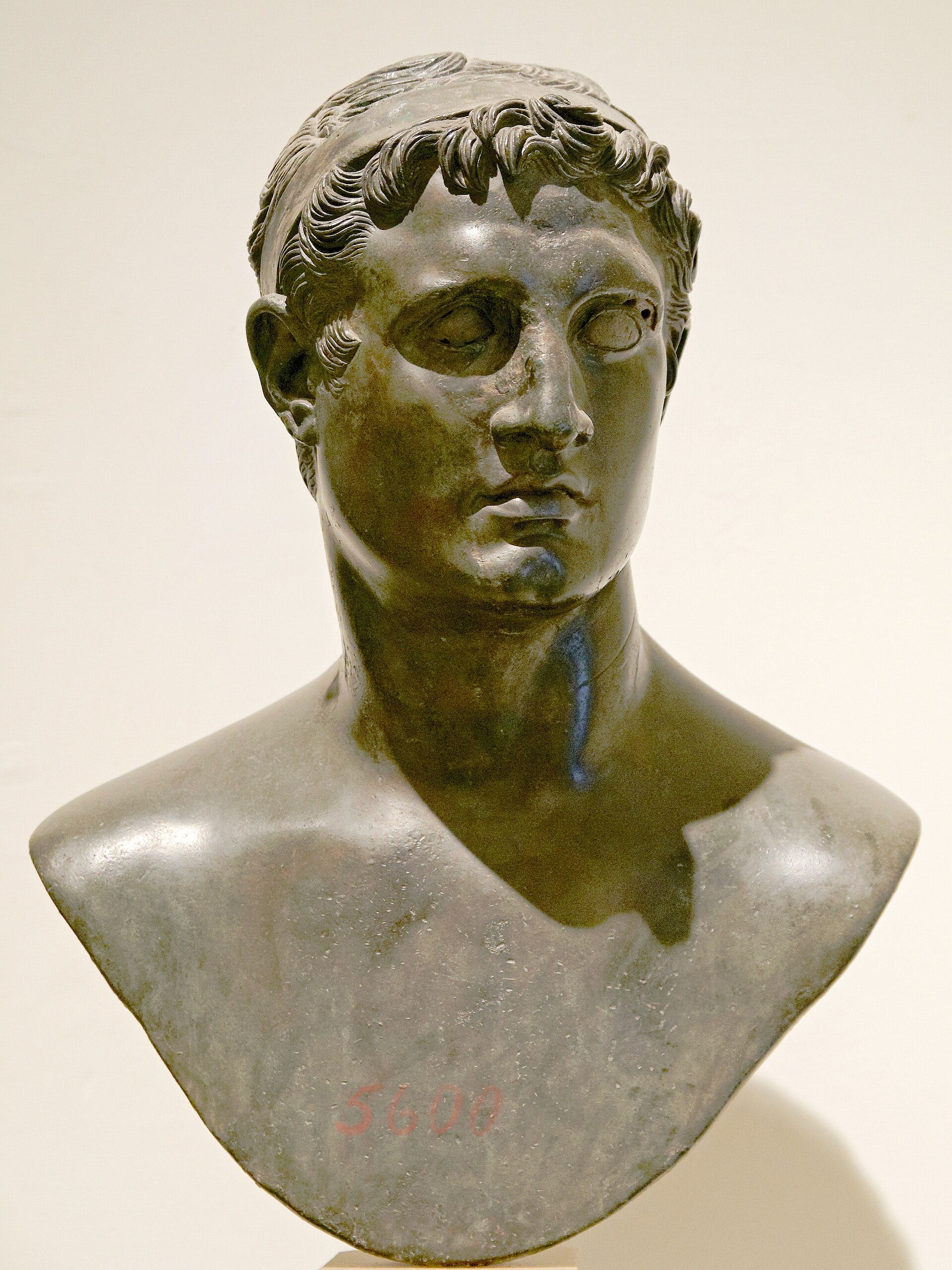
— Bust of Ptolemy II Philadelphus.
The translators of the King James Bible worked from the MT for their translation, and in doing so helped fix the MT as the OT for the English speaking world. They had merely intensified a Western theological impulse that had preceded them by more than a millennia, that of St. Jerome’s reliance on the Hebrew textual tradition for his Latin Vulgate: both were driven by the seemingly intuitive assumption that the Hebrew tongue was the preferred medium to base their translation upon. Yet, those same KJV translators repeatedly turned to the LXX to translate notoriously thorny Messianic passages in the MT — such as Psalm 22:16/17 or Isaiah 7:14, to name but a few.
Consider the following renderings of Psalm 22:16/17, a well known Messianic prophecy:
Dogs surround me; a pack of evil ones closes in on me, like lions [they maul] my hands and feet.
— Psalm 22:17 (Revised JPS, 2023) [MT]
For many dogs have compassed me: the assembly of the wicked doers has beset me round: they pierced my hands and my feet.
— Psalm 22:16 (BES) [LXX]
The MT reads more literally as “like lions my hands and feet.” Even for Masoretic-based translations like the KJV, the Septuagintal reading is preferred almost universally by Christian translators, for obvious theological reasons. That the LXX preserves the more faithful rendering of this Psalm is taken as a given, and the Christian is not without warrant for doing so considering the Dead Sea Scroll’s validation of the LXX reading. LDS Scholar Shon Hopkins summarizes the evidence for us (emphasis mine):
The discovery of the text of Psalm 22:16 at Nahal Hever strikes at the heart of the controversy. This important text adds strong support to the Septuagint’s translation, which has stood in conflict with the Masoretic text for so long. This new evidence from the Dead Sea wilderness shows that the Hebrew rendering of vrak (“pierced/dug”) was not a late change introduced into the manuscripts of the Psalms in support of Christian theology, but rather that it existed before the Jewish/Christian controversy began.
— The Psalm 22:16 Controversy: New Evidence from the Dead Sea Scrolls
The result is a quiet tension inside so many of our English Bibles: an OT largely governed by the Masoretic tradition, bound together with a NT whose authors repeatedly cite and reason from the Greek Scriptures.
Before delving into the history of such a necessarily complex and theologically charged subject as the Canon or the corruption of the Scriptures, it behooves us to clarify our terms and familiarize ourselves with the history of the LXX tradition, so named for the seventy translators responsible for its translation (with six from each of the Twelve tribes). By “canon,” I mean the body of books received for use by the people of God: books read, taught, and preserved within the liturgy and instruction of the faithful. By “Scripture,” I mean writings understood to be given by the Holy Spirit and therefore binding upon the conscience of God’s people.
The later language of infallibility, though true in my view, is not the most useful category for the present historical inquiry, since it is not the language in which the ancient disputes were framed. The more immediate question is that of authority: which writings were received as sacred, which were treated as Spirit-given, and which were binding in the life of Israel and the Church. Therefore, when we ask whether a book or textual tradition was canonical, we are asking whether it functioned as Scripture: whether it was received, cited, and obeyed as the word of God.
Protestant canonical scholar and former president of the Institute for Biblical Research, Lee McDonald, further elucidates this history for us (emphasis mine):
A major project to translate the Law of Moses took place in Alexandria, Egypt, sometime during or shortly after the reign of Ptolemy II Philadelphus (ruled 285–246 B.C.E.). According to the author of the Letter of Aristeas (ca. 140–100 B.C.E.), who offers a legendary account of this process (which still has some historical value), Ptolemy II wanted to develop the largest library in the world, and he took considerable measures to acquire the classic writers and copies of all of the volumes that he could. By the mid-to-late-third century B.C.E., his library at Alexandria may well have exceeded half a million volumes. …
Eventually this translation became known as the Septuagint. The original translation was of only the Pentateuch, but this changed in time, certainly before the first century C.E., as the prologue to Sirach shows.
— Lee Martin McDonald, The Biblical Canon (Part 2, Ch.5.I)
In the strictest sense then, the “Septuagint” first refers to the Greek translation of the first five books of the OT, the Pentateuch. In this series, however, I will be using the term in its more common and colloquial sense: the Greek OT tradition as a whole. By the time of the NT’s writing, the term had already begun to be used in this sense, and it is certainly in this broader sense that the early Church understood the matter, as we will see. As subsequent chapters will further document, the divergences between these textual traditions are significant and theologically impactful.
Most modern scholars, secular or otherwise, dismiss large portions of the Letter of Aristeas as legendary, but we should not confuse alleged or potential embellishment with historical uselessness. On the contrary, the story of the seventy translators became one of the central ways Judeans and Christians understood the provenance of the Greek Scriptures: from Philo to Augustine, the account was readily accepted as legitimate by both Jew and Christian alike. Long before the time of Christ’s Incarnation, Hebrew had effectively become a dead language for anyone outside of the priestly class: Greek and Aramaic were the tongues of the Judean peoples after the Babylonian captivity. Even granting that Aristeas’s account is embellished, it remains an important historical witness to the way in which the Jewish and Christian world remembered this monumental event:
An act of Divine Providence by which God made the Scriptures accessible to an empire that would soon hear Christ preached from them.
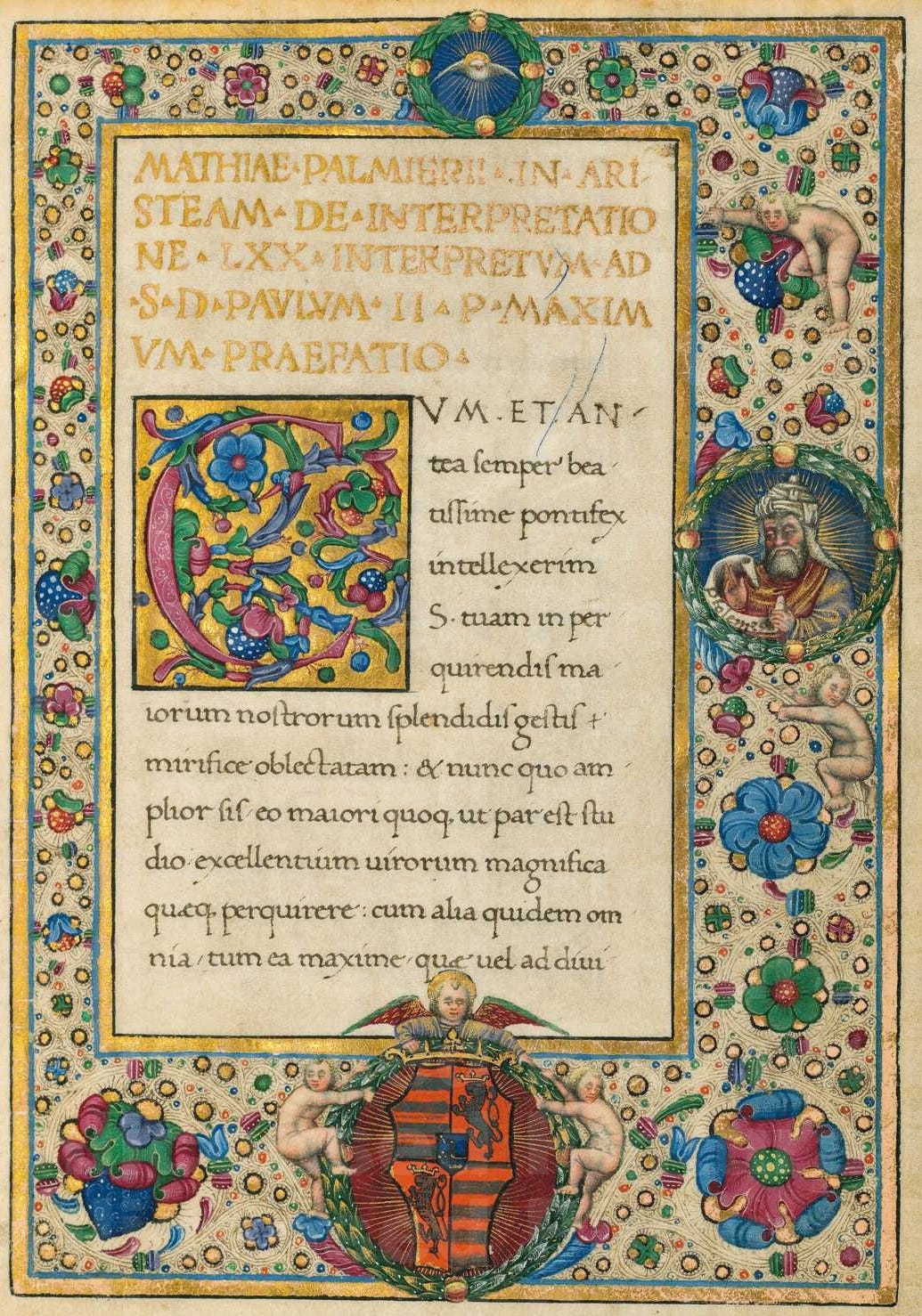
— Medieval Latin manuscript of the Letter of Aristeas (c. 1480).
By the close of the Apostolic era, the Greek Scriptures had become the predominant text of the early Church.
As the textual tradition used by the NT’s authors, it was readily accepted by the churches they had established (emphasis mine):
For canon inquiry, one of the most amazing facts about the LXX is the rapidity of its adoption within the Christian community as the Bible of the Christian church. This was true even in Palestine where the Hebrew Scriptures were also in circulation. Because it was in Greek, the language of the majority of the Greco-Roman world, it was an especially useful tool in the Christian evangelization of the Roman world.
This near-universal use of the LXX by the Christian community contributed to the Jewish reaction against it at the end of the first century C.E. and eventually their rejection of it altogether in the second century C.E., calling for the production of other Greek translations of their Scriptures.
— The Biblical Canon (Part 2, Ch. 5.I)
One of the earliest Christian apologists, St. Justin Martyr, serves as an important historical witness here. He notes in the middle of the second century how the rabbis of his day had begun rejecting the LXX precisely because this older Greek witness more explicitly bore testimony to Jesus as the Christ (emphasis mine):
But I am far from putting reliance in your teachers, who refuse to admit that the interpretation made by the seventy elders who were with Ptolemy [king] of the Egyptians is a correct one; and they attempt to frame another. And I wish you to observe, that they have altogether taken away many Scriptures from the translations effected by those seventy elders who were with Ptolemy, and by which this very man who was crucified is proved to have been set forth expressly as God, and man, and as being crucified, and as dying; but since I am aware that this is denied by all of your nation, I do not address myself to these points, but I proceed to carry on my discussions by means of those passages which are still admitted by you. For you assent to those which I have brought before your attention, except that you contradict the statement, ‘Behold, the virgin shall conceive,’ and say it ought to be read, ‘Behold, the young woman shall conceive.’ [Isaiah 7:14] And I promised to prove that the prophecy referred, not, as you were taught, to Hezekiah, but to this Christ of mine: and now I shall go to the proof.
— St. Justin Martyr (c. 110-165 AD), Dialogue with Trypho (Ch. LXXI)
There are several things to note here, and St. Justin is not the only Church Father to make such a claim. Firstly, he locates the dispute precisely where we would expect it to be found: the passages cited in the NT by which Christ is proved to be God, to be man, and to be Messiah. For now, it is sufficient for our purposes to bring attention to the most well-known example, of course, being Isaiah 7:14, where St. Justin notes the Jewish objection to the virgin birth. Secondly, he accuses the rabbis of not just corrupting the text, but removing writings (scriptures) in their forging of a novel manuscript tradition, a phrase which very likely refers to the Deuterocanonical texts. That such texts were once used by the Pharisees, only later being rejected in the late 2nd century, is a matter beyond any serious historical dispute. Further Biblical, Patristic, and Rabbinic evidence will be marshalled to conclusively establish this in the proceeding chapters.
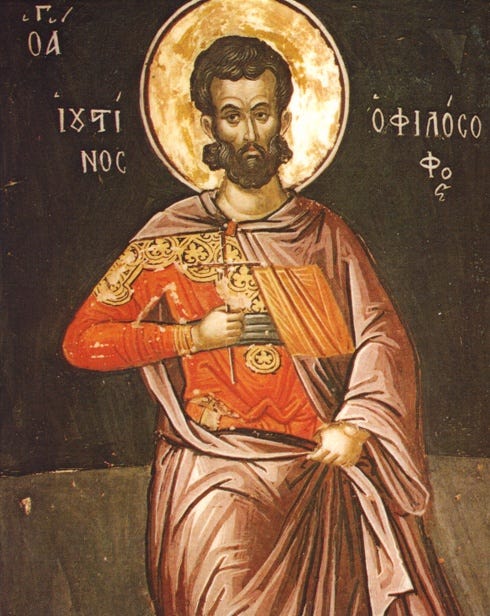
— St. Justin Martyr by Theophanes the Cretan.
The early Church’s confidence in the Greek Scriptures must be understood against this theological backdrop: the early Church was predominantly Judean, and it is the reaction against the Christian usage of the LXX which would birth the Masoretic tradition. As the Gospels record for us, both Christ and His Apostles worshipped in the synagogue — it is only natural that early Christian worship found itself modeled after the liturgy of the synagogue, itself modeled after the Davidic liturgy. For the early Church, the LXX was not just the Christian OT — it was considered to be the authoritative and inspired translation of the ancient Hebrew (emphasis mine):
The value attributed to the LXX in the early church cannot be overestimated. It was the Christian Bible. There was a strong belief in the early church that the LXX was an inspired translation that was superior to the Hebrew. Indeed, when the Hebrew and the LXX differed, the latter was preferred because the LXX translators who changed the Hebrew text were inspired by God to do so, which the apostles recognized by citing the LXX. In the fifth century, Augustine likewise expresses the opinion that the Greek translation of the Scriptures is inspired and therefore may be trusted in the Christian community…
— The Biblical Canon (Part 2, Ch. 5.I)
The Church trusted the LXX because Christ and His Apostles trusted the LXX. Its authority was derived from the concrete fact of Apostolic usage and praxis, as recorded in the NT and reflected in the worship of the early Church.
This is especially clear in Acts, where St. Luke repeatedly preserves the Apostolic preaching of Christ from the OT: “Luke’s text mostly is the Septuagint text witnessed also in Septuagint manuscripts; only in a few cases, his text comes close to the reading of the Hebrew text.” (Meiser et al., Septuagint Quotations in Acts) Although their usage of the LXX is not monolithic, this same pattern appears more broadly across the NT:
A nineteenth century study of 275 New Testament passages by D. M. Turpie concluded that the New Testament, the Septuagint and the Hebrew text all agree in only about 20% of the quotations. Of the 80% where some disagreement occurs, fewer than 5% agree with the Hebrew against the Septuagint. These figures show just how heavily the New Testament writers used the Greek version of the Old Testament and how significant the Septuagint was for the emerging Christian Church.
McDonald summarizes the matter even more sharply, noting that the LXX is “cited more than 90 percent of the time by the NT writers when quoting the OT” (McDonald, The Biblical Canon). The importance of the LXX to early Christianity can not be understated.
The preference given to the MT is rarely defended on textual grounds alone. It is usually protected from scrutiny by a larger historical assumption: that there existed, in the time of Christ and His Apostles, a clearly fixed Rabbinic canon which was then handed down to the Church as the “OT.” The MT is a witness, and remains a valuable one, but it cannot be permitted to function as the unquestioned arbiter of all other textual witnesses merely because habit has taught us to call it “the Hebrew.”
That phrase, so often used as though it settles the matter, is precisely what must now be questioned.
The question we must ask is whether there existed, in the time of Christ, a single, fixed, universally recognized Hebrew canon corresponding to the later Rabbinic Bible — much less the medieval Masoretic form of that Bible. The rabbis, we are told, gathered around the end of the first century and settled the OT canon once and for all. The only problem is that this story is an entirely fictional one (emphasis mine):
Who started this Jamnia hypothesis? Some suggest that it was the invention of Christian scholars, but Aune, denying that Jamnia was a “myth of Christian scholarship,” shows how the idea emerged instead in Jewish scholarship. He traces this view to an 1871 publication by Jewish historian Heinrich Graetz, who probably depended on Baruch Spinoza’s Tractatus theologico-politicus (1670). Both Spinoza and Graetz held that the Hebrew Scriptures were defined for the Jews late in the Second Temple period, that this definition was made by the Pharisees, and that they acted as a “council” making final decisions about their biblical canon.
— The Biblical Canon (Part 2, Ch. 7.II)
As to why Christ’s Church would look to the Pharisees of all people for their canon, and not His Apostles, remains entirely mystifying to this author. Jamnia once gave the early Rabbinic canon a convenient point of origin close enough to the Apostolic age to make it appear settled and catholic among the Judeans. But if Jamnia is a scholarly fiction, then that tidy story disappears with it.
“Scripture” and “the later Rabbinic canon” are not interchangeable categories. The former is the language of Christ and His Apostles; the latter is the decision of a post-Temple religious faction that slowly came to define “Jewish” orthodoxy over against both rival sects and the Church:
The Old Testament text used today by non-Orthodox Christians is the Masoretic text, which was prepared by Jewish scholars in the centuries after Christ. When they picked among the many variant texts to prepare their own version of the Old Testament, these Jewish scholars, as might be readily understood, had an already decided bias against any Scriptural variant that might lend itself to a Christian interpretation. As the centuries passed, those variant texts not used by the rabbis fell by the wayside, or were usually destroyed, and thus, about a millennium after Christ, these scholars finally arrived at what is now known as the Masoretic text.
— Metropolitan Ephraim of Boston, Why Orthodox Christians Prefer the Septuagint: Part 1
This is the necessary distinction: the MT is not “the Hebrew Bible,” it is a particular Hebrew textual tradition, eventually standardized within post-Christian Rabbinic Judaism.
This assumption becomes even more untenable once we turn to the content of the Pharisaic canon. Josephus is often quoted as evidence for a 1st century Hebrew canon, but there are several difficulties with this argument, as McDonald notes (emphasis mine):
If it were true that all Jews everywhere agreed on the precise number and identity of the books that made up their Scriptures, one can only wonder why at the end of the second century C.E., Bishop Melito of Sardis could not find sufficient awareness of that collection in his own community at Sardis, which had a very large synagogue…
If, therefore, the number were settled for all Jews everywhere, and if the early Christians had received a biblical canon endorsed by Jesus, why would a well-known and distinguished bishop at the end of the second century not know the number or the specific books that were in it? And if Melito did not know the contents of the Jewish canon, how certain can we be that any Roman citizen could have verified Josephus’s comments about the extent of the [Hebrew Bible] by asking the nearest Jew? … Mason agrees with Rudolf Meyer that Josephus’ fixed biblical canon was not a widespread first-century Jewish view, but likely an “inner-Pharisaic view” that could only have come to prominence after 70 C.E.
— The Biblical Canon (Part 2, Ch. 6.I)
McDonald’s point is devastating: while Josephus may preserve a narrower Pharisaic view, that does not mean his view represented every Jew. Indeed, if the canon were already settled for “all Jews everywhere,” St. Melito’s inquiry makes little sense.

— Flavius Jospehus, Jewish general, Pharisee, & historian.
Nor can we simply see a familiar book title in an ancient canon list and immediately assume it refers to the Masoretic version now printed in modern Bibles. Simply seeing a title does not settle the question of which manuscript tradition is being used. If “Wisdom” in St. Melito’s record of the Rabbinic canon refers to the catch-all phrase for the Solomonic corpus, a valid understanding, then the same logic must be allowed elsewhere. “Jeremiah” also functions as a broader heading in the Greek tradition, including his epistle, Lamentations, and Baruch. The Greek Epistle of Jeremiah is also shorter and differently arranged compared to the MT. Esther is longer in the Greek, while Daniel exists in multiple Greek forms and includes multiple chapters absent from the later Masoretic version.
Josephus’s testimony further complicates the issue for advocates of a 1st century rabbinic canon. Even where a narrower canon is asserted, Deuterocanonical material remains in use (emphasis mine):
…Josephus does include the deuterocanonical additions to Esther in his retelling of the Esther narrative in his other work Antiquities of the Jews, in which he similarly included material from 1 Esdras. And Josephus relied extensively on 1 Maccabees in his narration of the events of the second century BCE…
— Edmon L. Gallagher, Translation of The Seventy (Section II.4)
Clearly, the Esther manuscript cited by Josephus is not the one you will find in the MT. The Talmud sharpens the problem: the Deuterocanonical books were not rejected “everywhere from the beginning.” The Talmud cites Sirach “as Scripture several times in rabbinic literature (b. Hagigah 13a; y. Hagigah 77c; b. Yebamot 63b; Genesis Rabbah 8:2b; b. Bava Qamma 92b).[33] What these examples suggest, of course, is that the Scripture canon of the rabbinic tradition was not as firmly settled as some argue.” (McDonald, The Biblical Canon) This is obviously not what we would expect if the Rabbinic canon had been universally received by the 1st century.
Biblical scholar R. Timothy McLay states the matter with admirable directness (emphasis mine):
The lowest common denominator for a solution to this dilemma is to acknowledge that the Majority Text is not equivalent to the original text of the Hebrew Scriptures. It is, for lack of better words, a synagogue text. It is a text that witnesses to the text form adopted by the dominant rabbinic party in Judaism sometime in the late second to third century C.E. Other editions and versions of a number of books existed at this time or had previously existed, but the ruling Jews made decisions to adopt particular books and particular forms of the books as the official Scriptures, and this decision eventually prevailed in the form of the Majority Text because they were the “winners” in the struggle for Jewish orthodoxy.
— The Biblical Canon (Part 2, Excursus: The Use of the Septuagint in the New Testament)
As the Dead Sea Scrolls reveal, the Essenes preserved a library that included multiple textual forms of Biblical books. The Sadducees appear to have restricted binding authority to the written Law of Moses, the Samaritans had their own Aramaic Pentateuch, and Greek-speaking Judeans used the Greek Scriptures. Phariseeism, which would later give rise to Rabbinic Judaism, was just one stream within this larger world.
This is why the phrase “the Hebrew” is misleading. Which Hebrew? The Hebrew behind the LXX? The Hebrew represented among the Dead Sea Scrolls? The Samaritan textual tradition? The proto-Masoretic stream? The later medieval Masoretic form? These are not pedantic distinctions.
It can not be said more plainly than this: there was no monolithic “Hebrew canon” in the first century.
Continued in Part II…
— Erasing the Messiah I, digital art, 2026.
Get Scipio’s latest book, The Empire of Lies: the American Empire unmasked.
Buy Anatomy of a Revolution today!
Information is a weapon. Arm your family and friends.
Hit the Tip Jar and help spread the message!
This post contains affiliate links, which means I may receive a commission or affiliate fee for purchases made through these links.
Meet Scipio & get practical tools for wellness and preparedness at the Sovereign Health Summit — save 5% with promo code SCIPIO.
Unlock the mysteries of Biblical cosmology and enrich your faith with some of the top rated Christian reads at BooksOnline.club.
Expand your horizons @ BooksOnline.club!
Click the image below and be sure to use promo code SCIPIO for 10% off your order at HeavensHarvest.com: your one stop shop for emergency food, heirloom seeds and survival supplies.
Further Research
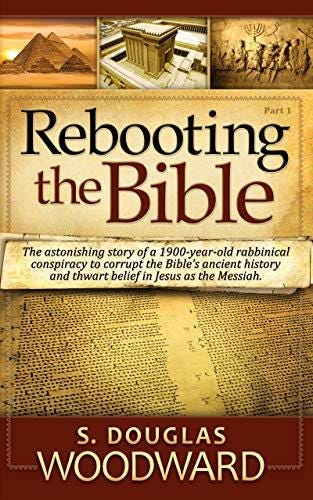
Rebooting the Bible: Exposing the Second Century Conspiracy to Corrupt the Scripture and Alter Biblical Chronology (Part 1) by S. Douglas Woodward
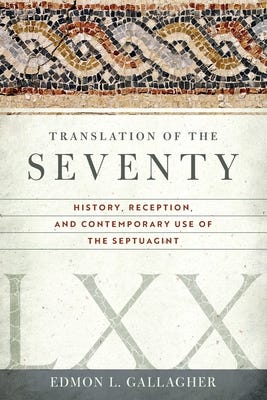
Translation of the Seventy: History, Reception, and Contemporary Uses of the Septuagint by Edmon L. Gallagher
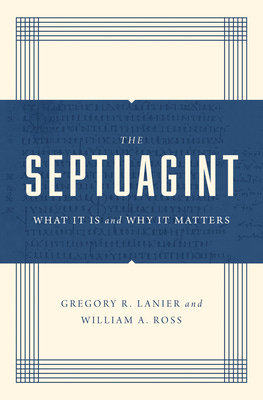
The Septuagint: What It Is and Why It Matters by Gregory R. Lanier & William A. Ross
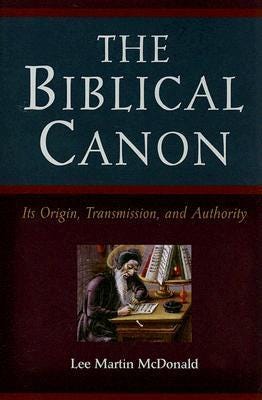
The Biblical Canon: Its Origin, Transmission, And Authority (3rd Edition) by Lee Martin McDonald
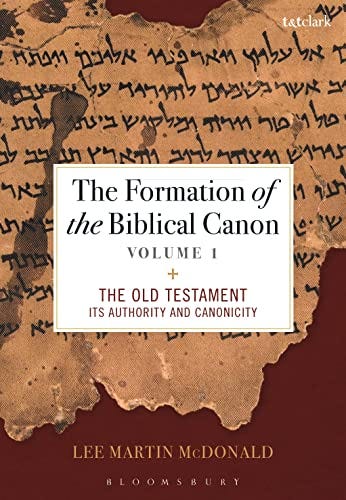
The Formation of the Biblical Canon, Volume I: The Old Testament: Its Authority and Canonicity by Lee Martin McDonald
Comments
Nothing yet. Say the first thing.
Sign in to join the conversation.