
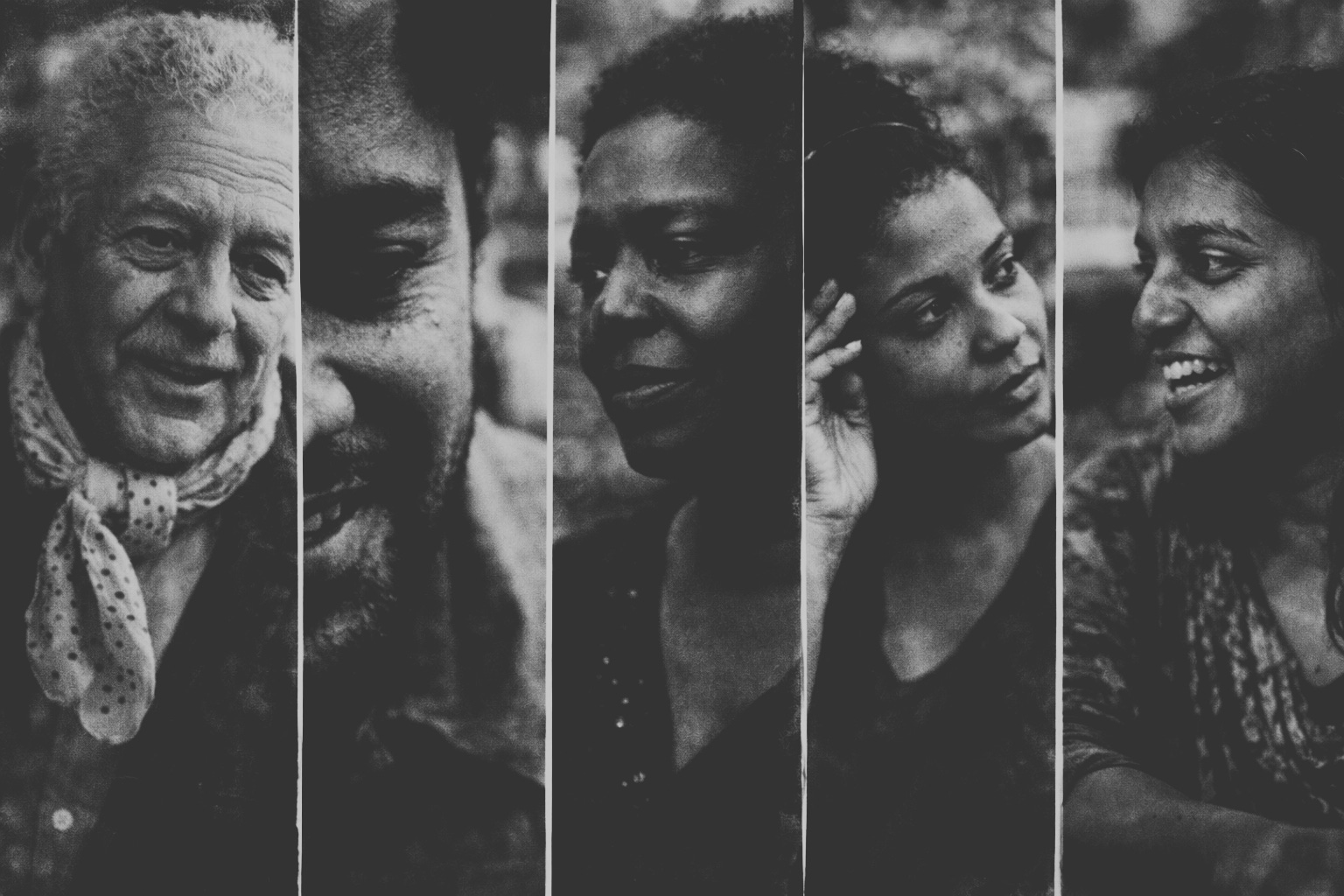
Toni Morrison wrote a novel called Sula.
Near the end of the book, Sula is dying. Her oldest friend Nel comes to visit. Nel asks if she’s lonely. Sula says yes. But then she says something else.
“My lonely is mine.”
And then: “Your lonely is made by somebody else and handed to you.”
I have been sitting with that line for a long time.
Morrison wasn’t only talking about loneliness. She was pointing at something the Dharma also points at, from a very different direction, the difference between a life that is yours, shaped by your own seeing, your own choosing, your own willingness to actually show up to it and a life that was handed to you, like passed-down clothing, and you just put it on and kept wearing it because that’s what you do.
A secondhand life.
We walk around, many of us, in secondhand loneliness. Secondhand identity. Secondhand versions of who we are supposed to be, passed through families, through systems, through cultures that needed us to be a certain shape.
I grew up hearing all power to the people like scripture. A liberation theology that said: the community already holds what it needs. Dignity doesn’t wait to be granted. When I came to the dharma and found the Buddha saying, in different language and across centuries, that the luminous mind is already here…already whole, only obscured by what was piled on top, I felt those two teachings reach across time and find each other. This piece lives in that meeting.
The Buddha had a word for what gets in the way: Saṅkhāra. Mental formations. The conditioned structures of mind and self we inherit, accumulate, and over time mistake for who we actually are. The coat we’ve worn so long we’ve forgotten it isn’t our skin.
The devastating thing that makes this the First Noble Truth rather than a personal failure, is that most of us didn’t choose it. We were handed these clothes when we were young, and we tried to grow into them.
There is a man in Dublin.
He’s standing on a street corner wearing a neckerchief he just bought, adjusting it the way people do when they want to feel like themselves but aren’t quite sure anymore what that looks like.
A photographer named Christopher walks up. Christopher makes his living filming weddings, but he has this other practice, this strange, sidewalk practice…of approaching strangers and asking: “Can I take your portrait?” Most people say yes.
The man on the corner says yes. His name is James. Or that’s his middle name. He stopped using his first name years ago because it caused, as he put it, “a hassle.”
He tells Christopher: “I regard myself as the greatest failure that ever walked the planet Earth.”
He was just stating it matter of factly, making it plain.
“I’m the could-have-been man,” he says. “I could have been a top lawyer. That was within my grasp. I missed that train. I didn’t even get a life.”
Then something shifts in him. Just slightly.
“I make people laugh almost every day. Complete strangers. They crack up. I don’t even try. That’s my only contribution.”
And then, very quietly: “There are times when you do feel low, you know.”
Christopher thanks him. James thanks Christopher, for being kind, for being gracious. “That says a lot about your character,” he says.
And then James walks away.
I want to tell you about Christopher for a moment.
He started this project, the YouTube channel Model Strangers because he was feeling, as he said, “a little down in the dumps. A little lonely.” He thought connecting with strangers might help.
What he discovered is that eight out of ten people say yes.
Eight out of ten people approached by a man they have never met, on a street corner say yes. They sit down. They talk. They tell him things they haven’t told their closest friends.
He says: “I think a stranger will tell me things because I am a stranger. No judgment. Just two people, for a moment, actually meeting.”
Think about that. A man feeling lonely walks toward strangers so he won’t feel lonely. And it works.
Because that’s how we’re made. For this. The actual thing. Two people. A moment. Actually meeting.
The Buddha said something about this that stopped his closest disciple cold. Ānanda came to him and said: “Good friendship must be half of the holy life.” He meant it as a compliment. Half of everything, significant.
The Buddha looked at him and said: “No, Ānanda. Good friendship is the whole of the holy life.”
The whole of it. “The whole thing.”
Christopher Ward walking up to James on a Dublin street corner is not a small thing. For ten minutes, something passed between them that revealed what the whole of the holy life actually is. James was seen. He was heard. He was a person whose story mattered enough for someone to stop, to ask, to stay.
I know this from the back seat of a car in the San Francisco Bay Area.
For a few years I moved around the city without a car, on foot, by bike, by bus, by train and a few times a week by rideshare. I noticed what I was doing in those back seats: phone in hand, mind running, moving through a city full of people while treating every one of them as background. Hundreds of thousands of so-called strangers, and I was anxious about all of them and present with none of them. So I tried something different. I began offering metta, lovingkindness, silently, to whoever was driving. And something shifted, just enough. Conversations started. A driver from Nigeria with a Pele bobblehead on his dashboard. A woman from Colombia who wanted to talk about her mother. A Tibetan man named Tenzin with prayer flags lining the inside of his car. Coffee at a café with a man from Afghanistan who had been a teacher before he was anything else. A young Nepalese driver who took me to lunch so we could talk meditation.
Christopher felt lonely and walked toward strangers with a camera. I was anxious and turned toward a stranger with silent well wishes. Different cities, different methods, same discovery: that the stranger is rarely who we feared.
Her name was Grace.
She was 68. Mississippi born, Mississippi raised and when her husband died, she did something that surprised everyone. She moved to San Francisco. Alone. She’d never been, but she’d done lots of reading about it she said, seen it in movies and on television, built the whole city in her imagination over decades. And when the loss came, something in her said: “go there.” So she did.
She had first heard about meditation years earlier, back in Mississippi, watching Bill Moyers on PBS. “Healing and the Mind”, the episode about Jon Kabat-Zinn and his eight-week mindfulness program at the University of Massachusetts Medical School. She filed it away the way you file away something that feels true before you have words for why. When she got to San Francisco, she found a place to learn. Eventually that’s how we ended up sitting across from each other at a hospital’s meditation garden…a small patch of quiet in the middle of all that fluorescent light.
Around her neck, on a thin gold chain, her late husband’s ring.
She had deep Mississippi in her voice, the kind that makes every sentence feel like it has been considered before it arrives. When she mentioned the towns she was from, I knew them. My mother’s people are from Mississippi too. Something in her settled when I said that. The way it does when you realize the person across the table is not quite a stranger after all.
She told me what was happening to her in the practice. Not the formal language of meditation instruction. Her own words.
She said: “I didn’t know I didn’t have to believe everything I think.”
She chuckled when she said it, a low, private sound, like she was still a little amazed at herself. Like the surprise hadn’t worn off yet, even though she’d probably said it ten times already.
She said she could see her thoughts coming and going sometimes. She could watch anger come up and not become it. She could feel the agitation and stay on the other side of it.
“I can be a witness to it,” she said. And then that chuckle again, warmer this time. “Can I get a witness?”
She was quoting Marvin Gaye. She knew it. And we laughed, there in the meditation garden, in the middle of a hospital, next to a fountain that may or may not have been working, because what else do you do when a woman with Mississippi still in her voice accidentally describes vipassanā while quoting a Motown song?
Her fingers had drifted to the ring on her necklace while she talked. She didn’t notice. Or maybe she did. Either way, she didn’t move her hand.
Eleven years since he died and eleven years she had been practicing. Something in her had settled in a way that was unmistakable. The way she listened, the way she paused before she spoke, the way she stayed in the garden that afternoon without seeming to need anything from it.
She said: “Y’all were right, I did used to think the practice was about becoming a better version of myself. Now I think it’s about finally meeting the one that was always here.”
Think about how Grace got here. Death and a documentary. A woman in Mississippi watching television, filing something away. A city she built from books and movies. A gold chain with a ring that belonged to someone she loved. Eleven years of showing up to something she wasn’t sure would work.
That is how wisdom actually travels. Through a television set in Mississippi. something she followed all the way to San Francisco. Through the recognition that passed between us when I said “mmm hmm, I know those towns.”
For anyone whose survival has depended on passing down what cannot be written in official histories, story is not a teaching device. It is the teaching. It is how lineage holds when institutions fail. How the people who came before reach across the distance and say: “we were here. And we made it through.”
Grace didn’t come to me with a doctrine. She came with a giggle and a Motown song and a ring she couldn’t stop touching. James didn’t come with a framework. He came with a verdict he’d been wearing so long it felt like skin. They don’t need me to explain them. They are the explanation.
James on that street corner doesn’t know the word Saṅkhāra. But he knows the weight of the coat. He knows what it is to carry something so long it starts to feel like a fact.
“I didn’t even get a life.”
That is the secondhand life in its most heartbreaking form. Handed down by love’s exhausted cousin: compliance. The quiet self-erasure of someone who learned early that belonging required a certain smallness. The Saṅkhāra we didn’t choose, inherited before we were old enough to know there was another option.
And yet.
He makes people laugh. Every single day. Without trying. He sees people. He sees their character. He thanks a stranger for basic kindness with a sincerity that takes your breath away.
That is James. The James underneath the coat.
And Grace, who followed something she couldn’t name all the way to San Francisco, who sat in a hospital garden with her fingers drifting to her dead husband’s ring, who discovered she didn’t have to believe everything she thought. Grace is not some other, more enlightened person than the woman who arrived that morning. She is the same woman. Wearing the same loss. But she can be a witness to it now. And that changes everything.
James Baldwin wrote something I return to, daily, as a fact that keeps being true:
Love takes off the masks that we fear we cannot live without and know we cannot live within.
The coat has to come off sometime. Not because the people who handed it to you didn’t love you. But because underneath it, underneath all of it, is someone who was always enough.
James already knows this, even if he doesn’t have words for it. Grace found her way to it through eleven years of practice and a Motown song. The tradition has a name for what they’re both touching, what was there before the verdict, before the coat, before the Saṅkhāra settled in and started calling itself the truth.
Luminous is this mind. And it is defiled by adventitious defilements.
Adventitious. Passing through. Not inherent. Not permanent. Not who you are.
The luminous mind is in James on that corner, giving away laughter he doesn’t know is a gift.
The luminous mind is in Grace, who followed something she couldn’t name all the way to San Francisco, who sat in a hospital garden touching a gold ring, who laughed at herself in a Motown song and finally met the one who was always there.
The luminous mind is in every person who has ever been handed a secondhand coat and kept, stubbornly, quietly, persistently, looking for their own.
And this practice, this sangha, this showing up together, this ongoing experiment in being human, is simply the conditions under which that luminous mind remembers itself. We are the conditions for each other. The conditions under which the coat can finally come off.
This is what I mean when I say all power to the people.
A recognition that the Panthers were right. That the dharma, arriving from a different direction across centuries and oceans, lands in the same place. The power was never somewhere else. It was never waiting to be granted. It has always been here, in the ordinary miracle of two people actually meeting. In the calling each other in. In the refusal to let each other disappear. In the decision made again and again, on street corners, and hospital gardens and the back seats of cars, to turn toward rather than away.
That is the people’s power. Undelegated. Undefeated. Passing from hand to hand like a lamp.
The power of being stopped on a street corner and asked: “Can I take your portrait?” The power of a room where the pretending is optional. The power of a woman who watched a PBS documentary in Mississippi, moved to San Francisco alone at 68, and sat in a hospital garden laughing at her own amazement.
The power of James, who doesn’t know that his laughter is a lineage. That every stranger he’s made laugh has been given something real. Something that was entirely his to give. Something no failure, no could-have-been, no years of wearing the wrong coat could take from him.
The Buddha said, near the end of his life, when his disciples were afraid of what would come after:
Be a lamp unto yourselves.
Be the lamp.
And what the tradition implies but doesn’t always say out loud: we help each other stay lit.
That is sangha. That is what it means to truly belong to each other. To the practice of bearing witness. To the ordinary holiness of a human life, fully, imperfectly, courageously lived.
In a world working very hard to make us forget each other, turn against each other, and mistake distance for safety… the simple act of turning toward one another
is resistance.
is medicine.
is the whole of the holy life.
A small note -
Heartstream Sangha begins tomorrow.
A place to sit together.
To listen.
To speak a little, or not at all.
A place where the Dharma is practiced the way it lives-
through meditation, reflection,
and being human together.
We’ll gather on the first Sunday of each month,
5:00–6:15 pm ET.
If something in this piece felt familiar or resonant
if you’ve been looking for a place online to sit and land
you’d be very welcome.
*This post grew out of a dharma reflection called, All Power to the People. I’ll post the full audio on my website one day soon.
- Devin
Devin Berry is a storyteller and dharma teacher whose work explores memory, lineage, and the liberating possibilities of attention.
devinberry.org
Heartstream Sangha
IG: @blkb3rry
—
Christopher Ward’s Model Strangers project
Comments
Nothing yet. Say the first thing.
Sign in to join the conversation.