
For most of the past decade, governance was the thing that happened after the system was built. The approval process. The contribution guidelines. The review cycle. The meeting where someone decided whether a new pattern was justified. It was overhead, and most teams treated it as such.
What the field is now working out is that this model was always wrong, and AI has made it untenable. When agents are contributing to your system, review cycles do not scale. Human approval cannot keep pace with machine-speed output. Governance has to be encoded, not performed. It has to live in the system itself, as auditable rules, measurable thresholds and machine-readable contracts, or it does not effectively exist.
The language angle is the one worth paying attention to. A design system without a stable vocabulary is a system where drift happens silently, through misuse, misinterpretation and well-intentioned variation that accumulates until nothing means quite what it was supposed to. Tokens were the first vocabulary the field made machine-readable. Prop maps, component contracts and authored terms are the next. If the system cannot enforce its own language, nothing else holds.
Governance used to be the thing you bolted on at the end. It is becoming the thing you build from the inside out, and the systems that have not made that shift are accruing debt that will not show up until the machine surfaces it.
📚 Featured Articles
📰 Published in the Last Week
🎙️ From the Conference Floor
✨ Inspiration
🎗️Support us
📝 Closing Thoughts
Must-read articles at www.designsystemscollective.com.
💡 Have an article to share? Submit it here!
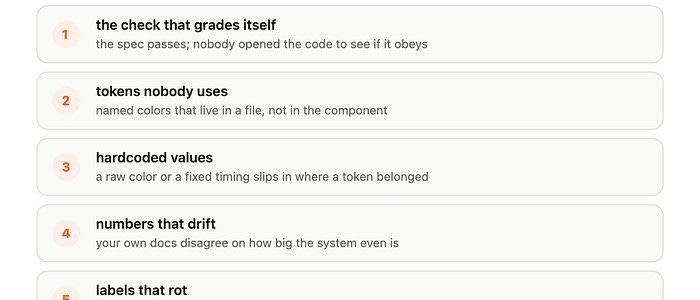
If a machine builds your design system, here is what quietly breaks by Tina Singh
Why We Like It: A clear, hands-on account of the silent failure modes that appear when agents generate UI, with a practical proof tool that checks painted DOM parity against contracts.
Pro Tip: : Tina shows why validators must inspect runtime output, not just specs, and documents a governance loop that detects, diagnoses and repairs drift; essential reading for teams building agentic pipelines and anyone responsible for DS integrity.
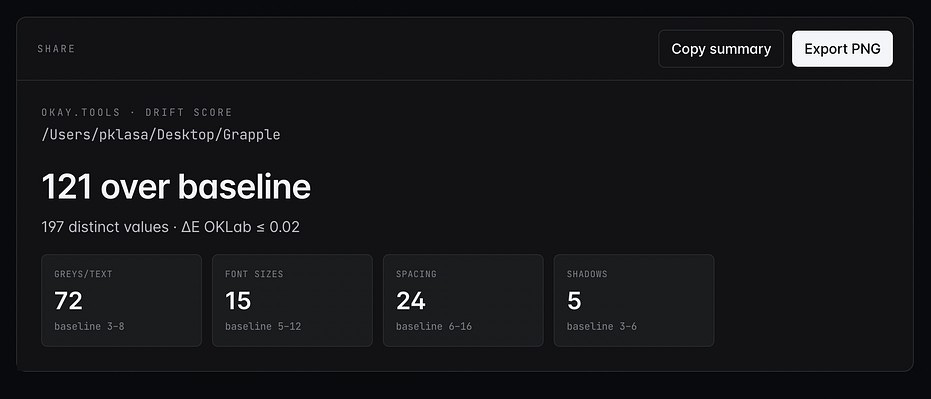
The most expensive Design Problem of 2026 lives in your CSS.by Pawel Klasa
Why We Like It: Pawel quantifies design drift and provides an open tool to measure it, turning a vague problem into auditable metrics you can act on.
Don’t Miss: : The Drift Score and methodology normalise values, bucket perceptual differences and produce a baseline you can track across releases; ideal for leads who need evidence to justify governance work.
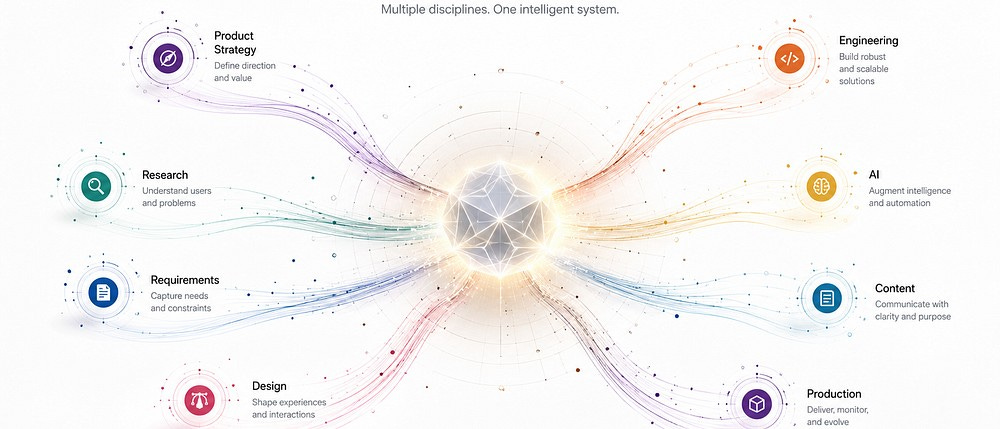
From Design Files to Living Product Systems by Surendar Selvaraj
Why We Like It: Strong framing that shifts the unit of work from static artefacts to continuously evolving product systems, tying Config 2026 announcements to organisational change.
Perfect For: : Leaders planning DS strategy; Surendar explains why executable behaviour, not isolated files, must become the primary artefact and what that implies for sources of truth.

Building language for design systems by Cristian Morales Achiardi
Why We Like It: A rigorous exploration of vocabulary, grammar and enforcement across design and code that explains why authored terms drift and how to avoid it.
Don’t Miss: : Practical argument for making authored vocabulary auditable and machine-readable, with tokens as a precedent; valuable reading for teams writing prop maps and cross-surface contracts.
To stay updated on the latest articles, we share every new article on our LinkedIn page.
👉 Stop Prompting Your AI. Start Designing the Loop by Abhi Chatterjee
👉 What AI Agents Need From a Design System. And What Most Systems Fail to Provide. by Eddie Lou
👉 If a machine builds your design system, here is what quietly breaks by Tina Singh
👉 The Principal Multiplier: What AI Actually Requires from Design by J Gibbens
👉 The 90-Day Design System Turnaround: 3 → 300+ Components and 60% Fewer Inconsistency Bugs by Vivek Ramachandran
👉 From Design Files to Living Product Systems by Surendar Selvaraj
👉 The Hidden Cost of a Bad Design System by Cédric
👉 Governance becomes an output by Shane P Williams
👉 From UI Kit to Enterprise Engine: A Practical Guide to Design System Governance by rakesh patel
👉 The Missing State in Most Design Systems: Read-Only Text Fields in Material Design by Vedant
👉 Icon Systems That Scale: From One Library to Every Platform by Madhesh P
👉 Patterns Are the Point by J Gibbens
👉 Turning Figma Tokens Into a Fully Working, Cross-Platform npm Package by Pir Ahmed
👉 Figma Config 2026 Changed How Design Systems Work — Here’s What Actually Matters by Madhesh P
👉 The most expensive Design Problem of 2026 lives in your CSS. I built a free tool that counts it. by Pawel Klasa
👉 Design System Is a Language, Nor a Rulebook by Najeeb
👉 Building language for design systems by Cristian Morales Achiardi
👉 Your Design Isn’t Done Until It Tells a Story by Christabel Akpoguma
👉 The Future of Design Isn’t AI. It’s Taste. by Angus Ewing
Learn how designers at WhatsApp, Atlassian, Figma and others use AI in their daily workflows.
As a Design Systems Collective reader, you get 10% off. Use code DSCOLLECTIVE at checkout. Get the recordings here
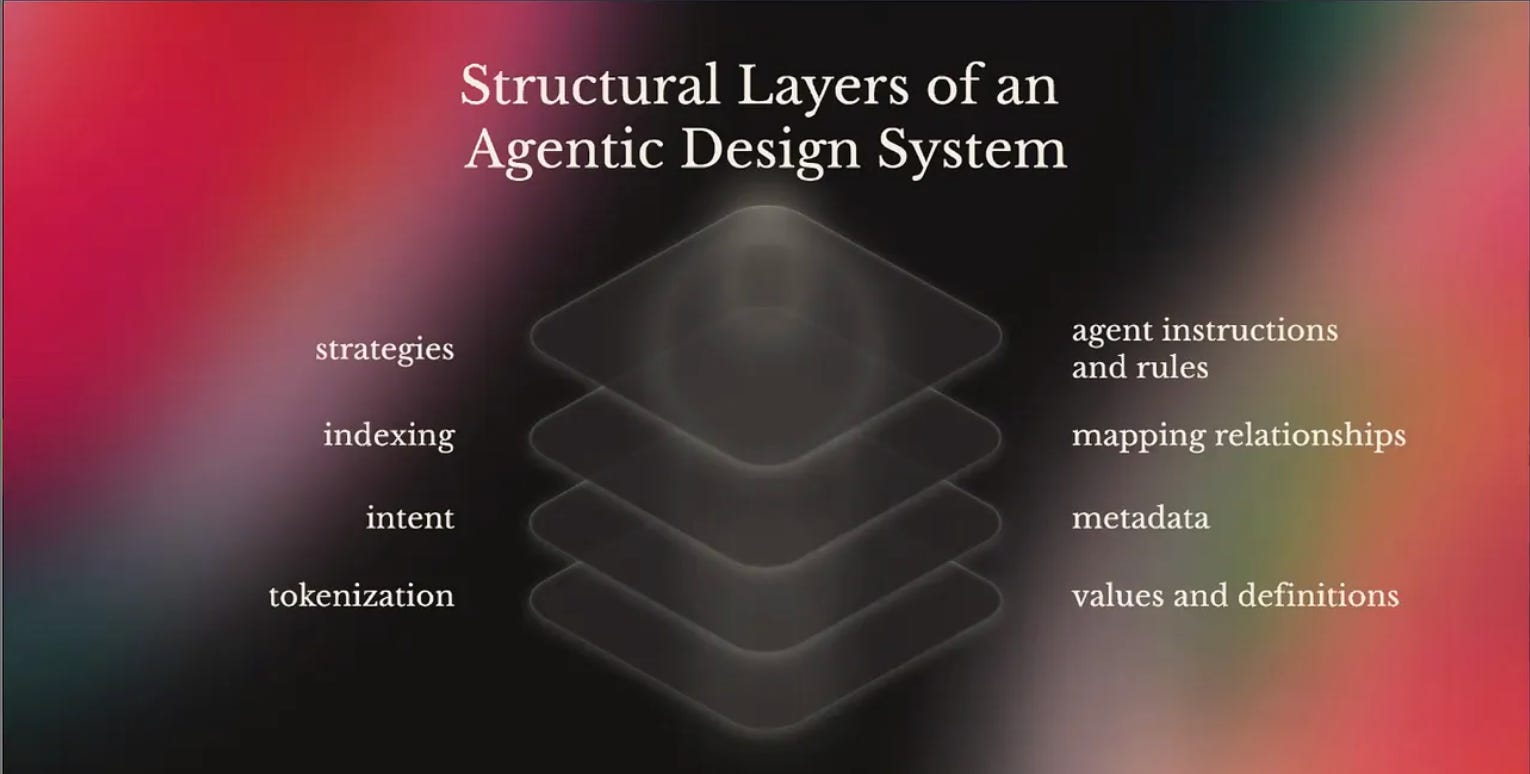
Are you constantly searching for innovative ideas and fresh insights in design? Look no further! Here’s a curated list of intriguing content that has sparked our interest lately:
🔗 What Do the Config 2026 Announcements Mean for Design Systems?
The blog post delves into the future of design systems, highlighting the implications of Config 2026 announcements on design and development workflows.
If you find our content helpful, here’s how you can support us:
Forward this email to a friend and invite them to subscribe
Support our writers by visiting the Design Systems Collective website
The systems that hold up are not the ones with the most thorough governance documentation. They are the ones where the rules are in the architecture, not in the process. If governance only exists when someone is watching, it does not exist.
Founding Editor, Design Systems Collective
Comments
Nothing yet. Say the first thing.
Sign in to join the conversation.