

Welcome to Designer, a place for designers, creatives, and the design-curious to explore graphic design styles, the history and future of design, and how art and design carry into the rest of life. In this article, we’re uncovering the deep history behind the Arts & Crafts movement. And keep a close eye on the history portion, because I predict that the past may soon repeat itself…
In short, the Arts & Crafts movement was a rebellion against the “enshittification” brought on by the Industrial Revolution.
Picture this… England (the birthplace of the Arts & Crafts movement) was experiencing massive technological and industrial advancements. Along with these advancements, though, came inhumane working conditions, the rise of capitalist greed, and products being made faster, cheaper, and of lower quality. Sound like anything we’re experiencing in 2026?
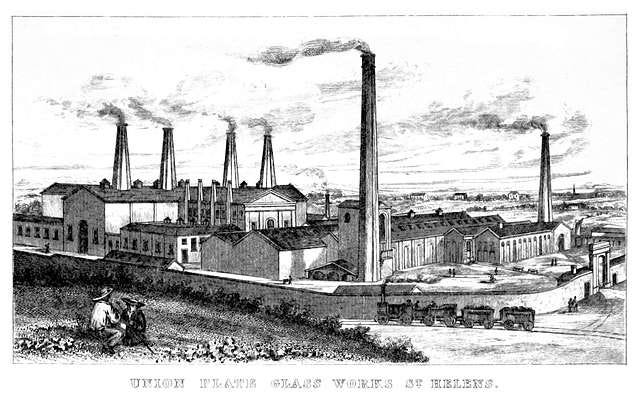
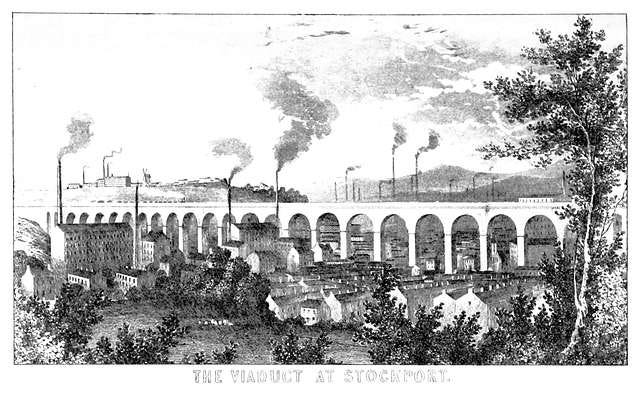
Because art and design movements often stem from social, political, and economic upheaval, which we’re currently experiencing with A.I., layoffs, etc., I figured we’d go back in time to learn from one of the most influential periods in design history - the Arts & Crafts movement. And although this movement placed particular emphasis on product design and architecture, we also saw the birth of modern-day graphic design, including layout planning and typography.
But first, we must go way back to discover what happened and why, then gather insights and apply them to today’s design climate. Let’s get into it!
Alright, brace yourselves, because this section is longer than any other history section I’ve written previously. However, because of the huge impact this movement had on design, I felt that it was necessary to include everything below. Let’s start from the beginning.
Picture this…
It’s late-Victorian England (~1860), and the Industrial Revolution is changing everything people knew about society. The steam age had brought mechanization to industry, agriculture, and transportation, which changed the way the world worked.
People were moving to cities to work in factories; Products were being created at a larger scale than ever before; Distribution began to scale, allowing more people to get more things; Life seemed great; There was more work, more products, more purchases, bigger wallets, and capitalism began to take firm root.
But, that’s not the whole story.
The industrial revolution took a physical toll on the environment, lives of the working class, and general quality of life. Business owners began prioritizing wealth and profit over beauty and nature, which caused the rich to get richer off the backs of the working class.
This is the exact issue that the Arts & Crafts movement aimed to solve. They had a better idea for society.
-
Now, there are two things to note before we dive deeper into the history:
The Arts & Crafts movement wasn’t named that until after it was over, so many of these designers and social commentators weren’t speaking for one particular cause, but rather a set of ideals.
The Arts & Crafts movement was about a set of ideals; It doesn’t represent a particular style. There isn’t an “Arts & Crafts” style, but rather a philosophy that guided their design-based decisions.
Alright, now onto the history…
The leaders of the Arts & Crafts movement believed that mechanization was making people less creative by removing skill from the manufacturing process. For the first time in history, design was happening separately from the end product - it was no longer a craft that required devotion, but a means to make money.
Before the Arts & Crafts movement had officially begun, a social commentator and writer, John Ruskin, spoke out against industrialization as a whole. He famously stated: “It’s not that men are ill fed, but that they have no pleasure in the work by which they make their bread, and therefore look to wealth as the only means of pleasure.”
Ruskin believed that the Industrial Revolution itself was ugly. Not only did it ruin the natural beauty of the environment, but it sucked the souls out of the people performing monotonous work day after day. In his view, art and architecture mirrored the spiritual health of society - when the arts began to decline, so too did society.
He longed for a better system, one where design, craftsmanship, and creativity were interconnected and used to uplift society. Ruskin took inspiration from medieval craftsmanship techniques, believing that it was the peak of creativity and design. These old-world techniques allowed creativity and the economy to thrive together.
Ruskin’s writing eventually became quite popular, influencing a new generation of artists. Of note, William Morris, who is often cited as the founder of the official Arts & Crafts movement, was particularly influenced by Ruskinian ideals. Throughout his career, Morris imagined a “perfect” society, modeled after the pre-Capitalist Middle Ages.
One distinction between Morris and Ruskin was that Morris didn’t oppose machines outright. Rather, he opposed the workers having so little connection to the products they were creating. Morris took notice of the fact that, to make a living, people had to become machines, working in assembly lines, stifling creativity, and working in often inhumane conditions - conditions that were devoid of individuality and inspiration.
His philosophy was deeply rooted in creating beautiful, well-made goods that were accessible to the everyday person. He believed that connecting products to nature would, in turn, reconnect people with the beauty of the natural world.
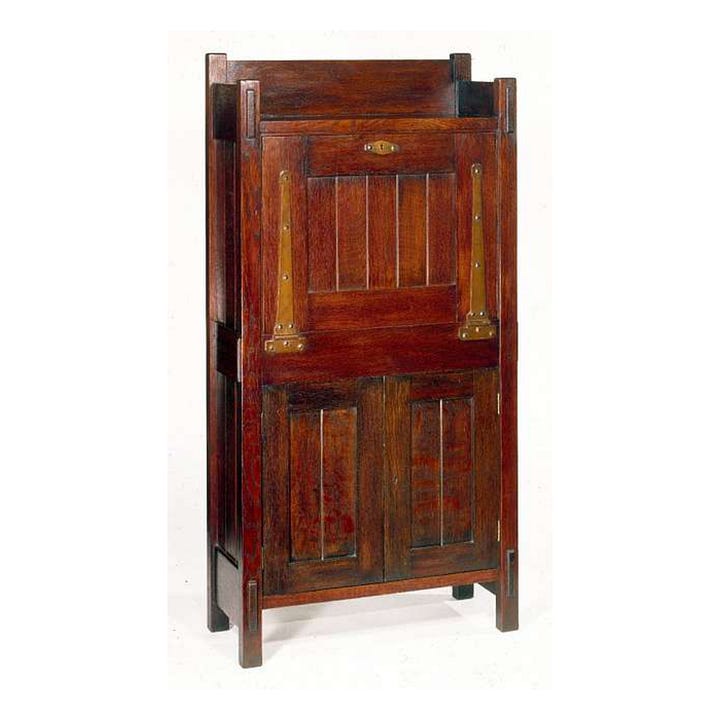
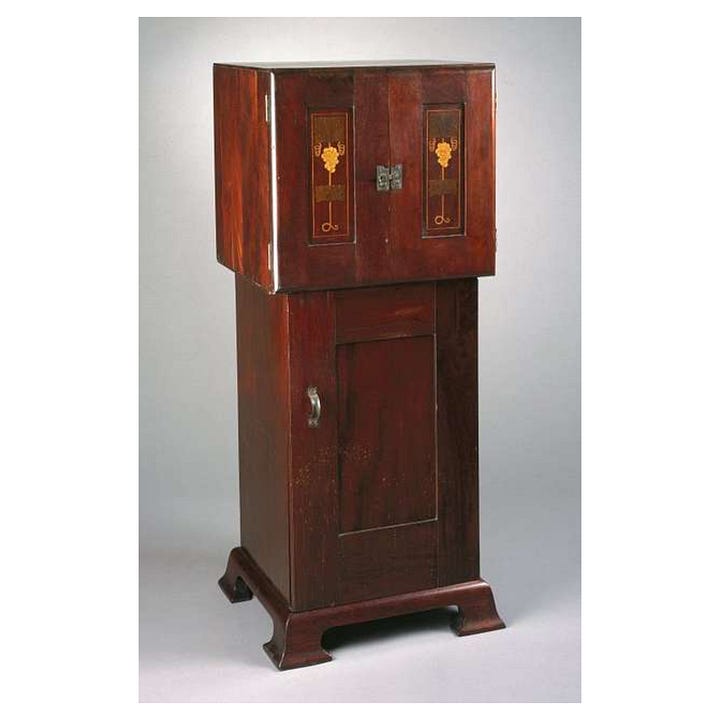
To further his initiatives, Morris spent his career trying to influence the general public’s taste. Whether through his design firm, the Kelmscott printing press, his textile company, or his printing service, his goal was to move away from mass-produced and toward higher-quality goods.
Sadly, Morris began to realize that no matter how hard he tried, craftsmanship would always be poisoned by the thorns of capitalism, which brought forth a critical issue: well-made products were becoming more expensive while cheaply made dupes were accessible to the masses.
By the end of the 19th century, the Arts & Crafts movement hit a rough patch, particularly due to the economics of its products. To help push the movement forward, several collectives formed in hopes of making an international impact.
Artists and designers capitalized on the wealth, capital, distribution pathways, and infrastructure of large cities to sustain the prices associated with hand-crafted goods, causing the movement to thrive in these areas for several years.
Arts & Crafts ideals saw an uptick in popularity, particularly through the efforts of designers and art collectives. Art schools added Arts & Crafts ideals to their curriculum, guest lecturers spoke on the importance of this movement, and international attention continued to rise, now to the U.S. and Japan.
In the U.S., although far beyond the point of return in terms of industrialization, the idea of fine craftsmanship for the masses spread. First in Boston, a Society of Arts & Crafts was founded in 1897, which then spread to Chicago, New York, and beyond.
Located in the U.S. was the final instrumental figure we’ll cover in this article (although there are countless others), Gustav Stickley. Stickley approached this movement from a different angle, trying to serve a growing market of middle-class individuals who wanted affordable and decent-looking furniture by combining craftsmanship with mechanization. He outsourced the creation of parts/basic components to machines, while reserving the actual construction for the craftsmen.
But finally, in the early 20th century, the Arts & Crafts movement began to succumb to industrialization and capitalism. Several overlapping factors led to its decline, including:
The intense focus on looking backward to medieval times, rather than forward to a more idealized future. The world was far too industrialized to go backward, so the Arts & Crafts movement was fighting a losing battle.
High production costs and competition from capitalist businesses. Machines were always going to be able to make cheaper goods, and people with working-class wages would feel pulled to save some money.
Although they tried for decades longer, many of these designers struggled against the industrialized world. Whether it was metalwork, typography/books, furniture, or other designs, the fact was simple: factories could make these products cheaper, and families who couldn’t afford handmade goods would search for the cheaper options.
-
Now, because this publication primarily focuses on graphic design, I want to dedicate some of the history portion directly to that area - particularly relating to book design, layout, and private printing presses.
By the 19th century, less and less attention was given to quality book design and printing. Instead of aiming for beautiful graphics and printed works, companies focused on printing quickly, using cheap materials, and selling as many products as possible. Many printed designs were created using cheap, thin paper with unconsidered typefaces and low-quality ink.
You can imagine how the Arts & Crafts designers felt about this - not great.
In 1891, William Morris founded a small printing press (the Kelmscott Press) which prioritized older printing methods and higher-quality ink and paper. Morris’ team cut illustrations by hand to print them into the books, created decorative borders to add beauty, and even designed three Gothic-style typefaces.
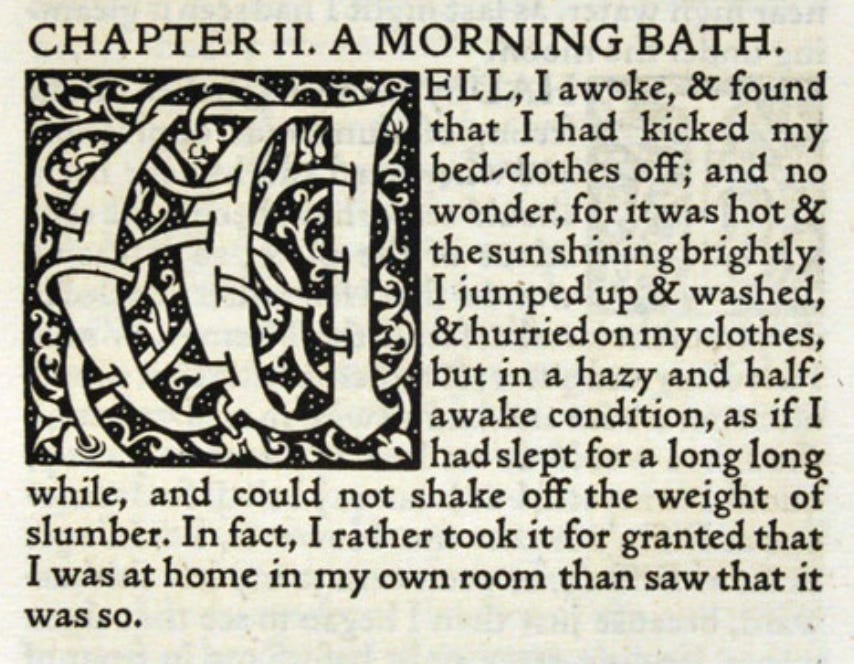
The Kelmscott Press’s intense focus on beauty, typography, layout, and page cohesion inspired a new generation of graphic designers, advertisers, and other printing services.
It’s here that we began to see the rise of the private press industry, where individual firms designed, crafted, and published books and printed materials. As this progressed, so too did the number of people who had access to beautiful and functional literature, artwork, advertisements, and more.
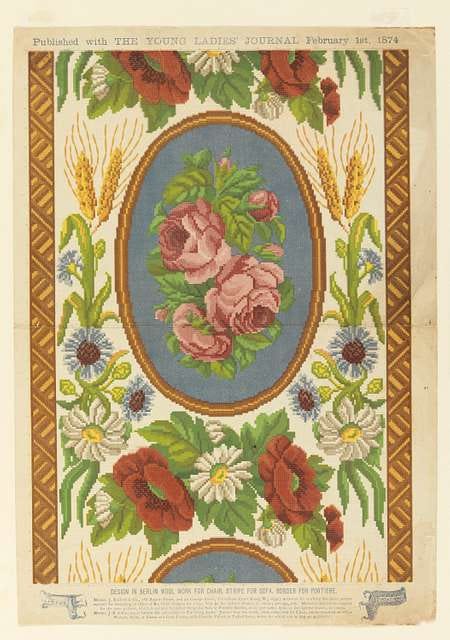
As designers advanced their private press companies, they began setting standards for margins, typefaces and fonts, and layout, touting their importance in the design process. This time is often cited as the birth of modern-day graphic design.
Sadly, industrialization drove this movement into a similar fate as the rest of the Arts & Crafts designers, where cheaply made books were more enticing than a more expensive, yet beautiful, alternative.
All was not lost, though, as Art Nouveau and Bauhaus eventually carried the torch forward.
-
Ok, great! Now that we understand how deep the history goes, let’s translate it into what the designers actually believed.
Philosophy #1: Anti-industrialism → Arts & Crafts designers had roots in socialist critique, believing that industrialism and capitalism ruined art, design, products, and societal health at large.
Philosophy #2: Labor should be meaningful and fulfilling → Arts & Crafts designers believed that the machine degraded both the creator and consumer. In their eyes, creativity was directly linked to fulfillment; they pictured a world where people took pride in craftsmanship, devoting their lives to creating high-quality goods.
Philosophy #3: Art/design and life are interconnected → Arts & Crafts designers believed that art and architecture mirrored the health of society. When factories reshaped large cities, ruined the natural landscape, and separated design from the craft, this set off alarms about the general societal well-being.
Philosophy #4: Straightforward use of material, structure, and function → Arts & Crafts designers believed in the beauty of natural materials, not only in specific products, but also in the home. In their eyes, the markings of craftsmanship (nails, joints, and imperfections) were beautiful and represented a quality product.
Great, now that we know what the Arts & Crafts movement believed, let’s quickly cover how they put these ideals into action.
The revival of guilds → Art and design guilds were revitalized in hopes of reconnecting the designer with their craft, focusing on using high-quality materials to create textiles, furniture, books, metalworks, leather, and more. Engaging with these guilds meant increased access to high-quality materials, distribution pathways, and consumers directly.
Turned back the clock → The movement focused primarily on design and craftsmanship techniques from the medieval/pre-industrial era. They aimed for everything to be handmade, using medieval tools and knowledge as their source of truth. Simplicity of form, function, and decoration informed their processes.
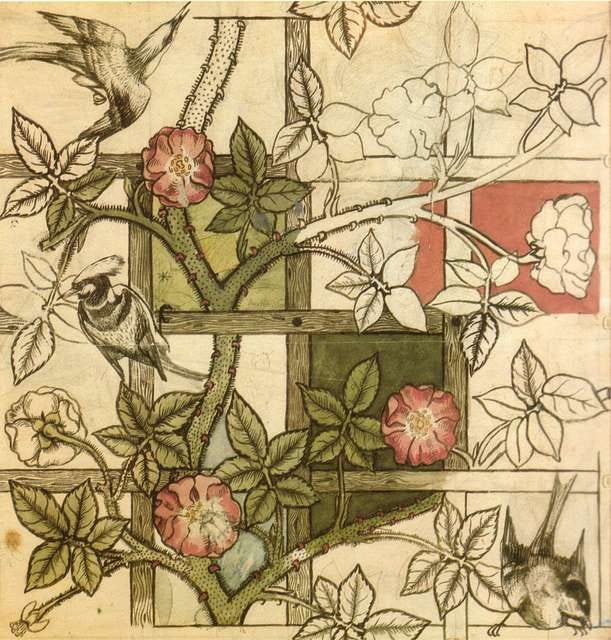
Pulled inspiration from nature → Designers used strong forms and colors, pulling various motifs from nature itself. They often derived their designs from floral patterns, birds’ feathers, and the natural landscape, such as rivers and forests.
Showed imperfection and marks of craftsmanship → The actual construction of the object was often exposed, using the marks of craftsmanship (joints, nails, hammered details, etc.) as decoration instead of adding ornamentation after.
Something to note before we move on: Notice the tension between the philosophy and the system.
At its core, the movement was about providing beautiful, handmade, high-quality goods to everyone. However, their techniques were often slow and difficult to master, which made their products quite expensive. There’s an inherent disconnect between what they believed and how they were going about achieving it. This perfectly illustrates why the movement declined.
I now want to take some time to reflect first on what we’ve learned and then apply it to the future of the art and design professions.
The main issue I see with the Arts & Crafts movement is that the strongest believers wanted to go back in time. They longed for a society that took a slow approach to the creation of high-quality, beautiful goods. Going backward, however, wasn’t an option. Industrialization was too far along for any meaningful impact to be made, no matter how hard they tried.
We are seeing a similar situation happening in 2026 as well, which is making people long for the past. Consider these examples:
Data centers ruining nature, water supplies, homes, towns, etc. → This is causing an increase in environmental awareness and human-made goods.
Layoffs powered by AI → This is leading to AI boycotts around the world.
AI slop and low-quality designs/goods → This is furthering people’s distaste for AI and empowering people to take a handcrafted approach to products, design, and life.
This makes me think about some of the more popular graphic designers on social media, and what content they’re pushing out. Allan Peters, for example, posts short videos, primarily with paper and pencil, which are quite popular.
Many people long for a time before AI was widely introduced, and as valiant an effort as it might be, it won’t happen in my opinion - just like industrialization, the AI era is too far along. Although I believe that, I still think that we can learn from the Arts & Crafts movement to create a more positive future for this field. Similar to Arts & Crafts designers, I believe that using AI to create an end product is separating the craft from the outcome. So the big question is: How can we create a future where designers work in harmony with AI to create bigger and better work?
As we learned in the history section, handmade goods were quite expensive, to the point that many people couldn’t afford them. Because AI can design quite quickly, will the future of the design profession become an economy of time? Human-made designs take much longer than an AI bot, so will time become the new currency? I wonder, if another Arts & Crafts-esque movement were to happen, how we designers may mitigate this? Just something to consider.
Personally, I think that if we want a movement like this to succeed in the future, we must find a hybrid approach, similar to how Gustav Stickley combined industry and handcrafted goods. Whether it’s with AI or further industrialization, technological advancements will likely never stop, so what we designers need to figure out is how to survive and thrive with the new technology to benefit the world at large.
So much of the design world is fueled by the social and political climate of the world. Many art movements, including the Arts & Crafts movement, are a rebellion against the current conditions in search of a better future. In the case of the Arts & Crafts movement, they sought a world where working-class people could enjoy the pleasure of well-built belongings in their homes, cities, and the rest of the world.
The Arts & Crafts movement was, in my opinion, a valiant effort, but ultimately a very optimistic idea. Designers were asking people to go against the grain of industrialization, spend more time and money, reject society at large, and potentially cast themselves out of their social groups. Although the heart of the movement was created with good intentions, it was doomed to end from the beginning.
Might we see a similar movement in the future? I predict so…
As always, thank you for reading and/or listening to this article! I’d love to continue the conversation with you in the comments and subscriber chat.
https://www.metmuseum.org/essays/the-arts-and-crafts-movement-in-america
https://www.vam.ac.uk/articles/arts-and-crafts-an-introduction?srsltid=AfmBOorGWlfoQ5QCmwFbqVuHCOtMgmi2gwbnwAL6UD_7Pevg2kLxc1ca
https://www.britannica.com/art/Arts-and-Crafts-movement
https://www.moma.org/collection/terms/arts-and-crafts-movement
Comments
Nothing yet. Say the first thing.
Sign in to join the conversation.