
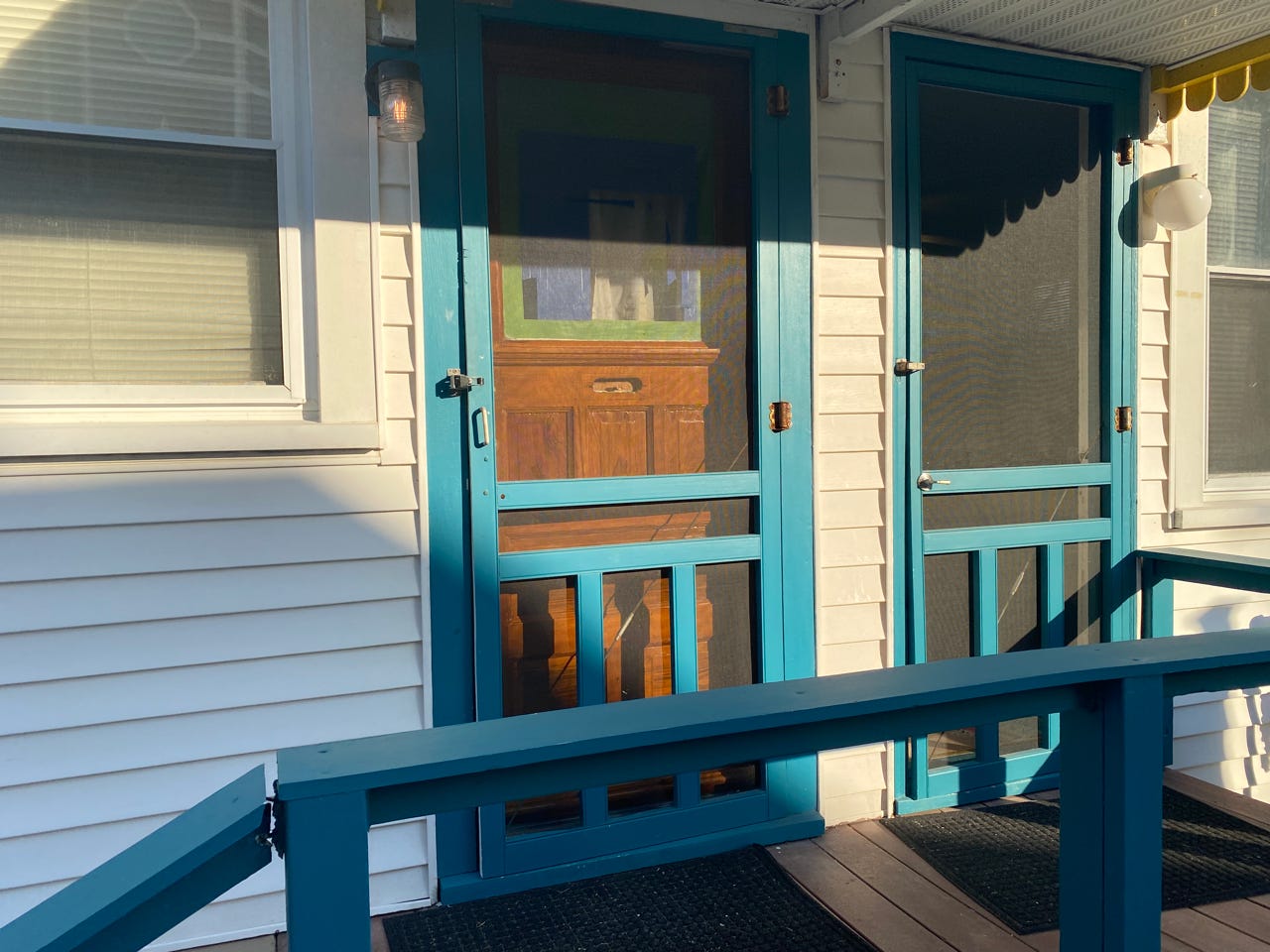
Now that the cottage is ready to go for Summer, I turn back to work in the house. I have floor and woodwork in the dry kitchen but I pause that to finish up some exterior facing work. It was a very cold winter so I didn’t get a lot of time to handle outside tasks so I’m going to focus on a few outside tasks now that weather is warmer, but before tenants arrive. The previous year I used Proluxe Door and Window Finish to varnish the exterior side of the entry door. I plan to use that for the side door. Luckily, I’ve already done a fair amount of stripping on the wood so before I get to varnishing, I only have to do a few more passes of chemical stripper, dental picks, and scrubbing with denatured alcohol to get ready for varnishing.
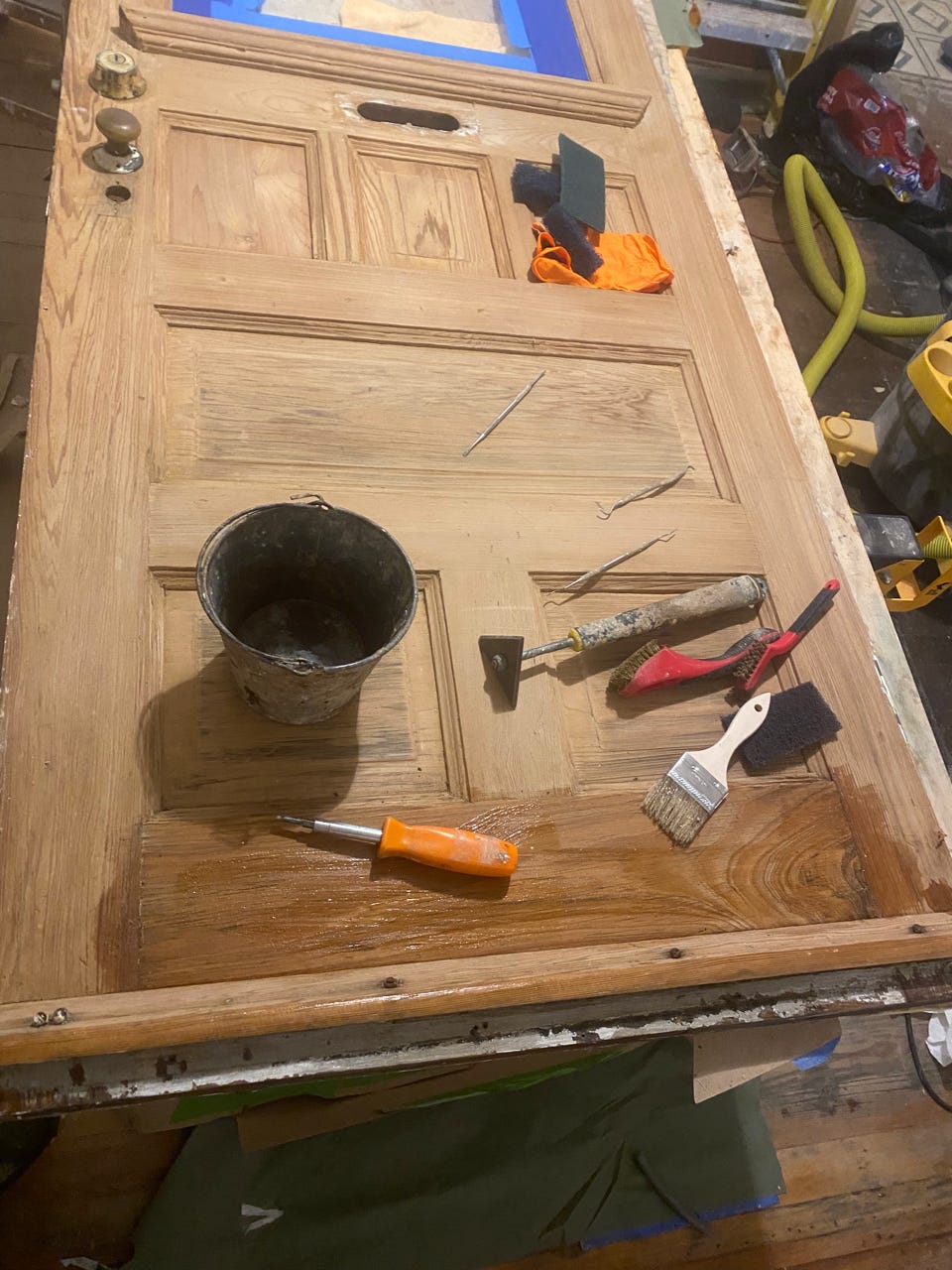
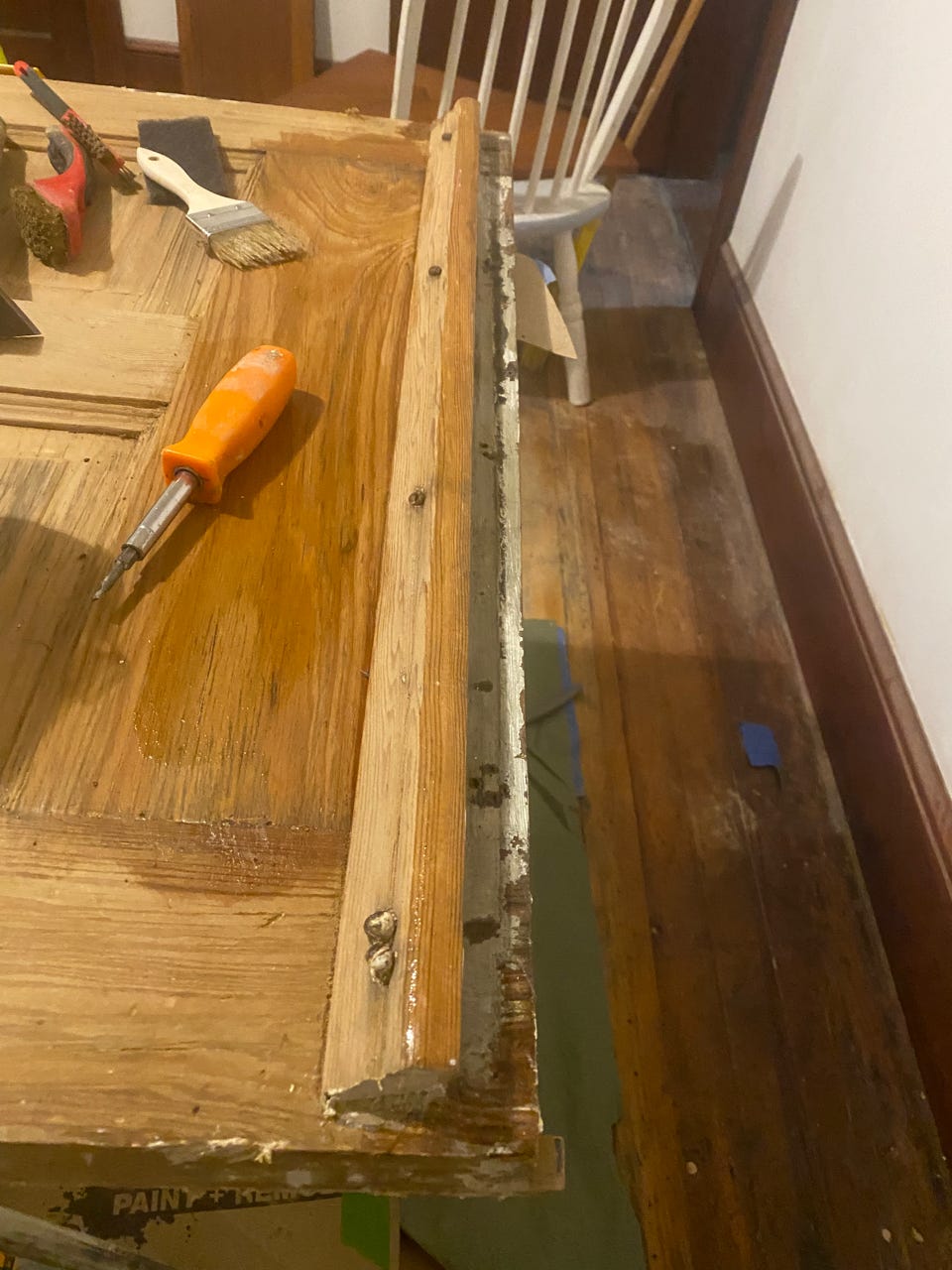
Once all the white paint is off, it’s on to the extensive prep the Proluxe varnish requires. The instructions for prepping Proluxe involves doing a 30 minute scrub with a mix of TSP and bleach. Then after the wood dries a series of sanding with sandpaper grits from 80 to 120. I get to work by taping off the plexiglass window and bringing the door into the indoor shower for scrubbing. After the scrubbing and rinsing it’s set aside for a few days to dry.
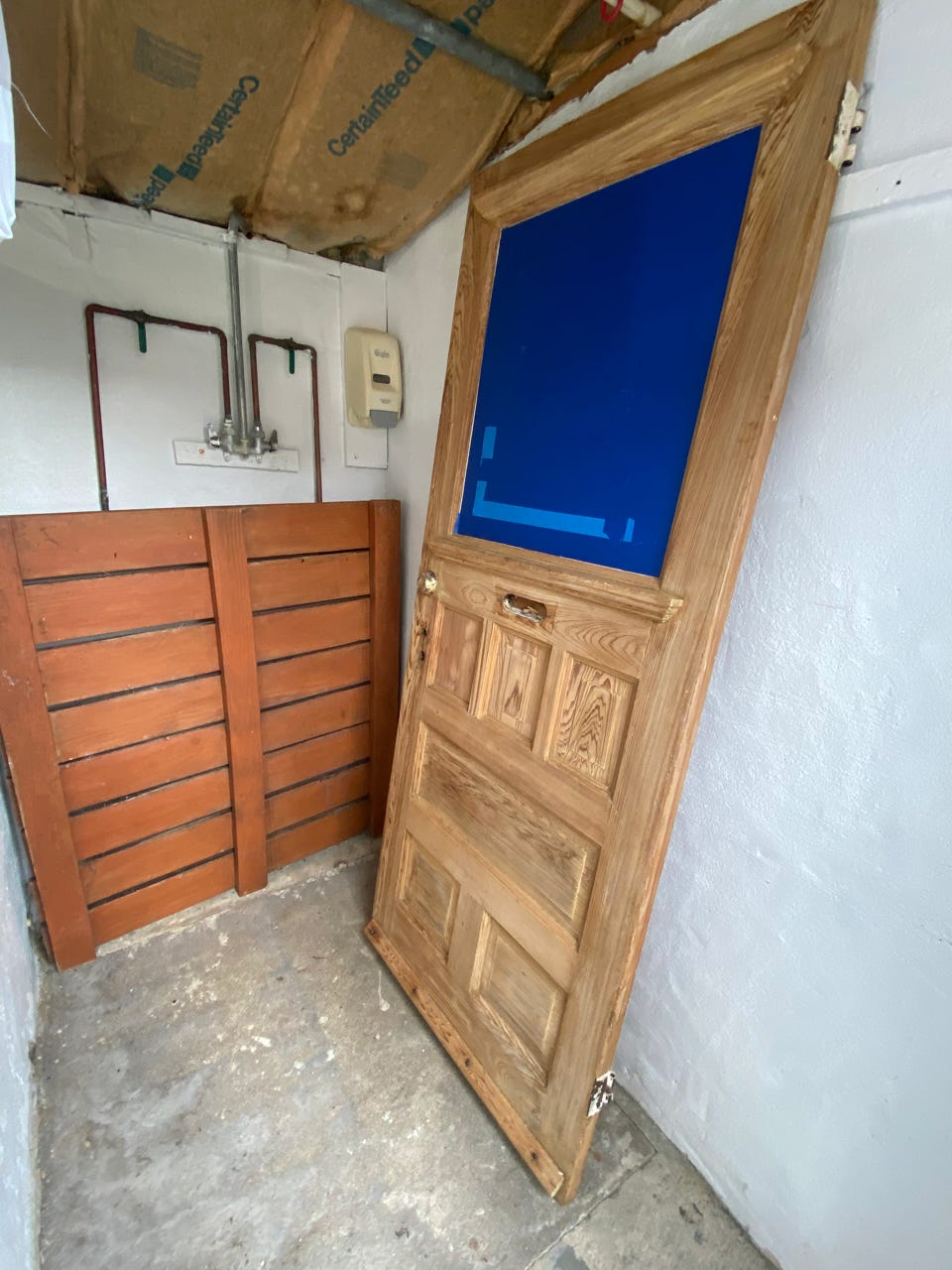
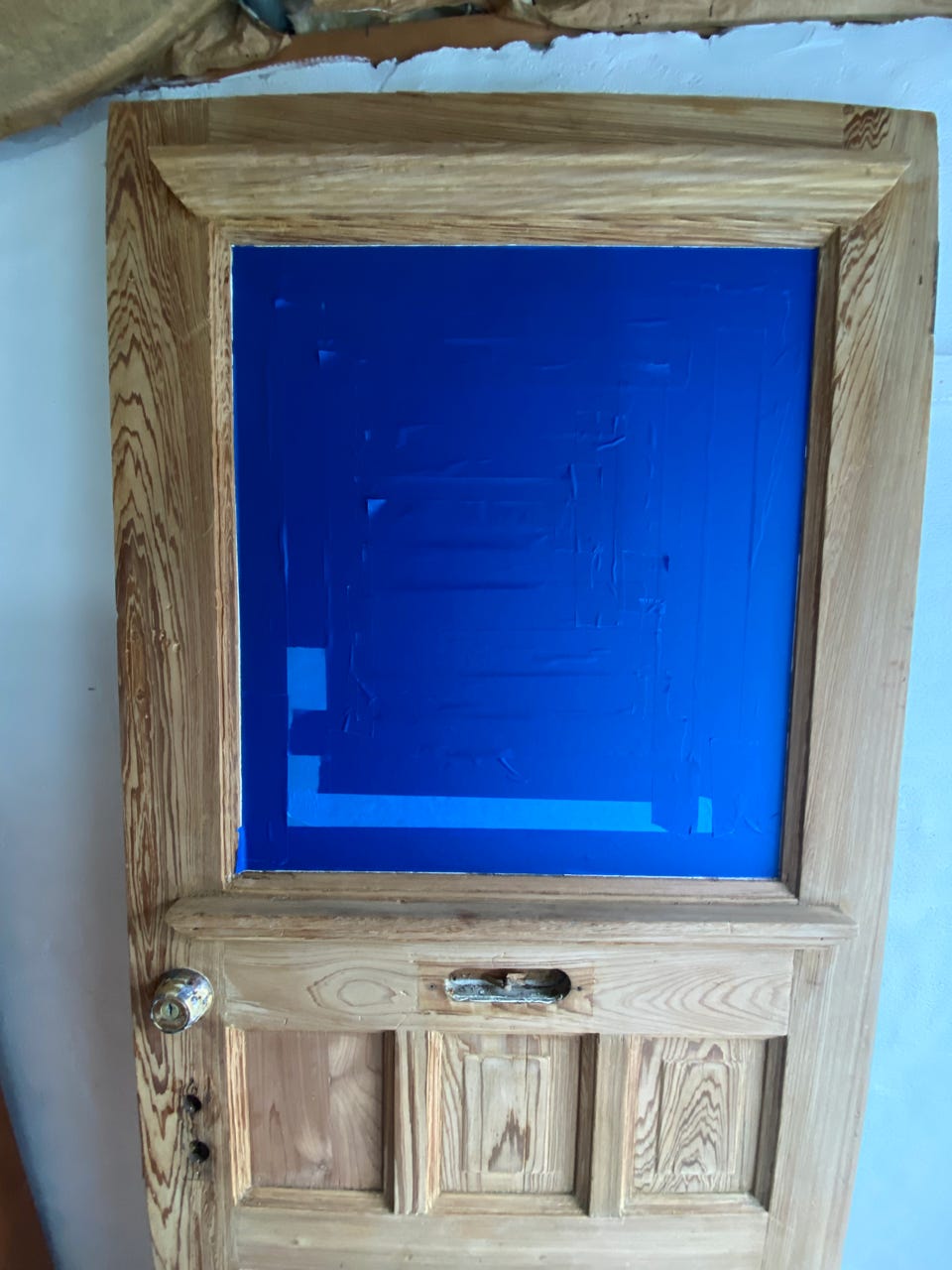
After all the sanding and then wiping down with mineral spirits, it’s time to apply the varnish. Similar to Waterlox, the Proluxe goes on pretty easily. We use a brush to apply and then rehang the door to dry between coats. One of the panels is a replacement with no bevel on it, so I kind of try and fake one with a marker, but it doesn’t come out great. At some point I’ll need to get a piece of veneer and glue it on to approximate the look of the other panels.
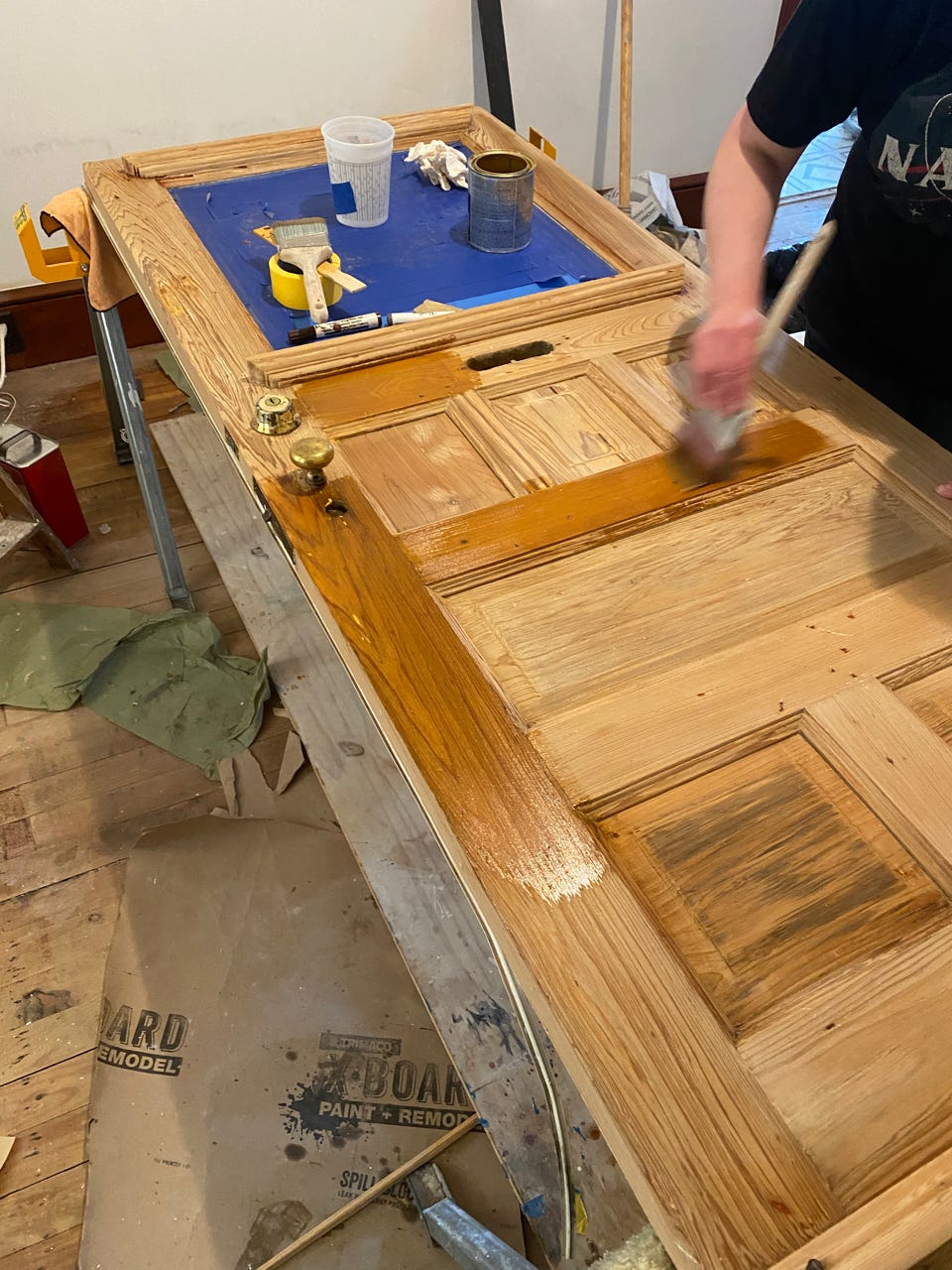
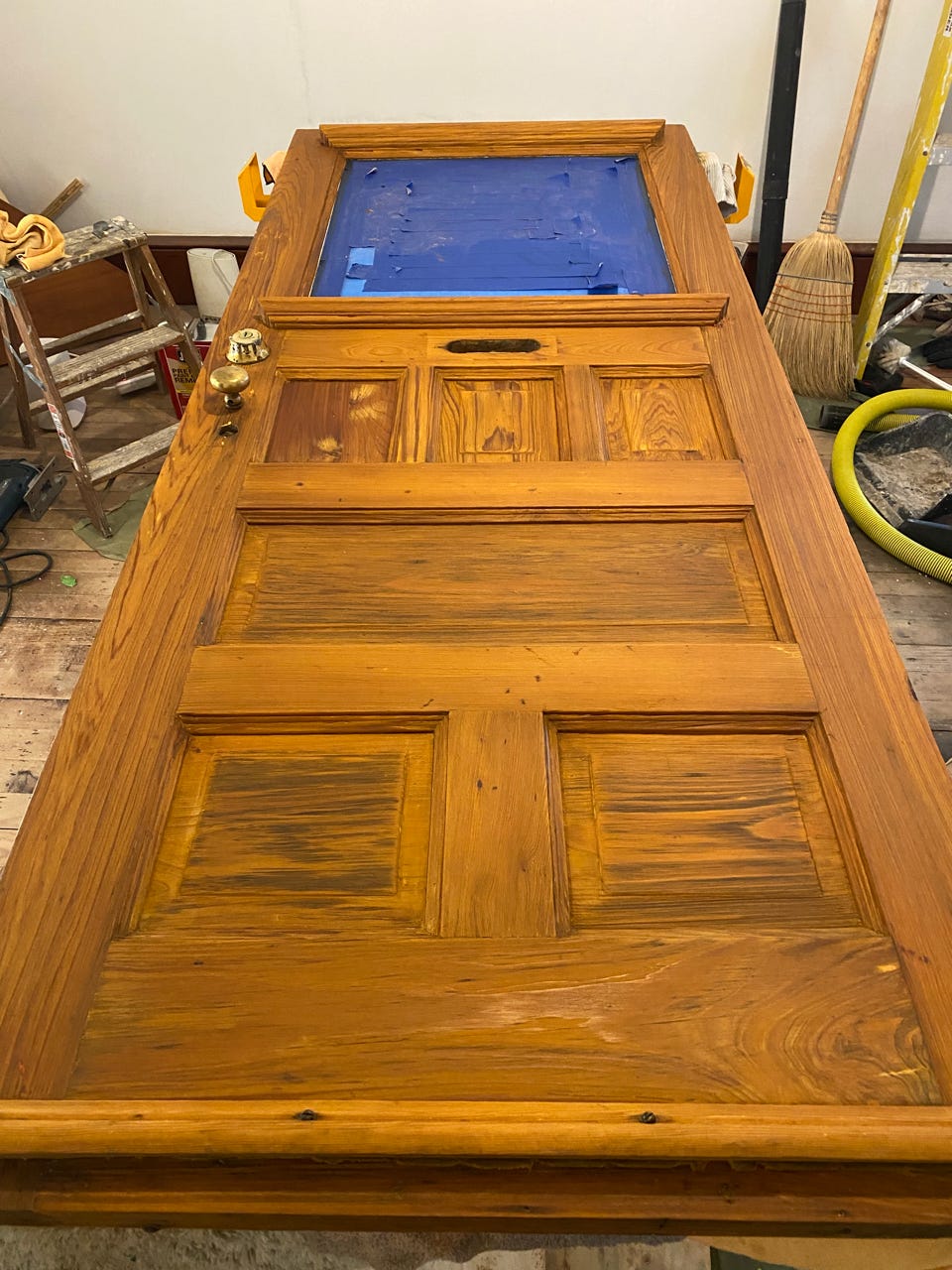
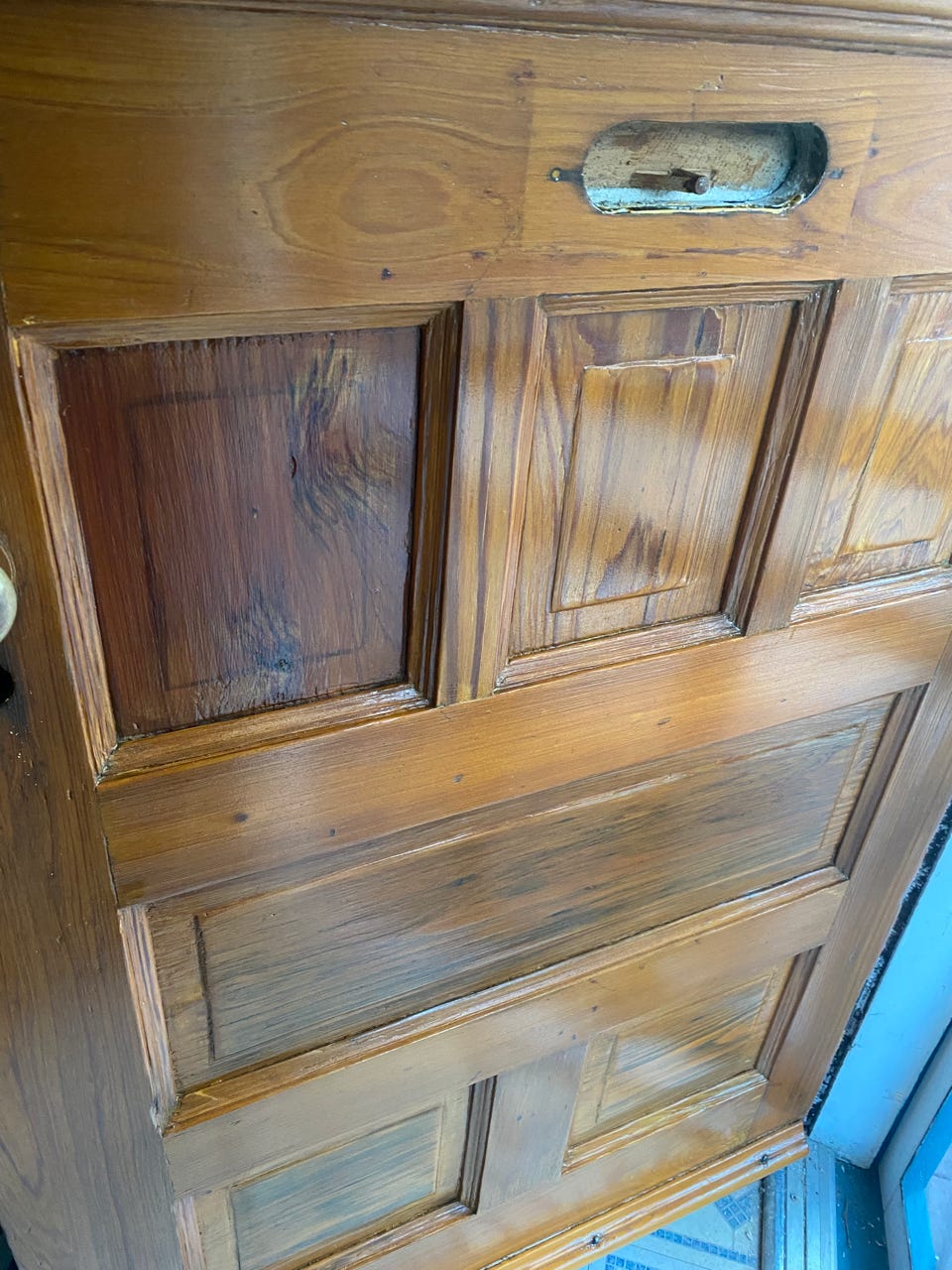
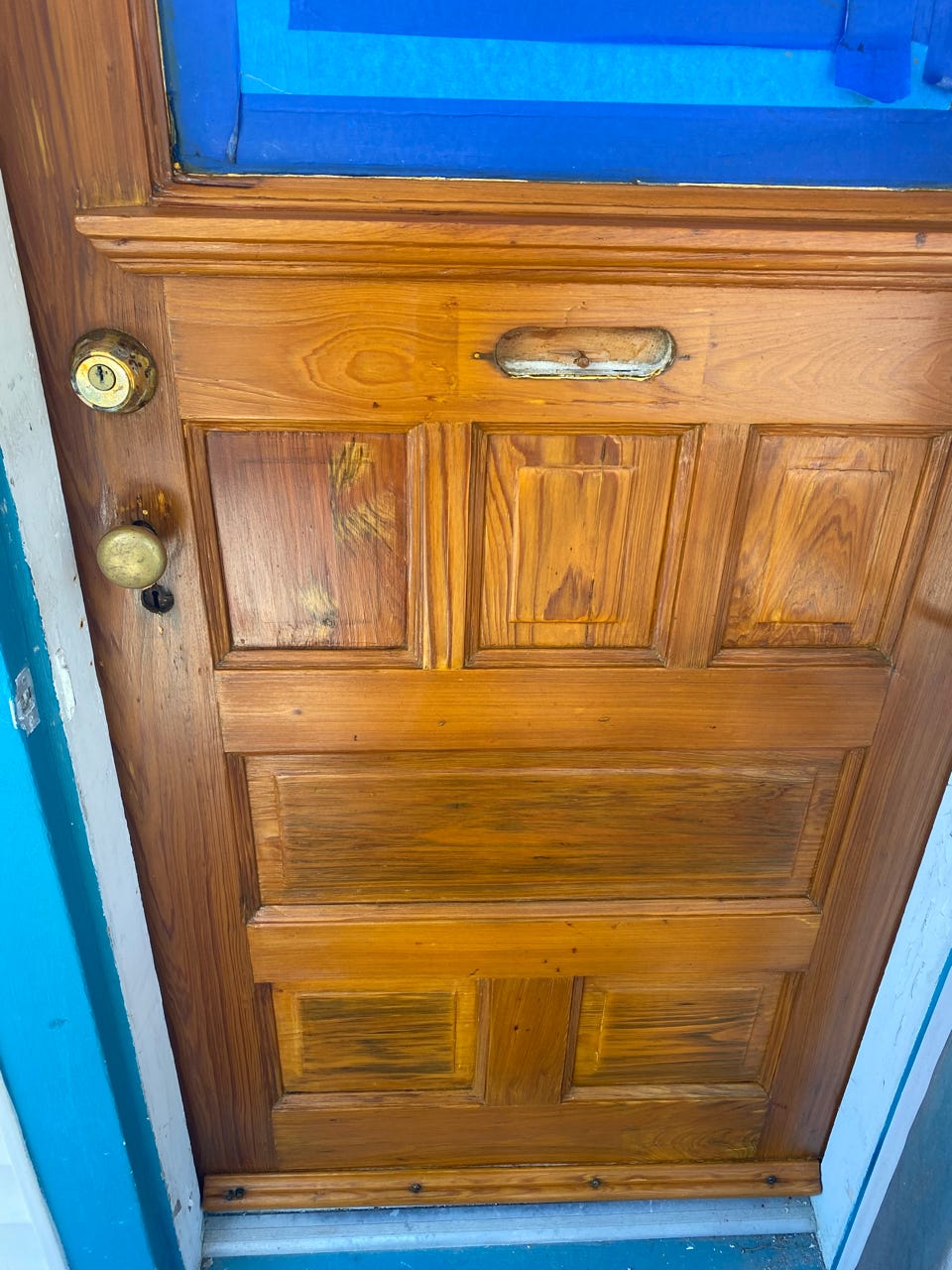
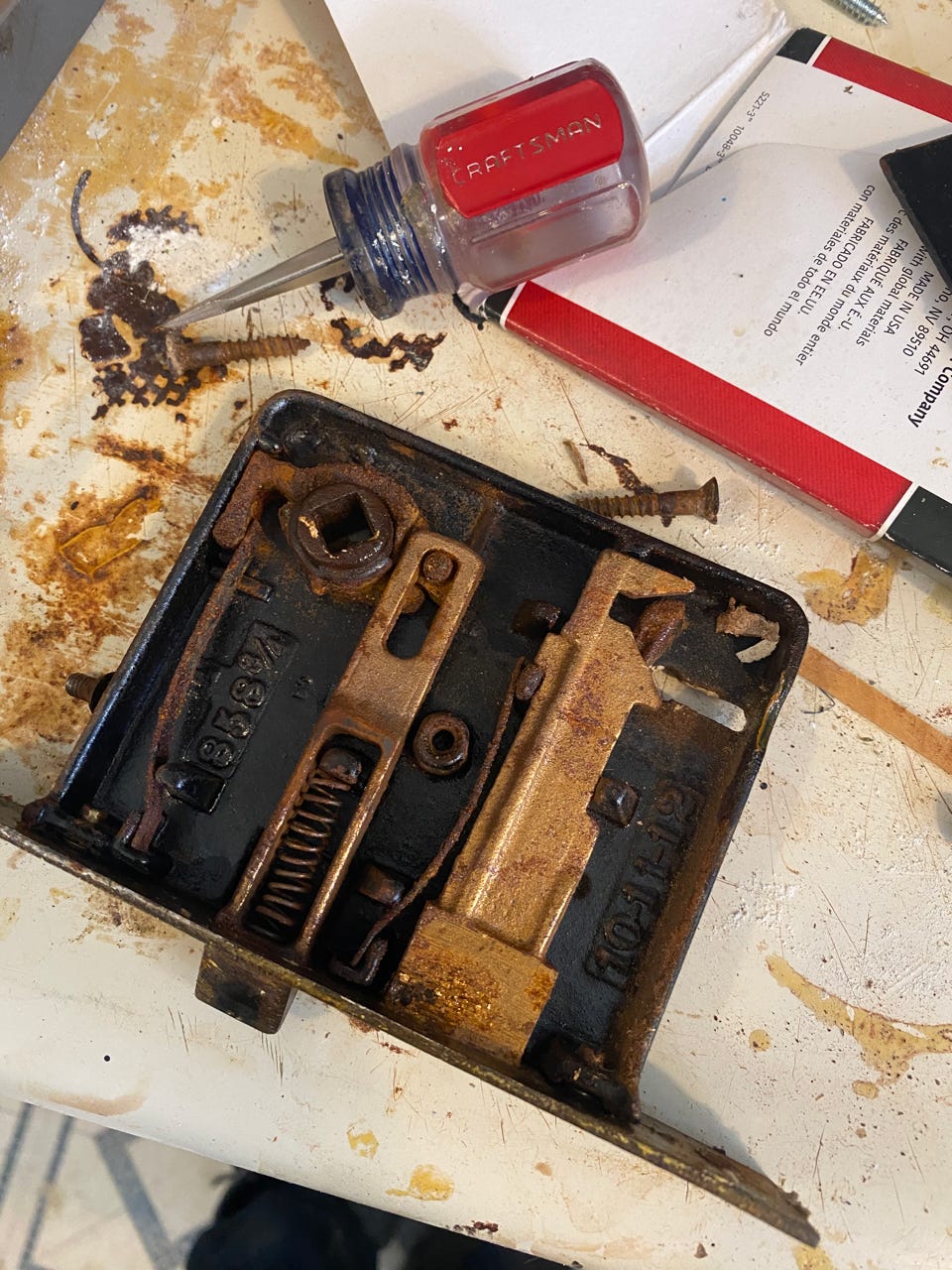
We do three coats. For the final coat I go to the clear color because the wood already naturally has a richer tone than the front door so I don’t need to darken it anymore. Also, I pop the mortise lock out to clean that up. It’s an old model and the interior isn’t terrible, but I brush off the rust and spray it with dry lube.
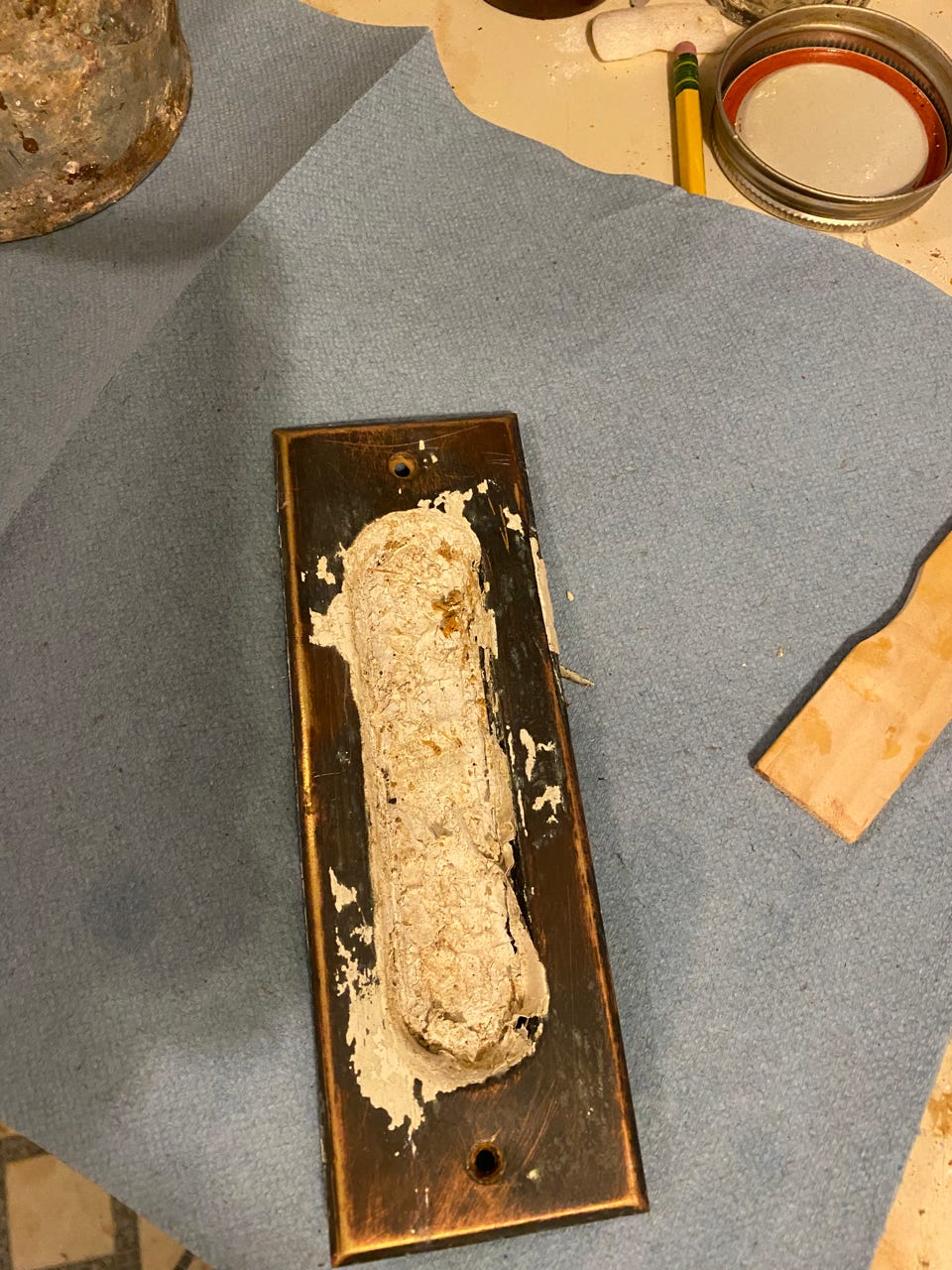
The only thing left for the door is cleaning off the paint on the non-functional letter slot. I use chemical stripper for that and once I get that all clean, I’ll polish it with Brasso.
Comments
Nothing yet. Say the first thing.
Sign in to join the conversation.