
Last week, we looked at some Big Shakespearean Questions: Who really was Shakespeare? Why, out of his many contemporaries, is he the one who’s stuck with us? And when we read a Shakespeare play, what are we actually looking for?
But you all knew it was coming next: Hamlet. A Demystifying Shakespeare crash course would not be complete without it. The play, written in (circa) 1600, is widely considered to be Shakespeare’s magnum opus: his masterpiece. And yet doesn’t Shakespeare have so many equally famous and brilliant plays? What about Macbeth? Or King Lear? Why does Hamlet wear such a crown, amidst such a brilliant body of work? That’s the question I’m setting out to answer today.
Hamlet has an unearned reputation for being difficult. It’s why (I think), my high school chose to teach us Macbeth instead. But the truth is, Hamlet is, in all of the ways that really matter, actually quite accessible: linguistically, it’s comparatively simple and less sticky than some other works by Shakespeare. And the plot is, honestly, the stuff of a bloody revenge thriller: The young Prince of Denmark is grieving after the death of his father, the King. The Ghost of the King appears, and tells Hamlet that, actually, he was murdered by Claudius: the King’s brother, Hamlet’s uncle, and - now - the new King of Denmark.
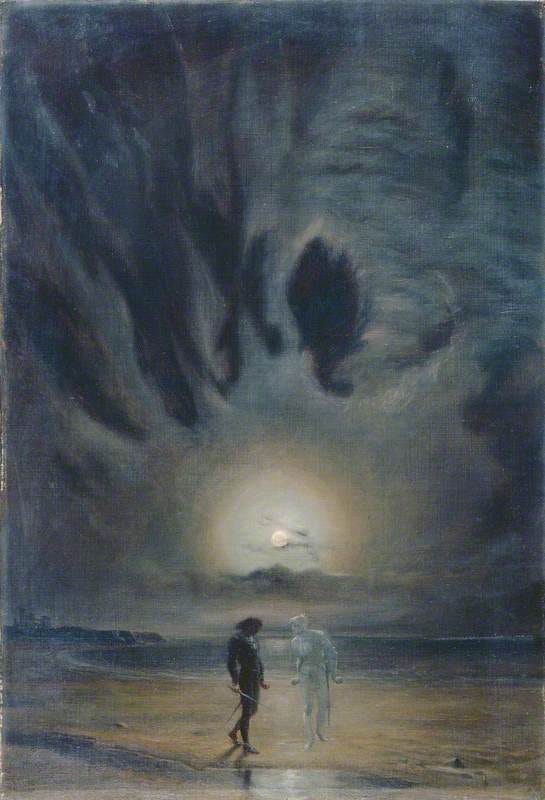
The next bit is probably the most important plot point in all of Hamlet: After the Ghost reveals this news, he asks his son to avenge his murder. Below is this all-important moment, which appears early in the play: Act 1, Scene 5. You can read it for free online here.
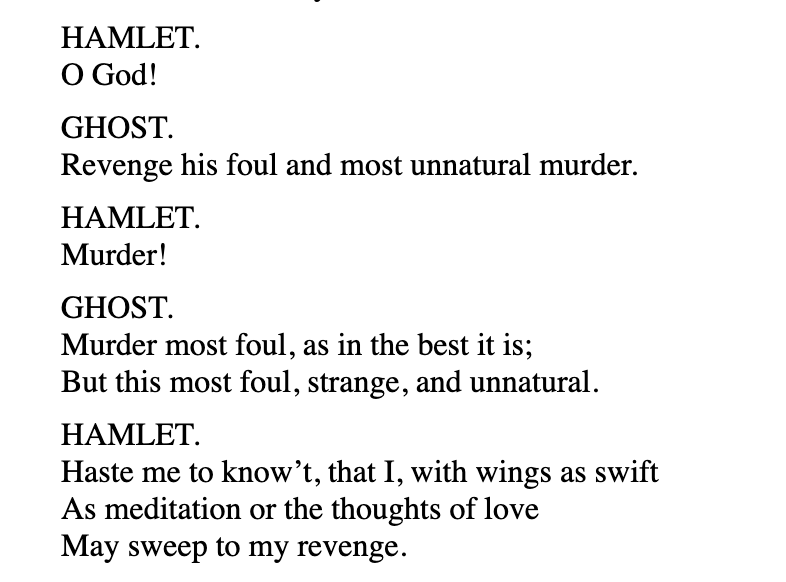
So, a bit of a whirlwind moment for our Prince Hamlet. And to add salt to the wound, Claudius (his father’s murderer), has just married Hamlet’s mother, Gertrude. Yes, that’s right: right after the death of the King, Queen Gertrude went ahead and married the King’s brother. So when the Ghost tells Hamlet that he must get revenge not only for the “unnatural” murder, but also for incest, that’s what he’s referring to. See this excerpt as an example:
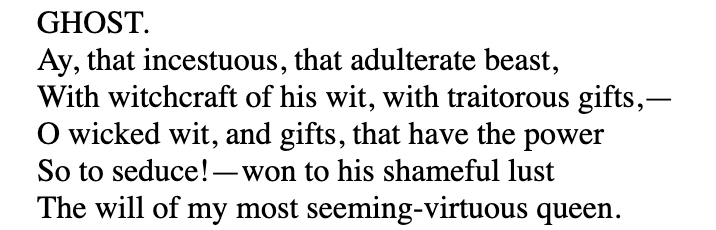
That, really, is the core plot of Hamlet: everything that comes after is dependent on how Hamlet responds to this information. And so it’s not necessarily the play’s language or storyline that might seem difficult at first: it’s dealing with a character like Hamlet himself, and becoming comfortable with his contradictions.
When approaching Hamlet, you should feel ready to ask a lot of questions that the play itself will not answer. To me, that’s the beauty - and the genius - of the play. I have my own theories and conclusions about the play and about Hamlet as a character, and those are so deeply intertwined with who I am as a person, my experiences, my perspective. Hamlet means something different to everyone - and so, in some ways, it resists interpretation. To enjoy Hamlet, you should be comfortable with that inherent unknowability.
There are some universal questions, though, that the play asks: What does grief actually feel like? How about depression, even before we actually had the language to describe mental illness? Where’s the line between madness and normalcy - and who determines where that is? What do we owe to our parents, if anything?
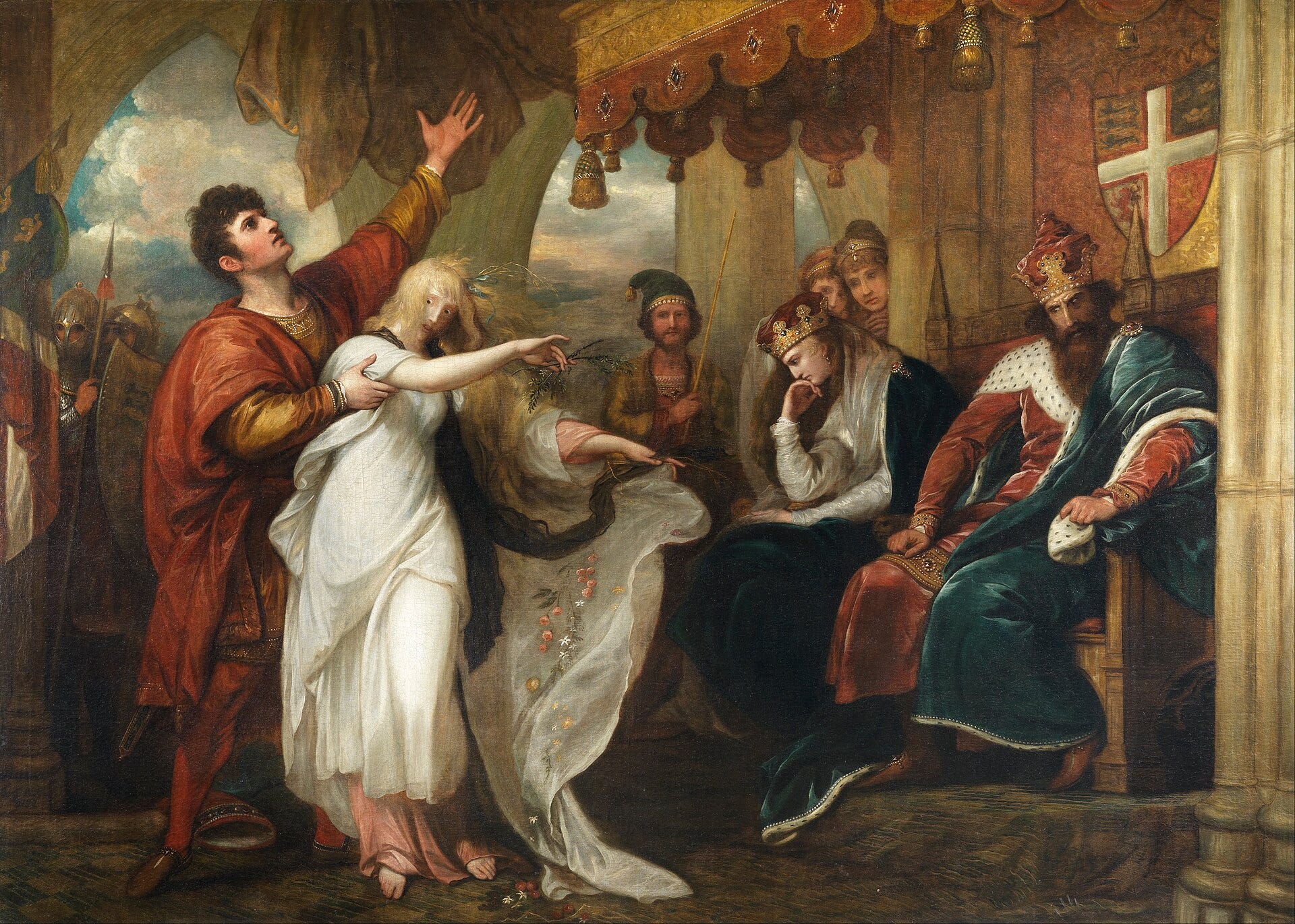
Very shortly after the Ghost’s Big Reveal, something strange seems to overcome Hamlet. Polonius, Ophelia’s father, calls it “lunacy.” The King says that he is worried about “Hamlet’s transformation” - that he no longer truly understands himself. Ophelia gets freaked out by Hamlet’s sporadic behavior. But to some people, like his childhood friends Rosencrantz and Guildenstern, Hamlet actually acts pretty sound. All of this raises one of the most central questions surrounding the Hamlet legacy. It is a question that has confounded and fascinated us since the play’s very first performance:
I’ll leave you with some core evidence, anecdotes, and passages that help us to answer this question; then I’ll explain some of the academic theories surrounding Hamlet’s madness, and you can decide for yourself where you land in this perennial debate.
In Act 1, Hamlet directly tells Horatio that he intends to feign madness. Shortly thereafter, other people in the castle begin to notice his strange behavior. So, he could be acting madness: that is, after all, what he said he’d do.
At certain points thereafter, Hamlet can appear to be either very lucid or very out-of-it: it depends largely who is speaking with at any given time.
Even when Hamlet acts mad, his insults and jibes are not always incoherent: they sometimes feel clever and deliberate, pointed at a particular person. Below is an example, from Act 4, Scene 3. Claudius is questioning Hamlet about where Polonius’ body is (hint & spoiler: Hamlet has killed Polonius). On first read, Hamlet’s response sounds, well, a big unhinged:
“Not where he eats, but where he is eaten. A certain convocation of politic worms are e’en at him. Your worm is your only emperor for diet. We fat all creatures else to fat us, and we fat ourselves for maggots. Your fat king and your lean beggar is but variable service,—two dishes, but to one table. That’s the end.”
The King, for his part, thinks that this is just more of Hamlet’s incoherent rambling. But if you really take a look at this passage, it’s actually a very logical and even advanced conception of philosophies that would’ve been way ahead of Shakespeare’s own time: about nihilism, existence, personhood, and existentialism. Hamlet is reckoning with mortality. What he’s saying here - and what he really comes to obsess over - is that the emperor and the beggar, despite their vastly different stations, will both eventually end up as maggot food. In life, we treat them so differently. As dead bodies, they are “two dishes, but to one table.”
Hamlet asks: who are we, really, once we have died? What do we become, if anything at all? How much does anyone’s - yours, theirs, ours - existence really matter, when we all reach the same end?
These passages are philosophically complicated and well-reasoned. So something that scholars often ask about Hamlet, when he says things like this: would a madman actually say that?
To be honest, these types of questions, when they appear in Hamlet, have always affected me deeply. I am scared of death - it might be my greatest fear. I’ve read all sorts about the illogic behind this fear, but it doesn’t really matter. It still just deeply scares me.
So for paid subscribers, I’m going to get a bit more into Hamlet’s existentialism, madness, nihilism, and mental health. I’ll give some excerpts and context that will help you to understand Hamlet and interpret the Big Hamlet Questions for yourself, and a reading list to dive deeper. I’ll also draw on some personal reflections about Hamlet as a character, because, I think, everyone has their own Hamlet: their own sense of what he means. I’d love to hear about yours.
Comments
Nothing yet. Say the first thing.
Sign in to join the conversation.