
Like a driver instructor teaches you to stop at a red light no matter what—not to look around and decide if it’s actually safe to go or to check if a police officer is present to ticket you, you want a child to never hit or bolt into traffic, regardless of how they feel about it or what the “consequences” may be.
Rewards and consequences, “natural consequences,” and choices can be useful reinforcers of discipline but they should not be the main course. We are not supposed to teach kids that basic conduct is a choice, we teach them to embody that it’s just how you act. It’s not a question, it’s not drama. It just is.
Instead of teaching habitual, automatic compliance for basic rules, “choices and consequences” encourage children to consider and decide if they will follow a given rule based on how they feel about it and how advantageous it will be.
That is a mistake when teaching kids basic rules. When it comes to rules that are meant to ensure the safety and respect of people and property, we don’t want 2 year olds (or 8, 12, 20 year olds) to consider and decide, we want them to just “do.”
Just like a driver instructor teaches you to stop at a red light no matter what—not to look around and decide if it’s actually safe to go or to check if a police officer is present to ticket you, you want a child to never hit, regardless of how they feel about it. To come when you call them, not decide if it’s a worthwhile time to comply or not.
Just like someday a student driver will learn they could go through a red light if it there was no traffic and their passenger was in labor, your child can someday learn that there might be a time to disregard automatic compliance with some rules, but that day is not when they’re 5. You need competence before you can exercise judgment.
Of course this truth underscores the responsibility of leadership we have as parents: we are not to teach wrong rules or make foolish commands. As they say, with great power comes great responsibility and parents need to own that fully. What is the alternative to rewards/consequences, choices, and the like? Leadership, instruction, and insistence: I will cover the nitty gritty in future posts.
We can safely assume Mommy didn’t bribe Bobby and Martha with prizes or threaten consequences for their good behavior at the grocery store. They listened and helped at the grocery store because Mommy had taught them and leaves no space for noncompliance.
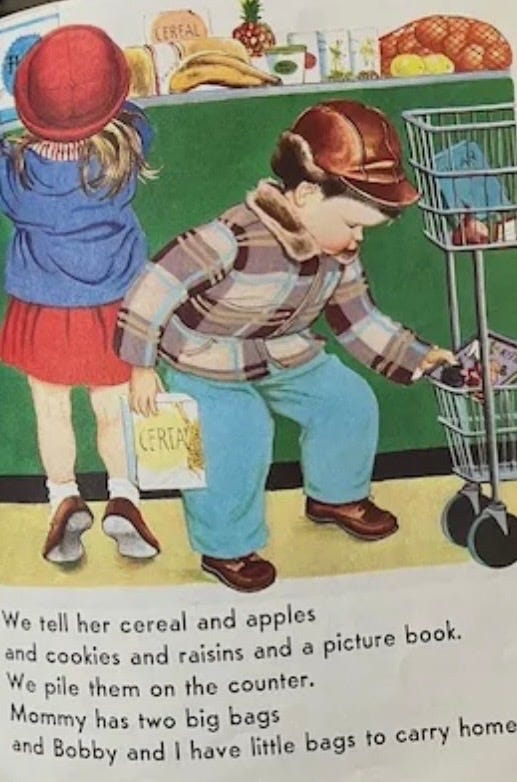
We Help Mommy, Cushman 1959
No posts
Comments
Nothing yet. Say the first thing.
Sign in to join the conversation.