

Ever wondered why those ‘Terms and Conditions,’ and ‘User Agreements’ are getting longer and longer?
Why Standard Operating Procedures and training manuals are following the same trend?
Regardless of the information, there’s just more of it to wade through - even if a lot is online now.
You may also notice this when you use most software platforms. What was once simple to use, has become more complicated.
There are too many options for things you didn’t need before.
Busy websites with too much choice and movement.
A perfect example is one of the tools many of us use everyday.
What are all these new options that I didn’t need previously?
Instead of exciting me, the word ‘Endless’ in the image below fills me with dread.
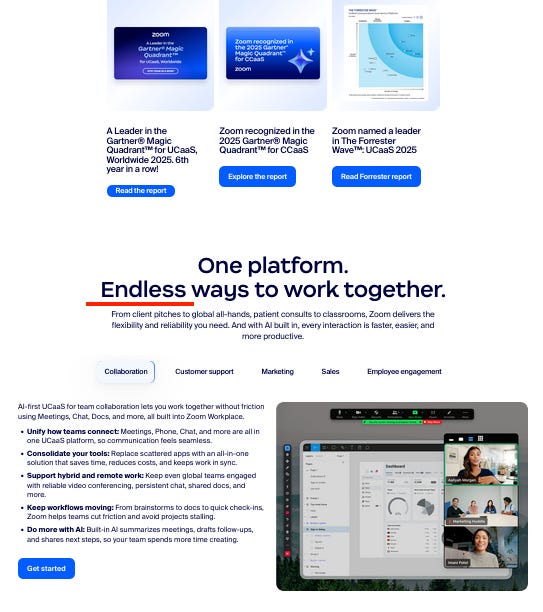
Do these developers know nothing about how the human brain functions - and what this onslaught is doing to our brains?
This is also related to what I refer to as ‘choice fatigue.’
Every new choice takes time to investigate - IF I was curious enough to do so.
Which I’m not.
I simply want to get the job done - effectively and efficiently.
Now, if I was alone in this, I’d be forced to consider my age as playing a role in this online irritation.
However, it’s not just me.
I mentioned the thought-leader JA Westenberg in my January newsletter, and here’s another excerpt from a recent article, in which she eloquently describes the rise of AI in apps - a great example of ‘addition’ where it’s not required:
‘ … Open your phone. Count the apps that have added an AI feature in the last six months. Your email client "summarizes" threads you were already going to read. Your calendar "suggests" meeting times based on patterns you'd already internalized. Your note-taking app offers to "generate" text in a space you opened specifically because you wanted to think. Your photo editor, your spreadsheet, your to-do list, your weather app, for some reason: all of them have sprouted little sparkle icons like a rash …’ (1)
The polite phrase for this phenomenon is ‘feature creep.’
However, I prefer the less polite term ‘enshittification,’ which was coined by Cory Doctorow in 2024, which he describes as follows:
‘ … how the defining digital platforms and systems in our lives are decaying in ways that drive the steady degradation of key services and our overall living conditions …’ (2)
Who really wants to wade through new options vs simply accomplishing the task?
Doctorow believes this has happened primarily due to the dominant Silicon valley business model over the last two decades, which starts with a ‘free’ service, then attracts huge numbers of users, after which the service scales, followed by monetising it and extracting all the value, until whatever made the service useful has been eroded.
The truth is: this was likely to happen because the more complex the world becomes the more options emerge for everything and there are simply more interactions between more variables.
And each of those interactions need to be addressed.
The more interactions mean more possibilities for things to go wrong
Coupled with our more individualised society, where it seems we all want our every experience to reflect our specific needs and wants - even one’s we’ve never considered before, but someone, at some desk in the employ of some software platform, has, and so we’re presented with yet another, unnecessary option.
Please click the button below if you’d like to read more about complexity in the world.
Can We Thrive Living in Complexity?
But what if there’s something more going on?
Something deeply related to how brains function?
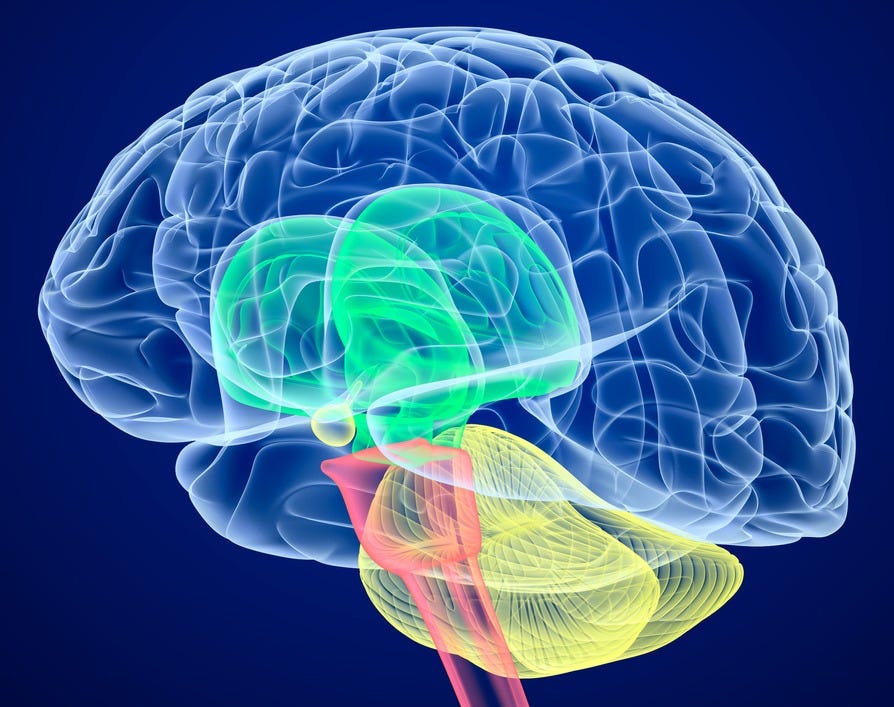
When we’re faced with something that’s not working - or something we want to improve - we try to figure out how to do so.
So we consider possibilities, cognitively.
We search, mentally, for options.
Sometimes we do this alone. Sometimes it starts off as a one-person endeavour, but often we ask others for their ideas.
When we do this alone, it’s called ‘bound cognition,’ in that our thoughts are ‘bound’ within our brain.
However, we also do this in groups, using what can be thought of as ‘distributed cognition,’ so more brains can weigh in on what can be done to solve the challenge, or improve the situation.
The idea behind the term ‘distributed cognition’ is that:
Knowledge and cognition exist within ourselves, but also in our physical and social environments. So, our decision making, learning, memory and reasoning are all processed by our minds, similarly, but are influenced by the external world too.
In other words, our interactions with people and our environments, impact how and what we think. (3, 4)
‘The emphasis on finding and describing ‘knowledge structures’ that are somewhere ‘inside’ the individual encourages us to overlook the fact that human cognition is always situated in a complex sociocultural world and cannot be unaffected by it.’ (Hutchins, E, 1996, in ‘Cognition in the Wild)
This is simply a new way of looking at how cognition works and not a new kind of cognition.
An example of distributed cognition in action would be analysing how an airport functions, or how a plane takes off.
Many people work together to ensure all the systems work optimally, communicating with each other, and the passengers, while monitoring technology and being part of feed-back and -forward loops, to ensure efficient, smooth operation.
Together, this complex system of people, technology and machinery allows airports and planes to function well (mostly).
The interaction between people and things allows systems to function and when there are challenges - or possibilities to improve situations are sensed - human brains (and possibly AI/LLMs) can work together to examine and test possibilities.
So, distributed cognition allows us to highlight, and examine more deeply, the complex interactions and interdependencies between people and their environment.
However, we also know that the phenomenon of ‘groupthink’ exists, in which group members can conform to the norm, which hinders problem solving.
But this article isn’t about that, fascinating as it is.
It’s about what are our default options for solving challenges, or improving ideas/products/situations are.
And applying the principles of ‘distributed cognition’ may help solve the challenge, but, I’m getting ahead of myself.
This is where things get interesting!

Leidy Klotz, a researcher, became curious about the difference between how he and his son solved a Lego bridge-building challenge. The support towers were different heights, so they couldn’t span them, so he reached to grab a block to add to the shorter tower. (5)
As he turned back toward the bridge they were building, his son was removing a block from the taller tower, instead.
He realised that his first impulse had been to add to the support.
His son’s choice was a faster and more efficient way to solve their bridge dilemma.
He’d stumbled onto something that plagues us. A trend in our problem solving.
We tend to add something we think is appropriate to whatever isn’t working or needs improvement, vs removing something, which Klotz later examined more deeply in his book, ‘Subract.’ (6)
Later, Klotz and his colleagues observed the behaviour of many participants, in many studies, to understand this tendency more. (5)
For example, in one study, 1,585 participants were asked to tackle eight puzzles and problems that could be solved by adding or removing something.
One puzzle required shading or erasing squares on a grid to make a pattern symmetric.
Another one offered participants the option of adding or subtracting items on a travel itinerary to create an optimal experience.
The researchers noticed, across all experiments, that the vast majority of participants chose addition vs. subtraction.
For instance, in the grid task, of the 94 participants who completed the task, 73 added squares, while only 18 subtracted squares and another three simply reworked the original number of squares.
They decided it was likely that the participants never even considered subtraction, so they decided to run some more experiments in which they’d subtly encourage that option.
Keeping this in mind, in one such experiment, the researchers offered 197 people on a university campus a financial incentive to solve a puzzle: a dollar.
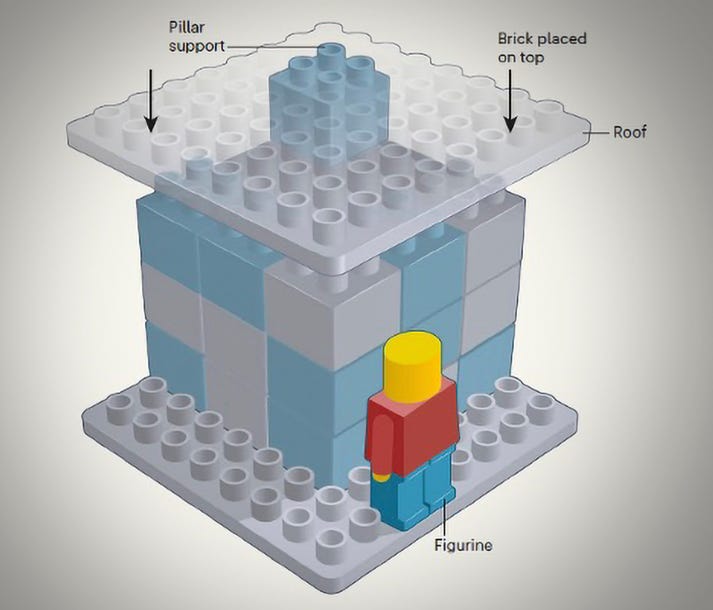
Participants were shown a Lego structure in which a figurine was standing atop a platform with a large pillar behind her.
On top of that pillar, a single block in one corner supported a flat roof.
The teams asked the participants to stabilise the roof to avoid squashing the figurine.
Approximately half the participants were told that each piece they used would cost them 10 cents from their bonus dollar. Even with that penalty, only 40 out of 98 participants thought to remove the destabilising block and simply rest the roof on top of the wide pillar.
So, about 60% of the participants chose to add vs subtract Lego blocks.
The other participants received a different, more direct message from the team. They were told that each piece they added would cost them 10 cents from their dollar, but removing pieces was free.
That message prompted 60 out of 99 participants to remove the block.
The researchers found that practice did help participants remember that subtracting a block was an option.
And when they used a variation on the grid experiment, where subtraction yielded the superior solution, it was revealed that three practice runs that lead up to the actual task, nudged more participants to subtract than those who solved the task without practice.
This means that our natural tendency to add vs subtract, when faced with a challenge, may be overcome if we’re reminded subtraction is an option, and practice thinking about it as being an option.

No, it does not!
The researchers examined what participants did when they were given essays, recipes, and travel itineraries. (5)
The team was working hard to examine every-day decision-making so they could report on what seemed to be a natural bias.
And they found that yes, in almost every situation, participants were more inclined to add to whatever they were handed vs the opposite.
And there’s more: While the team was involved in these fascinating observational studies they observed an interesting real-life example of this trend.
They were working with an organisation that had a new incoming leader, who asked stakeholders for their ideas about shaping the organisation.
They realised this question was precisely what their research was about: ‘how do we improve something,’ so they asked to see what kinds of suggestions were offered.
And they discovered that for every eight ‘additive’ suggestions there was one ‘subtractive’ one.
But is this a generalisable trend?

Juvrud and colleagues (2024) suggest that there are nuances in how individuals approach a given task, which may be influenced by age and culture, because they found children presented with similar ‘additive’ tendencies to adults in their experiments, and suggest that Swedish cultural values of analytical approaches to problem-solving may lead to different outcomes when people are faced with solving challenges. (7)
However, is the ‘addition’ problem visible in enough places to warrant a deeper dive?
I believe it does, and suspect you’ll agree with me by the end of this article.
But first, let’s briefly discuss another of the ways we think, also using the term ‘bound.’
The economist Herbert A Simon proposed this phrase in the 1950’s, to describe our tendency to reach for an easily accessible solution, without considering whether it’s the best one. (8)
What’s really happening is that we opt for the least cognitive effort, without realising we’re doing so.
Why?
Adding something to anything we’re tackling uses less cognitive effort vs considering what to subtract, which requires more cognitive effort.
And more cognitive effort requires more neural energy vs less.
I speak and write about this often, and I’ve written about it here in more detail:
The brain is primed to save energy, and whatever it can accomplish with the least amount of energy expenditure it will default to.
In addition, choosing to remove/subtract something from a system that may be running - even if not very efficiently - can be harder to implement.
We’re all busy and it’s easier to adopt a simple, additive solution to a challenge, vs spending more time (and neural energy) to consider what could be removed.
And how to do so.
But some people have factored in this tendency, including software engineers.

The Agile Manifesto is a 12-point list, developed in 2001, by a small group of software developers to propose a new way to develop software. (9)
The 10th item is of specific importance to our discussion, and states:
‘Simplicity - the art of maximising the amount of work not done - is essential.’
This means in essence, that software should be written as simply as possible, with as little added as possible.
And using this principle in all our endeavours could make a big difference to how organisations, societies, governments - and our households function.

In 2014 the average U.S. household had 300,000 things in it, from paper clips to ironing boards. Today the number is likely to be greater. (10)
As of 2024, about a fifth of Americans (18%) rent storage and about a seventh (14%) plan to do so in the future and what most motivates people to use self storage is a lack of sufficient space at home, with 42% of renters stating this as their primary reason. (11)
And, 25% of people with two-car garages don’t have room to park cars inside them and 32% only have room for one vehicle. (12)
Although the original research isn’t available, a much-mentioned study online, conducted in 2012 by an insurance company, based on 3,000 British couples, suggested that having cluttered homes lead to participants losing more in their homes, and spending 10 minutes a day searching for lost items, and arguing with their partners about such. (13)
A 2024 survey in the US, conducted by Shane Co, a large privately owned jeweller, which surveyed over 2,000 people from 44 states over a two-week period, revealed that Americans lose an average of five items per month.
Participants took between 10 and 30 hours per year to look for these lost items, with their phones being the most-often lost, followed by keys, remotes, glasses and headphones. (14)
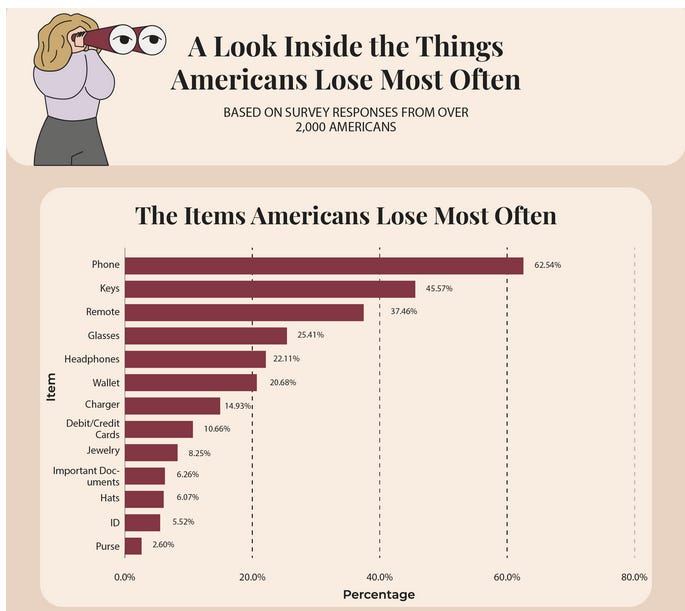
Lost time and disagreements, amidst too much stuff, because it’s easier to add to what we already own vs having less - or getting rid of what we no longer use.
And, I’m assuming of course that what’s being stored in millions of garages isn’t being used every day.
This isn’t factoring in how scarce time is today, and how much accumulating all this stuff is costing us, and what the storage costs are.
But, what about governments? Do they also keep on adding regulations and policies?
Taking only US regulations into account, as of 2024:
‘ … Since 1970, the number of restrictions in the Code of Federal Regulation (CFR) has increased, on average, 3.2 percent per year. Touching all aspects of American life, the CFR surpassed one million restrictions in 2016, and shows no signs of stopping … in only 1 percent of final rules does an agency acknowledge it considered alternatives to regulation.’ (15)
Furthermore, the figure below highlights the growth of final rules in the US Federal Register, showing that 2024 was a record year for adding new rules: (16)
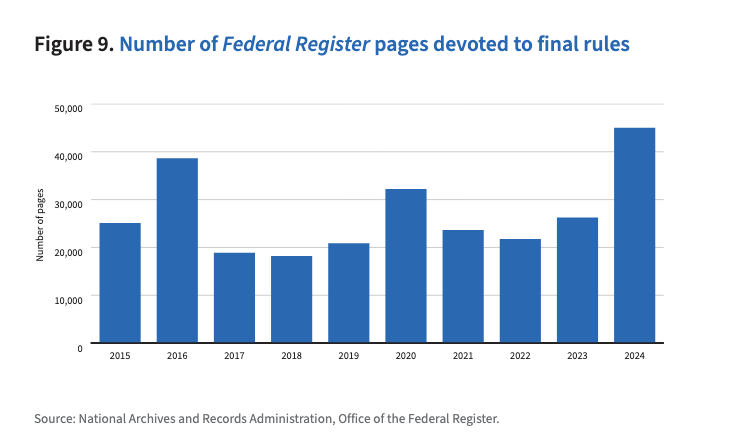
So, again, the option to remove any rules doesn’t seem to be considered regularly.
And, considering the cost of this, as below, it would serve taxpayers if the ‘additive’ challenge wasn’t so widespread:
‘ … U.S. households are paying an average of $16,016 annually in hidden regulatory taxes, consuming 6% of household income and 21% of household expenses …’ (16)
But, apart from it becoming a habit to add vs subtract when attempting to solve a challenge, what else is at play?
Here are five reasons researchers in this field suggest are responsible for this tendency, although I will address another three in more detail in the next sections: (5)
We all develop cognitive shortcuts because they work well in most circumstances. The brain is primed to develop habits because they save time and neural energy.
As a culture, we may value ‘additions’ more than ‘subtractions’ because it’s easier to demonstrate you’re doing something by highlighting an ‘addition’ - it’s harder to highlight what can’t be seen i.e. a subtraction.
It is likely that additions get more acknowledgment - even praise - and most people enjoy being acknowledged as contributors.
We use words like ‘better,’ ’faster,’ ‘higher,’ ‘improved’ and ‘more’ to signal progress, and it may be easier to conflate these words with ‘addition,’ vs the opposite, because they naturally fit together. It is hard to associate these words with the word ‘remove’ isn’t it?
In addition, here’s another one:
The ‘endowment effect’* and ‘loss aversion’** both describe how people become attached to what they own and are averse to letting them go. We also own ideas and beliefs.
[*Endowment effect: When people own something, they are more likely to retain it and **Loss aversion: People are more sensitive to losing things than to gaining equivalent things, and tend to make decisions to minimise losses rather than maximise gains.]

Individuals in any organisations - whether governmental or software related - need to justify their positions and career advancement.
Organisations react to complexity - and competition - by adding more management roles, reporting and investing in AI/LLMs - all of which are additive.
Large systems may (often) become bloated and stagnate, because just like individuals, systems don’t like to change. Large systems are after all comprised of large groups of individuals who have become habituated to specific behaviour and processes.
So, it’s easier to add to whatever they’re trying to solve vs changing anything by removing what may not be necessary.
So leaders continue adding to everything from standard operating procedures to checklists of every kind.
Believing it’s all aimed at improvement and progress.
The explosive, tsunami-like onslaught of information - again, an example of addition - has also led to a distinct discipline to manage it all, namely ‘Knowledge Management.’
Although Oscar Wilde has been incorrectly quoted as the person who stated the below, it is still correct:
‘The bureaucracy is expanding to meet the needs of the expanding bureaucracy.’
But, isn’t it time to get to ‘first principle’ thinking?
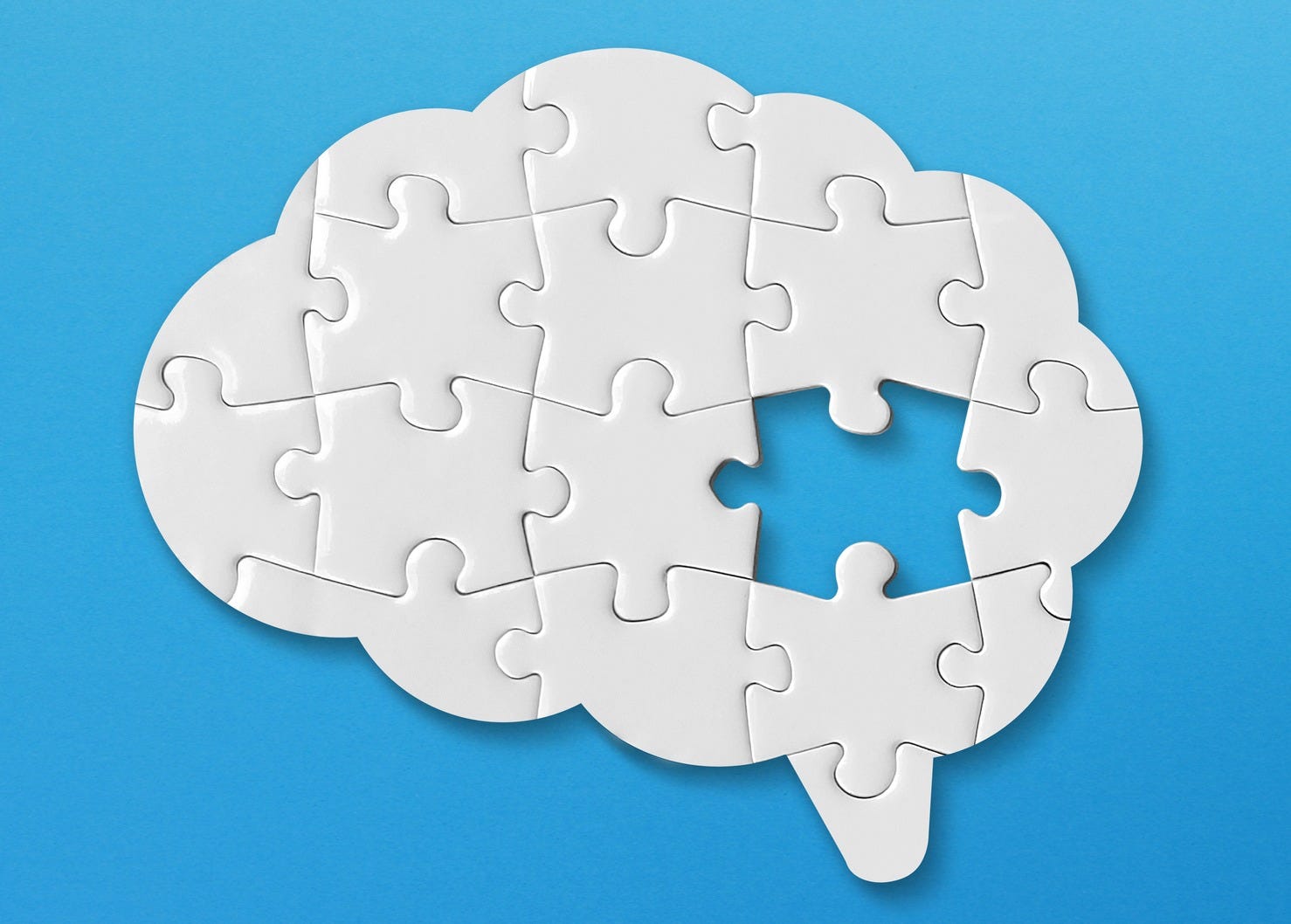
While we’re searching for new ways to improve ideas, objects or situations, we can’t consider an infinite number of such because our working memory (WM) has limitations.
Although some researchers now disagree about some aspects of WM limitations, early research suggests that we can hold about seven pieces of information in our WM - give or take two - although ‘chunking’ data can make this process more efficient. (17, 18, 19, 20)
This number is dependent on a few variables, including individual variation and the type of cognitive task being undertaken. (20)
Again, although researchers aren’t in agreement around all the aspects of Cognitive Load Theory (CLT), it is still relevant in explaining some important aspects of cognition. CLT refers to a body of research that highlights the capabilities and limitations of human cognition, and suggests that higher cognitive load may lead to lower memory performance. (21, 22, 23)
Three factors contribute to our cognitive load according to CLT:
Intrinsic cognitive load: the innate difficulty of the task at hand
Capacity of WM to link new ideas to information held in long term memory (LTM)
Limits imposed by factors not related to the challenge at hand
Item 3 above refers to distractions, working with ideas or materials an individual may be unused to, such as a different language or culture, confusing information and/or being in an environment that feels threatening or unsafe.
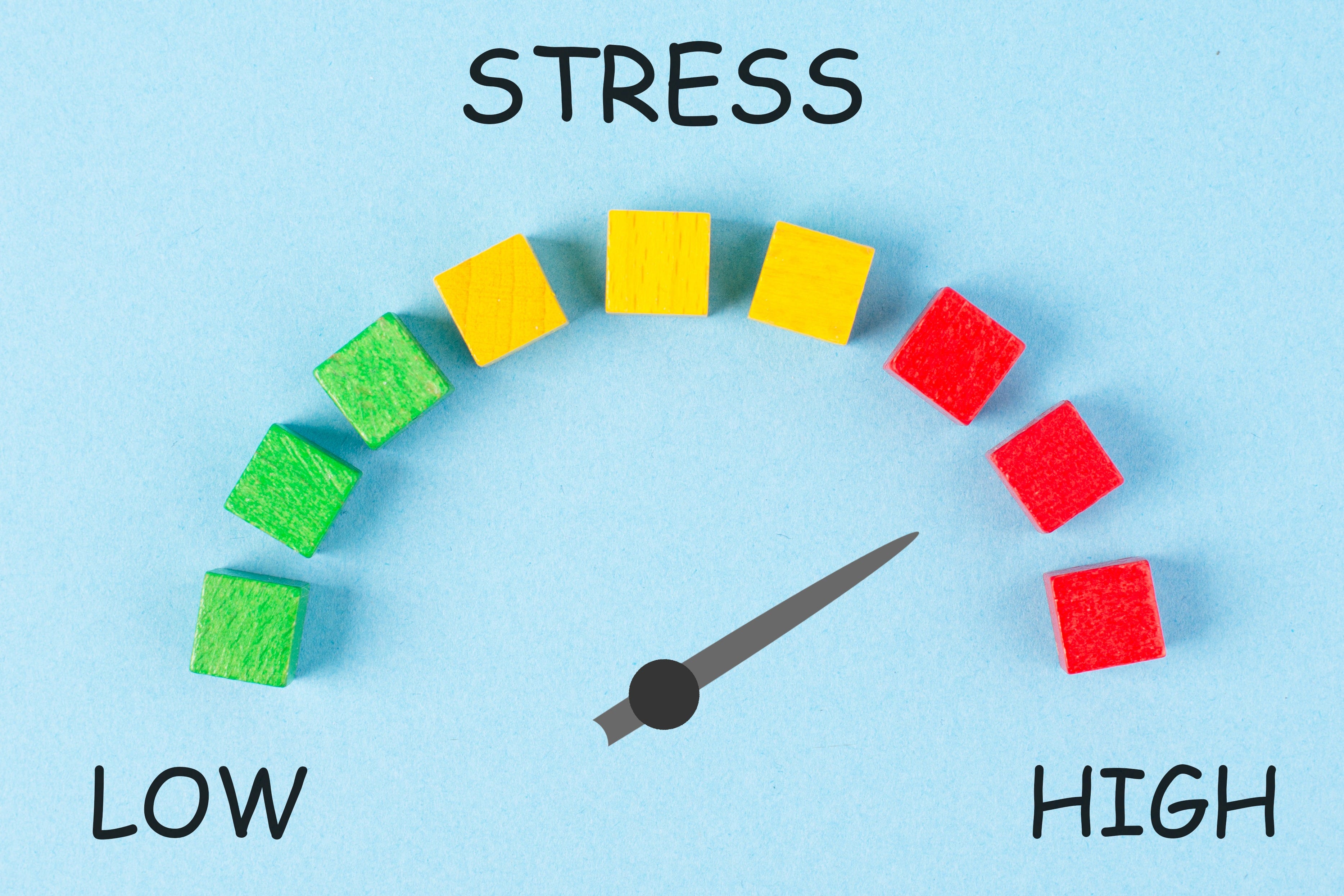
The researchers who started with the Lego experiments also found that when they distracted participants, they were more likely to choose additive solutions. (5)
Similar to research highlighting how being distracted by texting impacts driving negatively. (24)
Although being distracted isn’t the same thing as being stressed, the brain seems to respond similarly - choosing a habitual response vs examining alternatives.
When the brain is stressed it’s less able to explore options it hasn’t considered before, and instead relies on habitual behaviours, or what some researchers refer to as ‘exploit’ behaviours. (25)
A number of researchers have found this is a natural tendency, and is linked to our neurophysiology: (Lenow JK, 2017)
‘ … Stress recruits biological systems that monitor and respond to changes in the environment (specifically those that pose a threat to homeostasis), orchestrating a cascade of hormonal, neurophysiological, and behavioural adjustments to do so …
We found that both acute physiological and chronic psychological stress bias human decision makers toward over-exploiting current, known resources despite diminishing returns … ‘
Individuals who are financially stretched, anxious or discriminated against are at a higher risk of experiencing daily stress and are therefore vulnerable to making ‘exploitive’ decisions, vs ‘exploratory’ ones.
And, stress impacts WM negatively too, limiting the amount of information we can hold and the ability to use it optimally. (26)
In other words, when stressed, we’re more likely to gravitate to the type of decisions we’ve made in the past, like adding something to solve a challenge, vs taking the time to consider whether subtraction may be the better option.
Paying subscribers get access to the 16 questions to ask yourself/your team to counter the ‘additive’ challenge, why it’s so important to consider this issue, the summary and conclusion, and the full list of references and extra reading material. I’ve also included an audio file to continue listening to this article, on the Substack app.
NOTE: None of this content was generated by AI.
Comments
Nothing yet. Say the first thing.
Sign in to join the conversation.