
In Part 1 I explained my shock at people being unwilling to discuss brain differences based on gender and we examined differences between gender in relation to brain size, general brain ‘busy-ness,’ choice of toys, differences between visuospatial and verbal skills, the corpus callosum and how aggression and competitiveness differ between genders too.
If you haven’t yet read Part 1, please click the button below to do so:
Part 1 - Gender Brain Differences
Now, we’re diving into the last five topics, starting with differences in hormones:
8) Women’s cyclical reproductive hormones make female neurobiology more responsive to hormones across their lifetime compared to the male brain, because male reproductive hormones are more stable across their lifetime.
Some details:
Large fluctuations in levels of sex hormones, such as progesterone and estrogen, which ebb and flow in concert with the neurotransmitters serotonin and gamma amino butyric acid (GABA), occur regularly throughout women’s reproductive life span.
And, the receptors for these female hormones are highly expressed in the limbic system, the emotional centre of the brain, (Number 9).
This is how, for example, appetite, mood and sleep are all impacted differently at different times of the female reproductive cycle.
Studies have revealed that vulnerabilities to these hormone-neurotransmitter interactions may differ among women, with some women being more vulnerable than others.
In addition, this interaction may negatively impact women’s ability to manage stress well. (McCabe, D, 2019)
The female brain is remarkably dynamic, and responds uniquely to its early life environment, aging and to various life stages in between, and is dynamically remodelled as circulating sex hormones change. (Barrientos RM, et al, 2019)
This simply means that hormones impact the female brains capacity to change because the brain needs to change, to support behavioural shifts, such as increased nurturing, when a woman has a child, and this also occurs during and after pregnancy, but also during peri- and meno-pause. (Barrientos RM, et al, 2019; McCabe, D, 2019)
‘Behavioural endocrinology’ is the scientific study of the bi-directional interaction between hormones and behaviour.
In other words, hormones change brain chemistry which impacts behaviour.
Note: Hormones are chemical messengers released from endocrine glands that travel through the blood system to influence the nervous system to regulate behaviours such as aggression, mating, and parenting of individuals.

In a small 2015 study, researchers discovered that female participants testosterone increased more compared to the male participants when both genders were asked to perform as if they were ‘the boss.’
The results highlighted that behaviour may modulate testosterone more in women than in men:
’…men’s higher testosterone is typically seen as an innate “sex” difference. However, our experiment demonstrates that gender-related social factors also matter, even for biological measures …’ (Anderson MV & Rutherford MD, 2013)
The increase in women was particularly striking. For men, the spike was smallish, around 3 or 4 per cent on average. But the women in this study saw their testosterone levels increase 10 per cent on average.
This raises the question: Do men act powerful because they have more testosterone — or do men have more testosterone because men are typically conditioned to act more powerfully? (Van Anders, SM, et al, 2015)
Why is this important? Hormone fluctuations can impact some aspects of behaviour and mood in women, to a lesser or greater extent, depending on a variety of factors, including stress hormone levels.
Women need to take this into account when assessing energy output and work commitments, and organisations can support women to this end, to prevent chronic stress and the negative effects of such, including the higher rates of burnout that women report, globally.

9) The limbic system is the emotional regulation centre of the brain. It’s the area of the brain that governs our feelings, inter-personal lives and is the seat of our fear and stress response.
The limbic system is made up of a collection or group of structures (the hypothalamus, the amygdala and the hippocampus) that are situated in the middle of the brain and bridge the connection between the rational and the instinctive parts of the nervous system.
‘ … females exhibit greater activation in the limbic system compared to males, suggesting that emotional states may play a more prominent role for females when engaging in reasoning tasks…’ (Chen L, et al, 2025)
Other research supports this evidence: female brains are busier in the limbic system compared to male brains, as Number 2 highlighted for the female brain generally. (Amen DG et al, 2017)
Women also recall emotionally-laden events faster then men. (Lager E, et al, 2024) This may be one of the factors related to their higher rates of anxiety, depression and PTSD vs men.
The limbic system also contains high levels of the neurotransmitter serotonin, which is involved in a number of critical processes within the brain, including the regulation of mood by facilitating flexible responses and adaptations to environmental challenges.
And you already know from Number 8 that female reproductive hormones interact with neurotransmitters like serotonin and GABA. (McCabe D, 2019)
Some researchers think that increased activity in the limbic system, coupled with high levels of serotonin, and increased hormonal activity may be responsible for women generally being more capable at picking up non-verbal cues.
Research supports this idea:
‘ … Gender differences in understanding the meanings of affect cues, often labeled emotion recognition, have been studied for over a century … Indeed, the gender difference favouring girls and women still exists … ’ (Hall JA, et al, 2025)
However, the evidence suggests there’s a difference regarding subtle vs. expressive stimuli:
‘ … The results show that although women were more accurate than men in recognising subtle facial displays of emotion, there was no difference between male and female participants when recognising highly expressive stimuli.’ (Hoffmann H, et al, 2010)
This phenomena is present in women in a wide range of countries across the globe, supported by large data sets. (Greenberg DM, et al, 2022)
So, although the differences are not huge, they do exist and are consistent across studies.
And are useful to support pre-verbal infants who need intuitive carers.
The active limbic system is also responsible for women, on average, being more empathic than males, and although the research also suggests they score higher on tests of emotional intelligence, the evidence is mixed. (Urbón E, et al, 2025)
If you’ve ever been pregnant, or observed a women preparing for the BIG DAY, you’ll be familiar with what has been called ‘nesting.’
Researchers stated:
‘ …We found that women exhibit nesting behaviours, including space preparation and social selectivity, which peak in the third trimester of pregnancy …’ (Anderson MV & Rutherford MD, 2013)
Some researchers suggest this behaviour is an evolutionary drive to prepare for the baby’s arrival, coupled with an increase in specific hormones, like estrogen, and oxytocin, which is often thought to be our love, or ‘bonding’ hormone. (Li R, et al, 2013)
In particular, the cingulate cortex has been highlighted in these behavioural shifts, as it shares extensive neural pathways with other brain regions that connect emotions, sensations, and action.
It is therefore likely that it plays a large role in a variety of emotions and behaviour linked to hormonal shifts during female reproductive years and child-care. (Jumah FR & Dossani RH, 2022)
What does this mean? The more active female limbic system may underpin both an increase in affective disorders among women compared to men, but also supports the survival of offspring in caring behaviour and good non-verbal cue detection, for both pre-verbal children, and for assessing male mood.
High levels of empathy are also likely to foster consensus building, cooperation and collaboration, which is helpful in organisations.
However, it may come at the cost of being less assertive and competitive when working in teams and leading because of a focus on others wellbeing.
In addition, women may experience more compassion fatigue due to increased sensitivity to others distress, and may also need help in establishing healthy boundaries between what they need and what others require from them in relation to support.
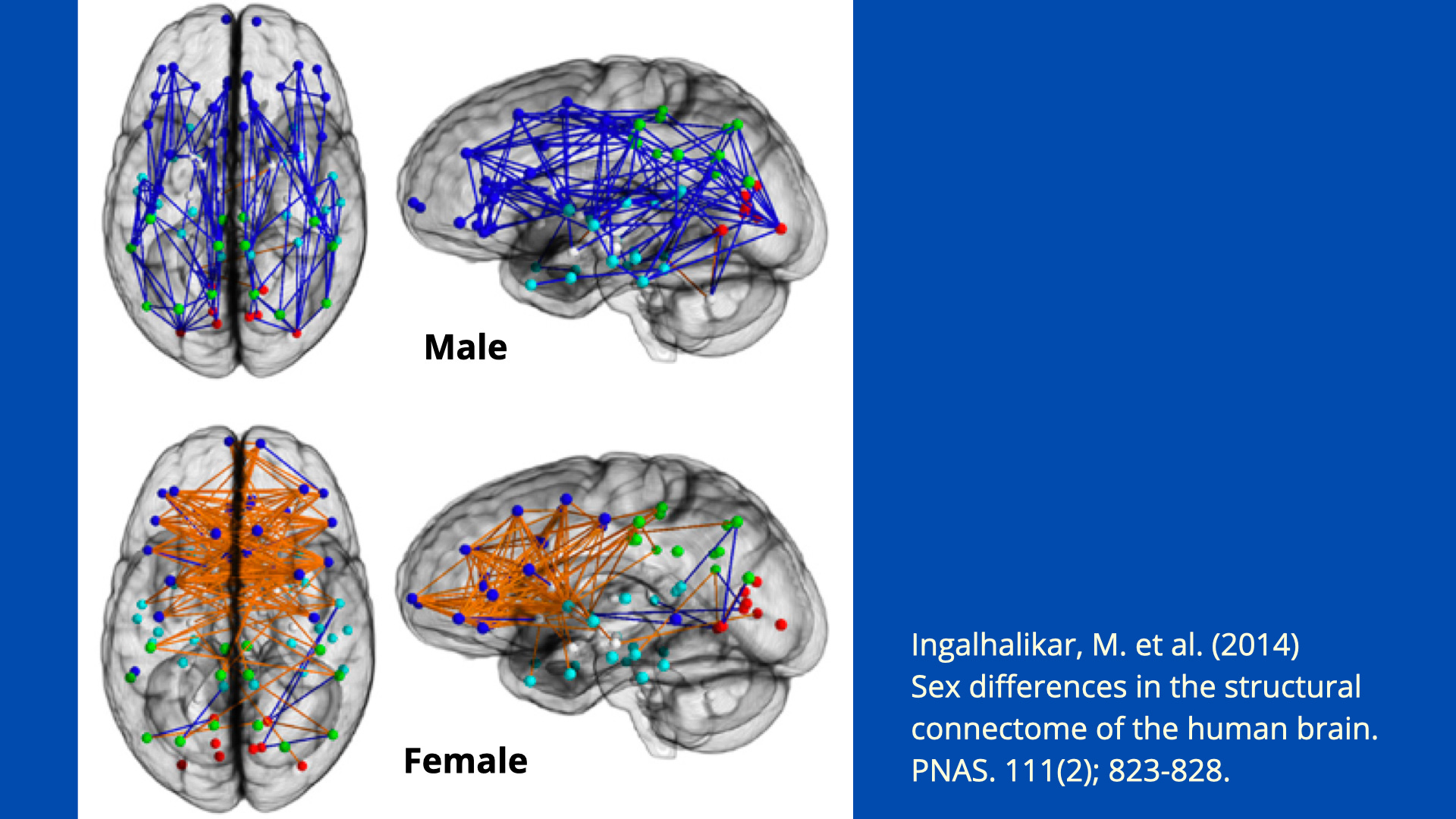
10) As discussed in Number 2, a large SPECT study revealed that women’s brains were significantly more active in many more areas compared to the male brain. This includes the prefrontal cortex (PFC). (Amen DG et al, 2017)
The PFC is involved in focus and impulse control and is often referred to as the executive centre of the brain, as it’s the master conductor of much of our higher order cognitive activity.
‘ … One of the last places in the brain to mature, the PFC is thought of as the “personality centre” and is the cortical region that makes us uniquely human. It is where we process moment-to-moment input from our surroundings, compare that input to past experiences, and then react to them. It is where we manifest our insight, foresight, and planning capabilities into the actions that define who we are.’ (Hathaway WR & Newton BW, 2023)
Practically, this is a feasible explanation for why there are more men in high-speed car accidents, and jail:
‘ … For nearly every year from 1975 to 2023, the number of male crash deaths was more than twice the number of female crash deaths.’ (Insurance Institute for Highway Safety (IIHS), 2023)
And there are also more men in jail than women:
‘ … The vast majority of prisoners worldwide are men, representing almost 94 per cent of the prison population or 10.8 million prisoners in 2022…’(UNODC, Prison Matters, 2024)
Amen suggests that the connections between the PFC, and the insula and anterior cingulate gyrus, which are the parts of the brain that track ‘gut feelings,’ explain why women are more prone to say ‘I just have a feeling ….’
This is one of the ways they gauge whether an activity could lead to negative consequences.
Amen also suggests that this is also why women have more of an intuitive ‘sense’ about relationships and situations. He also suggests that this increased activity make women more vulnerable to rumination, as these brain areas are also responsible for our capacity to ‘shift’ attention and recognise mistakes.
Amen thinks that due to the increased connectivity in different areas of the brain, it’s easier for the female brain to have a quick ‘run’ of negative thinking which would naturally prompt less risky behaviour. (Amen DG et al, 2017)
In relation to the male brain: it’s simply less active in these areas, and therefore experiences less rumination; we can think of it as a more ‘compartmentalised’ or focused brain compared to the female brain.
So, men seem able to ‘compartmentalise’ issues, while women try to consider all the aspects of an issue.
However, evidence from various cultures suggests that when mothers die their children have an increased risk of death, so, having a busy PFC and being extra cautious due to this, has certainly served us as a species and continues to do so. (Nguyen DTN, et al, 2019)
What does this mean? Women may generally have more self-control due to more activity in their prefrontal cortex, which analyses situations and possible outcomes in more detail. This is helpful in life generally, including in organisations, where the ability to assess risk, organise and plan according to a variety of possible outcomes is important.
This may be one of the reasons women become the ‘health monitor’ in their families.
However, too much anticipatory anxiety leads to increased stress levels via rumination which increases stress hormone synthesis. An overactive PFC can lead to increased anxiety, because of the tendency to anticipate challenges more accurately.
In addition, when under stress, this can lead to women becoming more rigid and controlling, even obsessive, in an attempt to control what they imagine could occur.
On a lighter note, if you’re a woman and can recall trying to talk to your partner about something that was bothering you, or about some plans, and they tune you out, or tell you what to do, it’s because they can compartmentalise things and want things sorted out quickly.
Women may be trying to figure out what to do by speaking about it, while men just want it solved already, and can’t see the sense of speaking about it.
This ability to hone in on a problem and ‘track down’ the solution quickly is an under-appreciated skill, as often talking more doesn’t solve the challenge at hand.

11) The female brain responds to stress differently compared to the male brain, due to a variety of factors.
As you now know, imaging technologies have revealed that there are gender differences in relation to brain function, neurochemistry and hormonal influences.
Women also experience a lower cortisol response to psychological stress – not because they are not feeling stressed – but because their stress response is less adaptive. (Kudielka BM & Kirschbaum C, 2005)
The limbic system, (Number 9), where we regulate emotion and fear, seems to be more active when women are under chronic stress, compared to the limbic system of men. (Kogler L, et al, 2015)
Psychosocial factors, such as ongoing time constraints imposed by increasingly complex and competing societal roles, coupled with unchanging traditional roles and culture-specific stressors contribute to women reporting higher levels of stress than men. (McCabe D, 2019)
We can list them as such:
• Not having enough time to do what they need to do
• Working both inside and outside the home
• Unchanging domestic and care-taking roles
• Culture-specific stressors
• Non-traditional family structures, like being a single mother
Unsurprisingly, women’s levels of stress – as measured by cortisol – remain high after work, compared to men’s levels, which tend to drop. This is no surprise to women, as after work they move into what is known as their ‘second shift.’ (Hochschild A, 2012)
These factors combine and contribute to women experiencing more affective disorders, like anxiety, depression, PTSD and panic disorder vs men. And an increase in stress hormone synthesis impacts reproductive hormone synthesis negatively too.
Research shows that women do report higher levels of anxiety and depression compared to men, globally, and a body of research suggests the figure is double for women.
Although this may partly be explained by the under-reporting of symptoms by men, large population studies of both genders suggest this is not the only factor at play. (McCabe D, 2019)
In relation to stress, complex psychosocial challenges that increase stress levels, coupled with neurobiological differences, and regular hormonal shifts, may combine, and contribute to women’s increased vulnerability to the negative effects of chronic stress.
In the USA in 2023, the suicide rate among males was nearly 4 times higher (22.8 per 100,000) than among females (5.9 per 100,000). (National Institutes of Mental Health, 2023)
This trend is unfortunately a global one. (Weaver D et al, 2021; International Association of Suicide Prevention, 2014)
However, in the USA there are three female suicide attempts for every one male suicide attempt.
Again, globally, this trend is similar. (American Foundation of Suicide Prevention, 2023)
One of the reasons given by researchers for the higher rates of completed suicide among men is that men generally use violent means to enact their decision, which have a greater chance of succeeding, whereas women use less violent, and therefore less successful means.
Researchers suggest that another reason for the discrepancy is that men can withdraw or externalise their feelings of stress via aggression or unhealthy ways of coping, such as increased alcohol consumption, compared to women. (Esper LH & Furtado EF, 2013)
Although men may be less proactive and therefore fail to report mental health symptoms, this is not the only factor at play.

What does this mean? A mal-adapted stress response, coupled with an overactive limbic system in the presence of stress, and a dip in serotonin due to how oestrogen and serotonin work together, may all combine to heighten the perception of stress among women.
In addition, women may look as if they can multitask, and societal expectations and their increased psycho-social and work-related roles and responsibilities mean they’re incentivised to continue this juggling act.
However, this means that when they’re stressed they may be poor at establishing boundaries. A larger limbic system, (Number 9), coupled with regular sex hormone fluctuations (Number 8), both play roles in increased vulnerability to mental health challenges.
Strategies to minimise psychosocial stress, learning how to manage unavoidable stress and improving hormonal health are all strategies that can improve stress resiliency among women.
However, chronic stress leads to changes in the brain, regardless of gender. These changes lead to the development of disorders such as anxiety and depression, which evidence suggests men also experience, although they try to alleviate such in different ways.
It therefore makes sense to prevent chronic stress considering it can lead to serious mental and physical health challenges, including death for both genders.

12) Stress and anxiety are associated with nutritional deficiencies, which are thought to compound anxiety and stress.
Robust evidence indicates that nutrients play a critically important role in central nervous system functioning.
In addition, subclinical nutrient deficiencies influence psychological wellbeing and potentially precede physical or emotional/affective disorders. (McCabe D, et al 2020)
Chronic stress leads to a cascade of negative physical and mental challenges such as cardiovascular disease, lifestyle-related diabetes, metabolic and immune dysfunction along with cognitive decline and depression. And, chronic stress leads to increased inflammation, which further drives disease. (McCabe D, 2019; McCabe D, et al, 2020)
A recent systematic review and meta-analysis (n=45,826) that examined the effects of dietary interventions on symptoms of depression and anxiety, revealed that female subjects experienced significantly greater benefits from dietary interventions for symptoms of these affective disorders. (McCabe D, 2019; McCann JC & Ames BN, 2009; Ames BN, et al, 2002)
One of explanations is that women use more nutrients than men as they need to synthesise more hormones than men do. In addition, to address their feelings of stress via emotional eating they may also eat more nutrient deficient foods, thereby consuming less nutrients. (McCabe D, 2019; McCabe D, et al, 2020)
What does this mean? Research suggests that women may experience negative symptoms from chronic stress sooner than men and are therefore also likely to benefit sooner than men when they supplement with the right nervous system nutrients.
It is therefore necessary to supplement with evidence-based nutrients to replenish their nervous system, although men can benefit similarly, although possibly not as quickly.
Current evidence suggests there are slight neurophysiological differences between the male and female brain, which underpin differences in how we think and behave, and our hormones play an important role in such.
Innate differences appear as specific instincts and biases, which are magnified by different environments, and our hormones, including what the brain is exposed to during development, such as specific role models and exposure to various kinds of reinforcement or discouragement from birth, all interact to impact gender differences.
Sex differences in emotional or relational styles may be linked more closely to different selective pressures based on our traditional roles – hunter/warrior and gatherer/nurturer - than our cognitive differences are.
The female brains increased activity and interconnectivity suggest it uses ‘cues’ picked up from distant parts of the brain to quickly find patterns and make predictions, which increases its tendency to rely on hunches, intuitions and non-vocal cues to make decisions.
In addition, the differences noted in aggression, competitiveness and empathy may be closely tied to reproduction and partly what drives sexual selection, even though we’re not consciously aware of the impact of such on partner choice.
So yes, learning does shape many of our cognitive skills, such as speaking, reading, maths and mechanical ability, and our interpersonal skills, which include aggression, empathy, risk taking and competitiveness.
But, differences between our brains also shape how we interact with our world, and how we decide what to pay attention to.
So, the evident social and emotional differences we observe between genders begin as tiny differences that are influenced by our hormones and our environment, including the society we grow up in.
The process is highly complex, and many factors influence the process of feminisation in females, in which a female pattern of brain anatomical and behavioural organisation develops, and similarly for the masculinisation of the male brain.
‘ … The research results show that empathy enhances leadership effectiveness through its extensive effects on the level of leader, followers, and organisation. It contributes to raising self-awareness, developing listening and mentoring skills, and enhancing the relationships of the leader as an individual…’ (Zivkovic S, 2022)
In addition, being able to maintain emotional equilibrium, harness intuition more readily, collaborate effectively, and keep possible risks in mind, make women valuable team members and leaders.
Similarly, mens visuospatial ability, capacity to compartmentalise and focus exclusively on a specific goal or task make them valuable team members and leaders too.
Furthermore, these 12 facts also suggest strongly that the tendency to ignore gender when doing research needs to come to an end, even though it introduces more complexity to research. There are many reasons we need to do this, including the need to develop sex-specific treatments for anxiety, depression, and PTSD.
In addition, as DeCasian, AR, et al (2022) state so succinctly:
‘ … we argue that broader historical and societal contexts make it important to reinforce the scientific method by adopting an actively “anti-sexist” viewpoint when conducting research on sex differences in the human brain.’
Neither brain is better, or smarter, just different in small (or bigger) ways that are noticeable because small differences add up – especially at the extreme ends of skill acquisition and behaviour.
‘ … there are distinct differences in major parameters that produce a complementarity between the sexes. Behaviourally, males are on average better at tasks requiring spatial processing and motor speed whereas females outperform males on tasks requiring verbal and facial memory and social cognition …’ (Gur RC & Gur RE, 2017)
Women may collaborate better than men which is useful in work environments where research suggests mixed genders in organisations and teams lead to successful companies.
Indeed, a 2023 McKinsey report that examined data from more than one thousand companies across 23 countries found that:
‘gender-diverse teams had a 39% higher profitability than their counterparts with less gender diversity.’ (McKinsey, 2023)
The female brain has skills that can serve and support us all in the busy and complex world we now find ourselves in, and similarly, the male brain possesses complementary skills.
It’s important to concede that we’re subtly different, and keep in mind that we have a greater chance of solving challenges when we work together: collaboratively and cooperatively vs competitively.
We need to stop trying to compete with each other or try to prove that either gender holds the monopoly on solving the complex challenges we’re all facing.
NOTE: None of this content was generated by AI.
Haven’t read Part 1 yet? Click the button below to gain access:
Part 1 - Gender Brain Differences
Alexander, G. M, & Hines, M. (2002). Sex differences in response to children’s toys in nonhuman primates (Cercopithecus aethiops sabaeus). Evolution and Human Behavior, 23(6), 467–479.
Amen, D. G, et al. (2017). Gender-based cerebral perfusion differences in 46,034 functional neuroimaging scans. Journal of Alzheimer’s Disease, 60(2), 605–614.
Ames, B. N, Elson-Schwab, I, & Silver, E. A. (2002). High-dose vitamin therapy stimulates variant enzymes with decreased coenzyme binding affinity (increased K(m)): Relevance to genetic disease and polymorphisms.
Anderson, M. V, & Rutherford, M. D. (2013). Evidence of a nesting psychology during human pregnancy. Evolution and Human Behavior, 34(6), 390–397.
Ardekani, B. A, et al. (2013). Sexual dimorphism in the human corpus callosum: An MRI study using the OASIS brain database. Cerebral Cortex, 23(10), 2514–2520.
Barrientos, R. M, et al. (2019). Neuroimmunology of the female brain across the lifespan: Plasticity to psychopathology. Brain, Behavior, and Immunity, 79, 39–55.
Becker, J. B. et al. (2007). Stress and disease: Is being female a predisposing factor? The Journal of Neuroscience, 27(44), 11851–11855.
Berggren, M, & Bergh, R. (2025). Simpson’s gender-equality paradox. Proceedings of the National Academy of Sciences of the United States of America, 122(23), e2422247122.
Bianchi, S. M, et al. (2012). Housework: Who did, does or will do it, and how much does it matter? Social Forces, 91(1), 55–63.
Björkqvist, K, et al. (1992). Do girls manipulate and boys fight? Developmental trends in regard to direct and indirect aggression. Aggressive Behavior, 18, 117–127.
Campbell, A. (2004). Female competition: Causes, constraints, content, and contexts. Journal of Sex Research, 41(1), 16–26.
Cassan, L & Rigdon, M. L. (2021). Prosocial option increases women’s entry into competition. Proceedings of the National Academy of Sciences of the United States of America, 118(45), e2111943118.
Carhart-Harris, R. J & Nutt, D. J. (2017). Serotonin and brain function: A tale of two receptors. Journal of Psychopharmacology, 31(9), 1091–1120.
Catenaccio, E, et al. (2016). Estrogen- and progesterone-mediated structural neuroplasticity in women: Evidence from neuroimaging. Brain Structure and Function, 221(8), 3845–3867.
Cashdan, E. (1998). Are men more competitive than women? British Journal of Social Psychology, 37(Pt 2), 213–229.
Chen, L, et al. (2025). Understanding gender differences in reasoning and specific paradigm using meta-analysis of neuroimaging. Frontiers in Behavioral Neuroscience, 18, 1457663.
Chekroud, A. M, et al. (2016). Patterns in the human brain mosaic discriminate males from females. Proceedings of the National Academy of Sciences of the United States of America, 113(14).
Cyranowski, J. M, et al. (2012). Psychosocial features associated with lifetime comorbidity of major depression and anxiety disorders among a community sample of mid-life women: The SWAN Mental Health Study. Depression and Anxiety, 29(12), 1050–1057.
DeCasien, A. R, et al. (2022). Sex differences in the human brain: A roadmap for more careful analysis and interpretation of a biological reality. Biology of Sex Differences, 13, 43.
Del Rio, J. P, et al. (2018). Steroid hormones and their action in women’s brains: The importance of hormonal balance. Frontiers in Public Health, 6, 141.
Dziak, E, et al. (2010). Inequalities in the psychological well-being of employed, single and partnered mothers: The role of psychosocial work quality and work-family conflict. International Journal for Equity in Health, 9, 6.
Eliot, L, et al. (2021). Dump the “dimorphism”: Comprehensive synthesis of human brain studies reveals few male-female differences beyond size. Neuroscience & Biobehavioral Reviews, 125, 667–697.
Esper, L. H, & Furtado, E. F. (2013). Gender differences and association between psychological stress and alcohol consumption: A systematic review. Journal of Alcoholism and Drug Dependence, 1, 116.
Gur, R. C, & Gur, R. E. (2017). Complementarity of sex differences in brain and behavior: From laterality to multimodal neuroimaging. Journal of Neuroscience Research, 95(1–2), 189–199.
Gupte, R, et al. (2019). Sex differences in traumatic brain injury: What we know and what we should know. Journal of Neurotrauma, 36(22), 3063–3091.
Greenberg, D. M, et al. (2022). Sex and age differences in “theory of mind” across 57 countries using the English version of the “Reading the Mind in the Eyes” Test. Proceedings of the National Academy of Sciences of the United States of America.
Hall, E, & Steiner, M. (2013). Serotonin and female psychopathology. Women’s Health, 9, 85–97.
Hall, J. A, et al. (2025). Gender and accuracy in decoding affect cues: A meta-analysis. Journal of Intelligence, 13(3), 38.
Hassett, J. M, et al. (2008). Sex differences in rhesus monkey toy preferences parallel those of children. Hormones and Behavior, 54(3), 359–364.
Hathaway, W. R, & Newton, B. W. (2025). Neuroanatomy, prefrontal cortex. In StatPearls [Internet]. StatPearls Publishing.
Hirnstein M, et al. (2023) Sex/Gender Differences in Verbal Fluency and Verbal-Episodic Memory: A Meta-Analysis. Perspect Psychol Sci;18(1):67-90.
Hochschild, A. (2012). The family speed-up. In The second shift: Working families and the revolution at home (pp. 1–10). Penguin Books.
Hoffmann, H, et al. (2010). Expression intensity, gender and facial emotion recognition: Women recognize only subtle facial emotions better than men. Acta Psychologica, 135(3), 278–283.
Im, S, et al. (2018). Gender differences in aggression-related responses on EEG and ECG. Experimental Neurobiology, 27(6), 526–538.
Jumah, F. R, & Dossani, R. H. (2025). Neuroanatomy, cingulate cortex. In StatPearls [Internet]. StatPearls Publishing.
Kessler, R. C. (2003). Epidemiology of women and depression. Journal of Affective Disorders, 74(1), 5–13.
Kogler, L, et al. (2015). Sex differences in cognitive regulation of psychosocial achievement stress: Brain and behavior. Human Brain Mapping, 36(3), 1028–1042.
Kudielka, B. M & Kirschbaum, C. (2005). Sex differences in HPA axis responses to stress: A review. Biological Psychology, 69(1), 113–132.
Lager, E, et al. (2024). Gender differences in operational and cognitive abilities. Frontiers in Psychology, 15, 1402645.
Li, R, et al. (2013). Early reproductive experiences in females make differences in cognitive function later in life. Journal of Alzheimer’s Disease, 34(3), 589–594.
Lotze, M, et al. (2019). Novel findings from 2,838 adult brains on sex differences in gray matter brain volume. Scientific Reports, 9, 1671.
Luoto, S. (2020). Sex differences in people and things orientation are reflected in sex differences in academic publishing. Journal of Informetrics, 14(2), 101021.
Maciejewski, P. K, et al. (2001). Sex differences in event-related risk for major depression. Psychological Medicine, 31(4), 593–604.
Matte Bon, G, et al. (2024). Modeling brain sex in the limbic system as phenotype for female-prevalent mental disorders. Biology of Sex Differences, 15(1), 42.
Matte Bon, G, et al. (2025). Longitudinal development of sex differences in the limbic system is associated with age, puberty and mental health. Communications Biology, 8, 1524.
McCurry, A. G, et al. (2025). Men’s impulsivity underpins gender differences in aggressive behaviour. Scientific Reports, 15, 35215.
McCabe, D, et al. (2020). Specific nutrient intake via diet and/or supplementation in relation to female stress: A cross-sectional study. Women’s Health Reports (New Rochelle), 1(1), 241–251.
McCabe, D. (2019). The neurological impact of specific nutrients on female stress: A two-phase, sequential, mixed methods study (PhD thesis). The Joanna Briggs Institute, Adelaide Medical School, Australia.
McCann, J. C, & Ames, B. N. (2009). Vitamin K, an example of triage theory: Is micronutrient inadequacy linked to diseases of aging? American Journal of Clinical Nutrition, 90(4), 889–907.
McEwen, B. S, & Milner, T. A. (2017). Understanding the broad influence of sex hormones and sex differences in the brain. Journal of Neuroscience Research, 95(1–2), 24–39.
Milkie, M. A, et al. (2009). Taking on the second shift: Time allocations and time pressures of U.S. parents with preschoolers. Social Forces, 88(2), 487–517.
Niederle, M & Vesterlund, L. (2011). Gender and competition. Annual Review of Economics, 3, 601–630.
Nguyen, D. T. N, et al. (2019). Risk of childhood mortality associated with death of a mother in low- and middle-income countries: A systematic review and meta-analysis. BMC Public Health, 19(1), 1281.
Piao, X, et al. (2024). Continuous worsening of population emotional stress globally: Universality and variations. BMC Public Health, 24(1), 3576.
Roivainen, E, et al. (2021). An examination of factors that may contribute to gender differences in psychomotor processing speed. BMC Psychology, 9, 190.
Selkie, E. M, et al. (2016). Cyberbullying behaviors among female college students: Witnessing, perpetration, and victimization. College Student Journal, 50(2), 278–287.
Su, R & Rounds, J. (2015). All STEM fields are not created equal: People and things interests explain gender disparities across STEM fields. Frontiers in Psychology, 6, 189.
Todd, B. K, et al. (2017). Preferences for “gender-typed” toys in boys and girls aged 9 to 32 months. Infant and Child Development, 26, e1986.
UNODC. (2024). Prison matters 2024: Global prison population and trends—A focus on rehabilitation. United Nations.
van Anders, S. M, et al. (2015). Effects of gendered behavior on testosterone in women and men. Proceedings of the National Academy of Sciences of the United States of America, 112(45), 13805–13810.
Walker, S, et al. (2000). Aggression among older adults: The relationship of interaction networks and gender role to direct and indirect responses. Aggressive Behavior, 26(2), 145–154.
Weaver, D, et al. (2021). Global, regional, and national burden of suicide, 1990–2021: A systematic analysis for the Global Burden of Disease Study. The Lancet Public Health, 10(3), e189–e202.
Wiegner, L, et al. (2015). Prevalence of perceived stress and associations to symptoms of exhaustion, depression and anxiety in a working age population seeking primary care—an observational study. BMC Family Practice, 16, 38.
World Health Organization. (2001). Gender disparities in mental health. Geneva: World Health Organization; Ministerial Round Tables 2001: 54th World Health Assembly.
Young, E. A, et al. (2002). Sex differences in neuroendocrine and neurotransmitter systems. In S. G. Kornstein & A. H. Clayton (Eds.), Women’s mental health: A comprehensive textbook (1st ed., pp. 3–30). New York: The Guilford Press.
Zivkovic, S. (2022). Empathy in leadership: How it enhances effectiveness. In Proceedings of the 80th International Scientific Conference on Economic and Social Development and 10th International OFEL Conference: “Diversity, Equity and Inclusion: The Essence of Organisational Well-Being”.
https://www.iihs.org/research-areas/fatality-statistics/detail/males-and-females (Cited 19 December 2025)
https://www.iasp.info/wp-content/uploads/WSPD-Facts-Figures-Infographic.pdf (Cited 20 December 2025)
https://afsp.org/suicide-statistics/ (Cited 19 December 2025)
https://www.nimh.nih.gov/health/statistics/suicide (Cited 20 December 2025)
https://leanin.org/article/womens-workload-and-burnout (Cited May 2020)
https://www.iasp.info/wspd/references/ (Cited 22 December 2025)
https://www.unodc.org/unodc/en/data-and-analysis/global-study-on-homicide.html (Cited 12 December 2025)
https://www.mckinsey.com/featured-insights/diversity-and-inclusion/diversity-matters-even-more-the-case-for-holistic-impact (Cited 24 December 2025)
NUTRITION TO RESTORE BALANCE: The Role of Nutrition in Female Stress & Hormone Fluctuations (20 page PDF Report)
It’s not that men can’t benefit from this approach too - it’s simply that women benefit more quickly then men do, and often want to try nutritional approaches more than men do.
Comments
Nothing yet. Say the first thing.
Sign in to join the conversation.