

As you know, these articles are about what I’m observing in the world, via behaviour patterns, or trends, and naturally include a lot of questions.
The murder of Charlie Kirk, along with the celebratory on-line responses to this terrible event, which were similar to the responses that followed the murder of CEO Brian Thompson, prompted this article.
And, although I try to avoid the news generally, I’ve also been shocked to see politicians calling for violence.
So, why do people celebrate terrible events and why do some leaders prompt violence?
Was this behaviour simply viewed by fewer people when the media wasn’t in our faces so much, and mostly hidden before social media made it visible?
Are we becoming less ‘moral,’ and less able to discern the difference between right and wrong?
And if so, why?
In an attempt to learn more, here in Part 1 (of 2), we’ll examine what morality is, and where it comes from, how our beliefs and our morality are linked, whether being tribal beings is linked to morality, how our emotions are linked to morality, what’s required to make us feel less moral towards others, how being embodied can impact our morality and how the media impacts our moral perspective.

Firstly, what is ‘morality?’
Morality is what we use to distinguish between right and wrong and acts as a framework to guide our behaviour. You can think of morality as a set of principles that help us to be kind and respectful towards ourselves and others.
Researchers who have examined morality suggest a few possibilities:
The first is that morality is innate and the second is that morality comes from what we learn in our childhood.
Jonathan Haidt discusses one of the theories related to the latter, in his insightful book, ‘The Righteous Mind,’ which is called the ‘rationalist answer.’
This theory states that morality is self constructed by children, during their childhood, on the basis of their own personal experience with harm.
They come to see harm as being wrong because they dislike being harmed, and assume others dislike being harmed too. Therefore, it’s wrong to harm others.
This leads them to a basic understanding of what fairness is and eventually what justice should entail.
However, after some research in Brazil and the United States, Haidt proposed an additional perspective, and rather, concluded that:
‘Our moral domain varies by culture and it is unusually narrow in Western, educated and individualistic cultures. However, in Sociocentric cultures, those that value social connection and cohesion, it’s broader and regulates more aspects of life.’ (Pg. 30)
He also believes that our gut feelings, especially around disgust and disrespect, also drive our moralistic reasoning and that our morality is sometimes a post-hoc fabrication.
In other words, we can try to make sense of our morals in relation to what we say and do after the fact, to maintain internal psychological coherence.
Haidt sees cultural learning or guidance playing a larger role than the rationalist approach suggests.
In summary, he believes that morality doesn’t come primarily from reasoning.
Morality has to emerge from a combination of innateness AND social learning, which means the culture we grow up in plays a big role in what we consider moral behaviour to be.
So, our lived-experience, which includes our environment and what we see the people in that environment do, leads to us modelling that behaviour and in so doing, modelling their morals.
Kathleen Taylor in her excellent, but sobering book, ‘Cruelty,’ also discusses the origins of morality and distinguishes between ‘basic,’ and ‘constructed’ morality, as below:
‘Basic morality is ancient, relatively simple, and similar across many different cultures. It is governed by rules which lead us to:
look after ourselves and our own,
cooperate with ‘in-group’ members,
prefer the company of people similar to us,
be wary of strangers,
exploit opportunities to cheat while punishing other cheaters, and
react to perceived threats from others with aggressive hostility or even cruelty.’ (Pg. 37)
Taylor goes on to explain that our basic morality is a survival instinct, and evolved out of us being social animals in dangerous environments.
Our basic morality became effective at social control because it increased social cohesion and reduced intra-group harm and exploitation all while we continued to develop and enforce social codes of conduct.
In other words, our capacity to moralise enhanced the chances of our survival.
Turner sees the second type of morality, ‘constructed morality,’ as being ‘far more elaborate than basic morality and comes in many culture-dependent flavours.’ (Pg. 37)
In this she agrees with Haidt: our culture plays a prominent role in our development of morality.
So, constructed morality retains the key features of basic morality: social sensitivity, emotionality, and concern with what should be done rather than what happens to be the case.
However, Turner sees constructed morality as having a much wider reach, in that it encompasses ‘principles formalised in bodies of law and political theory … ’ such as the demand for animal welfare and -rights, and the principle of universal human rights.
Constructed reality is therefore a more sophisticated type of morality compared to basic morality, and developed out of the latter as ‘a response to the pressure of cultural innovation, as human social systems became more complex, institutionalised, and abstracted.’ (Pg. 38)
Turner also suggests that constructed morality can vary considerably, even within a given society, such as between different ethnic groups, or during short periods of time, for example during war.
In essence, constructed morality, like reasoning, is a product of us having the leisure to think deeply and abstract across our species. It could only appear once we’d gained enough control of our world to give ourselves time to think.
Turner suggests, soberingly, that:
(Constructed morality) gains its reach from the power of cool reason to abstract across the whole human race, or even beyond. Unless it can link its high abstractions to the fierce energies stirred up by moral emotions, it will have a little effect on actual human responses.’ (Pg. 38)
In other words, we can lose the ability to abide by the morality we’ve established for ourselves if our emotions change and we no longer feel bound by them. (Pg. 37)
Why?
Because our emotions are linked to what we believe and what we feel is ‘moral.’
Which leads us to ask: how do we decide what to be ‘moral’ about?
Beliefs are not neutral concepts we carry around with us.
Our beliefs are linked to our emotions (and our morality) for two main reasons:
Many of our beliefs exist in our mind because of what other people believe and what we learn from them, and we often have very strong emotions about other people.
Our beliefs are also involved in the predictions we have about how the world does (or should) work. When our predictions are confirmed or dis-confirmed we don’t feel neutrally about such. When our predictions are confirmed we feel good - a positive reward for that belief and we feel in control. However, when our prediction isn’t confirmed, we feel bad and sense a lack of control.
Furthermore, strong beliefs are part of our identity, and when they’re challenged it can feel as if we would be a different person if we believed a different thing.
In other words, our beliefs become an integral part of our identity, or ‘a core aspect of ourselves’ (Turner, Pg. 156) which means they can and do drive behaviour that aligns with those beliefs.
So, the strength of our belief - how important it is to us, AND
our sense of self AND
how much we believe it’s true AND
how it resonates with us emotionally AND
how connected it is to our other beliefs AND
who else believes the same thing/s - all impact how strongly we hold onto what we believe, because our beliefs are intimately tied to a deep and natural drive and desire to predict what could happen next.
Remember, one of the brains primary functions is to find patterns so as to predict what could happen next.
Our beliefs play a critical role in this process.
In addition, our beliefs are intimately connected to what we feel, as embodied beings - our physical, visceral reactions to what we think and observe about how the world does and should function.
Furthermore, beliefs which challenge us by being different from what we expect are experienced as particularly stressful if we are already under stress for other reasons.
Why?
High levels of cortisol reduce the brains ability to think clearly and critically, so we revert to habitual patterns of thought instead of questioning what we believe.
We all know that we get a little jolt of dopamine when we read something or listen to someone who tells us what we already believe - there is no discomfort.
We also know that when we’re confronted with something that differs from what we believe, we feel uncomfortable.
The beliefs we like best cause strong and clear patterns of neural activity, which naturally fit easily among the patterns we already have.
Remember, ‘neurons that fire together, wire together.’
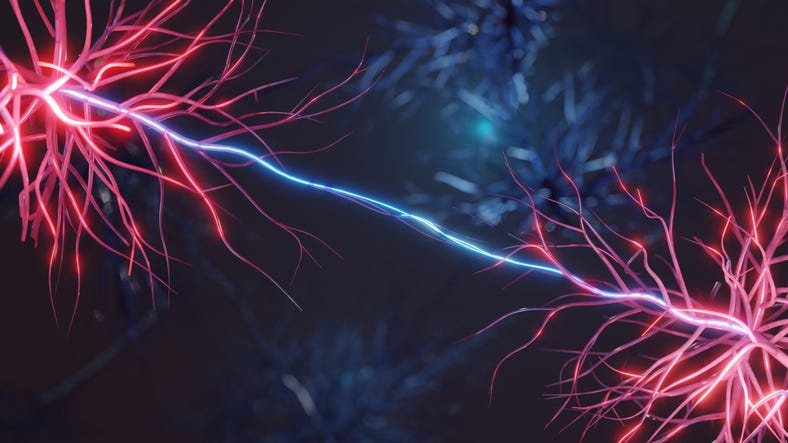
When we’re comfortable with our beliefs, they make us feel good and they fit neatly into the other neural patterns we’ve already consolidated, and they are more likely to sway us to behave in ways that support their continuance.
Even if those behaviours would seem a-moral to those not in our ‘in-group.’
And, strong beliefs, because they’re tied to how we feel about them, are also experienced viscerally.
Which means that our bodies let us know when our beliefs are being violated.
This is why we have a strong, emotional reaction to what we perceive as being wrong, or a-moral.
Our beliefs become strong and inflexible - they’re tied to our cognitive, reasoning processes AND to how our bodies feel about them.
In other words, our beliefs become consolidated and robust because they’re underpinned by robust neural pathways AND our bodies reinforce these beliefs, by making us feel good when we think about them.
And, over time they become stronger, unless we have an epiphany about something else that matters deeply to us, which contradicts the belief, OR if we face enough dis-confirming information about the belief. [I write about this elsewhere on this Substack.]
Keep in mind that our beliefs become part of our identity.
How we see ourselves.
How we interact with the world.
The lens through which we judge others and make decisions.
It is therefore no small feat to change our beliefs.
Therefore, the more important the belief in question is to us, the more strongly it will be defended, and the more extreme our emotions will be when these beliefs are challenged.
And, being social or tribal creatures means that we need a lot of ‘proof’ before we do so.
So, let’s tackle our tribal nature next.

Jonathan Haidt calls us ‘group-ish’ and ‘tribal’, and in his book states that:
‘Human life is a series of opportunities for mutually beneficial cooperation … those whose moral emotions compelled them to play ‘tit for tat’ reaped more of the benefits (of cooperation) than those who played any other strategy … we feel pleasure, liking and friendship when people show signs they can be trusted to reciprocate. We feel anger, contempt and sometimes even disgust when people try to cheat us or take advantage of us.’ (Pg. 159)
David R. Samson, in his excellent book, ‘Our Tribal Future,’ confirms this idea, but goes a little further, and states that:
‘ … Kin selection - the preferential bias for those who are genetically related – was the first answer concocted by evolution several hundred million years ago and has faithfully served earthlings ever since. The challenge is scale. When considering plants, social insects, and even naked mole rats, kin selection works predictively. However, when you scale up complexity to species that rely on meaty brains, long-term memory, and special kinds of social arrangements, then something else is needed.’ (Prologue)
Samson goes on to explain why we ended up confronting this challenge of increased complexity: we reproduced so effectively that strangers started encroaching on us.
We needed a new answer to the question of who we could trust, and he suggests the answer was to ‘become tribal.’
This naturally led to us developing what he refers to as ‘nested groups,’ each with their own particular symbols, myths and values that bound participants together in trusting relationships.
Haidt focusses on the survival benefits of being ‘tribal:’
‘For millions of years, therefore, our ancestors faced the adaptive challenge of forming and maintaining coalitions that could fend off challenges and attacks from rival groups. We are the descendants of successful tribalists, not their individualistic cousins.’ (Pg. 163)
This means that people align themselves primarily with their tribe, because their strong beliefs are aligned with other tribe members. This makes the cost of leaving the tribe inordinately high: their core, personal identity is inextricably bound to that of their tribes identity.
So, we’re tribal creatures, and seek out those we feel we can trust and collaborate with because these two concepts are linked to our survival instinct which has served us so far.
However, how do our beliefs and our tribalism work together and against ‘others?’
Beliefs about other people, and the moral stories we tell ourselves about them, need to meet three requirements according to Turner: (Pg. 150)
The ‘out’ group are not like me - they are different or disgusting.
These people want to harm me, others like me, or have already done so.
Removing these people will solve our problems.
Acting on our beliefs require reasons. And these three reasons are the ones people use to act on their beliefs.
In addition, we can reduce uncomfortable feelings about the beliefs we’re not comfortable with if we already trust the people who have them, and then we can slowly incorporate them into our other beliefs.
Basically, from a neurophysiological perspective, you’re rerouting neural signals away from where they’re in conflict with other neural signals, and in so doing you reduce the uncomfortable emotions (and what we call them, feelings) that ensue.
You’re making it easier to entertain beliefs that you would maybe not have entertained before.
If our ‘in-group’ believes it, then we may support it even if it doesn’t support our general moral stance. After all, staying in our ‘in-group’ is based on our core identity AND our survival instinct.
And, people have to become ‘other’ before we can despise and later hate them and the three ways above support this end.
Furthermore, our bodies can be used to make others more ‘other’ too.
One of the reasons any references to disgust and contamination are useful to ‘other-ise’ people is that we’re primed to avoid anything that can physically harm us via contamination or some form of poisonous pollution. (Turner, Pg. 167)
It’s therefore a very useful mechanism to link toxicity and physical danger to a specific group of people, and why it has been used for so long to induce fear in people.
So, we’re primarily focused on survival, and even an inkling that we could be threatened in the pursuit of that goal results in a reaction - a desire to get rid of the ‘toxicity,’ even if it’s not a physical threat.
So, can we make people judge others more harshly by using our ‘embodiment?’
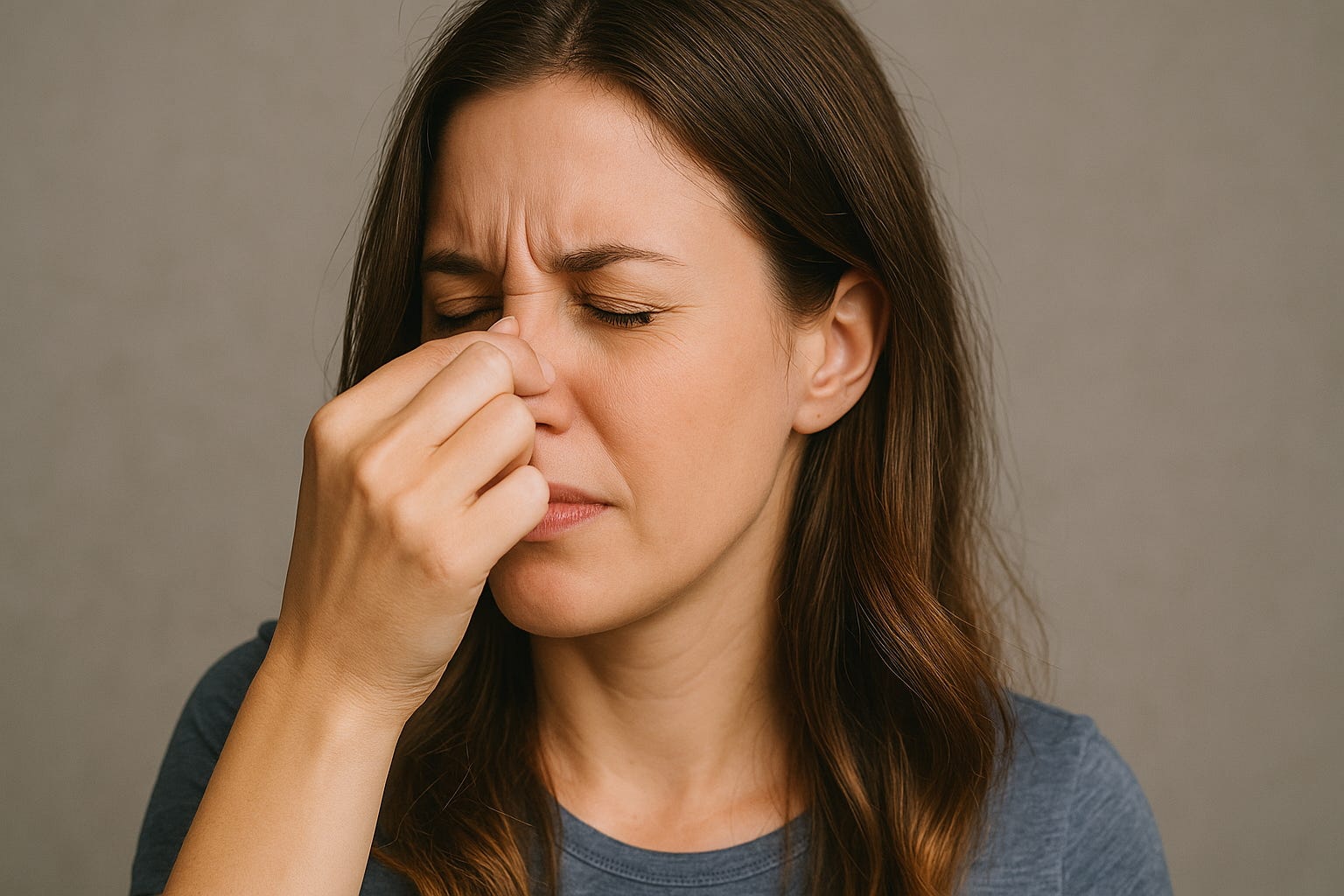
Our emotions impact how we judge others and what we think of them, and research suggests if we manipulate their emotions we can get people to behave less morally.
Psychological experiments revealed that manipulating peoples feelings of disgust - without their knowledge - impacted the moral judgement they made and their willingness (or not) to help others.
The participants did not realise the cause of their disgust, due to the experimental design, but they seemed to attribute the emotion to the task and made a moral judgement.
The more disgusted they felt about a person or their behaviour the more harshly they appeared to condemn them.
And, bringing us back to our body, forcibly, the researchers found that:
‘ … the role of disgust in severity of moral judgments depends on participants’ sensitivity to their own bodily sensations.’ (Schnall, S, et al, 2008)
This is an innate and unconscious response to what our body perceives and is not under our conscious control.
But, what about what we see and hear?

The media does manipulate how we perceive what’s going on in the world via the lens they use to describe events.
We naturally turn away from watching events that don’t align with what we already believe, for all the reasons mentioned above, and in other articles I’ve written.
When the media ‘other-ises’ another group of people, we don’t just feel threatened personally; we also feel threatened because our tribes existence may be at stake.
We experience a visceral response, a sense of fear, which we naturally try to reduce.
Unless, we decide to stay immersed in the experience because we want to heighten our emotional and physical response - we want to amplify our sense of being justified in what we believe, and our anger, and so we amplify - and consolidate - the ‘other-isation’ that the media and social media create.
In addition, Christopher Boehm, in his book ‘Moral Origins,’ as quoted by Samson, states that ‘… contempt is the dissolver of unions.‘ (Samson, DR, Pg. 328)
So, when the media introduces contempt for another group of people, they are making it easier for us to ‘other-ise’ them and become more tribal and less cohesive as a society.
In Part 2 we’ll delve into how cruelty (and our ideas) fit into our view of morality, whether we need religion to be moral, whether our political beliefs and morality are connected, what we need to be happy and fulfilled - and whether those factors are present today - and whether this is linked to our morality, and possibly a rise in a-moral behaviour.
NOTE: None of this content was generated by AI.
Please access Part 2 via the button below:
Becoming Less Moral? Pt 2 of 2
And if you enjoyed this article please subscribe below:
Comments
Nothing yet. Say the first thing.
Sign in to join the conversation.