
“If this does come down to litigation, and it comes down to putting people in jail and those kind of things, I think that I’m talking to the person that they’ll be talking to.”
Zimbardi’s response to Brandon’s prediction was short.
“That remains to be seen.”
More than three years later, we have seen quite a lot.
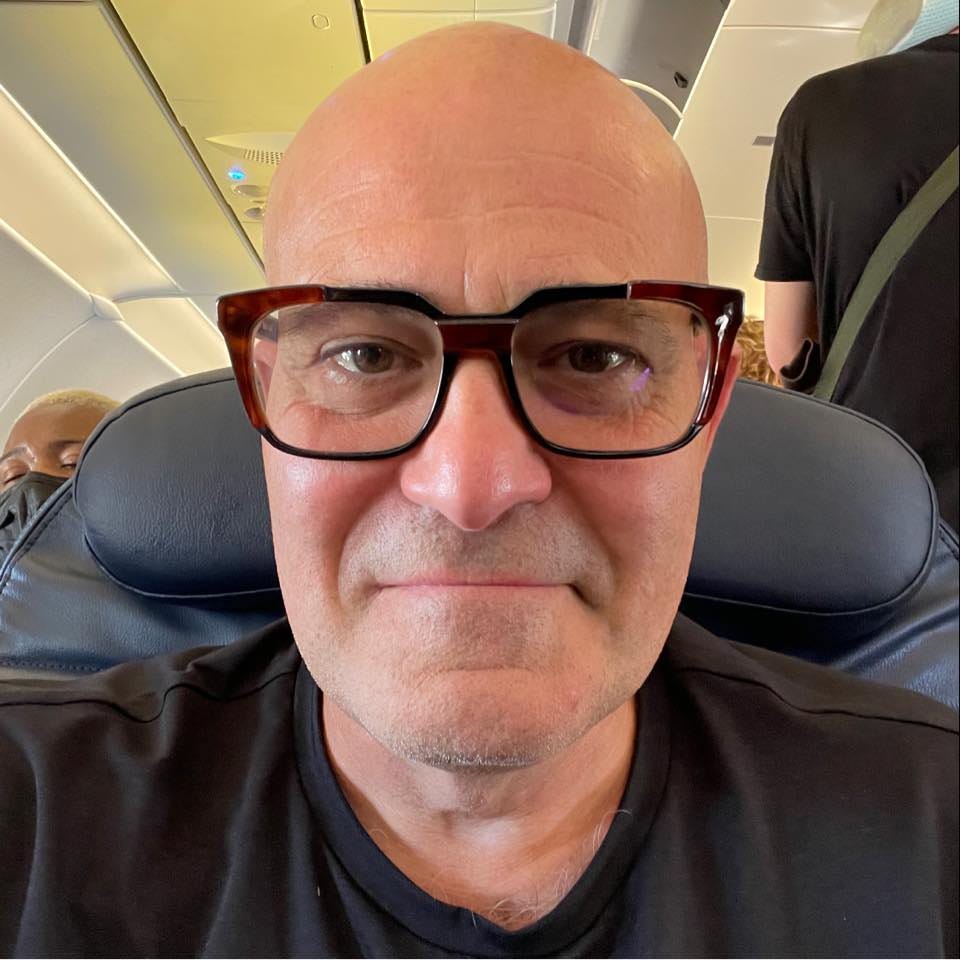
Edward (Ed) Zimbardi
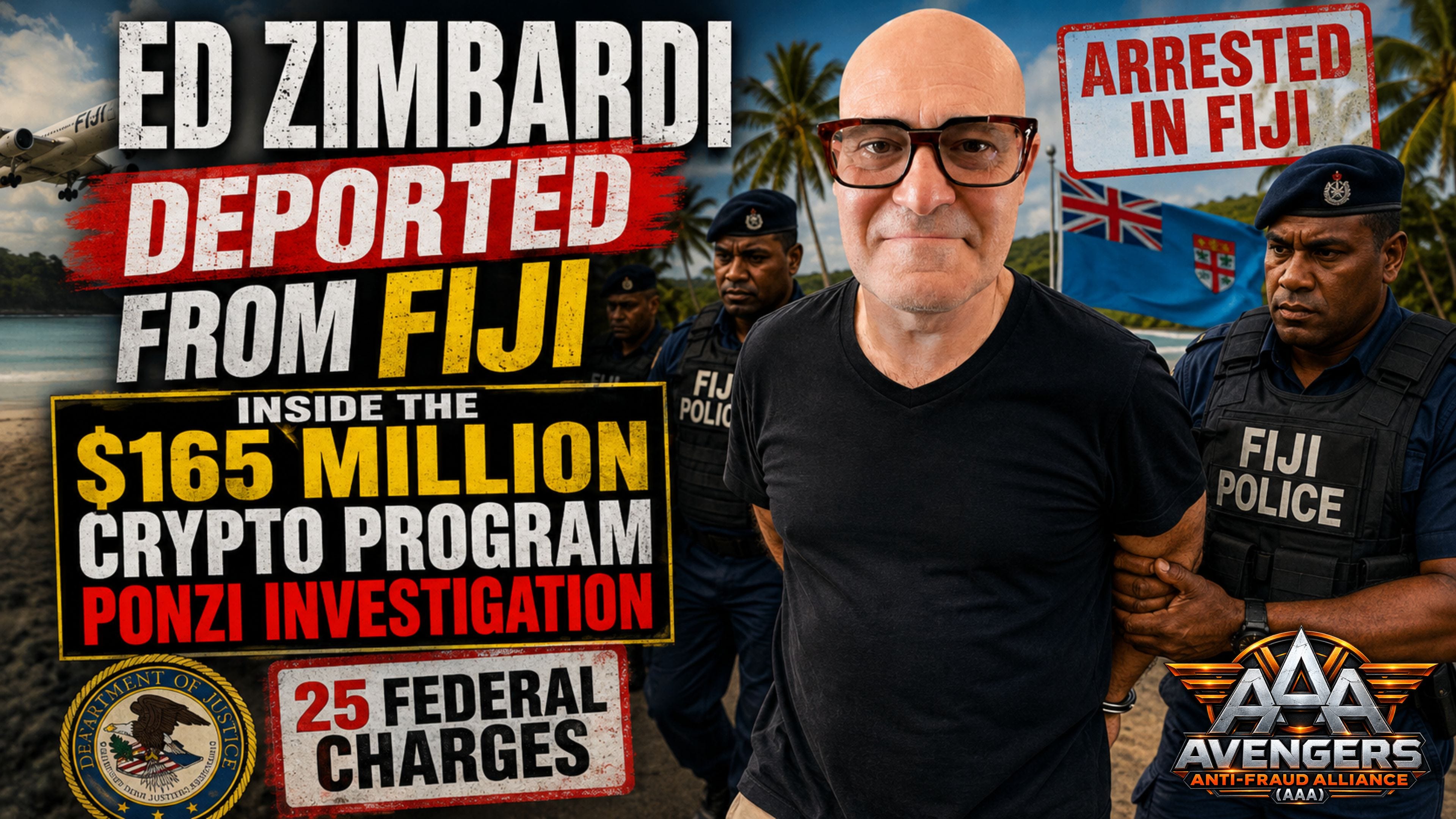
On August 14, 2026, authorities in Fiji deported Zimbardi to the United States. Federal Prosecutors Allege that the 59-year-old Georgia resident wasn’t simply the “master affiliate” he portrayed himself as during that interview. They allege he created and promoted The Crypto Program, secretly controlled cryptocurrency wallets into which thousands of investors sent more than $165 million, and operated the business as a Ponzi scheme.
Zimbardi now faces 12 counts of wire fraud, 12 counts of money laundering and one count of money-laundering conspiracy. These are allegations contained in a Federal Criminal Case. He is presumed innocent unless and until the government proves those charges beyond a reasonable doubt.
But this investigation didn’t begin with an FBI Press Release.
When I started digging through the history of Ed Zimbardi, I discovered something far more interesting than another alleged Ponzi scheme reaching the federal courts. People had been warning about this operation while it was still taking money.
Regulators were raising concerns. Victims from earlier ventures were speaking out. Blockchain transactions were being examined. And two scam investigators in particular — Brandon Williams of Ponzi Patrol and Oz from BehindMLM — simply refused to let the story disappear.
Brandon was especially relentless. Months before CryptoProgram collapsed, he confronted Zimbardi directly for almost three hours. He interviewed an earlier alleged victim, followed regulatory actions, examined cryptocurrency wallets, challenged major promoters and warned investors about what he believed was coming.
On May 15, 2023, Brandon publicly predicted that Zimbardi would eventually be arrested. By August 14, with payment problems already developing, he described what he was watching as the beginning of a “slow rug pull.”
Five days later, CryptoProgram paused payments.
Oz kept digging as well. BehindMLM continued documenting Zimbardi after CryptoProgram disappeared, following the regulatory actions, offshore connections and subsequent developments surrounding a man who increasingly seemed to be moving further from the United States.
Then the story reached Fiji.
According to federal prosecutors, after becoming aware of the FBI investigation, Zimbardi fled there and remained for more than a year. In May 2026, he allegedly cancelled plans to attend his son’s wedding in Virginia because he suspected FBI agents would be waiting to arrest him.
He was right.
Zimbardi avoided the wedding, but he couldn’t remain beyond the reach of law enforcement forever. Three months later, following cooperation between authorities in Fiji and the United States, he was deported back to America to face federal charges.
I’ve spent time going back through Brandon’s old videos, his presentation, his confrontation with Zimbardi, the wallet analysis, victim testimony, promoter statements, regulatory actions and the reporting BehindMLM preserved along the way.
What emerges is not simply the story of a man now accused of operating a $165 million cryptocurrency Ponzi scheme.
It is the story of how the warning signs appeared while the money was still flowing, how those warnings were challenged and dismissed, how the explanations changed as payments began failing — and how a handful of people kept following the evidence long after everyone else could have moved on.
And it begins years before Fiji.
Before the federal charges, before Fiji, and before the scale of the alleged $165 million CryptoProgram Ponzi scheme became public, Brandon Williams of Ponzi Patrol was documenting Ed Zimbardi in real time. The videos below form an important part of that investigative record — including Brandon’s direct confrontation with Zimbardi, victim testimony, wallet analysis, regulatory warnings, withdrawal problems and his coverage of CryptoProgram’s eventual collapse. Watching them chronologically shows just how early many of the warning signs were being identified and documented.
An index is useful at the start of this investigation because there are a lot of moving parts: Ed Zimbardi’s history, CryptoProgram, Amsys, Brandon Williams’ investigation, regulators, Mugan Markets, the Netherlands, Fiji and the federal case. It gives readers a quick roadmap, makes a long investigation easier to navigate, and lets people jump directly to the section they are most interested in without losing the overall chronology.
Long before federal prosecutors accused Edward Anthony Zimbardi of masterminding a $165 million cryptocurrency Ponzi scheme, his history was already giving investigators plenty of reasons to ask questions.
Zimbardi acknowledged during Brandon Williams’ March 2023 interview that he had previously been convicted of felony theft by taking in Georgia in 1997, when he was around 30 years old. He described the offence as involving orders entered into a computer system that caused inventory to be shipped elsewhere. According to Zimbardi, he received a two-year sentence, served approximately 18 months in a county work camp, paid restitution and later received a full pardon from Georgia in 2014.
A decades-old conviction does not prove somebody is committing a new crime. What made Zimbardi’s background relevant was the pattern of financial controversies that followed.
Brandon’s investigation uncovered complaints about Zimbardi stretching back years. His Ponzi Patrol research documented hundreds of negative online reviews and complaints, some dating back to around 2010, as well as a Facebook group containing more than 200 people established specifically to warn others about him. Brandon also reported receiving information concerning earlier arrests and lawsuits, although he was careful to acknowledge that he had not independently confirmed all of those claims.
One person willing to speak publicly was Candace Taylor, a registered nurse who said she had known Ed and his then-wife Brenda personally from around 2014. Taylor told Brandon that she moved retirement money into a self-directed structure and handed Zimbardi a $65,000 check to purchase shares connected with a company that later became associated with Her Imports. She alleged that the investment became effectively worthless to her, leaving her not only with the investment loss but substantial tax consequences. Taylor said the wider financial damage eventually contributed to her filing for bankruptcy.
Then came the trading programs.
Brandon investigated Zimbardi’s involvement with several PAMM accounts connected with IMGFX, where approximately $34 million was alleged to have been lost. Brandon believed the trading records had been manipulated and that investor funds had disappeared rather than simply being lost through legitimate trading. Zimbardi emphatically denied that allegation, maintaining that real traders had suffered catastrophic losses and that he lost money himself.
That dispute remains important: Brandon’s allegations about those earlier PAMM accounts are not findings in the current federal CryptoProgram prosecution. They should not be presented as though a court has already established what happened.
But the history mattered because the same questions kept appearing: anonymous traders, extraordinary returns, Zimbardi acting as the visible intermediary, and investors eventually unable to recover their money. Brandon’s own research concluded that Zimbardi was far more deeply involved than he admitted.
By 2022, another opportunity had appeared.
This time it was called The Crypto Program, and the proposition being put in front of investors was extraordinary: purchase so-called advertising packages and potentially receive 25% every month.
Given everything Brandon had already uncovered, he wasn’t prepared to take that explanation on trust.
By 2022, Zimbardi was promoting The Crypto Program, an opportunity built around so-called advertising or media packages. Participants sent cryptocurrency to purchase packages and were told the underlying advertising activity could generate returns of 25% per month.
The explanation was important because Zimbardi insisted this wasn’t an investment. During his March 2023 confrontation with Brandon, he described CryptoProgram as essentially an advertising agency, media buyer and list broker. At one point he accidentally referred to the money as an “investment,” before quickly correcting himself: “I retract that. It is not an investment.”
Brandon attacked the proposition from a much simpler direction: where was the money actually coming from?
If an advertising business could reliably generate enough profit to pay participants 25% every month, why raise capital at such an extraordinary cost? Why not use conventional financing? And what happens mathematically when participants continually compound returns of that magnitude?
Zimbardi maintained that advertising campaigns generated the revenue, but when Brandon pressed him on exactly how the underlying campaign data reached CryptoProgram, his answers became less certain. Discussing the supposed API connection, Zimbardi eventually said: “I would imagine. It’s their business. It’s not mine.”
That distinction between the advertised business and the actual movement of investor money is now central to the federal case.
The DOJ alleges that thousands of investors ultimately sent more than $165 million into cryptocurrency wallets secretly controlled by Zimbardi. Prosecutors say the money was not being used to purchase advertising packages as represented. Instead, they allege later investor funds were used to pay earlier investors, more than $34 million was placed into risky foreign-currency trades, and millions more went toward personal expenses.
The media packages provided the explanation for the returns.
Brandon wanted to see what the money itself would tell him.
When Brandon confronted Zimbardi in March 2023, one question kept coming back: who actually owned CryptoProgram?
Zimbardi insisted it wasn’t him. He described himself as the “master affiliate” and said the people operating the business behind the scenes wanted to remain anonymous. He acknowledged discussing the concept with them and providing input, but maintained that these unnamed operators built and controlled the platform.
That explanation created an obvious accountability problem. If the anonymous owners couldn’t be identified, who controlled the money? And if CryptoProgram collapsed, who would regulators or law enforcement come looking for?
Brandon put that question directly to him:
“If this does come down to litigation, and it comes down to putting people in jail … I think that I’m talking to the person that they’ll be talking to.”
Zimbardi replied: “That remains to be seen.”
Three years later, the government’s version of events looks dramatically different from the one Zimbardi presented during that interview. Federal prosecutors allege that Zimbardi created and promoted The Crypto Program and instructed investors to send cryptocurrency into wallets that he secretly controlled.
Those allegations remain to be proven in court. But they create one of the clearest contradictions in this entire investigation.
In 2023, Zimbardi pointed toward anonymous people behind the operation.
In 2026, federal prosecutors pointed directly at him.
Brandon could have stopped with the interview. Instead, he started following the money.
On 15 May 2023, he published a blockchain investigation using Etherscan and Dune Analytics. Brandon identified wallets he believed were connected to Zimbardi and traced transactions he argued went back to CryptoProgram’s earliest activity. His conclusion was that the visible flow of money did not support the story of an independent advertising business generating extraordinary external profits.
Brandon acknowledged that some of his wallet attribution relied on sources and information he wasn’t prepared to disclose publicly. At that stage, his conclusion that Zimbardi controlled those wallets was investigative analysis, not a court finding.
But the significance of that work looks very different today.
Federal prosecutors now allege that Zimbardi instructed investors to move cryptocurrency into wallets he secretly controlled. The FBI separately confirms that Zimbardi directed CryptoProgram/Amsys investors to wallet addresses used to receive their payments.
Brandon had therefore focused on one of the central questions in the eventual federal case more than three years earlier: who controlled the wallets?
And he was prepared to put his reputation behind where he believed the evidence was leading. In that May 2023 investigation, Brandon made another prediction:
“Ed Zimbardi will get arrested by the time that’s all over. I’m calling it now.”
At the time, CryptoProgram was still operating.
The arrest would take another three years.
By May 2023, CryptoProgram was no longer just attracting criticism from investigators like Brandon and Oz. Regulators were beginning to move.
The British Columbia Securities Commission issued action involving CryptoProgram and Edward Zimbardi, and Brandon documented messages showing Zimbardi reacting to regulator contact with members. Zimbardi said he would not speak with the investigator, described the inquiry as a “fishing expedition”, and questioned why participants would engage with regulators at all.
That response mattered. If CryptoProgram’s 25% monthly returns were genuinely being produced by legitimate advertising activity, regulatory scrutiny should have been an opportunity to demonstrate it.
Instead, the pressure increased.
California later issued its own action against CryptoProgram, and Brandon continued documenting additional regulatory concerns. Meanwhile, the name CryptoProgram was beginning to disappear from the front end.
By around June 2023, the operation had become Amsys.
The FBI has since confirmed that the name changed, but says the program continued operating in the same manner.
The branding changed.
The underlying questions did not.
The rebrand brought more than a different name. Participants were introduced to new KYC requirements and an offshore exchange, while U.S. members were reportedly being told they might need to establish an LLC as part of the process.
On 30 June 2023, Brandon warned that these changes could become the excuse for future withdrawal problems. His question was straightforward: if everything was functioning normally, why couldn’t participants simply continue receiving cryptocurrency directly into their wallets?
What was being said inside the community was even more concerning.
In footage Brandon preserved, Zimbardi lashed out at participants investigating the new arrangements. “None of your research matters because this is the way it’s going to be,” he said, adding that people who continued “digging deeper” and asking questions could “go find another program.”
Major promoter Scott Morris went further, telling participants they needed to “blindly, blindly” do what Ed was telling them. They didn’t need to understand how it worked.
For me, that turns due diligence on its head. This was an operation promising extraordinary returns while already attracting regulatory attention. Asking more questions wasn’t the problem.
Within weeks, participants would have a much bigger problem.
Getting their money out.
By July 2023, the problems Brandon had predicted were beginning to appear. Participants were reporting delayed payments, support requests were allegedly going unanswered, and Brandon documented that the cancel button disappeared for roughly a month. Several investors contacted him privately claiming they had requested their money but hadn’t received it.
The explanation was technical. Members were told there were database synchronisation problems associated with the new system and that affected wallets were temporarily paused while the data was reconciled.
Brandon compared those explanations with the blockchain activity. By 14 August, he was showing a significant decline in transactions from CryptoProgram wallets and comparing the pattern with other Ponzi collapses he had followed: payment delays, technical excuses, selective payouts and eventually a complete suspension.
His warning was blunt: “This is the way that slow rug pulls start.”
Brandon’s Ponzi Patrol Article was being updated alongside the videos. By 11 August, he had added a warning that CryptoProgram/Amsys was missing payouts and predicted that the situation would snowball as delayed payments caused more members to request withdrawals, putting further pressure on the operation.
There was no hindsight involved here.
Brandon was documenting the payment problems while they were happening and telling investors what he believed would come next.
Five days after his August 14 video, payments were paused.
On 19 August 2023, CryptoProgram announced that payments would be paused for approximately 90 to 120 days. Members were told the interruption was connected to people allegedly defrauding the program and were reassured that payments would eventually resume. Brandon immediately called it an exit excuse.
There were other developments around the shutdown. Brandon reported that the members-only Facebook group had been closed, access to the Amsys/CryptoProgram backend had been restricted, and Zimbardi boarded a flight. Most significantly, Brandon’s blockchain monitoring identified more than $2.5 million being withdrawn from CryptoProgram wallets on August 19. The transactions themselves did not establish who ultimately received the money, but their timing demanded scrutiny.
What nobody watching from the outside knew at the time was that the FBI says it began investigating Zimbardi in August 2023 — the very month CryptoProgram/Amsys was collapsing. While Brandon Williams was publicly documenting withdrawal problems, following wallet activity and warning investors about what he believed was happening, federal investigators had begun their own examination of alleged investment and wire fraud connected to the operation.
Two days later, Brandon updated his investigation and published a video declaring that CryptoProgram had been rugged. His prediction was equally unequivocal: the promised payments would not return.
This time we don’t have to rely on Brandon’s interpretation of what happened.
The Department of Justice now states that The Crypto Program imploded in August 2023 and victims lost their invested funds. Prosecutors allege that later investor money had been used to pay earlier investors and that the advertising-package explanation concealed a $165 million Ponzi scheme.
For more than five months Brandon had challenged the business model, followed the wallets and warned about what he believed was coming.
Now the money had stopped.
And Zimbardi was on the move.
Behind every collapse like this are people who believed the story long enough to put real money behind it. Brandon said some CryptoProgram participants weren’t simply investing spare cash. He documented discussions involving people considering 401(k) retirement funds, refinancing homes and using home-equity lines of credit to buy packages. In June 2023, while the program was still operating, he was publicly warning people not to put their homes at risk.
One example showed how quickly things could go wrong. Brandon documented a participant purchasing 50 media packages for $27,500 just one day before CryptoProgram announced the payment suspension. Whatever confidence that person had when the money went in disappeared almost immediately when withdrawals stopped.
For Brandon, these victims were different from the serial promoters who knowingly recruited people into high-yield opportunities. His investigation repeatedly distinguished between people who had been deceived and those earning commissions while persuading others to participate.
That distinction matters even more now.
The FBI’s Atlanta Division is formally seeking people who invested in CryptoProgram/Amsys, saying potential victims may have rights to services and restitution. It has asked investors to preserve and provide information as the criminal proceedings develop.
The numbers are enormous — thousands of investors and more than $165 million allegedly sent into the operation.
But the damage isn’t measured only in millions.
For some people, it was retirement money. For others, savings or borrowed money. And for those who entered at the end, there wasn’t even time for the illusion to last.
When CryptoProgram stopped paying, the scheme didn’t immediately disappear from the minds of the people who had been recruited into it. There was still hope to preserve, explanations to circulate and, crucially, confidence to maintain.
One of the most prominent figures Brandon followed was Scott Morris, a major CryptoProgram affiliate. Before the collapse, Morris had been the promoter telling participants to “blindly” follow Zimbardi. Afterwards, Brandon documented Morris portraying the shutdown as something closer to a temporary setback — even comparing the situation with experiencing a drawdown in conventional trading.
But investors weren’t simply watching the value of an asset fluctuate. They couldn’t get their money out.
Brandon also documented promoters continuing to encourage patience while questions mounted over what had happened to the underlying funds. This is where promoters become important to understanding how schemes like CryptoProgram can grow so large. The person running an alleged Ponzi scheme does not personally recruit thousands of investors. Trust is distributed through networks of affiliates, community leaders and recruiters whose followers may know them personally.
BehindMLM identified Scott Morris, Ramon Gemperle and Christopher Livingston among CryptoProgram’s notable promoters. Morris would later become particularly significant: according to BehindMLM’s reporting, he was subpoenaed by the SEC over his CryptoProgram involvement, with the CFTC also present at a subsequent deposition.
That does not make every promoter a knowing participant in fraud. Some recruiters can themselves believe the opportunity is legitimate.
But once the warning signs become impossible to ignore, another question emerges: when does belief stop being an adequate excuse for continuing to reassure everyone else?
CryptoProgram may have collapsed, but Zimbardi’s name didn’t disappear with it.
By March 2024, he had surfaced in the Netherlands, where Dutch authorities arrested him on suspicion of money laundering and providing illegal investment services. This was a separate investigation involving Corina de Jong, who Dutch authorities suspected of defrauding more than 1,400 consumers. Zimbardi was suspected of helping De Jong launder more than €56 million, with investor funds allegedly flowing through Mugan Markets, an offshore brokerage Brandon Williams and BehindMLM had already connected to Zimbardi.
Then came a decision that, in hindsight, proved significant.
After questioning Zimbardi, Dutch authorities released him. BehindMLM reported that Dutch investigators were cooperating with their U.S. counterparts, yet Zimbardi subsequently left the Netherlands and his whereabouts again became uncertain.
The newly unsealed U.S. case now gives that Dutch chapter additional significance. According to BehindMLM’s examination of the indictment, federal prosecutors are seeking forfeiture of assets connected to the alleged CryptoProgram fraud — including cryptocurrency seized by Dutch authorities during their own investigation into Zimbardi.
That creates a tangible connection between investigations that previously appeared to be running on separate tracks.
The Dutch allegations remain distinct from the CryptoProgram charges now before the U.S. federal court, and the government will still have to prove its case against Zimbardi. But what happened in the Netherlands can no longer be treated simply as an interesting detour after CryptoProgram collapsed.
Some of the cryptocurrency seized there may now form part of the financial trail prosecutors are attempting to recover in the United States.
By June 2024, Mugan Markets had surfaced again — this time inside BehindMLM’s investigation into Nelo Life and its LifeElevate trading offer.
Oz traced the structure through several layers: Nelo Life → Secure Admin Group → Spydr Capital/SpydrFX → Mugan Markets. During a Nelo Life webinar, Cameron Kerkar displayed a MyFxBook account showing claimed trading performance. BehindMLM identified that account as Spydr Main, linked to Mugan Markets as the broker. Kerkar’s relationship with this ecosystem also appeared to predate Nelo Life; Oz located a 2022 Trustpilot review in which Kerkar praised IMGFX, the brokerage BehindMLM and Brandon had connected to Mugan Markets.
The significance was not that this proved Zimbardi was secretly running Nelo Life. It did not.
What it showed was that a brokerage already central to Brandon and Oz’s earlier investigations had reappeared inside another passive trading opportunity, only months after Dutch authorities had arrested Zimbardi in connection with alleged money laundering involving that same broker.
By this stage, CryptoProgram had been dead for nearly a year.
The trail around Ed Zimbardi was still very much alive.
By this point, most people could have moved on. CryptoProgram had collapsed, the payments had stopped, and Zimbardi had disappeared from the daily lives of many investors.
Brandon Williams and Oz from BehindMLM didn’t move on.
Brandon had been confronting Zimbardi since before the collapse, following wallets, interviewing victims and documenting promoters. Oz continued assembling the regulatory and corporate trail, connecting developments across CryptoProgram, Amsys, Mugan Markets, the Netherlands and later investment operations where Zimbardi’s name or infrastructure resurfaced.
Their work complemented each other. Brandon brought the direct confrontations, blockchain research and relentless pursuit of the people involved. Oz methodically documented companies, promoters, regulatory actions and the changing structures around them.
Neither man could know exactly where the investigation would eventually lead.
But they kept the receipts.
That persistence matters because by the time federal authorities finally revealed the scale of their case in August 2026, there was already more than three years of contemporaneous material showing what had been said, what investors had been promised, what promoters had defended and what investigators had warned about before and after the collapse.
Then the story took one final geographical turn.
Ed Zimbardi was in Fiji.
After CryptoProgram imploded in August 2023, Zimbardi began moving. According to federal prosecutors, he travelled through Hawaii, Fiji and other locations around the world. By July 2025, the FBI investigation had apparently become impossible for him to ignore.
The DOJ alleges that after becoming aware of the investigation, Zimbardi fled to Fiji and lived there for more than a year.
Then came an extraordinary decision.
In May 2026, Zimbardi was supposed to attend his son’s wedding in Virginia. Prosecutors say he cancelled those plans because he suspected FBI agents would be waiting to arrest him if he returned to the United States.
His suspicion was correct.
But avoiding the wedding only delayed what was coming. A federal grand jury indicted Zimbardi on July 8, 2026, and once Fijian authorities learned about the charges, his refuge in the South Pacific was effectively over.
On August 14, authorities in Fiji deported him to the United States in an operation coordinated with the FBI and U.S. Department of State. The case involved assistance from the Fiji Police Force, Fiji Ministry of Immigration, SEC, CFTC, California regulators, Georgia authorities and other U.S. agencies.
After years of anonymous operators, offshore brokers, disappearing money, regulatory warnings and international travel, Zimbardi was back on American soil.
And waiting for him was a federal indictment alleging wire fraud, money laundering and conspiracy.
That keeps the ending strong without locking us into the unresolved 22-versus-25 count issue.
The unsealed federal case provides considerably more detail about what investigators allege was happening behind CryptoProgram’s advertising story.
According to the FBI affidavit, the Bureau began investigating Edward Zimbardi in August 2023 following allegations of investment fraud and wire fraud involving The Crypto Program/Amsys. That timing matters. It was the same month the operation collapsed — and while Brandon Williams was publicly documenting withdrawal problems and warning investors that he believed he was watching a slow rug pull.
The FBI didn’t simply rely on complaints from investors. According to the affidavit quoted by BehindMLM, investigators followed the cryptocurrency.
One unnamed victim allegedly invested $45,700. Investigators traced that victim’s money into what they identify as “TCP Wallet 3,” a wallet that also received funds from other investors. The FBI alleges its analysis showed that part of the victim’s investment was subsequently used to pay previous investors.
That is an important development in this story because wallet movements had been central to Brandon’s investigation years earlier. What was being debated publicly in 2023 is now being examined as evidence in a federal criminal prosecution.
Investigators reportedly identified tens of millions of USDT passing through TCP Wallet 3. The government further alleges that investor money was diverted into risky foreign-currency trading and personal expenditure rather than being used as investors had been promised.
The newly revealed affidavit also puts specific numbers against some of that alleged spending. According to the FBI, Zimbardi purchased a Georgia house for more than $433,000; his girlfriend purchased an $235,000 RV; more than $1.237 million was sent to Anthony Zimbardi during 2023; and nearly $400,000 was spent purchasing vehicles for Zimbardi’s four children. Investigators also allege that his trust subsequently purchased another two vehicles for more than $300,000.
The indictment also refers to two unnamed co-conspirators, raising another question that will be worth following as this prosecution develops: who were they, and what does the government allege they did?
There is also an important discrepancy in the public record. The DOJ’s August 17 press release stated that Zimbardi had been charged with 12 counts of wire fraud, 12 counts of money laundering and one count of money-laundering conspiracy — 25 counts in total. BehindMLM’s examination of the subsequently unsealed indictment reports 12 wire-fraud counts, nine transactional money-laundering counts and one money-laundering conspiracy count — 22 counts.
Until that discrepancy is resolved against the indictment itself, I am preserving both accounts rather than pretending they say the same thing.
What is no longer unclear is the scale of the government’s case. Prosecutors allege thousands of investors entrusted more than $165 million to an operation promising extraordinary monthly returns.
The questions Brandon was asking in 2023 about wallet control and the source of investor payments are now questions federal prosecutors intend to answer with transaction records, victim evidence and the money trail itself.
By the time I finished going back through Zimbardi’s own interviews, Brandon’s videos and the federal allegations, the central contradiction was difficult to miss.
In 2023, Zimbardi said he was not the owner of CryptoProgram. He described himself as the “master affiliate” and pointed toward anonymous people supposedly operating behind the scenes. He said the returns came from advertising activity and media buying. When challenged about the mechanics, he repeatedly distanced himself from the actual operation: “It’s their business. It’s not mine.”
Federal prosecutors now allege almost the opposite.
The DOJ says Zimbardi created and promoted The Crypto Program, secretly controlled the wallets receiving investor funds, and used later investor money to pay earlier participants. Prosecutors also allege that more than $34 million went into risky forex trades and at least $10 million was spent on personal expenses.
That does not mean every allegation Brandon made over the years has now been proven. It hasn’t.
But several of the questions he kept asking — ownership, wallet control, external revenue, anonymous operators and the source of the 25% monthly returns — now sit at the centre of a federal criminal case.
For me, that is the real significance of this story.
The arguments that once played out in YouTube videos and private groups are no longer theoretical.
They are now evidence questions for a federal court.
Back in March 2023, Brandon Williams put a simple proposition to Ed Zimbardi. If CryptoProgram eventually ended in litigation, criminal charges and prison, Brandon believed Ed would be the person authorities came looking for.
Zimbardi’s answer was: “That remains to be seen.”
Now it has been seen.
Three years later, Zimbardi has been deported from Fiji and returned to the United States to face federal wire-fraud and money-laundering charges arising from an alleged $165 million Ponzi scheme. The government still has to prove its case, and Zimbardi remains presumed innocent unless and until that happens. But the journey from that 2023 interview to this federal prosecution is difficult to ignore.
Brandon kept following the wallets, the promoters, the missed payments and the changing explanations. Oz at BehindMLM kept documenting the regulatory actions, rebrands, offshore connections and later developments when most people would have stopped paying attention.
They were dogs with a bone.
And in investigations like this, that persistence matters. Fraud rarely reveals itself in one dramatic moment. It usually emerges through contradictions, changing stories, missing money, silenced questions and evidence that only becomes meaningful when somebody keeps collecting it long enough.
That is what makes this case worth documenting now.
The FBI’s Atlanta Division is currently seeking people who invested in The Crypto Program/Amsys. Potential victims are being asked to come forward so they can be identified for future proceedings and possible restitution.
For years, Brandon was telling victims to preserve their wallet addresses, save promoter messages and report what happened.
Now the FBI is asking for them.
The investigation is no longer happening on YouTube.
It is happening in federal court.
That actually improves the ending because “federal wire-fraud and money-laundering charges” is more informative than an arbitrary count and removes the only unresolved factual discrepancy.
This investigation relies entirely on OSINT — Open Source Intelligence — meaning every claim made here is based on publicly available records, archived web pages, corporate filings, domain data, social media activity, and open blockchain transactions. No private data, hacking, or unlawful access methods were used. OSINT is a powerful and ethical tool for exposing scams without violating privacy laws or overstepping legal boundaries.
I’m DANNY DE HEK, a New Zealand–based YouTuber, investigative journalist, and OSINT researcher. I name and shame individuals promoting or marketing fraudulent schemes through my YOUTUBE CHANNEL. Every video I produce exposes the people behind scams, Ponzi schemes, and MLM frauds — holding them accountable in public.
My PODCAST is an extension of that work. It’s distributed across 18 major platforms — including Apple Podcasts, Spotify, Amazon Music, YouTube, and iHeartRadio — so when scammers try to hide, my content follows them everywhere. If you prefer listening to my investigations instead of watching, you’ll find them on every major podcast service.
You can BOOK ME for private consultations or SPEAKING ENGAGEMENTS, where I share first-hand experience from years of exposing large-scale fraud and helping victims recover.
“Stop losing your future to financial parasites. Subscribe. Expose. Protect.”
My work exposing crypto fraud has been featured in:
Coffeezilla 2026): Featured in the investigation exposing the alleged $328M Goliath Ventures Ponzi scheme
Bloomberg Documentary (2025): A 20-minute exposé on Ponzi schemes and crypto card fraud
News.com.au (2025): Profiled as one of the leading scam-busters in Australasia
OpIndia (2025): Cited for uncovering Pakistani software houses linked to drug trafficking, visa scams, and global financial fraud
The Press / Stuff.co.nz (2023): Successfully defeated $3.85M gag lawsuit; court ruled it was a vexatious attempt to silence whistleblowing
The Guardian Australia (2023): National warning on crypto MLMs affecting Aussie families
ABC News Australia (2023): Investigation into Blockchain Global and its collapse
The New York Times (2022): A full two-page feature on dismantling HyperVerse and its global network
Radio New Zealand (2022): “The Kiwi YouTuber Taking Down Crypto Scammers From His Christchurch Home”
Otago Daily Times (2022): A profile on my investigative work and the impact of crypto fraud in New Zealand
No posts
Comments
Nothing yet. Say the first thing.
Sign in to join the conversation.