
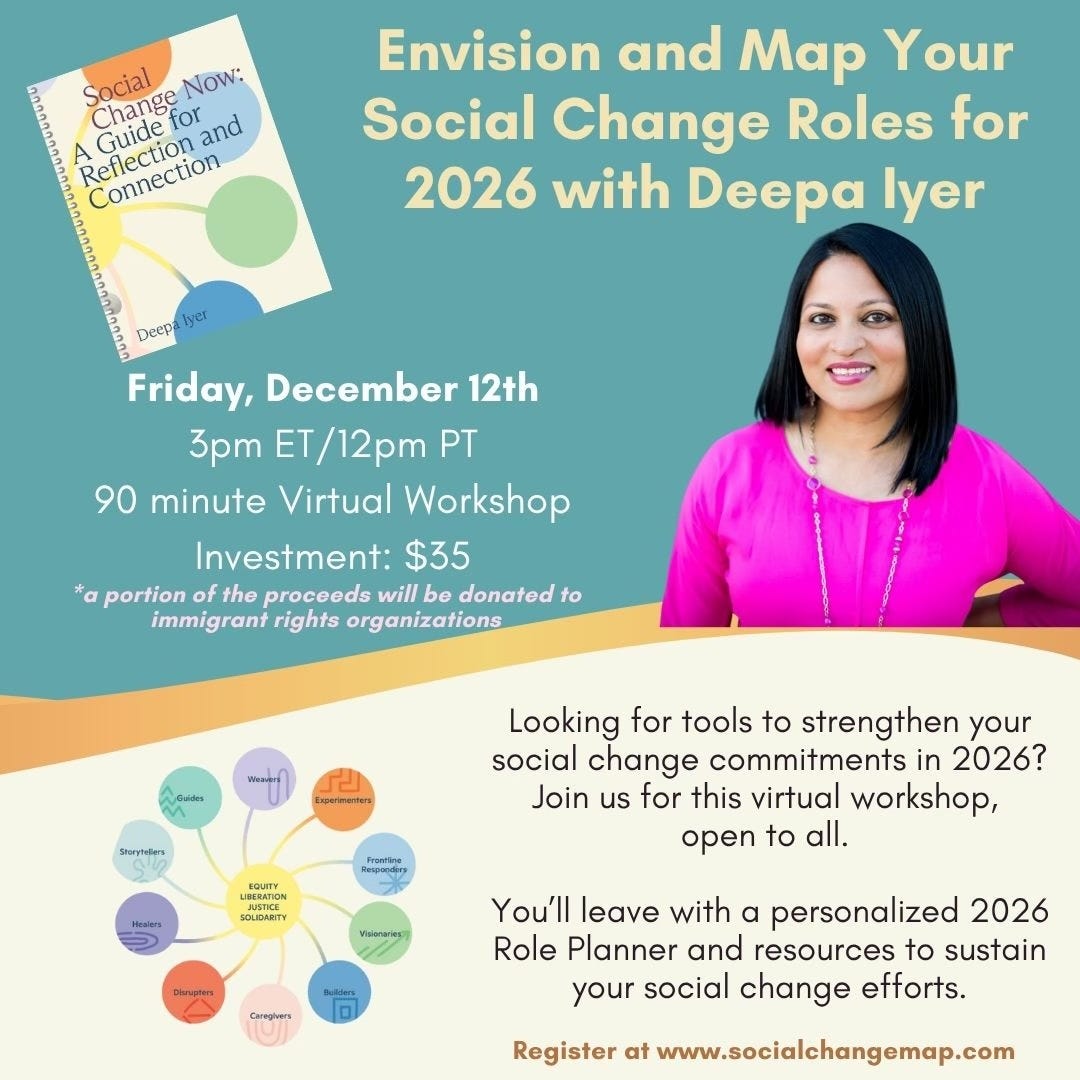
As the year winds down, I’m sharing two offerings: a 90-minute virtual workshop to help us map our social change roles for 2026, and an essay about what this year’s toughest audiences taught me. I’m grateful you’re here. Thank you!
In this 90-minute virtual session on December 12th, we will explore the ten social change roles and work on a personalized 2026 Role Planner to guide your commitments in the year ahead. Register at www.socialchangemap.com.
Thanks for reading! Subscribe for free to receive new posts and support my work.
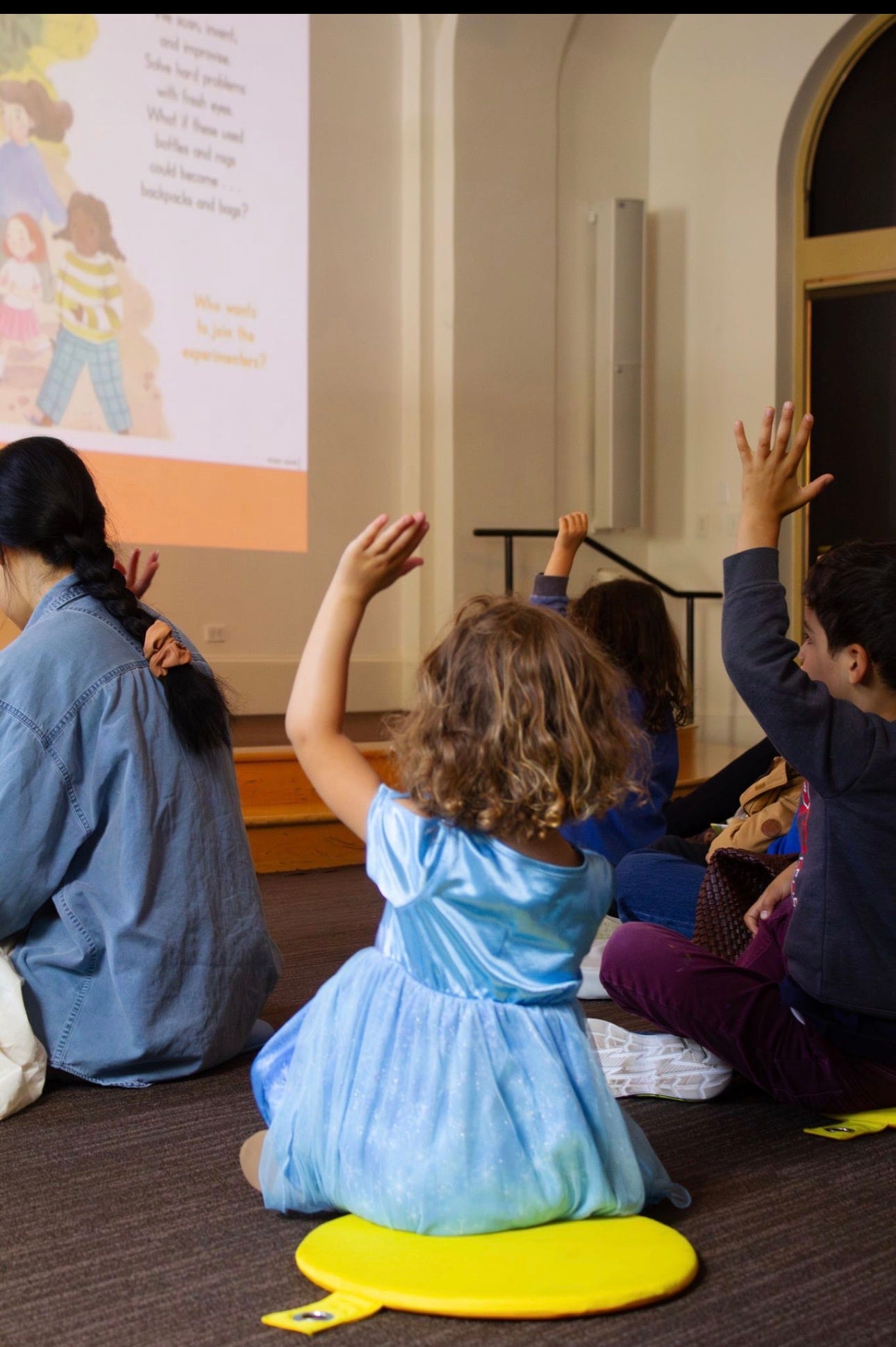
About a year ago, I nervously stood in front of an audience that I had never spoken to before. No, they weren’t CEOs or heads of state.
They were first and second graders.
“Sit down, criss-cross, applesauce, everyone!” the principal of Westgate Elementary School in Ann Arbor, Michigan, announced. The kids fell into oddly-shaped configurations on the floor of the school’s auditorium, knees splayed out, jackets bunched up, arms open wide. They looked up at me, waiting. I smiled widely.
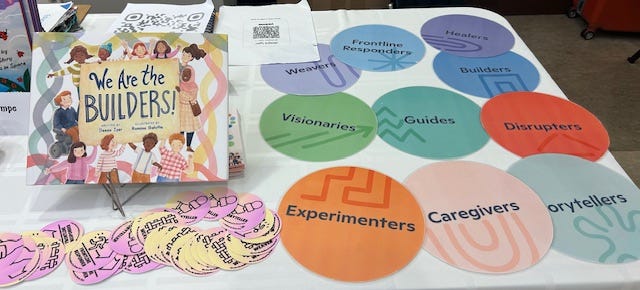
On the inside, I was panicking. I realized that I could totally botch this reading of my picture book, We Are The Builders! It’s a book about the ten roles that we can play, regardless of age and background, to improve our communities. Even adults struggle with this sometimes so would first graders get it? How would I be able to communicate a big concept like social change to elementary school children?
I took a deep breath and plunged in. “Is everyone ready?”
The short answer: yes, everyone was not only ready for the story, but they were engaged and interested. Elementary school children, it turns out, are primed to become community changemakers. They possess a natural curiosity about the world, an intuitive sense of empathy, and the readiness to get things done.
My experiences with young children who interacted with my book over the past year reinforced the importance of imparting social justice education at a young age. Here are four observations I’ve learned:
Kids engaging with my book immediately gravitate to the illustrations because they see themselves reflected on its pages. This is all thanks to my collaborator, Romina Galotta, who illustrated the book in a way that deepens the sense of diversity and community care.
Young readers have noticed. In Elmhurst (Queens), I spoke at a Title I school during Ramadan. I started by showing the kids, mainly Black, Latino, and South Asian, the cover of my book. I asked: “What do you think this book is about?”
Lots of kids! Kids working together. A community!
A girl raised her hand high, almost standing up to get my attention. “She looks like me!” she said breathlessly, pointing to a Black Muslim girl wearing a hijab.
“Ah, that’s Ramla,” I explained. “She is actually the main character in the book.” The little girl beamed.
Her friend piped up: “Do you think Ramla is also going to an Eid celebration like us?”
“Oh, you can count on it!” I replied. Peals of delightful laughter ensued from the girls!
The instinct of empathy is so strong in young children. When they see themselves and their friends represented, they open their hearts, brim with confidence, and experience a deeper connection with each other and even the big, overwhelming and confusing world around them.
When my son was young, I wanted to shield him from the sad realities of our world. I learned I couldn’t when he started asking about the very things I tried to hide.
It’s not surprising that children naturally intuit the inequities and challenges of our society. Children don’t live, grow, or study in apolitical contexts, and are regularly shaped by what they are exposed to at home and in school. For example, young immigrant children absorb fears of family separation and immigration enforcement.
Rather than keep children in a bubble so that they don’t feel overwhelmed about the inequities in our society, we can offer them age-appropriate language, models of other children taking action, and examples of how community care approaches create change.
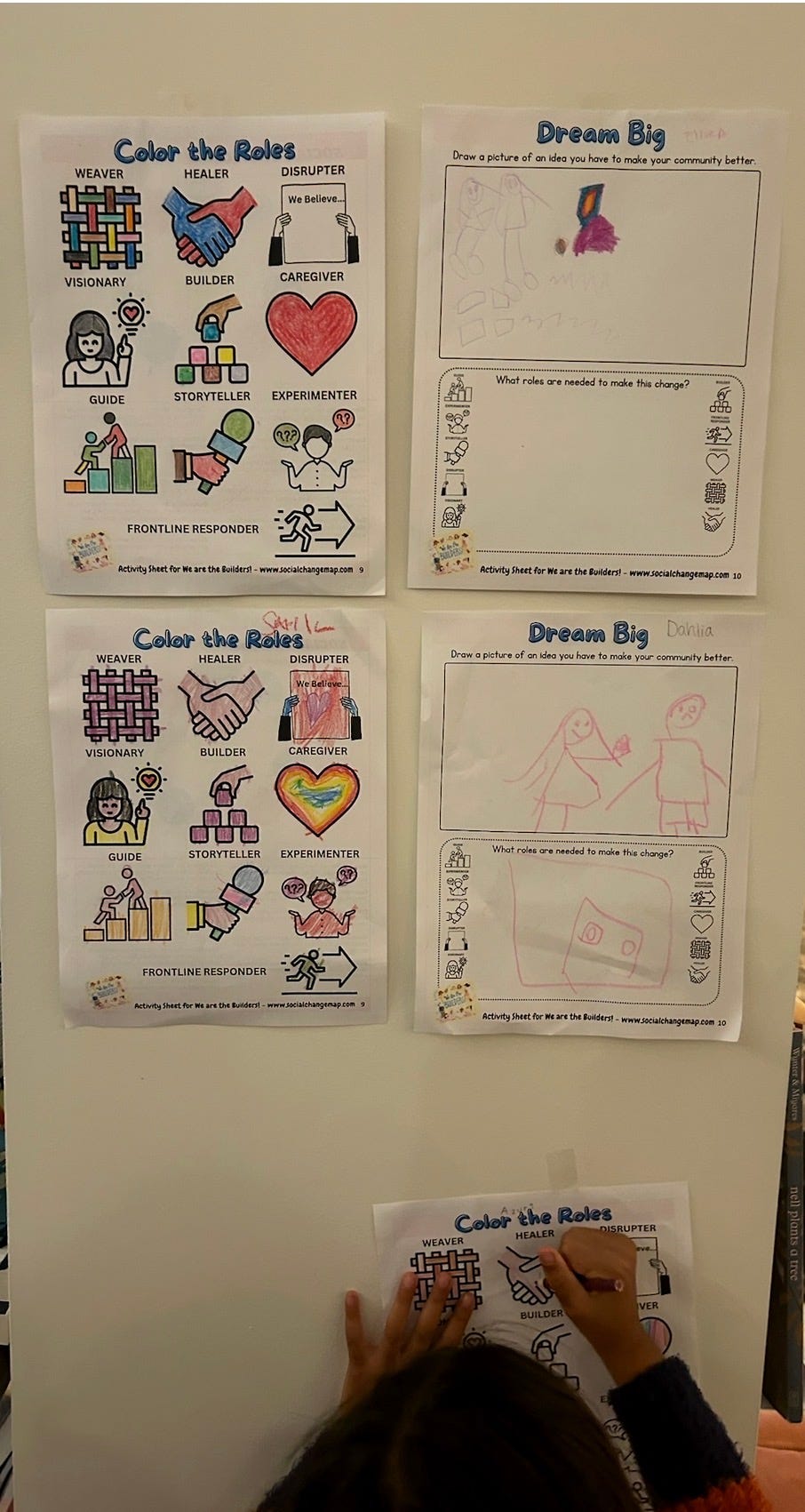
In my book, children explore a range of roles - builders, visionaries, caregivers, frontline responders, and more. As we learned about each role, children raised their hands if they identified with them. (Experimenters, storytellers, and caregivers remain the perennial favorites though I’m seeing a surge of visionaries and disrupters these days).
A Latina girl in Florida said that she felt like a guide because she interprets for her non-English speaking parents. “I help them understand the world by translating.”
A child in Chicago explained the role of a caregiver in this way: “When someone gets hurt on the playground, I ask if they’re okay and take them to the nurse.”
Children at an elementary school in San Francisco told me that they are all frontline responders as they were putting together a food drive with emergency supplies.
Young children are honing their own sense of self, sorting out the characteristics and attributes that make them unique, in elementary school. Identifying with social change roles gives them an added level of confidence (“this is who I am”) that can serve them well in all contexts.
Despite the many reasons to support social justice education in elementary schools, there has been an increase in restrictions and educational gag orders around the country. PEN America found that in the 2023-2024 school year, there were over 10,000 instances of book bans, more than double that of the previous year. With the current Administration’s emphasis on patriotic education, coupled with the dismantlement of the Department of Education, young children will lose out on opportunities to understand the mosaic of American life - and its complexities, histories, and contradictions. Additionally, the literacy crisis is worsening, particularly for students of color, working class and immigrant families, young people with disabilities, and multilingual learners.
We must course correct to ensure that children have the resources, skills, and individual and collective agency to meet the challenges of the society that they will inherit, shape, and lead. This means early and enduring access to books, histories, and community-centered storytelling. It means that teachers have the freedom and power to shape curricula anchored in social justice and community care without fear of harassment and retaliation. It means that state standards and frameworks for instruction encourage the inclusion of social justice and civic engagement. Check out my conversations with educators and children’s book writers for more ideas.
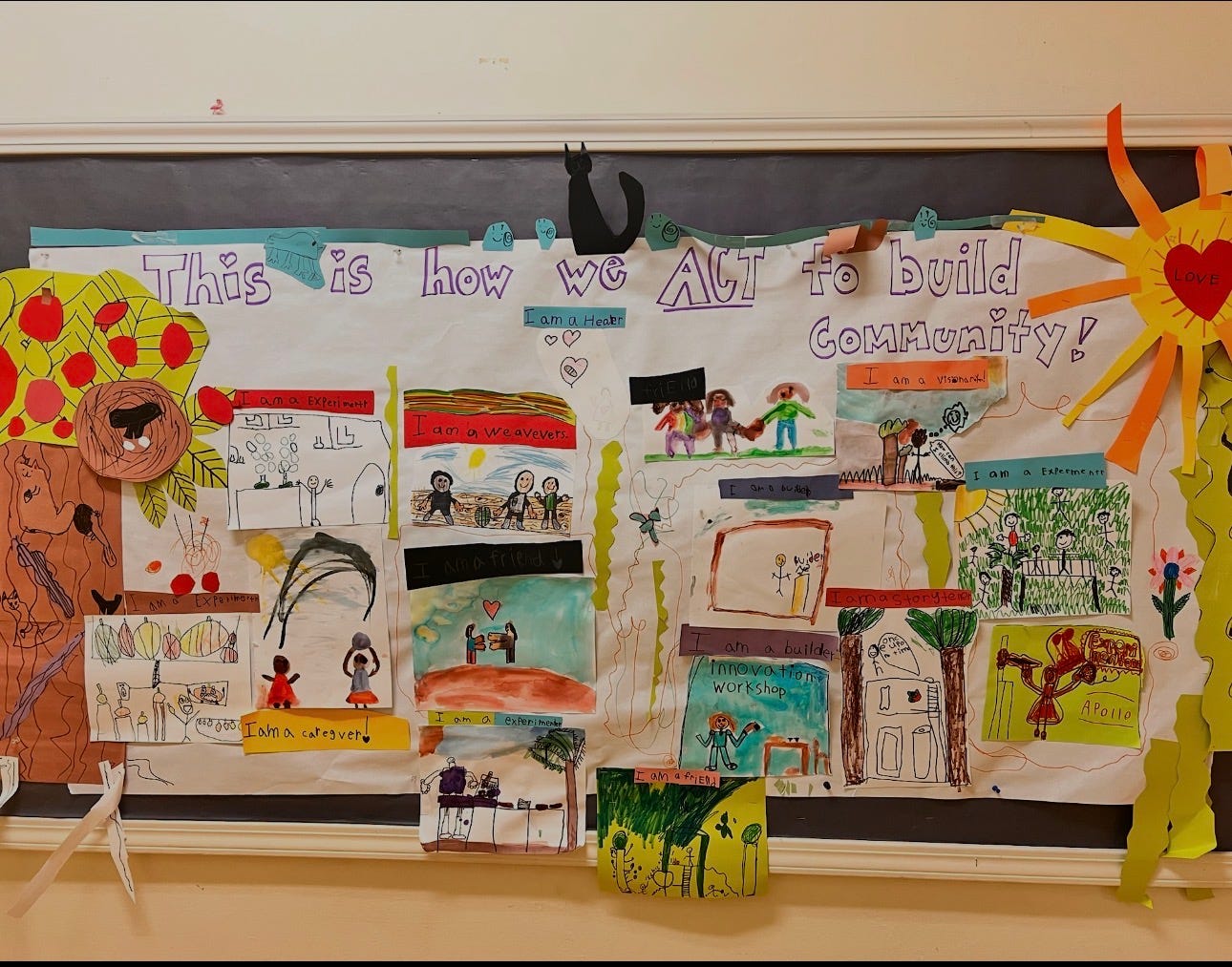
I began my We Are The Builders! book tour just a few weeks after the 2024 election. Throughout the year, the harshness of the headlines and my own sense of hopelessness have eased whenever I’m sitting with young children in classrooms and libraries. They have actually become my guides, and in their presence, I’m reminded that our deepest strength comes from our unique capacity to care for each other.
Thanks for reading! Subscribe for free to receive new posts and support my work.
Comments
Nothing yet. Say the first thing.
Sign in to join the conversation.