
[Photo by Nik on Unsplash]
It was a pretty unremarkable, long-ago Tuesday, except for the small fact that I was sitting in a meeting room in a Big Fancy Studio in Los Angeles, in the company of three film executives who had asked me to come in to discuss a script I’d written. They were excited! I was excited! The story was futuristic: a sci-fi tale of intrigue, mystery, struggle, and unwavering love. Woven into the action was a dog who played a pivotal role in establishing the character of my beleaguered hero-protagonist.
The meeting seemed to be going well, but I was in my early thirties, and pretty naive with regard to the machinations of the film industry. My degree and previous work in theater, and my job as a newspaper editor, had hardly prepared me for wheeling and dealing. It was thanks to my friend and mentor, author/screenwriter Jack Hunter, that I had been afforded this opportunity: Jack had sent a copy of my script to people he knew in the industry, and I was the fortunate recipient of their collective generosity.
In the swish meeting room filled with glass and sunshine and art and a lot of people whose names I don’t recall, everyone had a copy of my screenplay. Even the assistants. That alone was a rush, and I remember feeling a sense of the surreal. These people, who had made big, successful films, were interested in something I’d written.
The conversation, summarized, went pretty much like this:
(Chorus of studio execs:) We love it! We love it!
(Me, blushing) Oh! Well, thank you. I...
(Chorus of studio execs:) Great story — it’s clever! Fresh! We love it! Now, we need you to kill the dog.
I’m sorry — do what? The John Wick movies had yet to be made, but it seemed this plot device was already in rotation. My sense of the surreal became stronger.
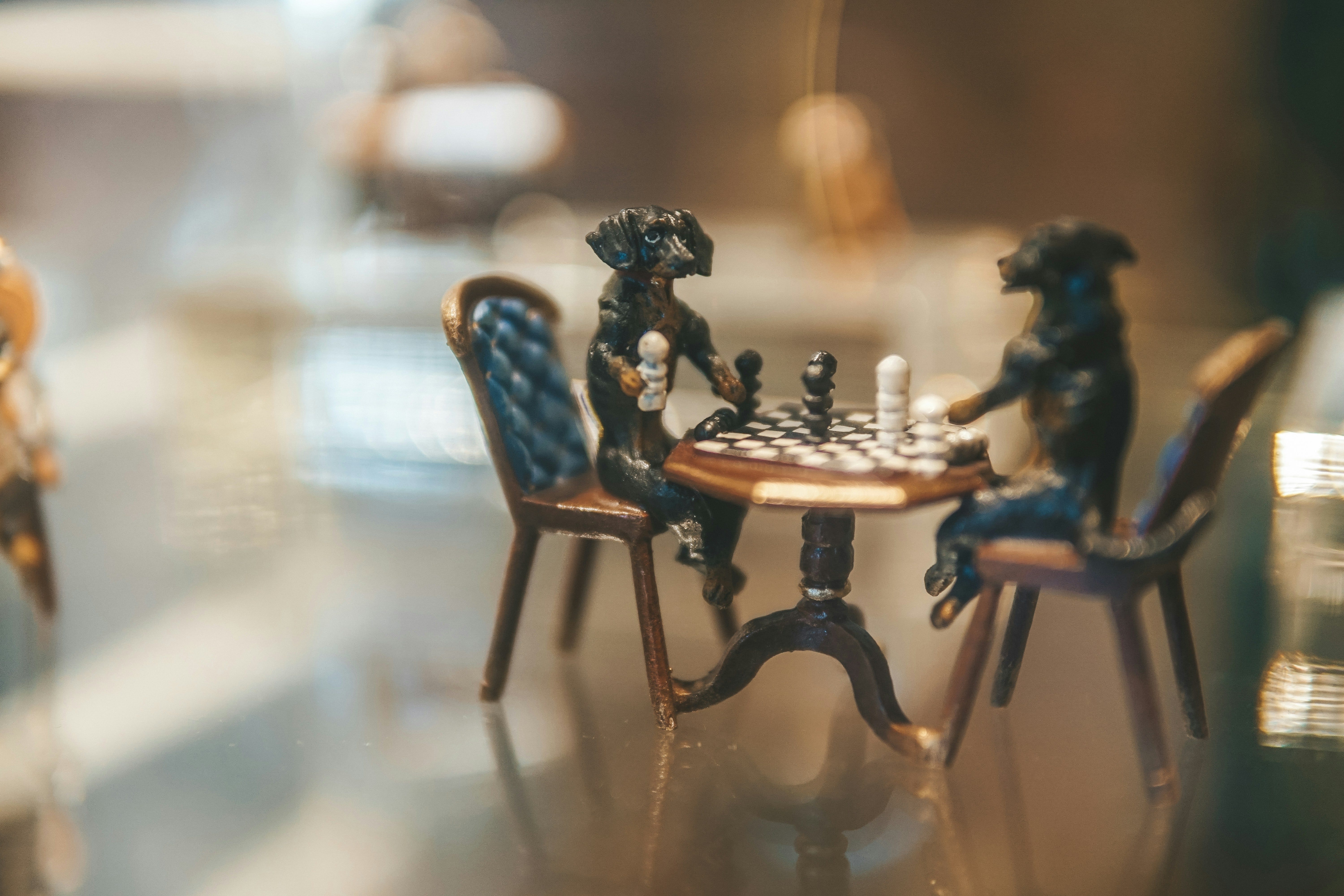
For the record, I’m not good at chess games, but am a big fan of editing. I do it myself: both to my own work, and the work of others. Collaboration can be useful, but there are limits. When editing the work of others, my prime directive is to do no harm — and that means respecting the author’s voice and leaving it alone. Plotlines? Well... they can sometimes (maybe even often) be strengthened, deepened and honed to create a better story. But that’s not a hard and fast rule. And a writer’s instinct? In my opinion, sacrosanct.
The trio of execs explained all sorts of stats around the contrivance of “killing the dog:” audience engagement, a surge of loyalty, the motivating essence of loss. While the ask felt Faustian in scope, I reasoned that my gut reaction was only because I happen to quite adore dogs, even fictional ones; and because I hadn’t realized that getting a film made has a whole lot to do with compromise.
Despite my instincts rumbling and protesting at a deep, gut level, I rewrote the script and turned it in. The ensuing conversation went pretty much like this:
(Chorus of studio execs:) We love it! We love it!
(Me, hesitantly:) Thanks. I...
(Chorus of studio execs:) Powerful! Moving! We love it! Now, we need you to make the male protagonist a woman, and instead of being set in the future, let’s move the story to the past. Oh — and let’s leave out the dog entirely! Maybe add some background about children and divorce.
[Photo by Andrei Stan on Unsplash]
You can see, of course, where this is story is going. I had already done one rewrite without the script being optioned by the studio (which I later learned is a BIG no-no), and was being asked to do another. This time, a complete reimagining of the story. This felt like a test. A game of chess. These studio people were going to see how many hoops they could get me to voluntarily jump through, and how willing I was to compromise my original vision, without being offered a guarantee of anything. After a soul-searching night, a few phone calls and at least one glass of wine, my answer was to politely decline unless an option was being extended.
It was not. Did I make a huge career mistake? Perhaps. It certainly wouldn’t be the first. The thing is, if I had made those changes, the story would no longer have been mine. It certainly wouldn’t have been the one I longed to tell.
Years later, my first book submission got a positive response from one of the Big Five publishers. They wanted to see if I was willing to make some tweaks to the manuscript before making an offer. Though I didn’t like the suggestions, and felt they’d change the story in a negative way, I agreed (see previous comments about editing and collaborating, and how I rolled over in that glassy film studio office).
After conferring with my agent, who pointed out that I had never sold a book before and might regret saying no, we sent a revision, making those initial changes without the benefit of a contract. The publisher passed on the book, which now sits (in its original form) in a file drawer, next to that momentarily dog-free script. I’ll revisit the book in the future, after it marinates for a sufficient period of time for me to review the plot and characters, and see where my instincts tell me it should go.
I’ve since published three books in my Dark Paradise Mysteries series, and worked with a fabulous editor who helped me make them better (see how open I am to tweaking?). But — I had a signed contract before I made any changes, and was studious in my decision regarding the final selection of publisher (I was fortunate to have two good choices). Throughout, I listened to my instinct and intuition.
Which brings me to the question that all writers struggle with, at least to some degree. How much should we trust our instincts, and where should we acquiesce to the demands of market trends and advice from others, particularly when those others are actual experts? I think about all the situations in which my intuition has been vital, and maybe even life-saving: when to not get into that particular taxi, or say yes to that invitation, or when to immediately cross the street and step into a shop to avoid an approaching person who exuded a sense of ill intent. When I ignore my instincts — even in moments as simple as when to delay putting out spring seeds because my Spidey-senses are warning that there’s one more big snow on the way — I always regret it.
[Photo by Mario Serpas on Unsplash]
Maybe, had I made that next round of changes, those studio people would have eventually optioned my script and made it a hit, launching a fabulously successful career; maybe if I’d been less resistant about the book changes, I would have landed on Oprah’s show to talk about my wildly popular novel. No way to know, of course. I do know that my instincts and intuition were screaming at me, in both cases, that I would have been compromising on something important, and would have been unhappy with the process, and quite likely, the result.
I like this quote from the great actor Alan Alda: “You have to leave the city of your comfort and go into the wilderness of your intuition. What you’ll discover will be wonderful. What you’ll discover is yourself.”
What are your own limits on creative compromise? Do they shift, or are they steadfast? I’d love to know.
Comments
Nothing yet. Say the first thing.
Sign in to join the conversation.