
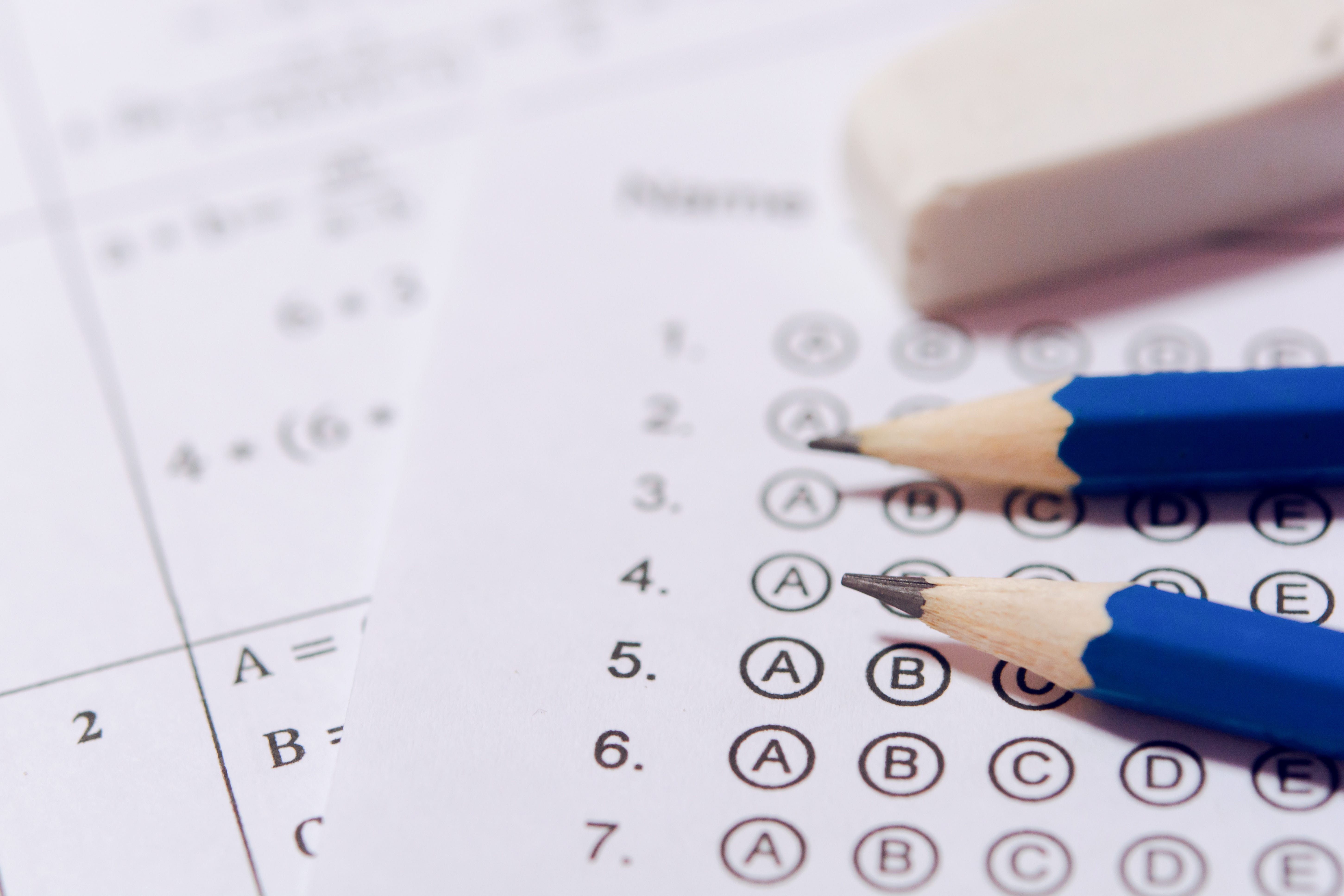
During my years as a consultant with families, I administered individual IQ tests to people, mostly to children, who showed signs of being intellectually gifted. I also interpreted for parents what the results mean and what the results indicate about the learning needs of their children.
This job was, for me, difficult for a variety of reasons, the foremost reason being that IQ scores aren’t precise. And I know that. Having focused on Test & Measurement for my PhD program at the University of Minnesota (once called the empiricism dustbowl for being a leader in psychological testing and analysis: see “Meehl, Paul Everett.” Complete Dictionary of Scientific Biography. Encyclopedia.com. (August 26, 2022). https://www.encyclopedia.com/science/dictionaries-thesauruses-pictures-and-press-releases/meehl-paul-everett), I have a different background in testing than many others who administer ability tests. In my opinion, this article on Meehl is a very fun read!
IQ tests generally indicate what a person is capable of learning, not how successful or cooperative at learning — and using what’s learned — the test-taker will be.
What? IQ tests aren’t precise? Does this mean that the IQ I have for myself or my child might be wrong?
Wrong? Well, not exactly. You see, an IQ is just one sample of the range that is your “true score.” A true score is the hypothetical average of a thousand parallel testings of someone’s intellectual abilities. You can score higher or lower on any given occasion, but if you take the tests enough, the scores will find their center, the most likely place that it’s reflecting your true score or your average ability (ability to learn new things) profile and level.
Think of this: if, as in the olden days, when you stick a thermometer in your mouth to get your temperature to see if you have a fever, the results vary according to which part of your mouth you stick it in, whether you’ve just had ice water or hot tea to drink, and whether you keep trying to talk while it’s in there. Because we know there’s a healthy human temperature average, we can pretty much guess if we’re doing it wrong or if the thermometer isn’t functioning correctly. (I still use this kind of thermometer and think I should get a modern one, but you get my point here).
But with IQ tests, having a good or bad day when you take the test isn’t all that can make the difference in your score. Which test you take, what the test’s possible score range is, what the scale is of your test compared to someone else’s test, what elements are actually assessed, how new or old the test was (when was it last normed or updated?), and all these factors can determine whether or not you have a score that represents your abilities very well.
Try not to get too hung up on an actual score. It’s more important to know as much as possible about what you are capable of, what lights your own fire of ambition or passion, and in what circumstances you are most blissfully happy with the people and activities around you. Getting your score results — or your child’s — should be to help you understand yourself — or your child — better. Because then it becomes possible to have more control and say over your life!
For IQ test results to have meaning, we need to know who the “peer group” was for the particular test you took.
Think of this: when we were in grade school and took those tests we had to take, we may have gotten mostly 99th percentile scores, or at least above the 90th percentile. I’m guessing that is true for you because you wouldn’t have chosen to read this article if you weren’t that kind of person.
Depending on where in that range of the other students we were way back in elementary school, many of us see our percentile results drop when we take tests such as the PSAT, the SAT, the Explore Test, and the ACT. Even more of us are likely to see our percentiles drop when we take the GREs or other graduate or professional school tests. When that happened for me in some cases, I used to think the problem was that I’d simply become too much of a social butterfly during my teen years and “lost” my focus. (There was some truth to that; I also never prepared for those tests at all).
It turns out that, in many cases, we were simply being compared to a different group of people as we got older. If you were a “smart kid,” your early scores compared you to all of the children your age in school at the time. If you or your children took the Explore Test (which is no longer available at this time), the one that helps you plan your high school coursework, the one that gives smarter students a chance to take a test that has higher ceilings than the grade level tests, unless you are the most supremely intelligent kid around, you are not as likely to get any 99th percentile scores on the Explore Test.
In a nationally normed sample of students, kids of all abilities, your score would still be 99th percentile, but not if you’re being compared to your true peers.
Okay, what are true peers? They are people who are in your intellectual range, people who share your interests and sense of humor. They may or may not be in your age group. They have intellectual abilities that are very much like yours. When you take the SAT or ACT, both tests that help universities and individuals “sort” prospective students for their ability to succeed in college-level courses, most of the students who struggled with academics for the preceding 8 or 9 years will have opted out of university-level preparation by then. Fewer of them are still in the sample pool who takes the ACT and SAT. Within this new group of test-takers, the average IQ or academic ability level goes up. There are fewer people “below” you. Your percentiles might go down because you’re competing against others who have a good chance of “beating” you.
5 Levels of Gifted: School Issues and Educational Options in 2009. This is the original 5 Levels of Gifted book for parents and educators. Moderately Gifted, Highly Gifted, Exceptionally Gifted, and Profoundly Gifted children are the subjects of this book (78 of them) and their early milestones, behaviors, and parent journeys through how to raise and educate these children is a must-read. Parents who read this book can estimate their own children’s eventual IQs surprisingly accurately by the time they are age three to about six years old, before it is effective — or reliable — to have them professionally tested.
Here are links to the 5 Levels of Gifted book on Barnes & Noble: https://www.barnesandnoble.com/w/5-levels-of-gifted-deborah-ruf/1126358834 and Amazon: https://www.amazon.com/Levels-Gifted-School-Educational-Options/dp/0910707987 or directly from the publisher: https://www.giftedunlimitedllc.com/store/p12/5_Levels_of_Gifted.html
The 5 Levels of Gifted Children Grown Up: What They Tell Us (2023). This is a 20-year longitudinal study follow-up about the original gifted child subjects in 5 Levels of Gifted: School Issues and Educational Options (2005, 2009). In it, Dr. Ruf covers every conceivable topic to ask the 60 of the original study group of 78. She also shows readers how it is that people of the same original promise to succeed have vastly different outcomes. https://www.amazon.com/Levels-Gifted-Children-Grown-Up/dp/B0C9SHFRLH or https://www.barnesandnoble.com/w/the-5-levels-of-gifted-children-grown-up-phd-deborah-l-ruf/1143719859?ean=9798988323709.
Keys to Successfully Parenting the Gifted Child (2023). Need answers fast on what to do now? This is a short book — 80 pages including pictures — that is a great starter for parents just wanting some answers … fast! The content was originally from a PowerPoint I created for the parents of gifted children presentations around the country. The contents zero in on some of the most important things about raising gifted children that parents want to know. On Amazon, Keys to Successfully Parenting Gifted Children (2022, 2023) Print and ebook. The Nook version is also now on B&N.
Losing Our Minds: Too Many Gifted Children Left Behind (Oct. 2024). This is the first book in a Trilogy meant especially for educators, parents, adult gifted, and therapists. Questions for discussion are at the end of every chapter. The book provides a detailed analysis of the different levels of giftedness, the concept of “good fit” in educational settings, and the impact of various school environments on gifted children. It also includes personal stories and experiences of gifted children and adults, highlighting the challenges they face in finding appropriate educational and social environments. Available now on both Amazon and B&N. It is not the old purple book from 2005. Also, the Kindle and Nook versions are formatted so readers can click back and forth easily and find their place again. Follow this link: https://www.amazon.com/dp/B0DL3BSC9X or this link: https://www.barnesandnoble.com/w/losing-our-minds-deborah-ruf/1146410968?ean=2940185888872
Environmental, Familial, and Personal Factors That Affect the Self-Actualization of Highly Gifted Adults: Case Studies (D. Ruf, 1998) doctoral dissertation. Free PDF https://dabrowskicenter.org/ruf
Comments
Nothing yet. Say the first thing.
Sign in to join the conversation.