
These heads of men, these collections of ears, these burned houses, these Gothic invasions, this steaming blood, these cities that evaporate at the edge of a sword, are not to be so easily disposed of. They prove that colonization, I repeat, dehumanizes even the most civilized man; that colonial activity, colonial enterprise, colonial conquest, which is based on contempt for the native and justified by that contempt, inevitably tends to change him who undertakes it; that the colonizer, who in order to ease his conscience gets into the habit of seeing the other man as an animal, accustoms himself to treating him like an animal, and tends objectively to transform himself into an animal.
-Aimé Césaire, Discourse on Colonialism (1950)
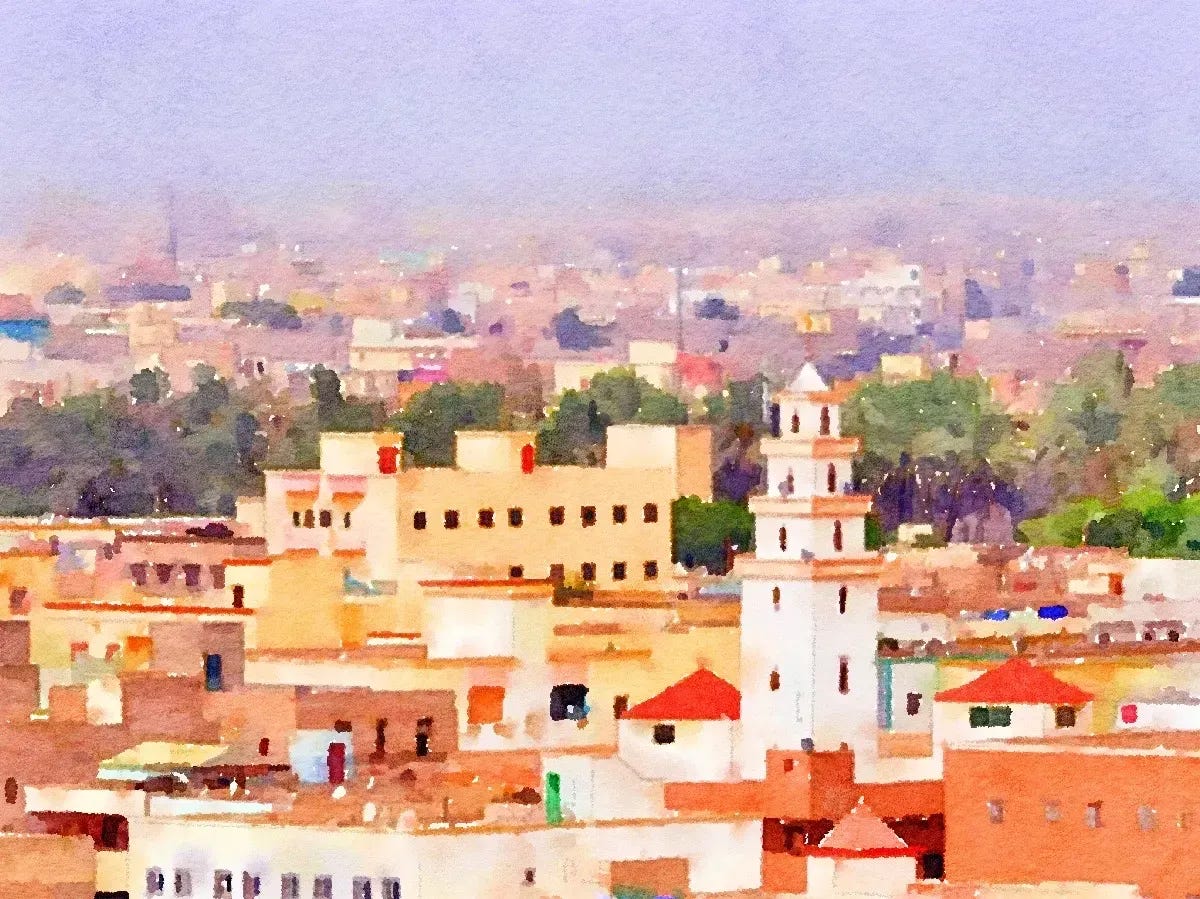
S——. Born in 1998 in Arafat, a village on the outskirts of the capital city of Nouakchott, Mauritania. A member of the Haratin ethnic group—whose maternal side of the family (of Arab ancestry) enslaved the paternal side (of indigenous West African ancestry—likely Wolof, Soninke, Pulaar, or Bambara). He, his father, and his grandfather were enslaved and lived together on the family’s farm.
He was periodically able to sneak away from the family’s property and head downhill into the center of the city, which sat two miles away. He had attended local marches and rallies for the “Initiative pour la Resurgence du le Mouvement Abolitioniste” (Initiative for the Resurgence of the Abolitionist Movement, or IRA)—an political and social movement that opposes the racism present in the Mauritanian government, as well as the practice and institutionalization of slavery throughout the country—since he was about 15 years old. He saw many other young Haratin people beaten, tear-gassed, and arrested by the military at these demonstrations. Some of his friends died in the streets demanding their freedom from enslavement.
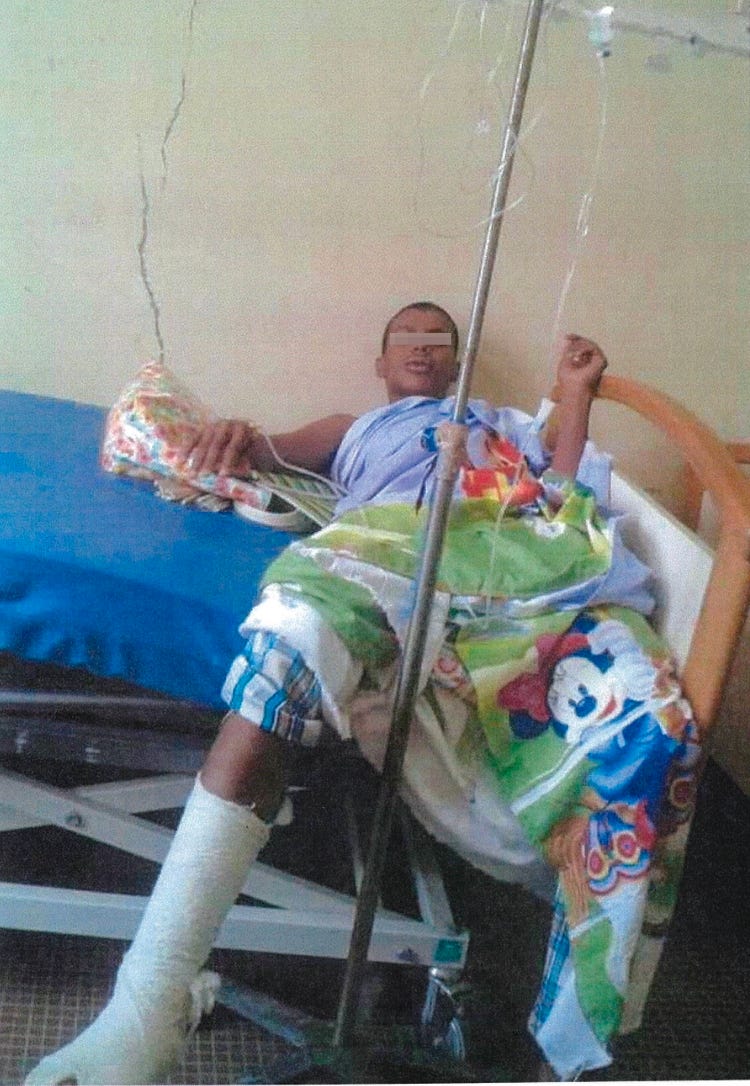
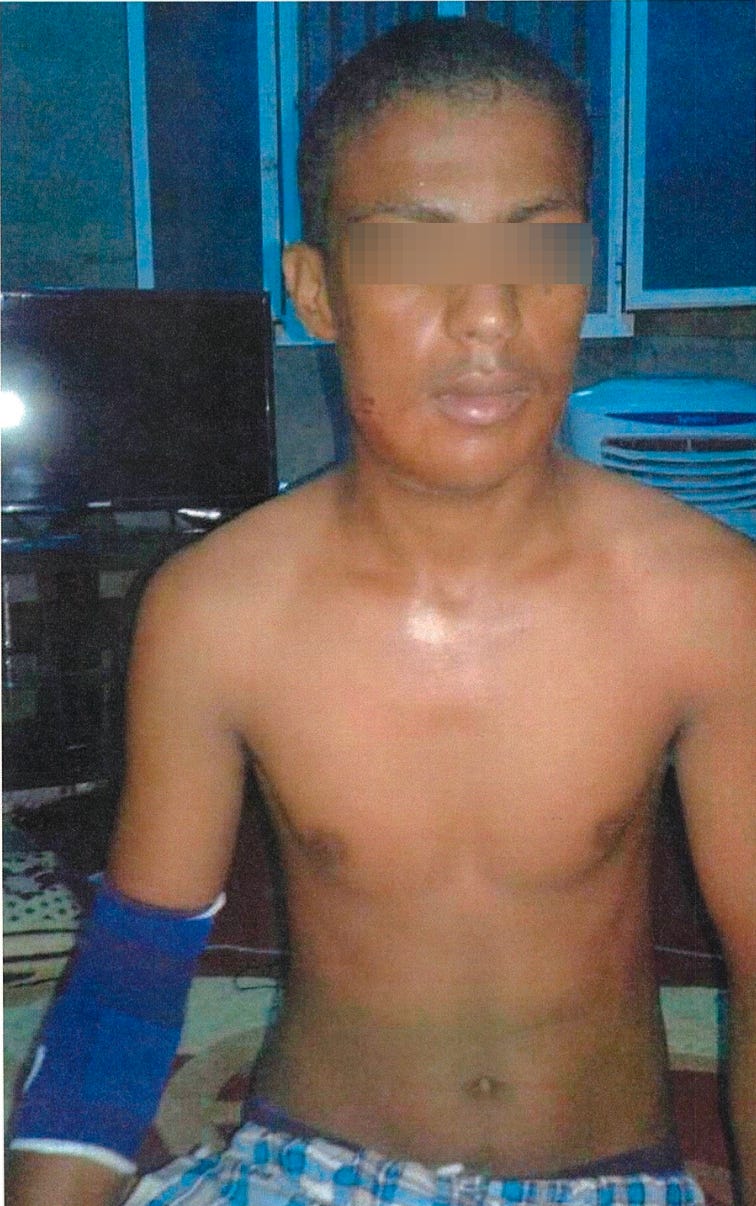
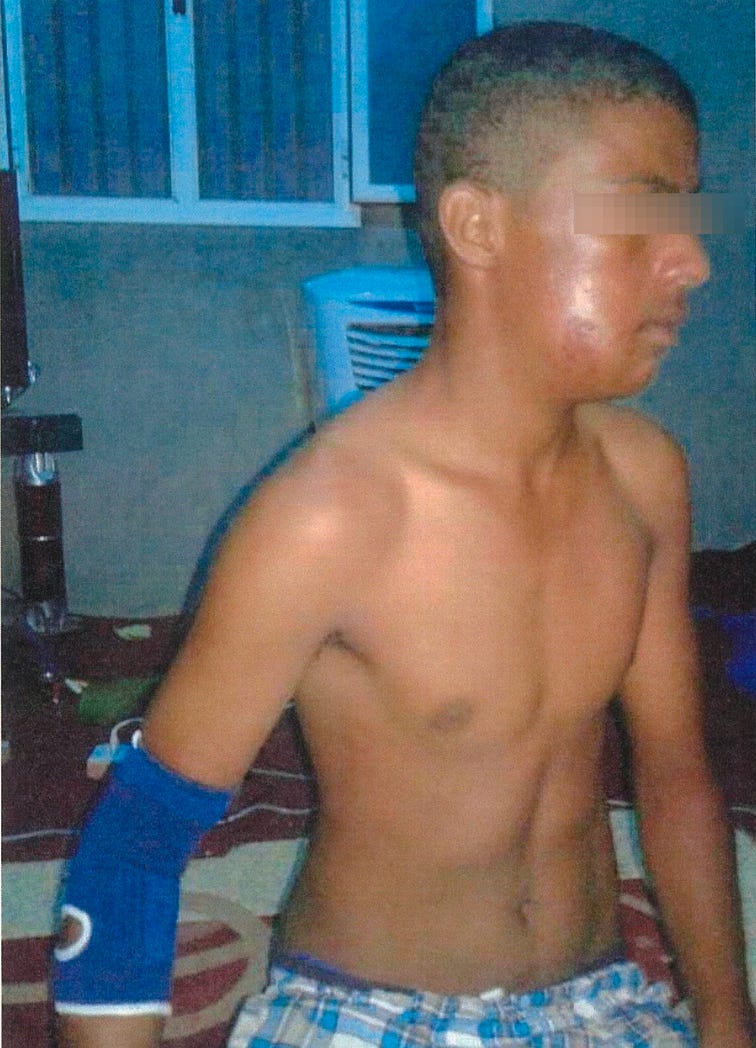
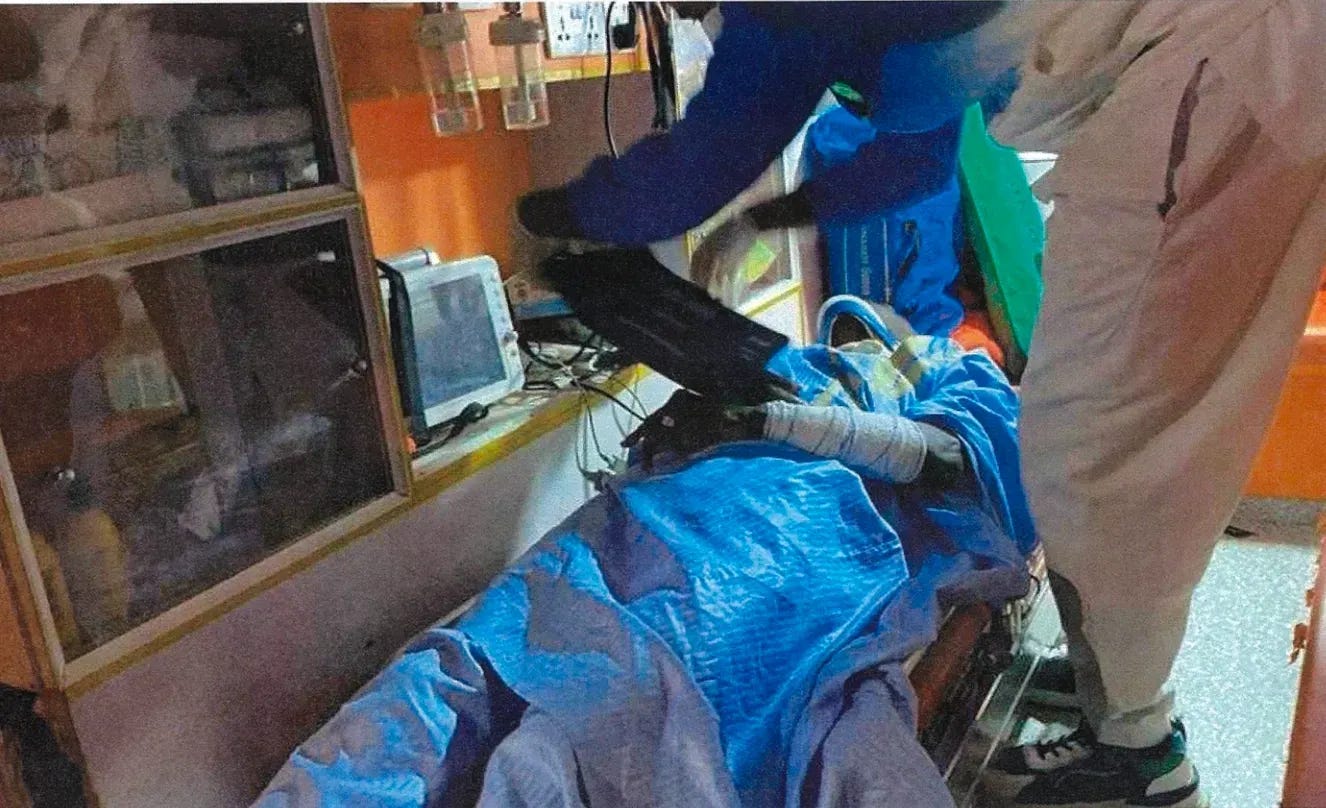
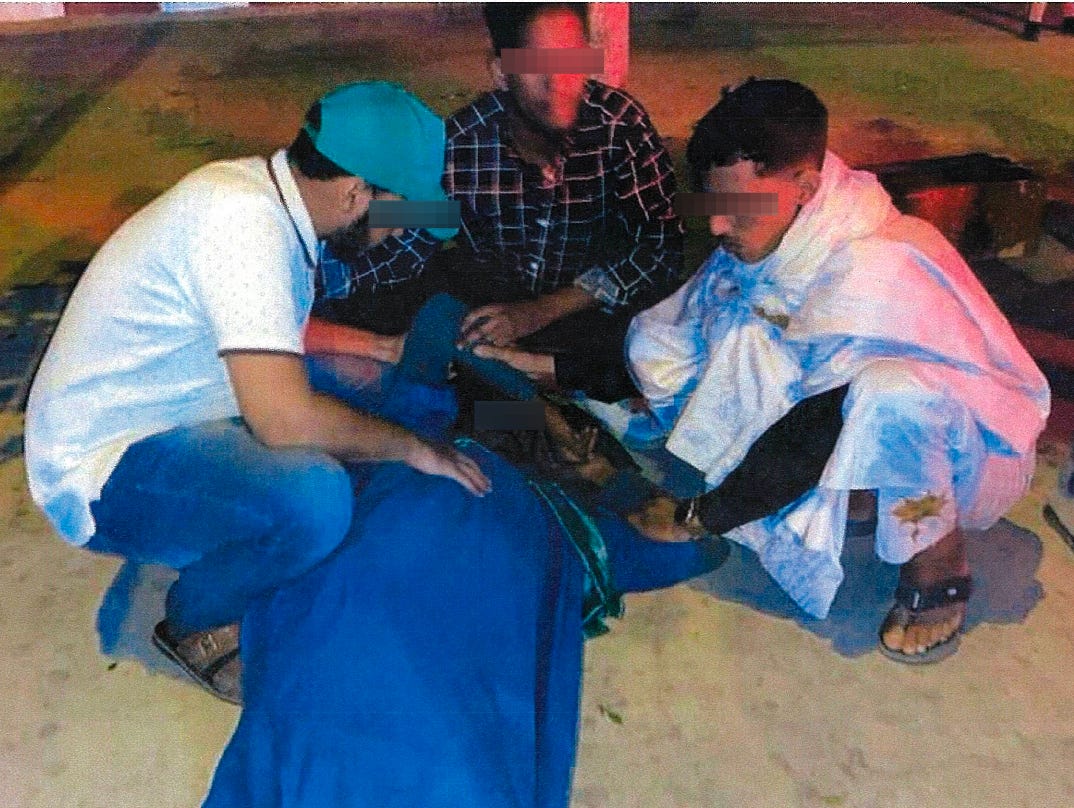
Two of S——’s cousins on his mother’s side of the family, who were both soldiers in the Mauritanian Army, viciously tortured him for leaving the property to partake in the IRA’s activities. They tied him up, beat him with metal rods, and ran him over with a truck, breaking his arms, one of his legs, and his jaw. They took him to a local jail, where the Mauritanian police beat him with their batons and held him in a cell for days without food and water.
He was finally able to escape Mauritania in May of 2023, with the help of a family member, who booked him a plane ticket from Nouakchott to Bogotá, Colombia via Türkiye. For the next month, he trekked through the Darién Gap, an unforgiving jungle environment plagued with violent armed groups, eventually making his way through Central America to the Lukeville, Arizona Port of Entry at the US-Mexico border in June of 2023.
When he was processed by DHS at the border, he was at no point provided an interpreter in his native dialect of Hassaniya Arabic—the only language he can speak and understand. Because he was denied access to basic education for his entire life as an enslaved person, he barely knew how to read Arabic—much less the legal jargon printed on his Notice to Appear (NTA) in English, which as a result he did not sign in order to confirm he understood what he was given. A DHS officer signed his documents before being released, noting that he was served notice of his upcoming court hearing in “the language of English/Spanish.”
He was scheduled for an immigration hearing in New York City (as that was one of the ‘sanctuary cities’ to which DHS was sending busloads of immigrants at the time) for January of 2024. He did not appear, as he had no idea he was scheduled for a hearing. In fact, he had no conception of what immigration legal proceedings were. He was a previously enslaved Mauritanian who fled a life of certain death to seek political asylum. It was under these circumstances in which I met him in March of 2025.
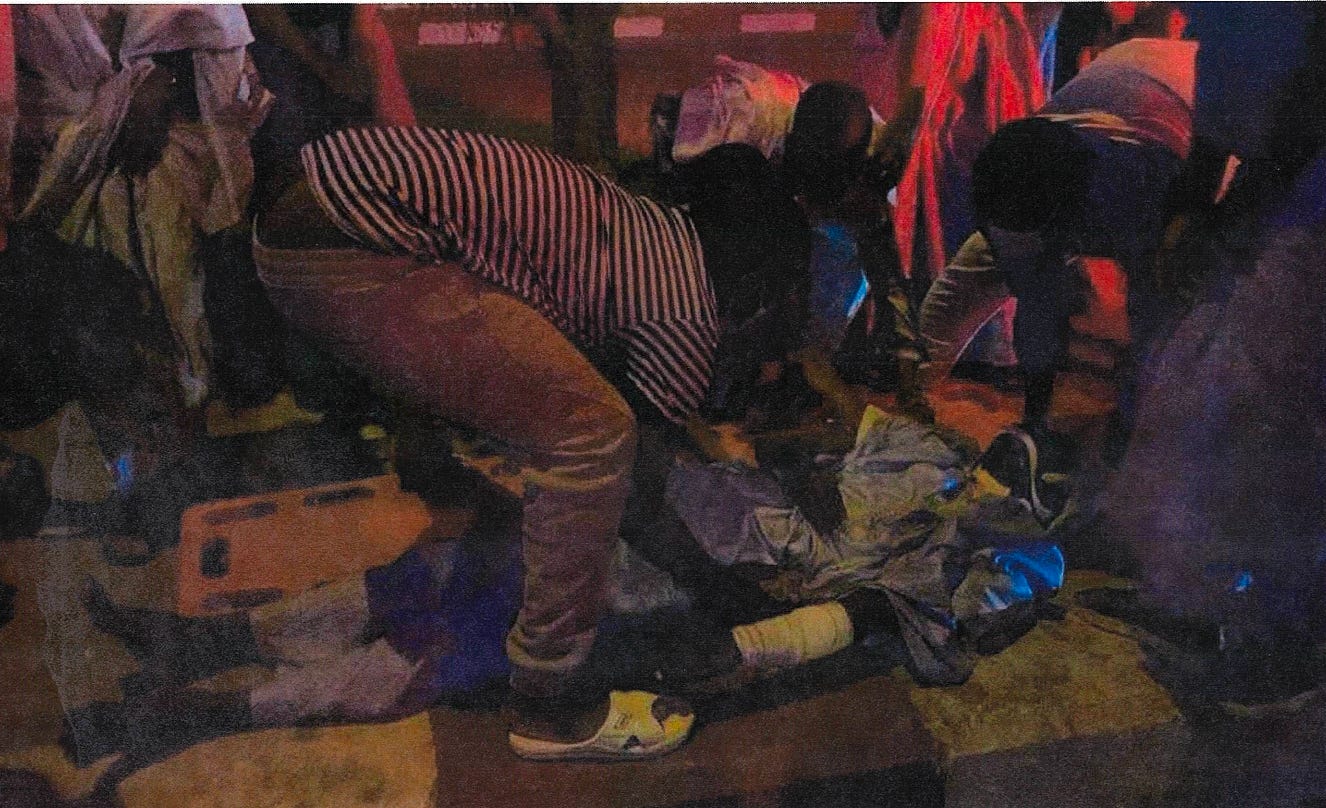
After discerning all of the most important facts of his case via hours of in-person interviews with a Hassaniya Arabic interpreter on speakerphone, I assisted S—— with filing a pro se Motion to Reopen/Rescind Removal Order with the New York Immigration Court. As supplemental evidence, we complied photos of his bruised and broken body, which had been taken by medical staff after he was beaten by his cousins and the police (some of which are included below).
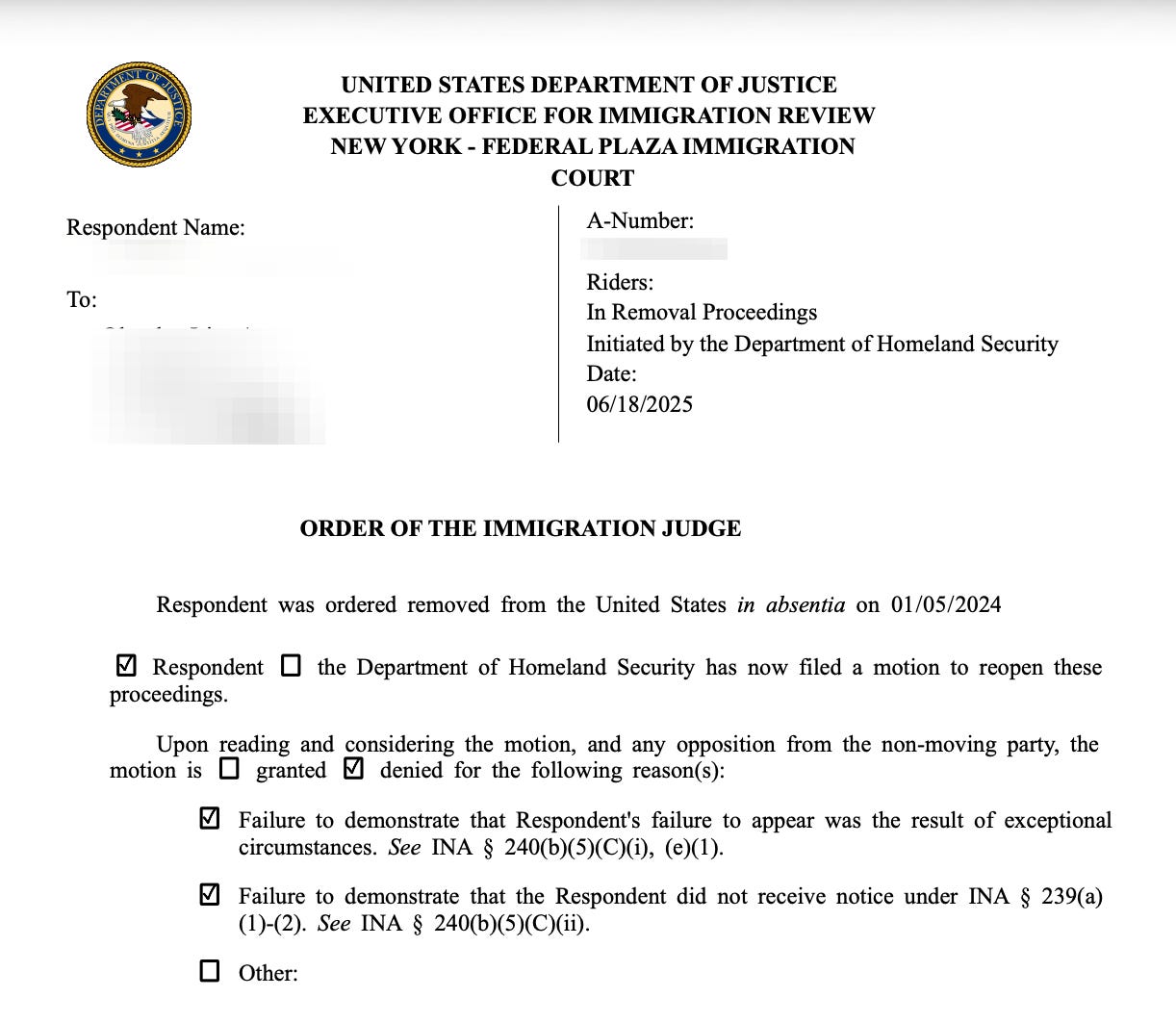
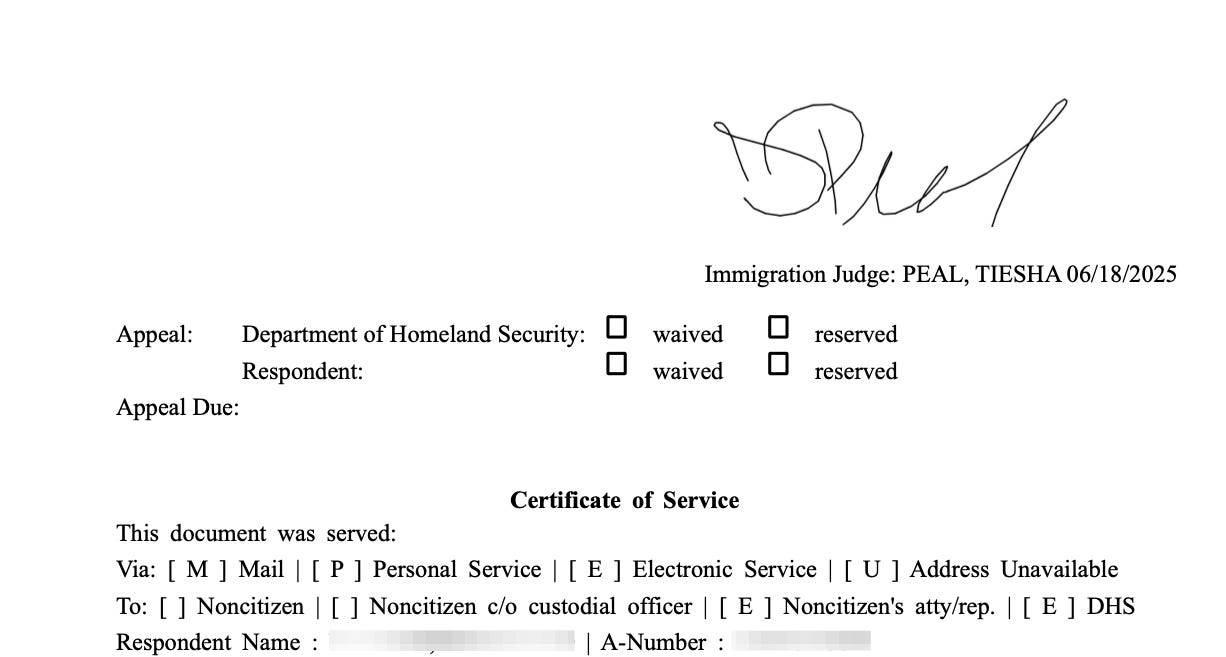
Without an asylum case pending, he could not apply for a work permit. He had been living at a a homeless shelter in the Bronx for almost two years. We waited three months for a decision from the immigration judge regarding the Motion to Reopen. In June of 2025, S—— received a letter of denial from judge Tiesha Peal, an alumna of Syracuse University and Rutgers Law School. She denied the Motion to Reopen without explanation.
During the 2025 phase of the Trump regime’s mass detention/deportation efforts in NYC, Peal had established herself as one of the ‘public servants’ most amenable to armed agents of the state waiting outside her door to abduct those who she ordered removed from the country just moments before (this I know from personal experience as a courtroom observer at 26 Federal Plaza). From 2023 to 2026, Peal’s asylum denial rate rose from 17% to 98%, while her caseload quadrupled.1 The young Mauritanian man I had come to call my friend was not counted among these numbers. He didn’t even have a chance to reopen his case and apply for political asylum—for which he had a clear cut path to approval, as a person who escaped enslavement in his home country. Judge Peal is seemingly unable or unwilling to comprehend the paradoxical implications of her personal decision to deny a victim who was suffering from the effects of institutionalized slavery a chance to reopen his case without explanation.
There was no comment made by Peal, a supposedly ‘neutral arbiter,’ regarding the extensive photographic evidence establishing past persecution and a well-founded fear of future persecution in Mauritania; nor was there any justification for the reality of the situation, that S—— had no idea he was scheduled for an immigration court hearing in the first place. And because he is living in a shelter, he was not able to access his mail until well after the 30-day deadline to appeal the judge’s decision; his case was, in effect, permanently closed. He remains in the Bronx homeless shelter without a possible avenue for relief, an order of removal from the US hanging over his head.
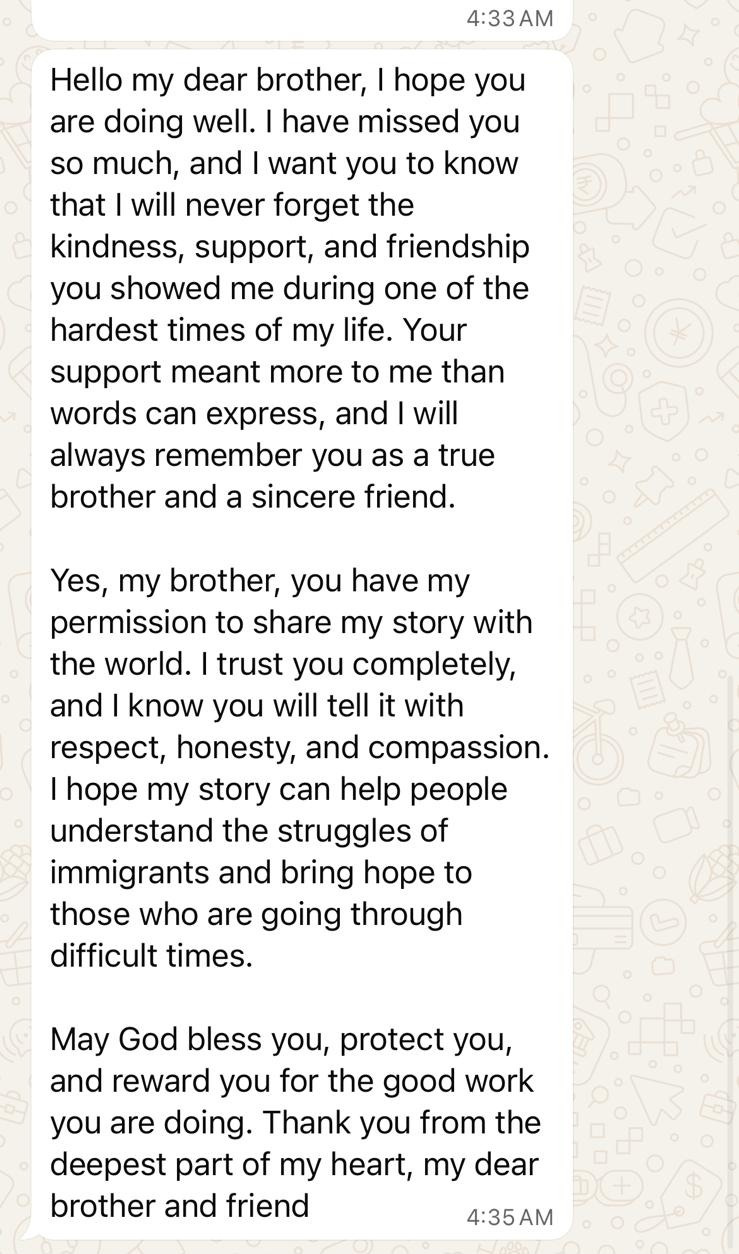
We maintain contact via WhatsApp; we translate our messages from English to Arabic and vise versa. He has given me his explicit consent to publish the details of his story, including the following relevant images from his case which he approved:
This series is part of a broader, ongoing project in collaboration with my friend and colleague, Zack Chaqor (who titled this series), in which we relay our experiences as legal professionals employed at a pro se legal clinic in NYC. Tasked with assisting newly-arrived asylum seekers—many of whom are victims of torture and other forms of severe persecution—we hope to further contribute to their struggle for self-determination and freedom by sharing their stories as they are relayed to us in our daily work, while we help them navigate the fascistic and violently oppressive immigration system of the US empire.
Follow the author here.
To those that would raise the argument it is unethical or unprofessional to display the name and personal details regarding Immigration Judge Tiesha Peal in this article: It is worth noting that Immigration Judges, employed by the Department of Justice, rely completely on federal tax dollars paid by US citizens (and those immigrants themselves who are working legally) for their salaries and employment benefits. They are public servants funded by the American people and are therefore beholden to the views and opinions of their constituents, particularly when they hold the fate and overall wellbeing of thousands of recently arrived asylum seekers in their hands.
Comments
Nothing yet. Say the first thing.
Sign in to join the conversation.