
The reality so described is perceived ever more clearly as resulting from a situation of dependence, in which the centers of decision-making are to be found outside the continent; it follows that the Latin American countries are being kept in a condition of neocolonialism. It has been asserted that underdevelopment “can be understood only in terms of the dependency relationship with the developed world that it results from. In large measure the underdevelopment of Latin America is a byproduct of capitalist development in the West.”
-Gustavo Gutiérrez, A Theology of Liberation: History, Politics, and Salvation (1973)
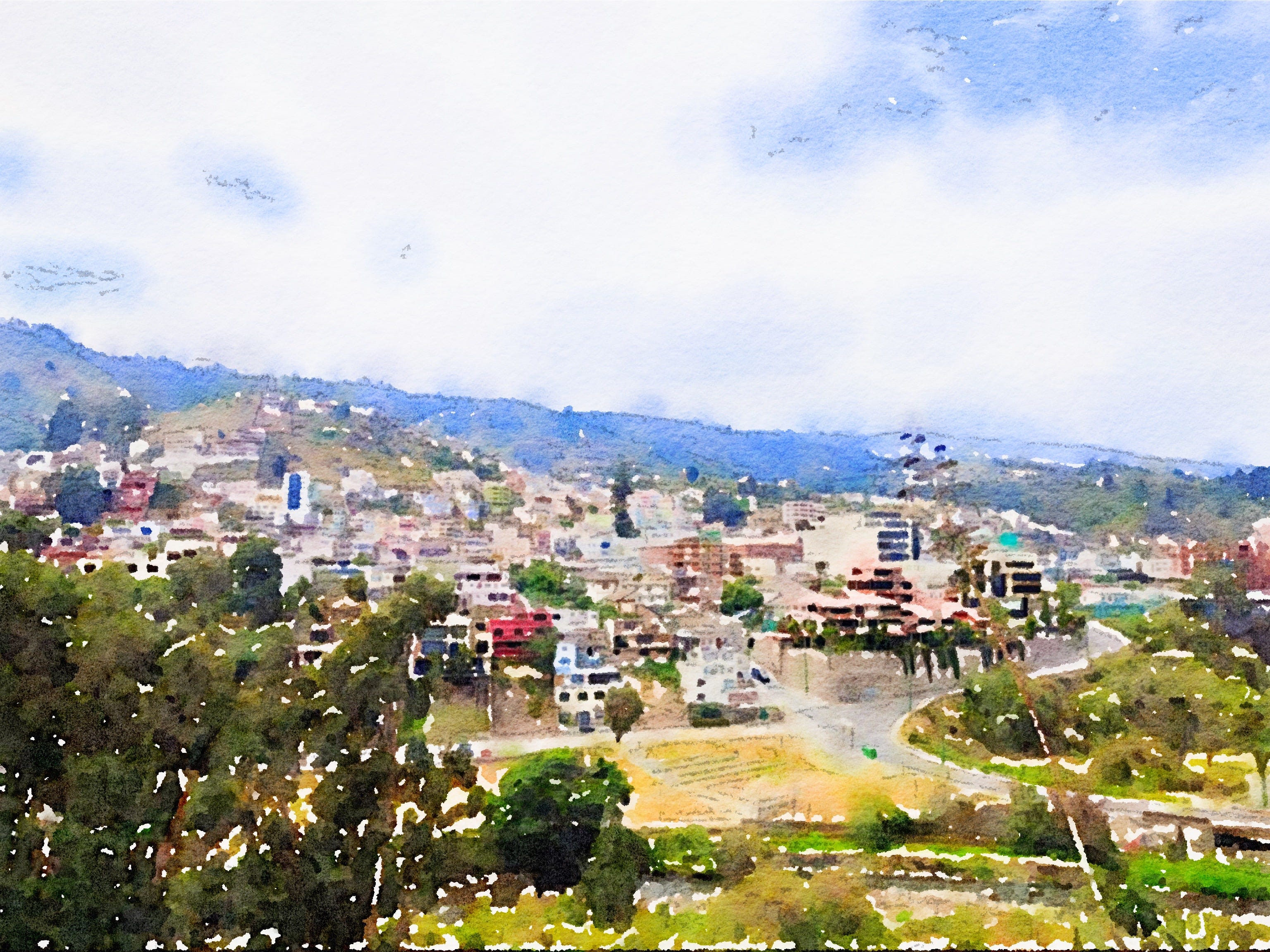
R——. Born 1988, in Atahualpa, a rural town on the outskirts of Ambato, Ecuador. One of seven children, to mixed-race indigenous Quechua parents. The family suffered constant threats of torture and death by members of Los Lobos, a heavily-armed and influential gang. Many male members of the family, including R——’s brother, had been viciously attacked. He was run over by a car driven by gang members in 2021, putting him in a coma for more than three months. The brother suffers permanent brain damage from this attack. Additionally, R——’s son was reaching an age sought after by gang members and was being forcibly recruited.
In one instance, as she was picking him up from school, a group of armed gang members tried to kidnap him, almost forcing him into their car. She was terrified to report this attempted kidnapping to the police, as it was well-known throughout Ambato that many of the police officers themselves are members of Los Lobos, or other local gangs such as Los Tiburones and Los Choneros. Many times, those who try to officially denounce robberies and kidnappings end up murdered just days later.
Shortly after this, almost the entire family left their home and made the treacherous trip north. They passed on foot and by car/bus through Colombia, Panama, Costa Rica, Nicaragua, Honduras, Guatemala, and Mexico, before finally arriving at a Texas Port of Entry at the US-Mexico border in July of 2022. Due to the fact that they came from a rural town with little to no law enforcement or medical infrastructure (and they were darker-skinned mestizo), they were denied crucial rehabilitation services for most of their lives. This culminated in the family arriving at the US-Mexico border hopelessly traumatized, depressed, and irreversibly altered by their experiences in Ecuador and their subsequent journey.
I met the family for the first time in October of 2024, when I assisted R—— and her daughter with applying for political asylum, and then for work authorization five months later. Despite all the suffering they had endured, the family immediately began working full-time jobs, sending whatever extra money they had back to the family members still in Ambato. The family had no upcoming Immigration Court hearings until 2028. One day in November of 2025, I received a call from R——’s sister, who I had also assisted in filing for political asylum. She told me that her daughter and brother, along with R—— herself, had been arrested by ICE agents in Newark during a traffic stop. The daughter had recently given birth, although luckily, the newborn child was not in the car when she was arrested, and remains in the care of her grandmother.
The detained family members were immediately separated and shipped off to separate prison camps- R—— and her brother to Delaney Hall in Newark, the underage new mother sent by herself to Northeast Ohio Correctional Center in Youngstown. After suffering several months in ICE prison, I was notified by the sister that R—— and the family members had opted for voluntary departure (self-deportation) in March and April of 2026. They returned to their homeland, the unstable, dangerous, violent place they had fled, fearing for their lives.
This series is part of a broader, ongoing project in collaboration with my friend and colleague, Zack Chaqor (who titled this work), in which we relay our experiences as legal professionals employed at a pro se legal clinic in NYC. Tasked with assisting newly-arrived asylum seekers—many of whom are victims of torture and other forms of severe persecution—we hope to further contribute to their struggle for self-determination and freedom by sharing their stories as they are relayed to us in our daily work, while we help them navigate the fascistic and violently oppressive immigration system of the US empire.
Follow the author here.
Comments
Nothing yet. Say the first thing.
Sign in to join the conversation.